Marie's Crisis Café
Marie's Crisis Café on Grove Street in Greenwich Village is New York's foremost piano bar for collective Broadway singing, where the drinks are secondary to the spectacle of strangers harmonising over show tunes from the 1920s to the present day. It occupies a different tier from the city's technique-driven cocktail bars, functioning instead as a social ritual that has endured in the same West Village basement for decades.
Pearl is the En Primeur Club membership app — saves, bookings, and concierge access live there. Same editors, same standards.
- Address
- 59 Grove St, New York, NY 10014
- Phone
- +1 646 470 6040
- Website
- mariescrisiscafe.com
- Directions
- Get directions
 Saves & bookings on Pearl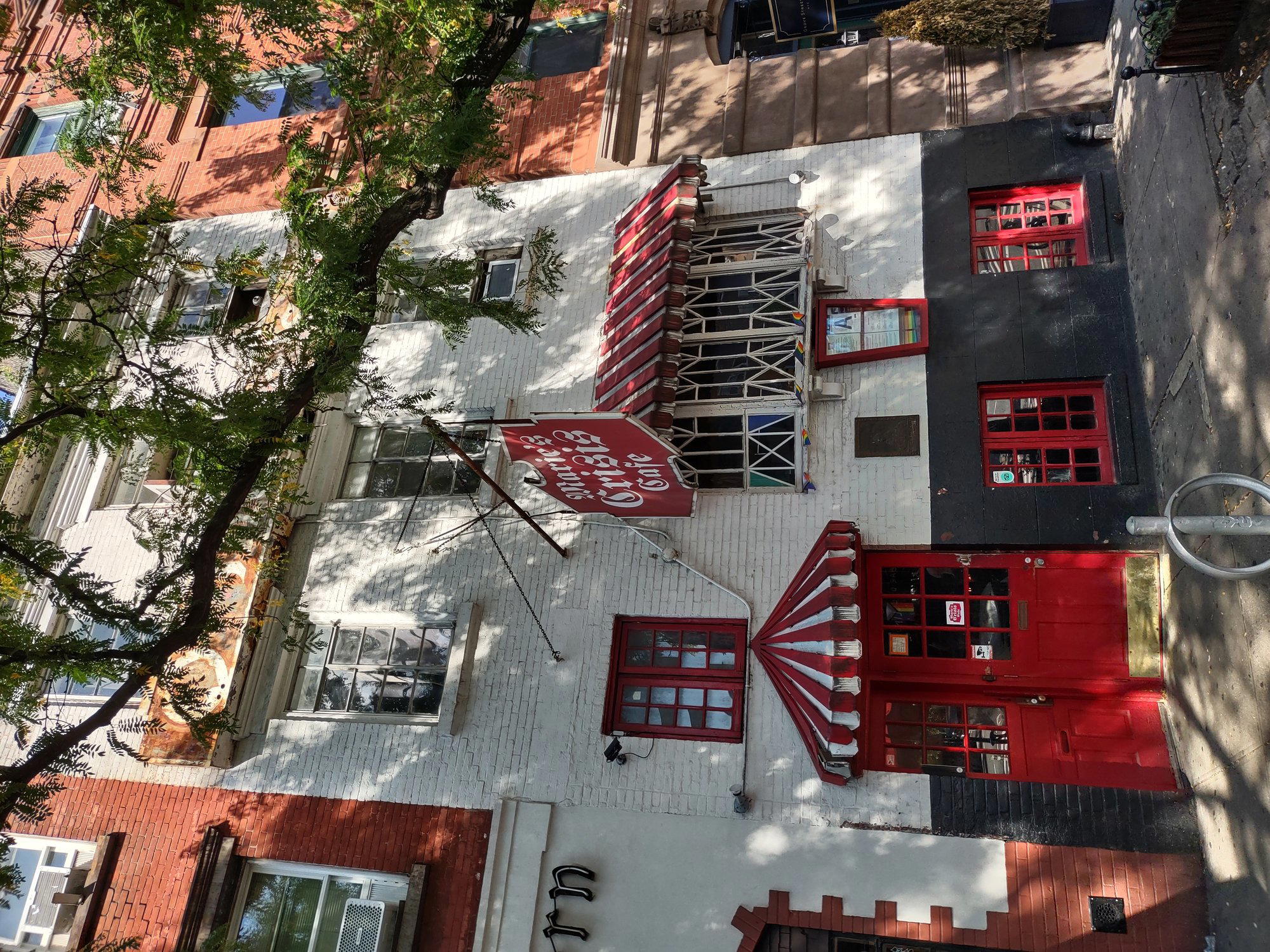
Grove Street at Full Voice
Approach 59 Grove Street on a Friday night and the sound reaches you before the sign does. From street level, a faint chorus drifts up through the basement stairwell — half a room singing something from Sweeney Todd or Gypsy, accompanied by a pianist working through a well-thumbed repertoire. The physical space below is compact, low-ceilinged, and lit to the kind of warmth that makes everyone look like they belong there. This is Marie's Crisis Café, and the atmosphere is the product, not the backdrop.
The West Village has long housed institutions that resist category — bars that function as community halls, music venues that sell cheap drinks, gathering points for subcultures that can't afford a proper venue. Marie's Crisis sits at the intersection of all three. It is a piano bar in the original American sense: a room organised around a keyboard rather than a cocktail programme, where participation is the point and performance is collective rather than staged.
The Cocktail Programme in Context
New York's drinking culture has bifurcated sharply over the past fifteen years. On one side sit technique-forward bars where clarified stocks, house-made amaro, and precise dilution ratios dominate the conversation. Amor y Amargo built its reputation on bitter-forward compositions with near-academic rigour. Attaboy NYC runs a no-menu format that places creative authority entirely with the bartender. Angel's Share in the East Village sustained Japanese-influenced precision for decades before that approach became mainstream.
Marie's Crisis sits on the other side of that divide entirely. The bar programme here is functional rather than expressive: beer, wine, and well-made simple mixed drinks that keep a room moving. The draw is not the bartender's creative vision, it is the pianist's, and the crowd's. That is not a criticism of the drinks so much as an accurate description of where the value sits. In a city that has produced some of the most technically accomplished cocktail bars in the world, Marie's Crisis is an argument that a bar does not need a signature drink to sustain four-plus decades of loyal attendance.
That said, the drinks do what they need to do. Cash transactions keep service fast during peak hours, and the bar is set up to handle volume, which matters when the room is at capacity and the pianist has just launched into the opening bars of something from Les Misérables. What Marie's Crisis offers instead is something harder to engineer: a room with genuine social stakes.
The Tradition Behind the Format
Piano bars as a format have largely been absorbed into hotel lobbies or replaced by karaoke rooms, which privatise the act of singing and remove the social friction. Marie's Crisis operates on the older model, where strangers sing together in public without the mediation of a private booth or a screen. That friction, the slight vulnerability of joining a chorus you didn't start, is what gives the room its energy. It also explains why the bar has maintained a specific community identity across multiple decades without significant concept drift.
The Broadway canon that anchors the playlist is broad enough to accommodate casual visitors but deep enough to reward regulars. Pianists work through requests with the fluency of session musicians, moving between Sondheim and Rodgers and Hammerstein and more recent catalogue without pausing for applause. The effect is less concert, more ongoing conversation conducted in four-part harmony.
Across the United States, a handful of bars maintain this kind of singular format discipline. Jewel of the South in New Orleans anchors its identity in historically documented cocktail recipes. Julep in Houston structures its programme around Southern spirits with clear intellectual framing. Kumiko in Chicago built its reputation on Japanese-influenced liqueur composition. Each of these bars has a defined creative proposition that shapes every decision from glassware to music. Marie's Crisis has its own proposition, it simply runs through a Steinway rather than a jigger.
The West Village Setting
Greenwich Village has shed much of its bohemian economics without fully shedding its identity. Grove Street in particular retains the scale and street character that made this neighbourhood a reference point for New York's artistic communities from the mid-twentieth century onward. The surrounding blocks hold a concentration of long-running restaurants and bars that have survived successive rent cycles, which says something about the loyalty of their customer bases.
For visitors building a West Village evening, the bar slots naturally into a late-night position, after dinner, after a show, or as the destination itself on a night that doesn't need to start anywhere else. The Village has enough options at every price point that a thoughtful itinerary is direct to construct. For the broader New York picture, our full New York City restaurants guide maps the city's drinking and dining options across neighbourhoods and categories.
For context on how specialty bars perform in other cities, Bar Leather Apron in Honolulu, ABV in San Francisco, Allegory in Washington, D.C., and The Parlour in Frankfurt on the Main each represent the kind of format-defined bar that builds identity through a consistent, repeatable proposition rather than seasonal reinvention.
Planning Your Visit
Address: 59 Grove St, New York, NY 10014. Getting there: The closest subway stops are Christopher St-Sheridan Square on the 1 train and 7th Ave on the 1/2/3, both within a short walk. Timing: The bar operates as a late-night venue; the room tends to fill after 10pm on weekends, when the piano sessions reach their highest energy. Weeknights are quieter and give first-timers a lower-pressure introduction to the format. Payment: Cash has historically been the preferred or required mode of payment at the bar, confirm current policy before arriving. Dress: No code. The room skews casual to theatrical, with a significant number of regulars who treat the visit as an occasion.
Continue exploring
More in New York City
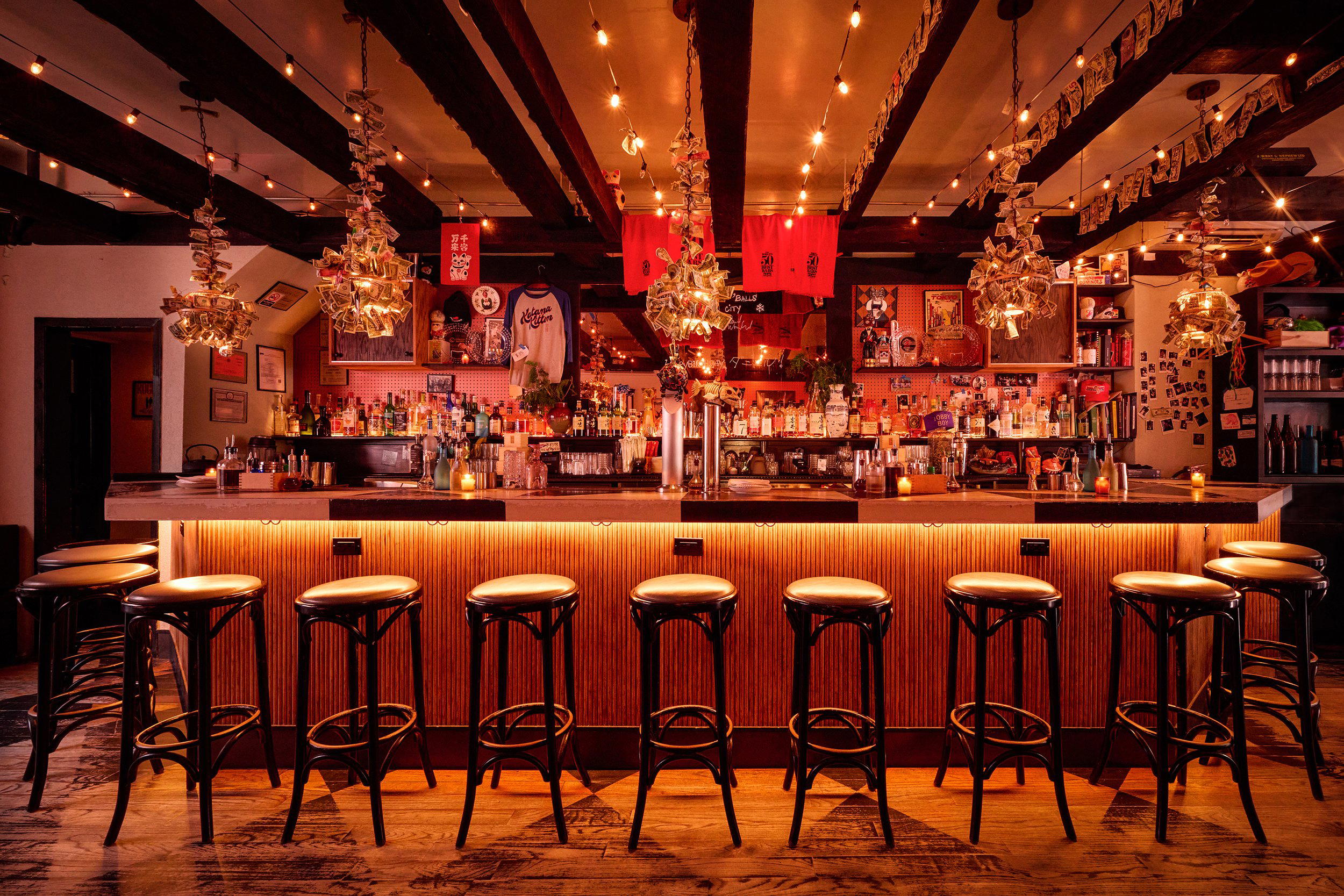
Bars in New York City
Browse all →
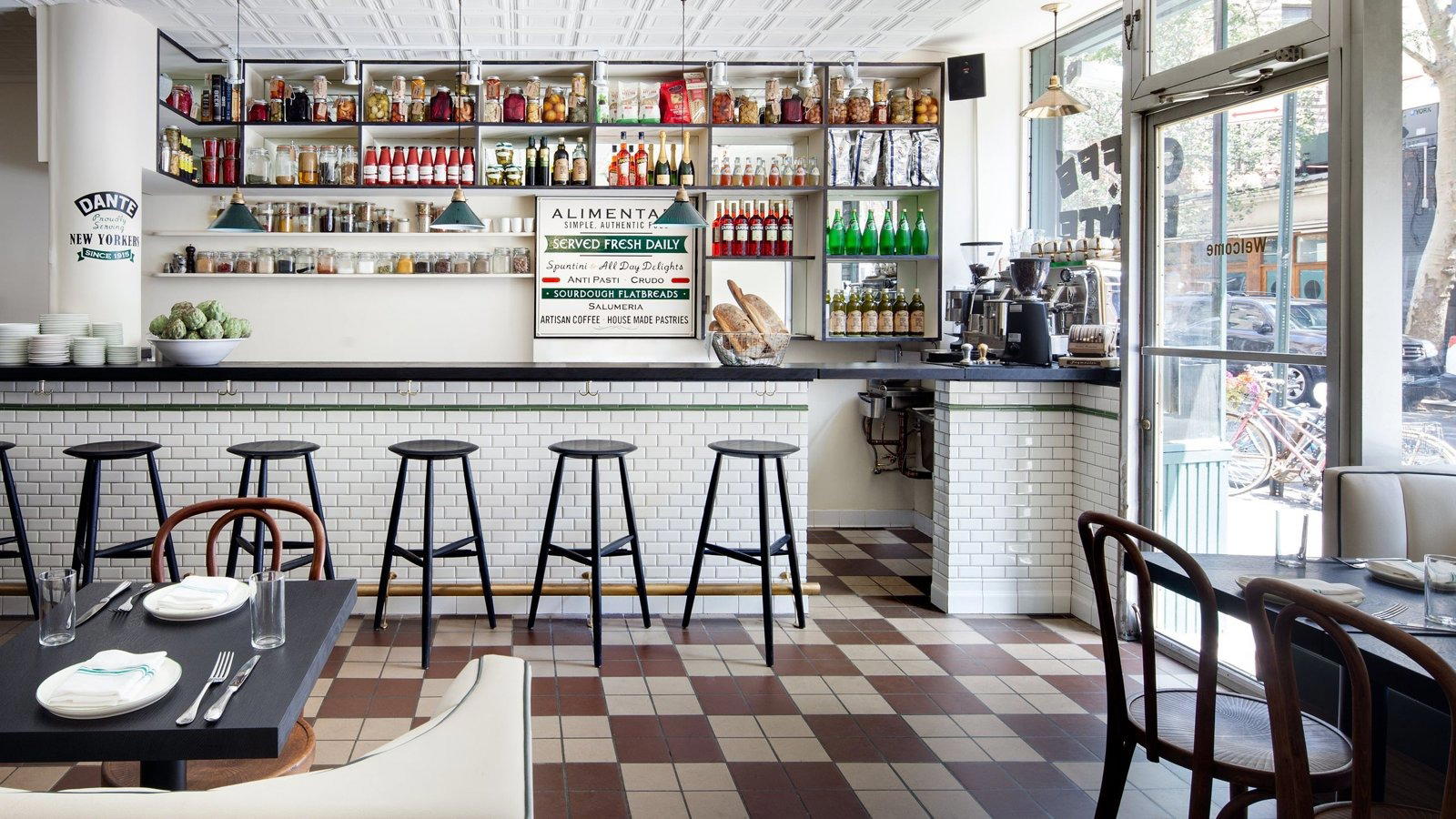
Restaurants in New York City
Browse all →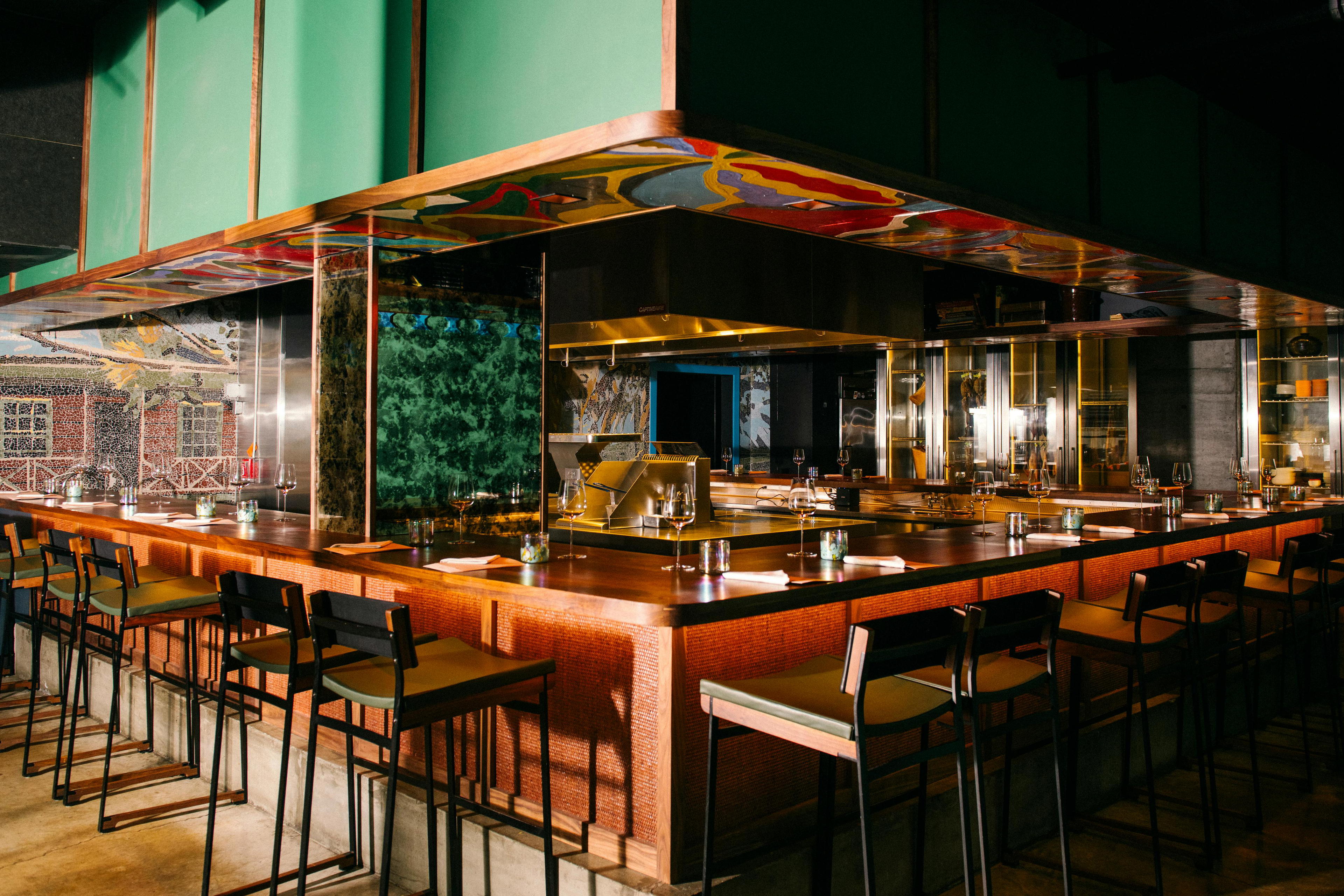
Hotels in New York City
Browse all →




At a Glance
- Lively
- Well Known
- Intimate
- Energetic
- Late Night
- Casual Hangout
- Group Outing
- Live Music
- Historic Building
- Standing Room
- Seated Bar
- Classic Cocktails
Current opening hours
- Monday
- 4 PM–4 AM
- Tuesday
- 4 PM–4 AM
- Wednesday
- 4 PM–4 AM
- Thursday
- 4 PM–4 AM
- Friday
- 4 PM–4 AM
- Saturday
- 4 PM–4 AM
- Sunday
- 4 PM–4 AM
Hours can change for holidays and private events. Last verified .
Divey, throwback interior with a rowdy, fun, and electric atmosphere filled with loud singing and communal joy.
Know Before You Go
- Getting there
- 59 Grove St, New York, NY 10014