Starbucks Reserve Roastery New York
The Starbucks Reserve Roastery at 61 Ninth Avenue in Chelsea is among the largest and most technically detailed coffee retail formats in the United States. The multi-floor space functions as a working roastery, bar, and experiential retail destination, with single-origin beans roasted on-site and a drinks program that extends well beyond the standard espresso menu. For coffee travelers, it represents a different tier of engagement with the brand than any conventional Starbucks location.
Pearl is the En Primeur Club membership app — saves, bookings, and concierge access live there. Same editors, same standards.
- Address
- 61 9th Ave, New York, NY 10011
- Phone
- +1 212 691 0531
- Website
- starbucksreserve.com
- Directions
- Get directions
 Saves & bookings on Pearl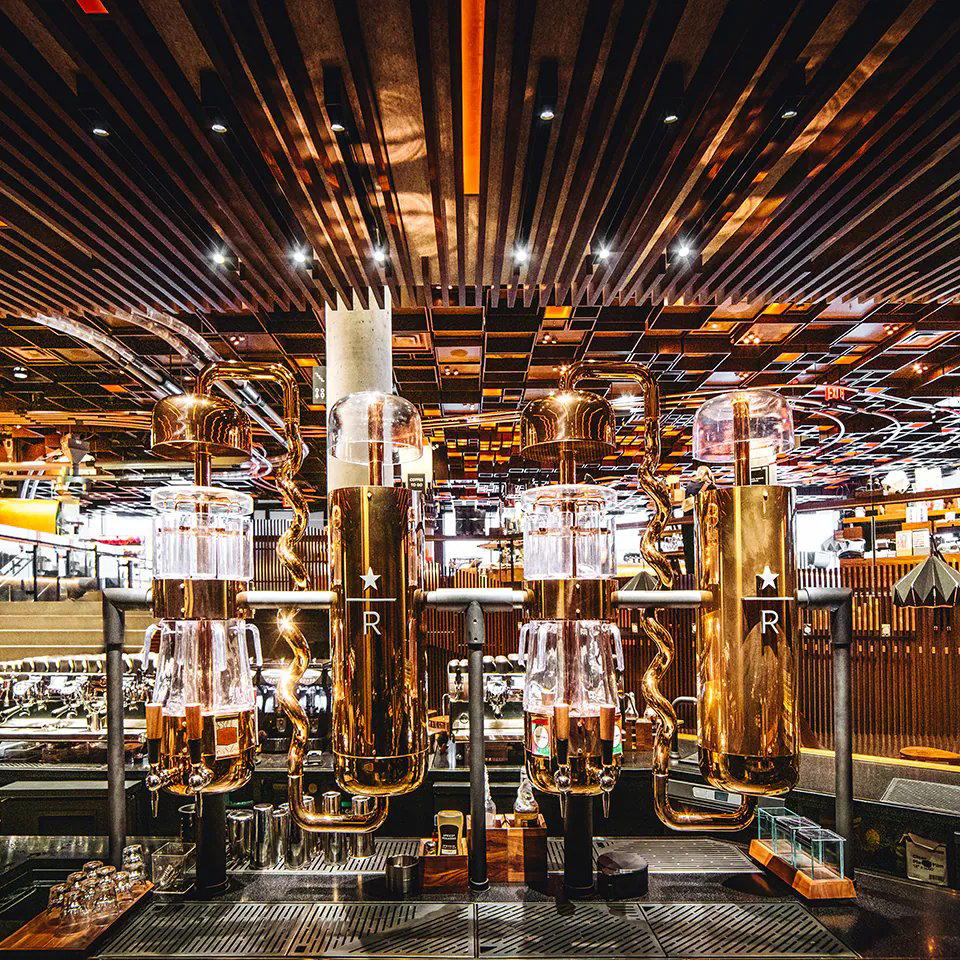
The Reserve Roastery Format and What It Represents
When Starbucks opened its first Reserve Roastery in Seattle in 2014, it marked a deliberate attempt to operate in a different register from the company's global retail network. The Reserve Roastery concept was built around a specific proposition: take specialty coffee's sourcing transparency and technical craft, apply it at a scale only a large operator could sustain, and house it in an architectural space designed to make the roasting process visible and legible to the customer. By the time the New York location opened at 61 Ninth Avenue in Chelsea's Meatpacking-adjacent corridor in 2018, the format had been refined in Milan and Shanghai as well. The Chelsea address placed it in a neighborhood that had already absorbed large-format retail, the High Line's cultural infrastructure, and a significant food and beverage cluster, making it a logical anchor point for this kind of flagship.
Coffee Sourcing as the Organizing Principle
The Reserve Roastery's editorial case rests on sourcing. Where a standard Starbucks location pours blends roasted at centralized facilities, the Reserve format is built around single-origin and small-lot coffees that are roasted on the premises. The copper-clad roasting cask at the center of the New York space is not decorative; it is the operational core of the location. Beans move from storage through the roasting process and into the various bar stations via a pneumatic tube system that runs through the building, making the supply chain physically traceable from the moment a customer walks in.
This sourcing approach positions the Roastery in conversation with specialty importers and micro-roasters who have built their reputations on direct-trade relationships and single-origin transparency. The difference is scale: the Reserve program can secure micro-lots that smaller roasters might not access, while the Roastery's retail volume means those lots turn over quickly, reducing the staleness risk that plagues smaller operations with slower throughput. That is a structural advantage, not a stylistic one, and it matters to the quality of what ends up in the cup.
The Drinks Program in Context
The bar program at the New York Roastery extends beyond espresso to include nitro cold brew, siphon-brewed coffee, and a cocktail-adjacent menu of Reserve-specific beverages that use coffee as a base ingredient in ways not available at standard locations. The Arriviamo cocktail bar on the upper level also serves alcohol-based drinks in the evening, placing the venue in partial overlap with the cocktail category that has defined much of Chelsea and the surrounding neighborhoods' after-dark character.
That cocktail dimension is worth noting for context. New York's serious bar community has developed in a direction that prizes technical specificity and sourcing transparency, values that the Roastery applies to coffee rather than spirits. Venues like Amor y Amargo and Attaboy NYC represent a bar culture built around ingredient discipline and a specific point of view; the Roastery's cocktail program operates from a different starting point but shares the broader ambition of making the ingredient story legible to the customer. Further afield, programs at Superbueno and Angel's Share demonstrate how varied that ambition can look across New York's bar formats.
For readers curious about how this kind of ingredient-led bar philosophy plays out in other American cities, similar orientations appear at Kumiko in Chicago, ABV in San Francisco, Julep in Houston, Jewel of the South in New Orleans, and Allegory in Washington, D.C.. Internationally, Bar Leather Apron in Honolulu and The Parlour in Frankfurt on the Main show how the same sourcing-first logic translates across very different drinking cultures.
The Space and the Format
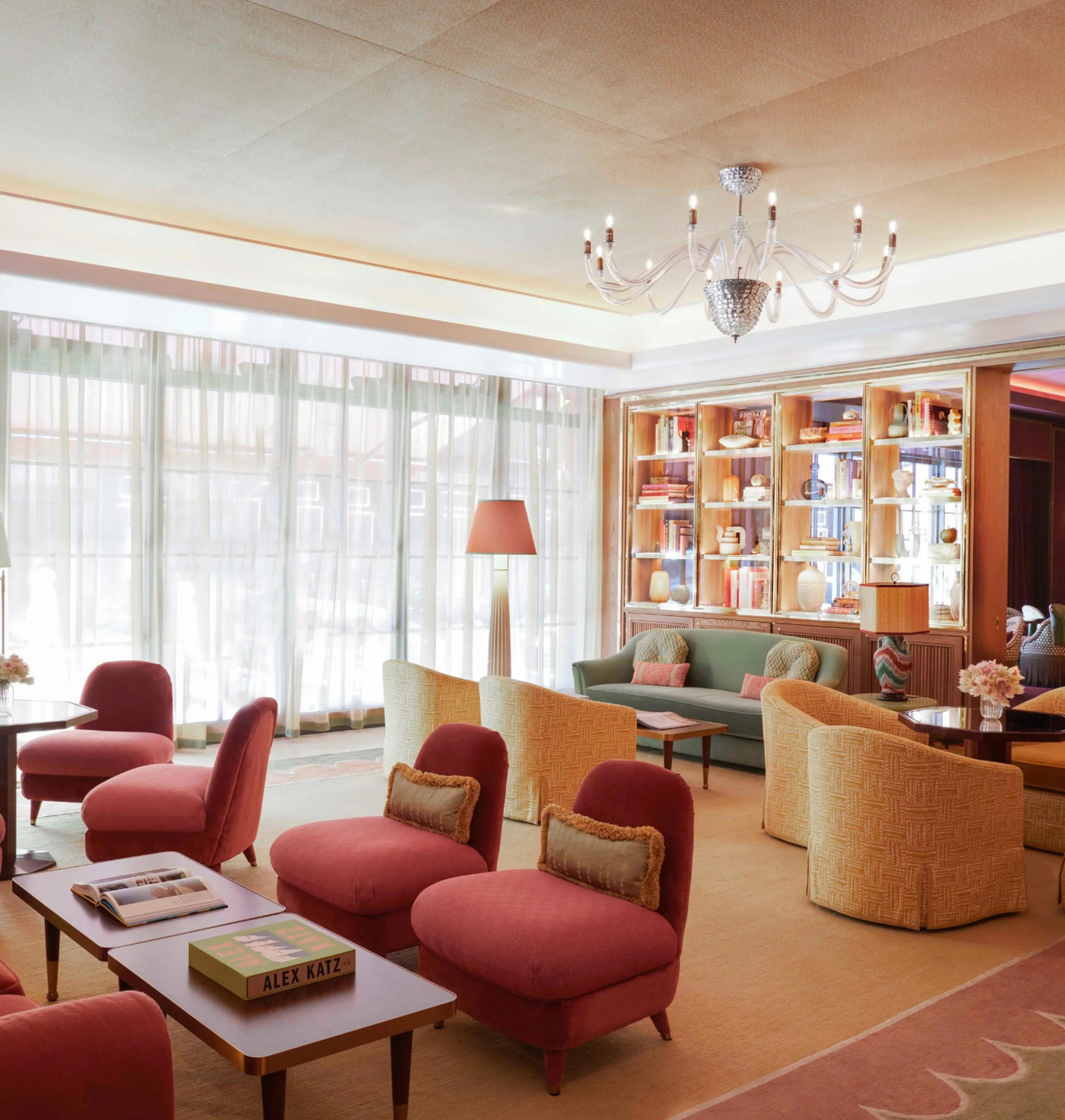
The Chelsea Roastery occupies approximately 23,000 square feet across multiple floors, making it one of the largest coffee retail spaces in the United States. The architectural brief leaned into industrial materiality: exposed brick, copper piping, raw steel, and the roasting equipment itself as the visual anchor. The result is a space that reads more like a working facility with a hospitality layer than a coffee shop with an industrial aesthetic applied over it. That distinction matters because it shifts the customer's relationship to what they're watching. The roasting is not theatre performed for the customer; the customer is present while roasting happens, and the beans they are served may have been processed earlier that day in the same room.
The multi-floor layout also creates meaningful separation between visit types. Ground-floor bar stations handle high-volume espresso and filter orders efficiently. The upper levels move at a slower pace, suitable for siphon service or the cocktail program in the evening. Visitors who treat the space as a quick caffeine stop and those who spend two hours working through the coffee menu are both accommodated, though the space clearly rewards the latter.
Where It Sits in the New York Coffee Context
New York's specialty coffee scene has expanded considerably since the early 2000s, with a generation of independent roasters establishing strong neighborhood presences across Brooklyn and Manhattan. The Roastery does not sit in direct competition with those operators; it functions in a different category. Its scale, its tourist draw, and its integration of the roasting process into the retail experience place it closer to a cultural destination than a neighborhood café. That is not a criticism. Chelsea's density of galleries, the High Line, and large-format hospitality means the neighborhood regularly absorbs destination visitors, and the Roastery has become a reference point on that circuit.
For a broader map of New York's food and drink scene, our full New York City restaurants guide covers the range from neighborhood spots to destination dining across every borough.
Planning Your Visit
The address is 61 Ninth Avenue, Chelsea, at the corner of West 15th Street, easily reached from the 14th Street station on the A, C, E, and L lines. The space is large enough to absorb significant crowds, but weekend afternoons during peak tourism season can create queues for bar service. Morning visits on weekdays offer the leading combination of manageable crowds and active roasting operations. The Arriviamo bar on the upper level operates during evening hours for the cocktail program, making it a viable stop before or after dinner in the neighborhood.
Quick reference: 61 Ninth Avenue, Chelsea, New York. Multi-floor coffee roastery and bar. On-site roasting of Reserve single-origin beans. Cocktail bar on upper level, evening hours.
Cost and Credentials
| Venue | Price |
|---|---|
| Starbucks Reserve Roastery New YorkThis venue — the venue you are viewing | This venue |
| The Long Island Bar | World's 50 Best |
| Superbueno | World's 50 Best |
| Amor y Amargo | World's 50 Best |
| Angel's Share | World's 50 Best |
Continue exploring
More in New York City
Bars in New York City
Browse all →
Restaurants in New York City
Browse all →
Hotels in New York City
Browse all →





At a Glance
- Modern
- Trendy
- Well Known
- Industrial
- Casual Hangout
- After Work
- Design Destination
- Lounge Seating
- Communal Tables
- Craft Cocktails
Current opening hours
- Monday
- 8 AM–10 PM
- Tuesday
- 8 AM–10 PM
- Wednesday
- 8 AM–10 PM
- Thursday
- 8 AM–10 PM
- Friday
- 8 AM–11 PM
- Saturday
- 8 AM–11 PM
- Sunday
- 8 AM–10 PM
Hours can change for holidays and private events. Last verified .
Expansive and stunningly designed space with innovative mixology theater, moderate noise, and New York energy.
Know Before You Go
- Getting there
- 61 9th Ave, New York, NY 10011