Maestro
Our verdict
Maestro occupies a considered address on Union Street in Pasadena, where the dining room operates as a frame for a slower, more deliberate kind of meal. Positioned in a city whose restaurant scene has matured well beyond its Old Town tourist circuit, Maestro draws a crowd that comes to eat rather than to be seen — and the pacing of the meal reflects that priority.

Pearl is the En Primeur Club membership app — saves, bookings, and concierge access live there. Same editors, same standards.
- Address
- 110 Union St, Pasadena, CA 91103
- Phone
- (626) 787-1512
- Hours
- Mon ClosedTue–Thu 5–9 PMFri–Sat 5–10 PMSun 5–9 PM
- Website
- maestropasadena.com
- Directions
- Get directions
- Booking
- Book on the venue's website
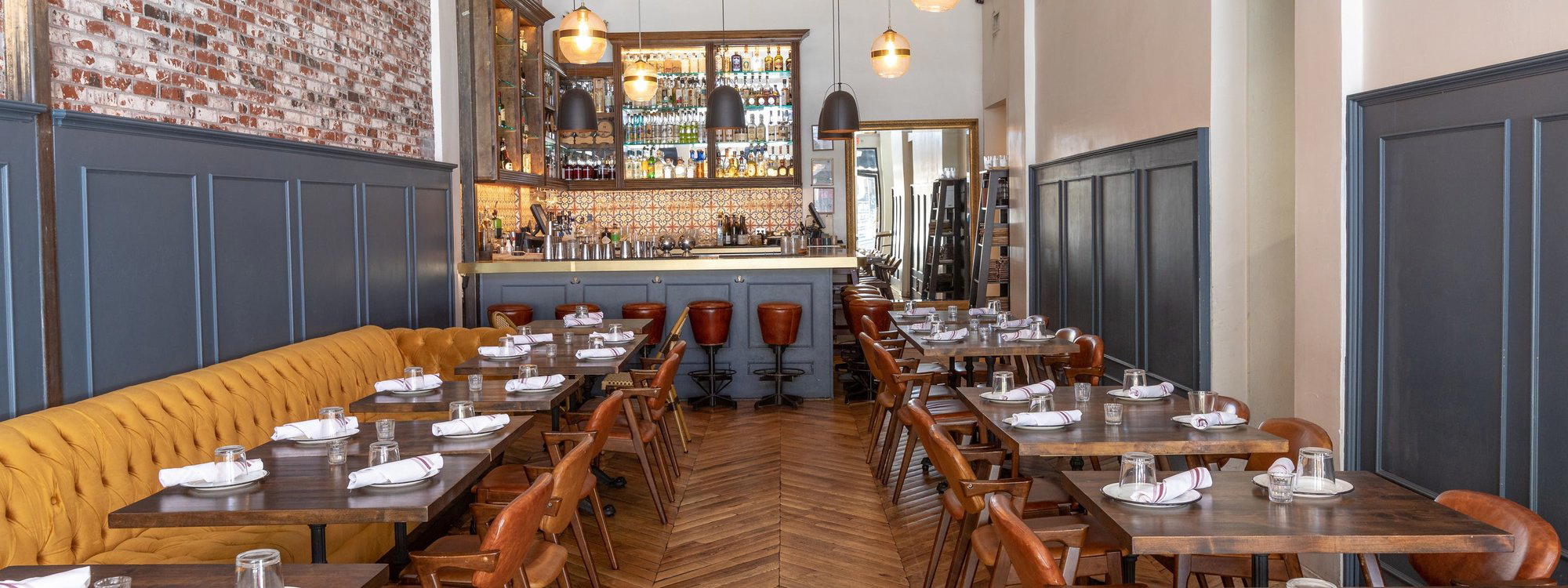
A Street, a Room, a Ritual
Union Street in Pasadena runs quietly between the city's civic institutions and its older residential blocks — a corridor without the foot traffic of Colorado Boulevard or the spectacle of the Arroyo. Arriving at 110 Union St, the experience reads as deliberate understatement. The neighbourhood context matters here: Pasadena's dining scene has long lived in two registers, the busy boulevard restaurant and the more considered room operating slightly off the tourist current. Maestro belongs to the second category, and the address alone signals that the audience self-selects.
That kind of spatial positioning carries weight in Southern California dining, where room design and neighbourhood placement function as the first course. The leading precedents for this approach exist at a national scale: Single Thread Farm in Healdsburg and Blue Hill at Stone Barns in Tarrytown both use deliberate geographical remove to condition how a guest arrives mentally before any food appears. Maestro operates on a compressed version of that logic within a city of roughly 140,000 people, a place large enough to sustain ambition but small enough that word travels fast.
How the Meal Unfolds
The dining ritual at a room like this is the product. In California's premium dining tier, the conversation has shifted decisively away from single showstopper dishes toward the architecture of a full evening: the pace of service, the sequencing of courses, the distance between arrivals at the table. Guests who approach dinner at Maestro expecting a transactional experience — order, eat, leave, are likely to find the room asking something different of them.
This is a pattern visible at several of the restaurants EP Club covers across the American fine-dining spectrum. At Lazy Bear in San Francisco, the communal table format makes the ritual explicit. At Atomix in New York City, the card-based tasting menu turns each course into a research exercise. The particulars vary, but the underlying premise is consistent: the pacing and structure of the meal carry as much information as the food itself. Maestro's position on Union Street, away from the noise, suggests a similar intent, even if the specific format remains to be confirmed through direct experience.
Pasadena rewards this kind of patience more than its Los Angeles proximity might suggest. The city has built a restaurant culture that includes serious contenders, Arbour, Alexander's Steakhouse, and 36 W Colorado Blvd #7 each occupy distinct positions in the local dining order, and a guest base that travels from across the San Gabriel Valley and the broader Los Angeles metro. That catchment area means Maestro competes less with Pasadena's tourist-facing venues and more with the wider regional dining conversation.
Pasadena in the California Dining Order
Understanding Maestro requires understanding where Pasadena sits in California's culinary geography. The city is not Los Angeles, though it operates within Los Angeles County. It is not a suburb in the diminished sense of the word, it has its own civic identity, its own institutions (Caltech, the Rose Bowl, the Huntington), and its own dining culture that predates the current wave of attention.
The California fine-dining conversation has historically centred on San Francisco and Napa, represented nationally by venues like The French Laundry in Napa, and more recently by Los Angeles, where Providence has held Michelin stars consistently for over a decade. Pasadena operates as a quieter participant in that conversation. It is close enough to Los Angeles to draw serious talent and serious guests, but distinct enough in character that the restaurants here tend to develop their own register rather than importing an LA template wholesale.
That distinctiveness extends beyond the fine-dining tier. Pasadena's dining range runs from the reliable Indian cooking at All India Cafe to the neighbourhood ease of Amara Cafe and Restaurant, with Maestro occupying a position considerably further up the register. Visitors looking for the full picture of what Pasadena offers at the table should read our full Pasadena restaurants guide.
Where Maestro Sits in a National Conversation
Positioning a room like Maestro against national reference points is useful less as a claim of equivalence and more as a way of identifying what kind of evening a guest should prepare for. The American restaurants that have most successfully developed a distinctive dining ritual tend to share a few characteristics: small capacity, a defined format, and a service philosophy that treats the guest's time as the primary currency.
Alinea in Chicago built its reputation on exactly this model, as did The Inn at Little Washington and, at the seafood-forward end of the spectrum, Le Bernardin in New York City. Further south, Addison in San Diego has demonstrated that California cities beyond San Francisco and Los Angeles can sustain serious fine-dining ambitions at a high level. Maestro's Pasadena address makes a comparable argument for the San Gabriel Valley.
Internationally, the ritual-driven tasting format has produced some of the most recognised rooms in the world. 8 1/2 Otto e Mezzo Bombana in Hong Kong exemplifies how a restaurant can transplant a culinary tradition into a new geography while developing its own codes of service and pacing. The comparison is instructive: what matters in rooms at this level is not simply the food but the total architecture of the experience. New Orleans has its own version in Emeril's, where the ritual of a particular city's food culture is as much the draw as any individual dish.
Planning Your Visit
Maestro is located at 110 Union St, Pasadena, CA 91103, a walkable distance from Old Town Pasadena and accessible by the Metro L Line at the Del Mar or Memorial Park stations. For a room operating in this tier, advance planning is advisable: Pasadena's better tables tend to book ahead on weekends, particularly during Caltech and Rose Bowl event periods when hotel capacity in the city tightens and restaurant demand rises correspondingly. Guests driving from central Los Angeles should allow additional time along the 110 freeway during evening rush periods. Contact and booking details are best confirmed directly through current online listings, as operational specifics were not available at time of publication.
Frequently asked questions
Where do I go for Maestro?
Maestro is located at 110 Union St, Pasadena, CA 91103, Pasadena.
How does Maestro's location in Pasadena compare to dining in central Los Angeles?
Maestro at 110 Union St sits in Pasadena, a city that functions adjacent to but distinctly separate from the Los Angeles dining circuit. For diners coming from central LA, the Metro L Line stops at Del Mar station within walkable range — making the journey deliberate rather than incidental, which suits a room built around the meal as the occasion.
What dish is Maestro famous for?
What the room at 110 Union St, Pasadena is understood to prioritize is the arc of the meal as a whole rather than a single anchor dish — consistent with how California's premium dining tier has moved in recent years.
Do they take walk-ins at Maestro?
Walk-in availability at Maestro on Union Street is not confirmed. Rooms operating at this level in Pasadena generally run on reservations, and given the intimate format the dining room appears to follow, contacting the venue directly before arriving without a booking is advisable.
What has Maestro built its reputation on?
Maestro's reputation in Pasadena is grounded in its positioning as a considered, ceremony-oriented dining room in a city that occupies its own distinct place in California's culinary order — neither absorbed into the Los Angeles mainstream nor operating in isolation from it. The address on Union Street, away from Old Town's heavier foot traffic, signals an intent to let the meal itself carry the weight.
Can Maestro adjust for dietary needs?
For a room structured around a set dining ritual, the standard practice at comparable California venues is to request dietary requirements at the time of booking rather than on arrival.
Is Maestro worth the price?
Pricing details for Maestro are not publicly listed at this time. The value case for a room at this level in Pasadena rests on the format itself — a structured, ritual-driven meal in an intimate setting that positions the dining experience as the primary event rather than an accompaniment to the address.
What It’s Closest To
Comparable venues nearby, for context on price, style, and recognition.
| Venue | Cuisine | Price | Notes |
|---|---|---|---|
| MaestroThis venue — the venue you are viewing | Modern Mexican | $50–100 | Not listed |
| Mijares | Authentic Traditional Mexican | $20–30 | South Arroyo |
| Nikki C's | Italian-American Trattoria | $30–50 | East Pasadena |
| Kulturas | Mexican-Peruvian Fusion | Not listed | Not listed |
| Kathleen's | Classic California American | $20–30 | Not listed |
| La Caravana | Authentic Salvadoran | $10–20 | North Lake Ave |
Continue exploring
More in Pasadena
Restaurants in Pasadena
Browse all →
Bars in Pasadena
Browse all →

Hotels in Pasadena
Browse all →
Wineries in Pasadena
Browse all →
Maestro
The wine
- Wine program
- Curated wine list
- Sake program
- Craft cocktails
Details
- Cozy
- Modern
- Trendy
- Date Night
- Special Occasion
- Open Kitchen
- Craft Cocktails
- Sake Program
- Farm To Table
- A La Carte
- Small Plates
- Mezcal
- Tequila
- Vegetarian Friendly
Current opening hours
- Monday
- Closed
- Tuesday
- 5–9 PM
- Wednesday
- 5–9 PM
- Thursday
- 5–9 PM
- Friday
- 5–10 PM
- Saturday
- 5–10 PM
- Sunday
- 5–9 PM
Hours can change for holidays and private events. Last verified .
Cozy atmosphere with exposed brick walls, mosaic tiles, neon art, and large banquettes creating an intimate modern vibe.