La Vermutería
La Vermutería on Lavalle brings the Spanish-inflected vermouth tradition into Buenos Aires' drinking culture, occupying a distinct position between the city's cocktail bars and its wine-forward spots. The format centres on low-intervention aperitivo drinking rather than elaborate mixed drinks, placing it closer to the neighbourhood bar ethos of Almagro than the polished programs at Palermo's premium venues.
Pearl is the En Primeur Club membership app — saves, bookings, and concierge access live there. Same editors, same standards.
- Address
- Lavalle 3780, C1190AAV Cdad. Autónoma de Buenos Aires, Argentina
- Phone
- +54 11 4865 6392
- Website
- es-la.facebook.com
- Directions
- Get directions
 Saves & bookings on Pearl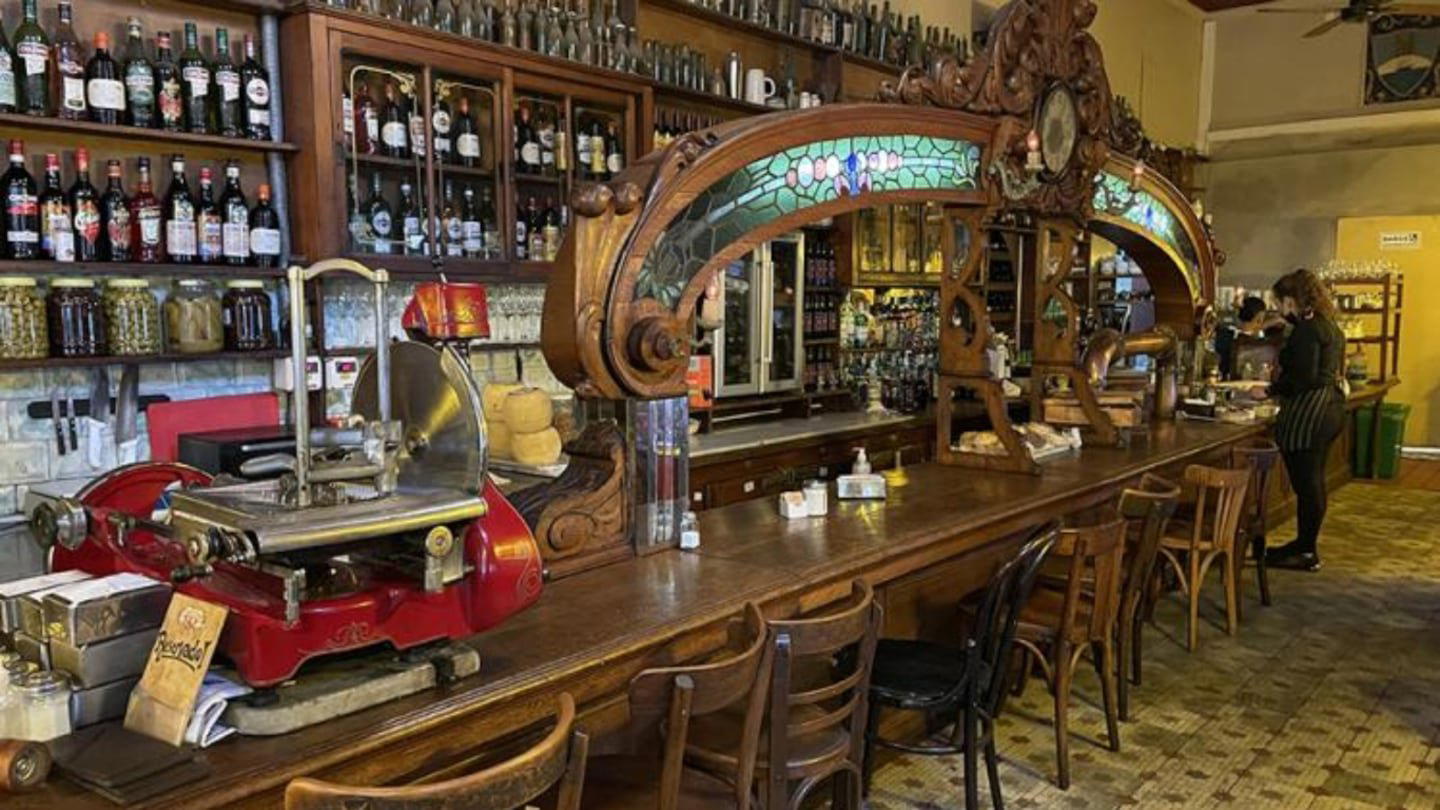
Aperitivo Culture in Buenos Aires and Where La Vermutería Fits
Buenos Aires has a layered drinking culture that rarely gets the same international attention as its beef or its wine. The city's bar scene splits broadly into two modes: the technically ambitious cocktail programs at places like Florería Atlantico and 878 Bar, which have earned regional and global recognition over the past decade, and the neighbourhood-rooted drinking spots that operate on a different logic entirely. La Vermutería on Lavalle belongs firmly to the second category. Its name announces the format before you arrive: this is a place organised around vermouth, the aromatised wine that anchors aperitivo culture across Spain and Italy and has found a durable home in Argentine drinking habits.
The Spanish immigrant influence on Buenos Aires is well documented, and vermouth arrived with it. The Saturday midday vermouth ritual, a vermut with olives and a small plate, persists in neighbourhoods like San Telmo and Boedo as something closer to social infrastructure than mere drinking. La Vermutería on Lavalle, in the Almagro and Palermo-adjacent stretch of the city, participates in that tradition while sitting in a part of town where the clientele is younger and the surroundings more charged than in the older southern barrios. That address on Lavalle puts it in a stretch of the city where the bar density is high and competition is real.
The Setting: What Vermouth Bar Aesthetics Mean in This City
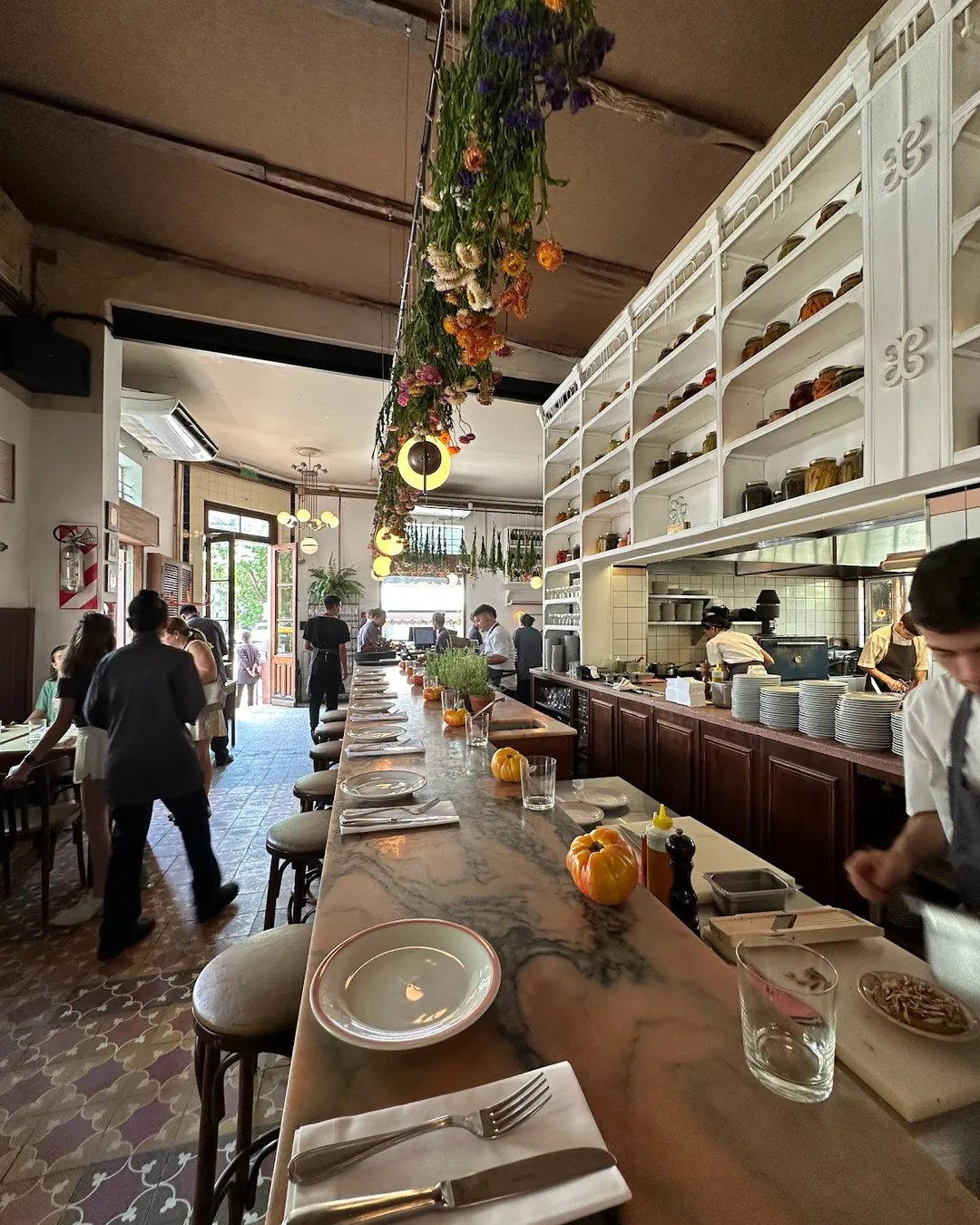
Aperitivo-focused bars in Buenos Aires tend to occupy a particular physical register: tiled floors, bottles displayed openly, marble or zinc counters, natural light when the hour allows. These are not accident. The format signals a different drinking pace, one that resists the dim theatricality that defines the city's more concept-driven venues. La Vermutería reads within that tradition. Where the basement-access bars and cocktail laboratories signal a certain kind of dedication to technique and occasion, a vermutería signals access, regularity, and the pleasure of drinking something familiar well.
That distinction matters because it positions the bar differently from the polished hotel bars at the Four Seasons or the elaborate multi-concept drinking at CoChinChina. The proposition here is not aspiration but repetition: a place that works well when you know your order before you sit down.
Vermouth, Sustainability, and the Argument for Low-Intervention Drinking
The sustainability story embedded in aperitivo-format bars is rarely stated but structurally present. Vermouth is an aromatised wine, meaning it starts with base wine that might otherwise not merit the glass on its own, then builds complexity through botanical infusion. In Argentina, where domestic wine production is both a cultural institution and an agricultural reality at scale, the category of aromatised and fortified wines occupies an interesting position: it provides a use-case for wines outside the premium tier, reducing waste while producing something genuinely worth drinking.
This connects to a broader shift visible across Argentina's drinks industry. Producers in Mendoza, Salta, and Patagonia have been reexamining what counts as a finished product worthy of sale. Antares Mendoza in Mendoza represents one direction, beer-focused and local-ingredient-led. Chato's Wine Bar in Cafayate and Colomé Winery in Molinos represent another, anchored in high-altitude terroir and minimal intervention. Vermouth sits between those poles: it is a processed product, but one that rewards careful sourcing of botanicals and base wine, and a format that penalises waste at every step of production.
A bar built around vermouth also operates with a simpler logistics footprint than a cocktail bar. Fewer spirits, less refrigeration demand, smaller mise en place, lower per-drink carbon load. None of this is typically articulated by the bars themselves, but for anyone tracking the environmental calculus of the hospitality sector, the aperitivo format carries structural advantages that full cocktail programming does not.
What to Drink and How to Approach the Menu
The vermouth canon at a Buenos Aires vermutería will typically run across domestic labels, Spanish imports (Punt e Mes, Carpano, Martini rosso, Mancino), and increasingly, Argentine-produced versions from craft operations in Mendoza and Buenos Aires province. The gap between a well-made Argentine vermouth and its Italian counterpart has narrowed considerably in the past five years, and a good vermutería will have opinions about which direction to point a first-time visitor.
Beyond the glass itself, the standard accompaniments, olives, chips, small preserved items, are part of the format rather than an afterthought. They are also low-waste by design: long shelf life, minimal preparation, sourced locally without difficulty. The food component at a vermutería is never the reason to go, but it is part of what makes the mid-afternoon visit work as a complete experience rather than just a drinks order.
For visitors building a Buenos Aires bar itinerary, the bar fills a specific gap that the cocktail bars do not. Places like 878 Bar and Florería Atlantico are worth serious time, but they operate on a different rhythm and require a different kind of commitment. A vermutería works for an hour on a Saturday before lunch, for a low-key first drink before a longer evening, or as a reset between more demanding stops. Internationally, comparable low-intervention bar formats have found consistent audiences at places like Kumiko in Chicago and Jewel of the South in New Orleans, where the depth of the drinks program does not always announce itself loudly on arrival.
Planning a Visit: Practical Notes
The bar is at Lavalle 3780, in the western stretch of Lavalle that runs through Almagro territory, away from the tourist-dense microcentro section of the same street. The neighbourhood is walkable from Palermo and well served by public transport. The address puts it within reasonable distance of Buenos Aires' denser bar corridor, making it a plausible first or last stop rather than a destination that requires its own trip.
For aperitivo-format bars in Buenos Aires, the practical window is typically early afternoon through early evening, with Saturday midday representing the culturally correct entry point for the format. Walk-in is the standard approach for this category of venue. Anyone building a broader Argentine drinks trip should cross-reference the full Buenos Aires guide for context on how the bar fits against the city's other drinking options, and consider pairing the Buenos Aires portion of a trip with wine-country visits to venues like Bar Leather Apron in Honolulu for a study in how different cultures handle the aperitivo hour, or the more southern-hemisphere-focused Julep in Houston for a sense of how regional identity shapes a drinks list.
The Quick Read
Comparable venues nearby, for context on price, style, and recognition.
| Venue | Cuisine | Price | Notes |
|---|---|---|---|
| La VermuteríaThis venue — the venue you are viewing | Not listed | $$ | Not listed |
| Bar Seddon | Not listed | $$ | Montserrat, cocktail_bar |
| Lo de Joaquin Alberdi (JA!) | Not listed | $$ | Palermo, wine_bar |
| Trade Sky Bar | Not listed | $$$ | Torre de Los Ingleses, rooftop_bar |
| BAR SUR Tango Show | San Telmo, lounge | $$$ | Not listed |
| Petit Colón | Centro, lounge | $$$ | Not listed |
Continue exploring
More in Buenos Aires
Bars in Buenos Aires
Browse all →
Restaurants in Buenos Aires
Browse all →

Hotels in Buenos Aires
Browse all →
Wineries in Buenos Aires
Browse all →
At a Glance
- Cozy
- Classic
- Relaxed
- Casual Hangout
- Standalone
- Seated Bar
- Natural Wine
Current opening hours
- Monday
- 4:30 PM–12 AM
- Tuesday
- 4:30 PM–12 AM
- Wednesday
- 4:30 PM–12 AM
- Thursday
- 4:30 PM–12 AM
- Friday
- 4:30 PM–12 AM
- Saturday
- 4:30 PM–12 AM
- Sunday
- Closed
Hours can change for holidays and private events. Last verified .
Authentic and relaxed atmosphere well-suited for casual gatherings with friends.