John Muir sits on Skalitzer Strasse in Kreuzberg, one of Berlin's most bar-saturated stretches, where the craft cocktail tier has grown more technical and less theatrical over the past decade. The bar occupies a position in that quieter, more deliberate end of the city's drinking scene, where the work behind the counter matters more than the spectacle in front of it.
- Address
- Skalitzer Str. 51, 10997 Berlin, Germany
- Phone
- +49 174 7462881
- Directions
- Get directions
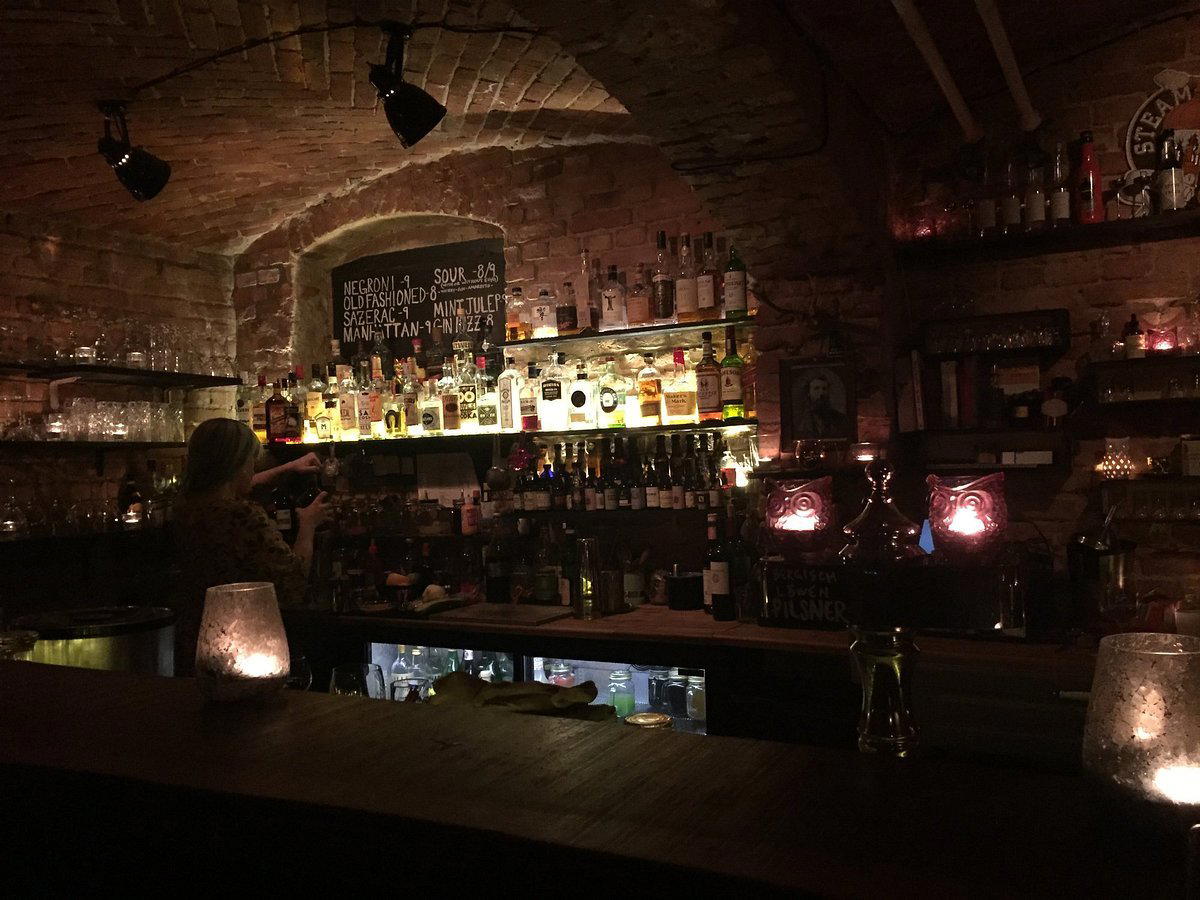
Kreuzberg's Drinking Culture and Where John Muir Fits
Skalitzer Strasse runs through the spine of Kreuzberg, a district with a long-running bar culture. The street sits near the U1 line, and the neighbourhood has a dense spread of bars from corner Spätis to cocktail rooms. In that mix, the craft-forward tier has matured considerably: the early 2010s wave of speakeasy-inflected openings has given way to something quieter and more considered, where the programme at the bar matters more than the door policy outside it. John Muir, at Skalitzer Str. 51, sits at that end of the Kreuzberg spectrum.
Berlin's cocktail scene broadly followed a pattern seen in comparable European cities, with early importations from New York and London followed by consolidation. Buck & Breck, operating as a reservation-only single room in Mitte, represents one extreme of that evolution. Lebensstern and Stagger Lee represent different registers of the same broader shift toward programmes with clear identity. John Muir sits in this peer group by geography and by the character of its offer.
The Bartender's Role in a Street-Level Bar
For a bar at this address in Kreuzberg, the focus is what happens across the counter. Berlin's more serious bar operators have consistently made the case that bartending at this level is closer to a discipline than a service job: the sourcing of base spirits, the construction of a drinks list that has internal logic, the decisions around dilution and temperature and vessel. These choices shape what ends up in the glass.
The craft bartending tradition that bar draws from has roots in German bar culture. Le Lion Bar de Paris in Hamburg built its reputation partly on rigorous classical training applied to a concise menu. Goldene Bar in Munich demonstrates how a bar anchored in a cultural institution can sustain a serious drinks programme without the usual trappings of the cocktail bar format. Both represent the idea that the person behind the counter sets the intellectual frame for everything that follows. That principle applies at Kreuzberg's street level as much as it does in those higher-profile contexts.
At bars positioned in dense urban neighbourhoods like this one, the bartender's relationship with regulars tends to shape the menu over time. What gets ordered, what gets questioned, what gets replaced: the programme at a neighbourhood-scale bar is never static. This is one of the structural differences between a high-volume destination bar and a place that earns its audience block by block.
What the Kreuzberg Location Implies for the Visitor
Skalitzer Strasse 51 is accessible from Görlitzer Bahnhof U-Bahn station (U1), which puts it within reasonable reach of Friedrichshain to the east and Neukölln to the south. The surrounding blocks include a mix of long-standing neighbourhood bars and newer openings, which means the competition for an evening's attention is real. A bar that draws a return audience in this environment is doing something right at the product level, because the alternatives are close and plentiful.
Kreuzberg after dark is not a monoculture. The strip running along the refined track line moves between formats, price points, and levels of seriousness within a few hundred metres. Visitors who approach Skalitzer Strasse expecting uniformity will find instead a set of distinct propositions operating in proximity. The bar is one node in that network, positioned at a street number that places it in the thicker part of the bar corridor.
For comparison across the German bar scene: The Parlour in Frankfurt on the Main and Bar Trattoria Celentano in Cologne both demonstrate how city-specific bar cultures develop their own registers, distinct from the Berlin model. Uerige in Dusseldorf and Kieler Brauerei am Alten Markt in Kiel show the persistence of brewing culture as the dominant frame in other German cities. Berlin, by contrast, has developed a cocktail-led bar culture that is especially internationally referenced in the country, and Kreuzberg has been central to that development.
Positioning Against the Berlin comparable set
Velvet and the bars clustered in Mitte and Prenzlauer Berg tend to attract a more transient, visitor-heavy audience. Kreuzberg bars, by contrast, often develop a local core first and grow outward from there. This distinction matters for the type of programme a bar can sustain: a locally anchored audience gives the bartender more room to experiment, to rotate offerings, and to push into less familiar territory without losing the room.
Internationally, bars operating in this format, neighbourhood-scale, craft-oriented, with the bartender's sensibility as the primary organising principle, have found a useful comparison in places like Bar Leather Apron in Honolulu, which built its reputation on technical precision and a deliberate rejection of high-concept theatrics. The parallels are structural rather than stylistic: both represent a bet that the quality of the drink and the knowledge of the person making it are sufficient to anchor a loyal audience.
Planning a Visit
The bar is located at Skalitzer Str. 51 in the 10997 postal district of Berlin, within walking distance of Görlitzer Bahnhof. Kreuzberg bars in this part of the district typically operate from evening into the late hours, consistent with the neighbourhood's pattern of late-starting, extended-run evenings. The bar sits in a walkable cluster, which makes it viable as part of a broader Kreuzberg evening rather than a standalone destination trip. For a fuller picture of Berlin's drinking and dining options, the EP Club Berlin guide maps the city's scene across neighbourhoods and formats.
The Short List
Comparable venues nearby, for context on price, style, and recognition.
| Venue | Cuisine | Price | Notes |
|---|---|---|---|
| John MuirThis venue — the venue you are viewing | Not listed | $$ | Not listed |
| Renate | Friedrichshain, lounge | $$ | Not listed |
| Mein Haus am See | Mitte, lounge | $$ | Not listed |
| Liesl Weinwirtschaft | Not listed | $$ | Neukolln, wine_bar |
| 8000 Vintages | Not listed | $$ | Kreuzberg, wine_bar |
| Kurpfalz Weinstuben | Not listed | $$ | Charlottenburg, wine_bar |
Continue exploring
More in Berlin
Bars in Berlin
Browse all →
Restaurants in Berlin
Browse all →
Hotels in Berlin
Browse all →
Wineries in Berlin
Browse all →
At a Glance
- Trendy
- Cozy
- Intimate
- Whimsical
- Casual Hangout
- After Work
- Group Outing
- Standalone
- Design Destination
- Seated Bar
- Lounge Seating
- Craft Cocktails
- Classic Cocktails
- Craft Beer
Cozy basement setting lit by candles with warm, friendly atmosphere and American West influences; comfortable for cool evenings.