Google: 4.1 · 1,885 reviews
Dhaba Indian Cuisine
On Lexington Avenue in the heart of Murray Hill, Dhaba Indian Cuisine occupies a stretch of Manhattan that has long functioned as the dining anchor for the neighborhood's South Asian community. The kitchen draws regulars from the surrounding blocks as reliably as it does curious visitors from across the boroughs — a measure of standing that no press release manufactures.
 Discover on Pearl
Pearl is the En Primeur Club membership app — saves, bookings, and concierge access live there. Same editors, same standards.
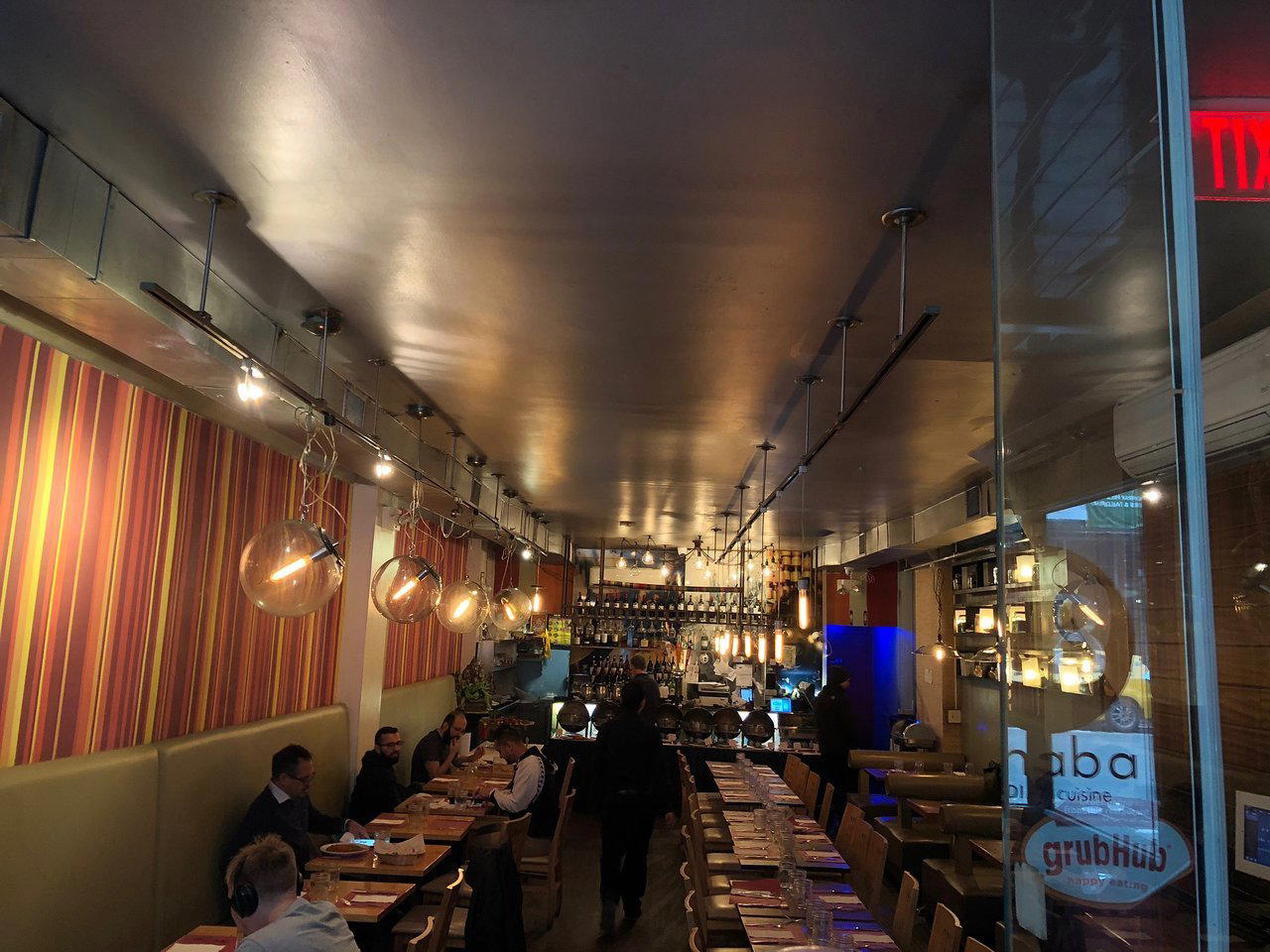
Curry Row, Lexington Avenue, and the Calculus of the Dhaba Format
Walk south along Lexington Avenue through the upper 20s and the air itself changes register. Cumin, charred ginger, and the faint sweetness of cardamom drift out from doorways before any signage comes into view. This stretch of Midtown South, anchored between 26th and 28th Streets, has functioned as New York's primary corridor for subcontinental cooking for decades, and Dhaba Indian Cuisine at 108 Lexington sits squarely within that tradition. The neighbourhood context matters here: Curry Row is not a destination for novelty-driven tasting menus but for cooking calibrated to the daily rhythms of a professional city — lunch counters, weeknight dinners, dishes that travel from subcontinent to table with minimum theatrical mediation.
The dhaba format itself is a useful frame. In northern India, dhabas are roadside establishments where the food is direct, the portions are generous, and the cooking draws on regional home traditions rather than hotel-kitchen showmanship. New York iterations of this format occupy a specific competitive tier: they sit above the quick-service South Asian lunch spots that populate Midtown's office corridors and below the high-concept modern Indian restaurants that have proliferated in neighbourhoods like the West Village and NoMad over the last decade. Dhaba Indian Cuisine holds a position in that middle band, where the measure of quality is consistency of technique and sourcing across a broad menu rather than the execution of a single prestige dish.
The Drinks and Food Dynamic on Lexington
The editorial angle that tends to get overlooked in coverage of this corridor is how the food-and-drink pairing equation works in the dhaba-style format. Indian cuisine at this tier rarely anchors itself to a wine programme in the Eurocentric sense. The structural logic is different: dishes built around high-acid tamarind, complex spice layering, and fat-rich dairy call for drinks that either match intensity or provide stark contrast. Lassi, masala chai, and mango-based beverages are not afterthoughts in this format — they are the deliberate counterpoint to dishes like dal makhani or rogan josh, whose slow-cooked depth needs something cooling and slightly sweet to reset the palate between bites.
For guests who prefer alcoholic options, the practical comparison with New York's more cocktail-forward environments is instructive. Bars like Superbueno or Amor y Amargo have built drink programmes explicitly designed around food-pairing logic, with bitter, herbal, or citrus-forward profiles that cut through rich cooking. The same principle applies, transposed into a South Asian register, at a dhaba-style restaurant: a cold lager or a simply mixed mango cocktail functions as palate-clearing punctuation rather than a statement in its own right. The food is the primary architecture; the drink is structural support.
This is a meaningful difference from the experience at cocktail-centric venues like Angel's Share or Attaboy NYC, where the drink programme carries narrative weight and the food (where it exists) plays a secondary role. At Dhaba Indian Cuisine, that hierarchy inverts: the kitchen sets the agenda, and the beverage selection is most usefully read as a complement rather than a co-lead. Guests who approach the meal with that frame tend to eat more deliberately and order more effectively than those who import assumptions from a cocktail-bar context.
Where Dhaba Indian Cuisine Sits in the New York Indian Dining Tier
New York's Indian restaurant market has fragmented considerably over the past fifteen years. At the upper tier, restaurants like Dhamaka and Semma have drawn critical attention by focusing on regional specificity , Rajasthani or Chettinad cooking presented with a level of sourcing rigour that earns mainstream press coverage. At the lower tier, a high volume of quick-service operations serves the lunch trade efficiently but without much culinary ambition. The middle tier, where dhaba-style operations like Dhaba Indian Cuisine sit, is arguably where the most consistent everyday cooking happens, even if it receives proportionally less editorial attention.
For context across American cities with comparable South Asian dining corridors, the structural parallels are worth noting. Chicago's Devon Avenue supports a similar middle-tier ecosystem, as does the Jackson Heights corridor in Queens. The Lexington Avenue cluster is distinctive primarily in its density and its proximity to a Midtown workforce that demands high lunch-volume throughput alongside the capacity to handle a slower dinner service. Dhaba Indian Cuisine, at 108 Lexington, benefits from both demand streams. For readers building a broader picture of how serious independent food programmes operate across American cities, the EP Club coverage of venues like Kumiko in Chicago and ABV in San Francisco offers useful comparative reference points for how food-driven establishments calibrate programming to their neighbourhoods.
Planning Your Visit: Practical Logistics
The Lexington Avenue corridor is accessible via the 6 train at 28th Street, placing the restaurant within a short walk of both the hotel cluster around Park Avenue South and the Flatiron and Gramercy residential neighbourhoods. The area operates with a broad service window across lunch and dinner, and the dhaba format generally does not require advance reservations for most visits, though weekend evenings on this strip can compress seating availability. Booking ahead for groups of four or more is advisable.
| Venue | Cuisine / Format | Booking Required | Price Tier | Neighbourhood |
|---|---|---|---|---|
| Dhaba Indian Cuisine | North Indian / Dhaba-style | Walk-in friendly; advance for groups | Mid-range | Curry Row, Lexington Ave |
| The Long Island Bar | American bar / food | Walk-in | Mid-range | Cobble Hill, Brooklyn |
| Dirty French | French bistro | Recommended | Upper-mid | Lower East Side |
| Superbueno | Latin cocktail / small plates | Recommended | Mid-range | Hell's Kitchen |
For a complete orientation to New York's dining and drinking scene across neighbourhoods, see our full New York City restaurants guide. Readers planning wider US itineraries may also find value in the EP Club coverage of Jewel of the South in New Orleans, Julep in Houston, Allegory in Washington, D.C., and Bar Leather Apron in Honolulu, each of which illustrates how food-and-drink pairings are being reframed in their respective cities. For an international reference point on how a serious bar food programme integrates with a cocktail list, The Parlour in Frankfurt on the Main is an instructive case.
Recognition Snapshot
A compact peer snapshot based on similar venues we track.
| Venue | Awards |
|---|---|
| Dhaba Indian CuisineThis venue — the venue you are viewing | |
| The Long Island Bar | World's 50 Best |
| Dirty French | |
| Superbueno | World's 50 Best |
| Amor y Amargo | World's 50 Best |
| Angel's Share | World's 50 Best |
Continue exploring
More in New York City
Bars in New York City
Browse all →
Restaurants in New York City
Browse all →
Hotels in New York City
Browse all →


At a Glance
- Lively
- Cozy
- Casual Hangout
- Late Night
- Group Outing
- Standalone
- Booth Seating
- Lounge Seating
- Classic Cocktails
Dim lighting with low background music creating a cozy atmosphere suitable for conversations.