Café Panache
On a stretch of Ten Katestraat where the Oud-West market crowd spills onto the pavement, Café Panache occupies a neighbourhood position that Amsterdam's café culture has long refined: part social anchor, part serious drinking destination. The address sits within a cluster of independent operators that reward locals who know where to look, and visitors willing to leave the canal-belt tourist corridor behind.
Pearl is the En Primeur Club membership app — saves, bookings, and concierge access live there. Same editors, same standards.
- Address
- Ten Katestraat 117, 1053 CC Amsterdam, Netherlands
- Phone
- +31 20 221 1736
- Website
- cafepanache.nl
- Directions
- Get directions
 Saves & bookings on Pearl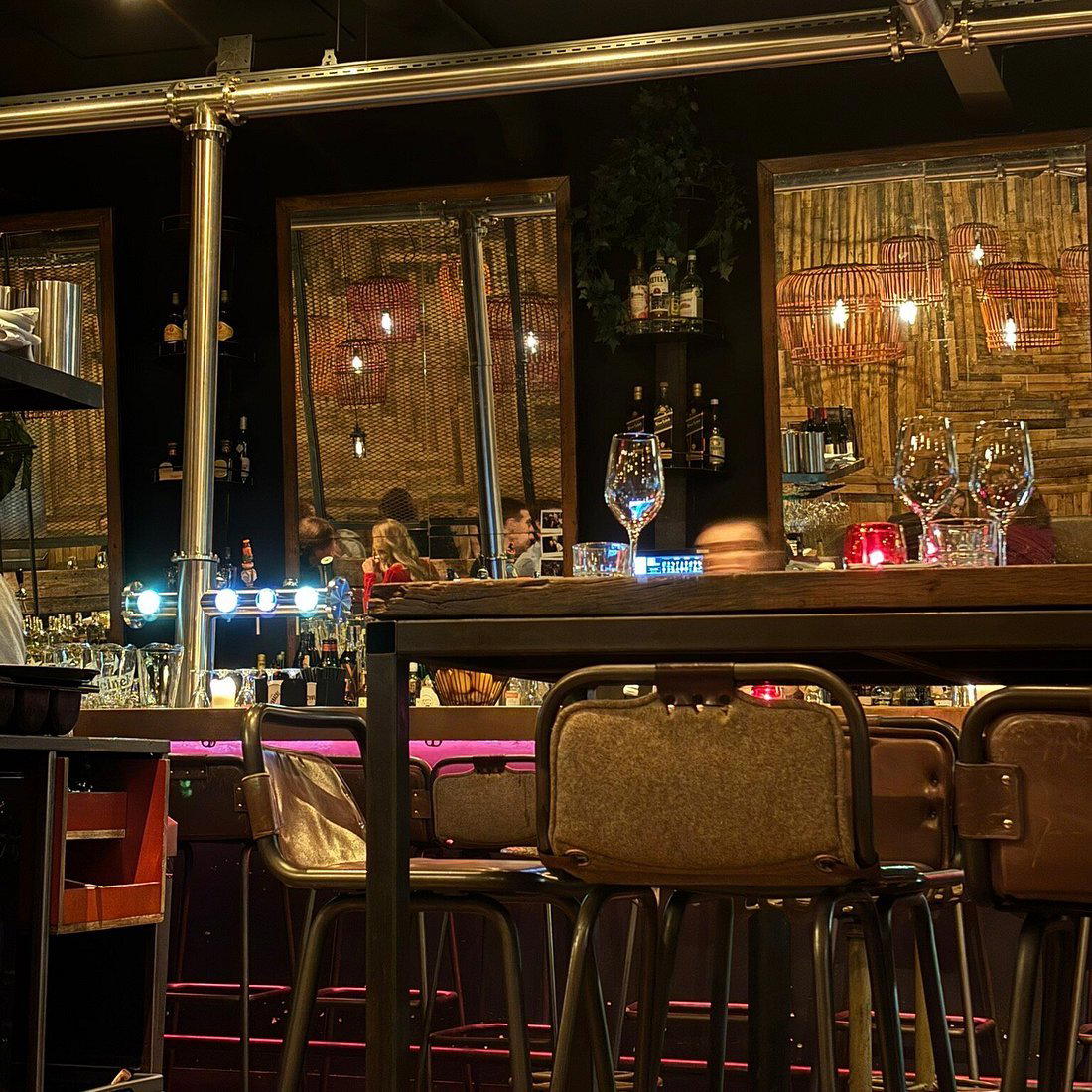
Ten Katestraat and the Oud-West Standard
Amsterdam's café culture is not uniform. The canal-belt terraces operate on tourist economics; the neighbourhood cafés of De Pijp and Oud-West operate on a different logic entirely, where repeat custom, local loyalty, and a specific sense of place define the offer. Ten Katestraat sits inside that second tradition. The street runs parallel to the Ten Katemarkt, one of the city's busiest street markets, and the foot traffic it generates is local rather than visitor-led. Businesses on this stretch do not survive on passing trade from canal boat tours. Café Panache, at number 117, occupies a position shaped by that context.
The physical approach along Ten Katestraat gives you the neighbourhood before it gives you the venue. Market stalls, specialist grocers, and independent operators line the route. By the time you reach the café, you have already read the character of the area: working, lived-in, unperformed. That is the relevant frame for understanding what the café does and who it serves.
Where Technique Meets the Local Market
Amsterdam's most considered neighbourhood venues have increasingly operated at an intersection that the city's food press has begun to track more deliberately: imported technical discipline applied to produce drawn from the immediate local supply. The Ten Katemarkt is not incidental to this. Markets at this scale, running six days a week with a mixed trader base of specialist importers and Dutch-grown producers, create supply conditions that reward kitchens and bars able to move quickly with what is available seasonally. The most capable operators in the Oud-West neighbourhood use that proximity as a structural advantage, building their offer around what the market makes possible in a given week rather than against a fixed menu logic.
This pattern, visible across the Netherlands in venues as different as Boode Foodbar in Bathmen and Brasserie Lalou in Delft, reflects a broader Dutch hospitality shift: technique and training that would not look out of place in a European capital's fine-dining circuit, applied inside a neighbourhood format with lower price points and less ceremony. The visitor who arrives at Café Panache from Amsterdam's more formal dining circuit will notice the register change. The ambition does not necessarily diminish.
Amsterdam's Café and Bar Tier in Context
To place Café Panache accurately, it helps to map the Amsterdam bar and café hierarchy briefly. At the upper end of the technical drinking program, venues such as Door 74 and Tales & Spirits have built international recognition on cocktail programs with specific editorial identity: Door 74 on a pre-Prohibition classics approach maintained across decades of operation, Tales & Spirits on ingredient-forward technique that has drawn coverage in specialist bar media. These are the reference points for what Amsterdam's serious drinking culture can deliver at its most focused.
Neighbourhood cafés operate in a different register. The expectation is not a 40-page spirits list or a clarified-fat-washed cocktail menu. The expectation is a room that functions well, a bar that knows its local, and an offer that earns repeat visits from people who live within ten minutes of the address. Amsterdam Roest has built a version of that neighbourhood loyalty on a larger, more event-led format. Ten Katestraat venues, including Café Panache, operate at smaller scale and closer to the daily rhythm of a residential street.
Across the Netherlands, the neighbourhood café model has produced some of the country's most durable hospitality addresses. Florin in Utrecht and Bowie in The Hague represent versions of the same format in different cities: a defined sense of place, a local-first orientation, and a quality threshold that sits above the generic café offer without demanding fine-dining prices.
Getting to Ten Katestraat
Oud-West sits west of the Jordaan and is reachable by tram from Centraal Station along routes that stop at Kinkerstraat and the surrounding streets. The walk from Leidseplein takes under fifteen minutes. The neighbourhood is dense enough to combine a visit to Café Panache with other Oud-West operators, and the Ten Katemarkt itself is worth the detour on market days. For visitors building a broader Amsterdam day, Bakers & Roasters offers another Oud-West reference point for the earlier part of the day, before the evening café circuit begins.
Those extending beyond Amsterdam to the wider Dutch café and bar scene will find useful comparison points in Espressobar Kopi Soesoe in Rotterdam, which applies a specific Indonesian-Dutch coffee heritage to a neighbourhood format, and Café Barolo in Eindhoven, where the Italian wine reference frames a different version of the neighbourhood anchor model. Each of these addresses illustrates how the Dutch café format absorbs global influence without losing its local orientation. Our full Amsterdam restaurants guide maps the city's wider offer for visitors planning across multiple days and neighbourhoods.
For international context, the neighbourhood café model has parallels well outside Europe. Bar Leather Apron in Honolulu operates on a similar neighbourhood-loyalty logic in a very different climate and cultural register, which makes the comparison instructive: the format travels, even when the produce and technique are rooted in local conditions.
What to Know Before You Go
Booking information, current hours, and the full drink and food offer for Café Panache are best confirmed directly before a visit, as neighbourhood venues at this scale can adjust their programming seasonally without wide online notice. The Ten Katemarkt area sees heavier foot traffic on market days, which affects availability at surrounding businesses. Arriving outside peak market hours, particularly on weekday afternoons, tends to give you a quieter room and more time with the bar. For visitors arriving from the canal-belt hotel corridor, the fifteen-minute walk west is a reliable way to step outside the standard tourist circuit and into a part of Amsterdam that operates on its own terms.
City Peers
| Venue | Cuisine |
|---|---|
| Café PanacheThis venue — the venue you are viewing | This venue |
Continue exploring
More in Amsterdam
Bars in Amsterdam
Browse all →
Restaurants in Amsterdam
Browse all →
Hotels in Amsterdam
Browse all →
Wineries in Amsterdam
Browse all →
At a Glance
- Cozy
- Trendy
- Intimate
- Lively
- Casual Hangout
- Group Outing
- After Work
- Date Night
- Standalone
- Design Destination
- Seated Bar
- Communal Tables
- Lounge Seating
- Booth Seating
- Craft Cocktails
- Classic Cocktails
- Conventional Wine
- Craft Beer
Warm lighting with dark interior, iron and wood communal tables lit with candles, corrugated walls softened by greenery, glass and aluminum fixtures creating an industrial-meets-cozy New York warehouse aesthetic.
Know Before You Go
- Getting there
- Ten Katestraat 117, 1053 CC Amsterdam, Netherlands