Bright
Bright sits on Westgate Street in Hackney, occupying a stretch of East London that has become one of the city's more serious addresses for natural wine and produce-led cooking. The room draws on the neighbourhood's warehouse-conversion register, and the kitchen operates within the wider movement of chef-driven, pared-back dining that defines the E8 postcode at its best.
- Address
- 1 Westgate St, London E8 3RL, United Kingdom
- Phone
- +44 20 3095 9407
- Website
- brightrestaurant.co.uk
- Directions
- Get directions
Hackney's Dining Register, and Where Bright Fits Within It
Westgate Street in Hackney is not a destination in the way that, say, Soho or Mayfair announces itself. There are no marquee frontages, no doormen, no queues stretching around the block for brunch reservations. What the street offers instead is the particular atmosphere of East London's more serious dining tier: a converted-industrial grain to the architecture, a neighbourhood crowd that is local without being parochial, and a general assumption that the cooking will make an argument rather than simply satisfy. Bright, at number one, was part of that register.
East London's dining identity has shifted considerably over the past decade. The area that once attracted attention for being affordable and experimental has developed a second, more settled layer: restaurants that are neither cheap nor provisional, but that carry the informality of the neighbourhood as a deliberate aesthetic choice. The natural wine list is long and annotated. The menu changes with supply rather than season. The room is spare but considered. Bright belonged to this cohort, alongside the handful of other addresses in E8 and E9 that made the argument for Hackney as a destination in its own right rather than a cheaper alternative to somewhere else.
The Physical Environment and What It Signals
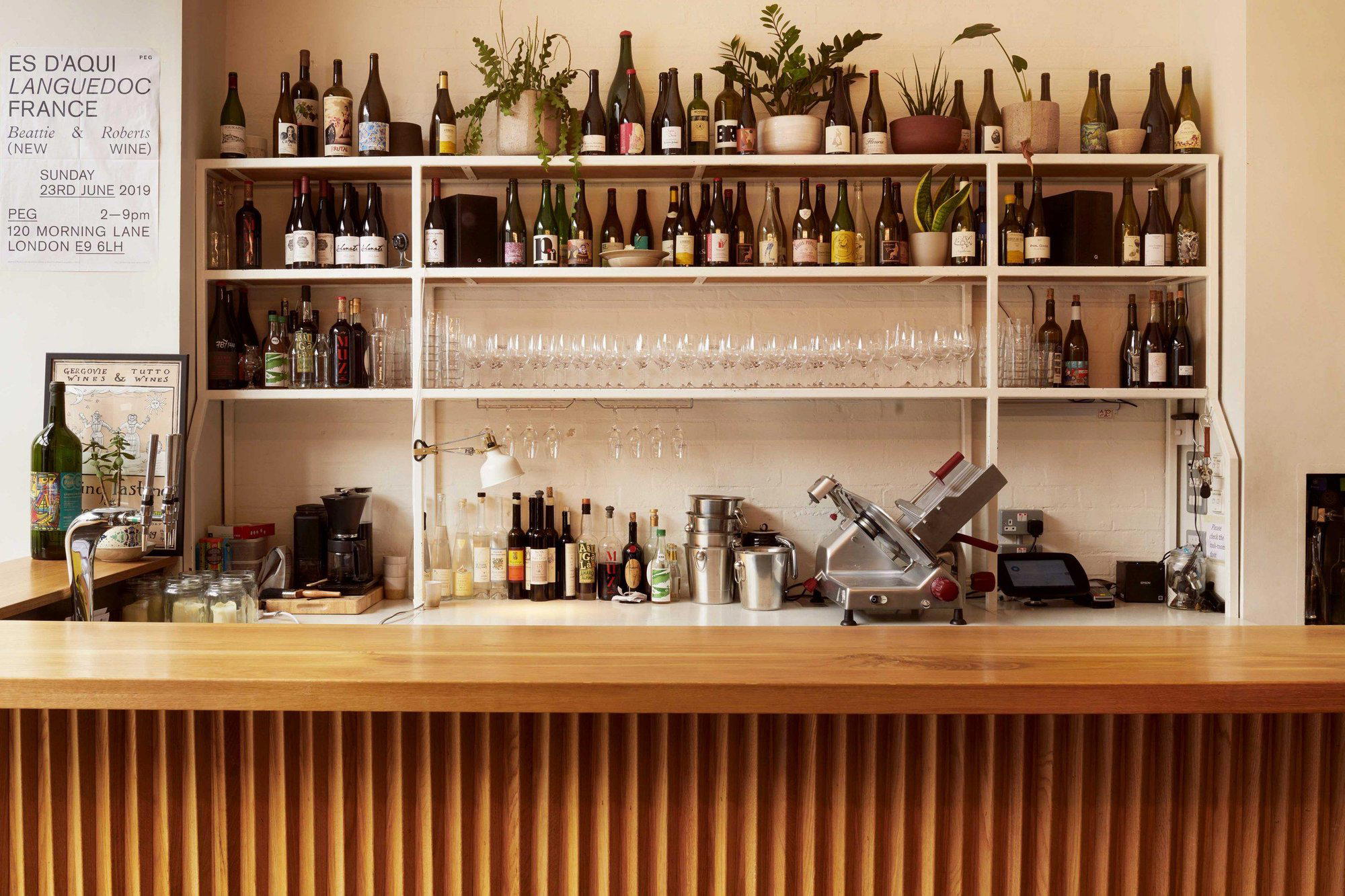
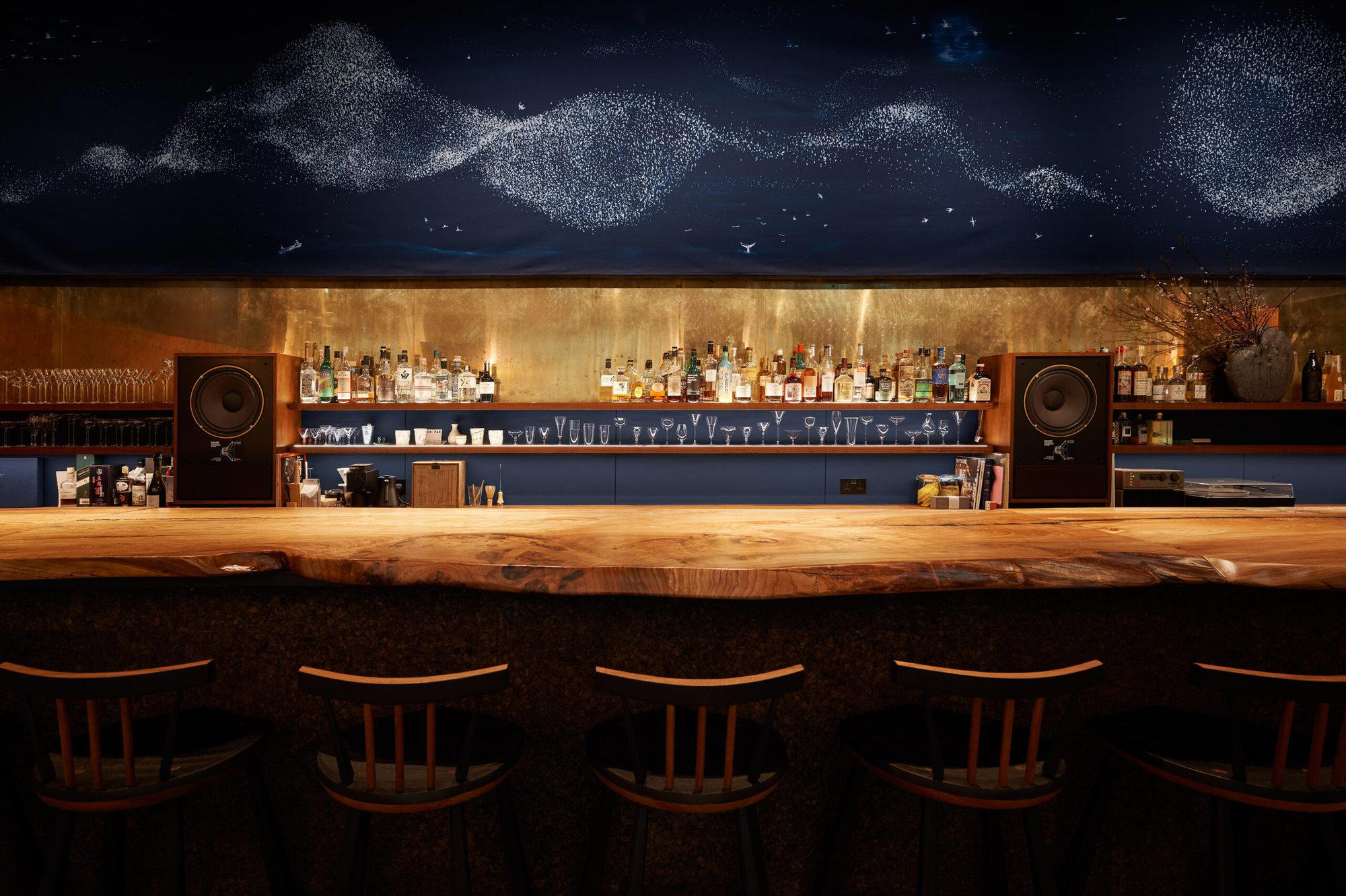
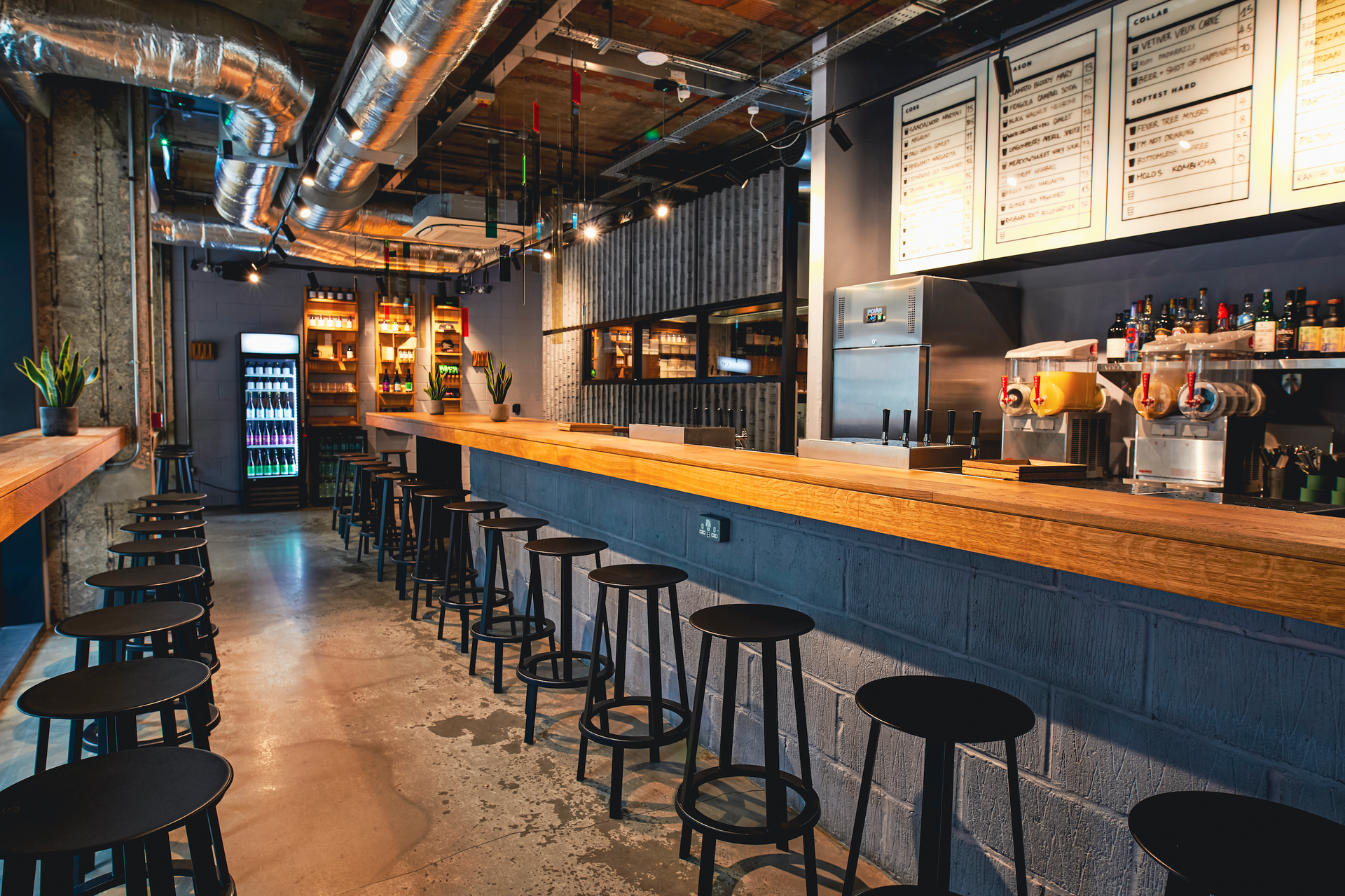
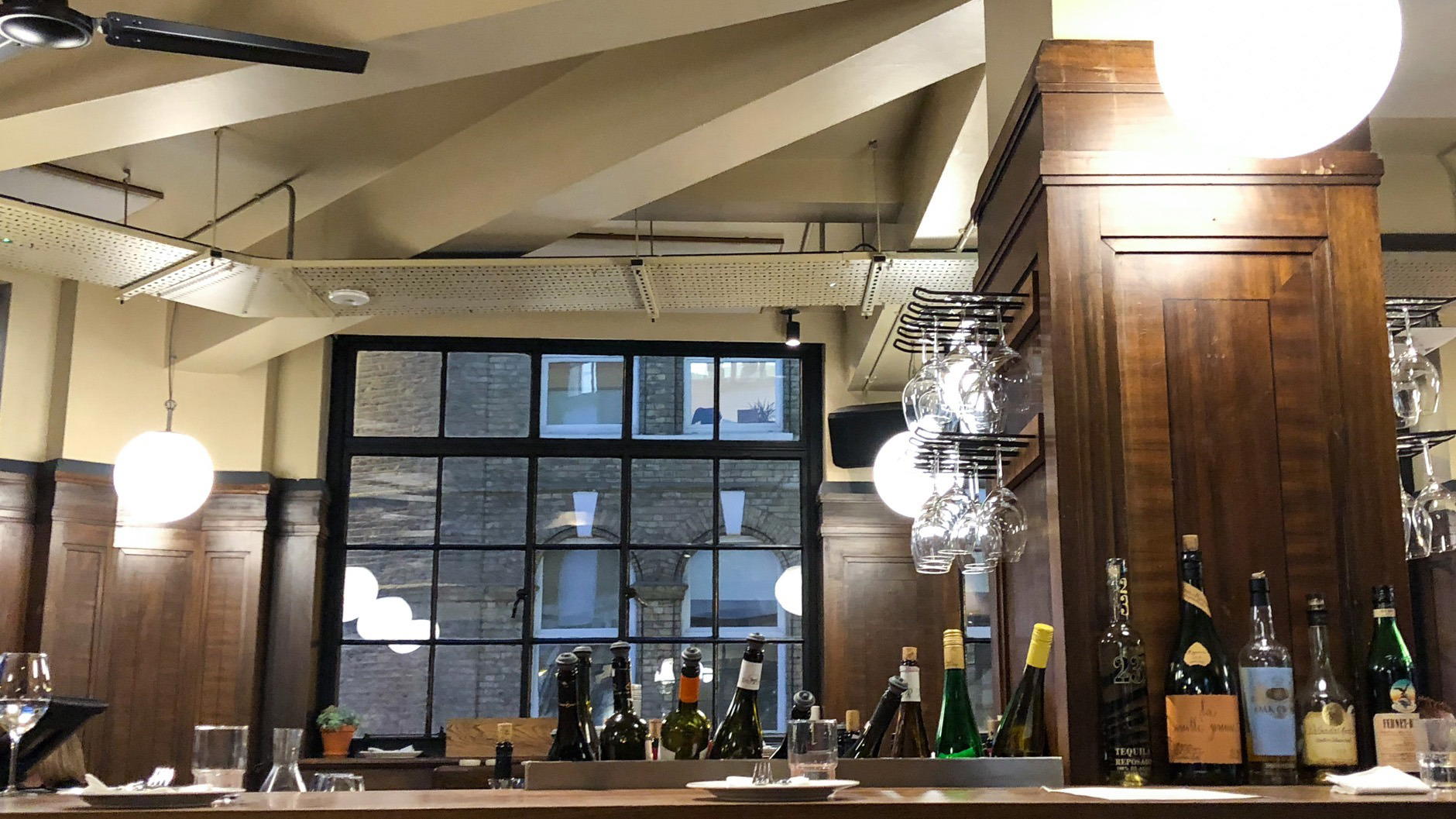
Approaching along Westgate Street, the venue reads as a corner site with the scrubbed-back look that warehouse-conversion Hackney has made its visual signature. Inside, the room operated in the register of stripped surfaces, ambient light, and a counter arrangement that oriented the experience around the kitchen rather than the view. This is not accidental. The spatial grammar of this type of room is a statement about priority: the food and the wine are the theatre, and the décor's job is not to compete with them.
That physical restraint places Bright in a specific competitive set. London's dining scene has developed two broad formats for serious mid-to-upper dining: the destination room with a design budget to match, and the stripped-back space where the cooking is expected to carry the room. The latter cohort, which includes addresses like Amaro and a wider cluster of neighbourhood-led London venues, operates on the implicit premise that a considered wine list and a kitchen with genuine point of view are sufficient. Bright made that same bet. The bar is permanently closed.
Natural Wine and the East London Model
The natural wine movement arrived in London from Paris and New York with enough momentum to change what the city's more progressive restaurants considered a credible list. In Hackney particularly, the model took hold: small producers, minimal intervention, lists that reward engagement rather than brand recognition. The format pairs logically with produce-led cooking because both operate from a similar premise, that the ingredient, handled with care and minimum interference, is more interesting than the technique applied to it.
Bright operated within this framework. The wine list functions as an argument about sourcing and producer relationships rather than as a conventional by-the-glass menu. The list rewarded genuine curiosity rather than default preferences, since the room's identity was partly built around changing what you might expect to drink. Reservations were advisable, particularly mid-week evenings, when the neighbourhood crowd that treated this as a regular rather than an occasion filled the room early.
Placing Bright in the Broader London Bar and Dining Context
London's bar and restaurant circuits overlap in ways that other cities' do not always manage. The same crowd that visits 69 Colebrooke Row in Islington for precise, technique-forward cocktails, or A Bar with Shapes for a Name for its commitment to a specific aesthetic, will find the underlying seriousness of purpose at Bright familiar, even if the format is quite different. These are venues that sit within a broader cultural moment in London hospitality: less interested in spectacle, more interested in making a sustained argument about what they serve and why.
That same thread ran across the UK's serious drinking and dining addresses. Bramble in Edinburgh, Schofield's in Manchester, and the Merchant Hotel in Belfast each operate with a comparable seriousness about craft and point of view, even though their formats and cities differ. The common denominator is a willingness to define what they are rather than attempt to be everything. Bright, in Hackney, made the same choice.
Internationally, the model of stripped-back, wine-forward dining with a kitchen that treats the menu as an ongoing conversation with suppliers rather than a fixed document has precedents from Copenhagen to Melbourne. In a London context, it is worth noting that the venues that have made this format work, in Hackney, in Shoreditch, in Peckham, tend to build loyal neighbourhood audiences before they attract destination diners. That sequencing matters: it means the room has a character before it acquires a reputation, which is relatively rare in a city where profile and quality do not always arrive in that order.
For those building a broader London itinerary around serious drinking and dining, Academy and Amaro represent adjacent points in the city's more considered hospitality tier, while the full London restaurants guide maps the broader field across neighbourhoods and formats. Beyond the UK, venues like Bar Leather Apron in Honolulu and L'Atelier Du Vin in Brighton indicate that the same commitment to craft and program-depth is producing interesting results well outside the traditional capitals. Horseshoe Bar in Glasgow and Mojo Leeds round out a picture of the UK's drinking culture that extends well beyond London's own circuits.
Planning a Visit
Westgate Street in Hackney E8 is accessible from London Fields Overground station in a short walk, placing it within easy reach of the broader East London hospitality circuit. The venue operated in the format typical of this tier: smart casual dress, recommended reservations, a room that worked for a long dinner as well as a shorter one. Given the neighbourhood crowd and the reputation the address has built, booking ahead for weekend and mid-week dinner service is the sensible approach. The natural wine list, the kitchen's supply-led menu, and the room's understated character are leading engaged with time rather than against a clock.
Cuisine Context
Comparable venues nearby, for context on price, style, and recognition.
| Venue | Cuisine | Price | Notes |
|---|---|---|---|
| BrightThis venue — the venue you are viewing | wine_bar | $$ | Not listed |
| The Laughing Heart | wine_bar | $$ | Haggerston |
| Royal Oak | pub | $$ | Bethnal Green |
| Perilla | cocktail_bar | $$ | Mildmay |
| Coin Laundry | cocktail_bar | $$ | Clerkenwell |
| 155 Bar & Kitchen | cocktail_bar | $$ | Clerkenwell |
Continue exploring
More in London
Bars in London
Browse all →
Restaurants in London
Browse all →
Hotels in London
Browse all →



At a Glance
- Trendy
- Intimate
- Date Night
- Casual Hangout
- Design Destination
- Seated Bar
- Natural Wine
Cozy and intimate atmosphere enhanced by carefully curated music playlists.