Barrel Proof
Barrel Proof sits on Magazine Street in New Orleans' Lower Garden District, drawing a serious whiskey crowd to one of the city's most focused spirits bars. The selection runs deep across American whiskey categories, and the no-frills setting keeps attention on what's in the glass. For those who take bourbon and rye seriously, this is a reference address in a city that takes its drinking seriously.

Pearl is the En Primeur Club membership app — saves, bookings, and concierge access live there. Same editors, same standards.
- Address
- 1201 Magazine St, New Orleans, LA 70130
- Phone
- (504) 299-1888
- Hours
- Daily 4 PM–1 AM
- Website
- barrelproofnola.com
- Directions
- Get directions
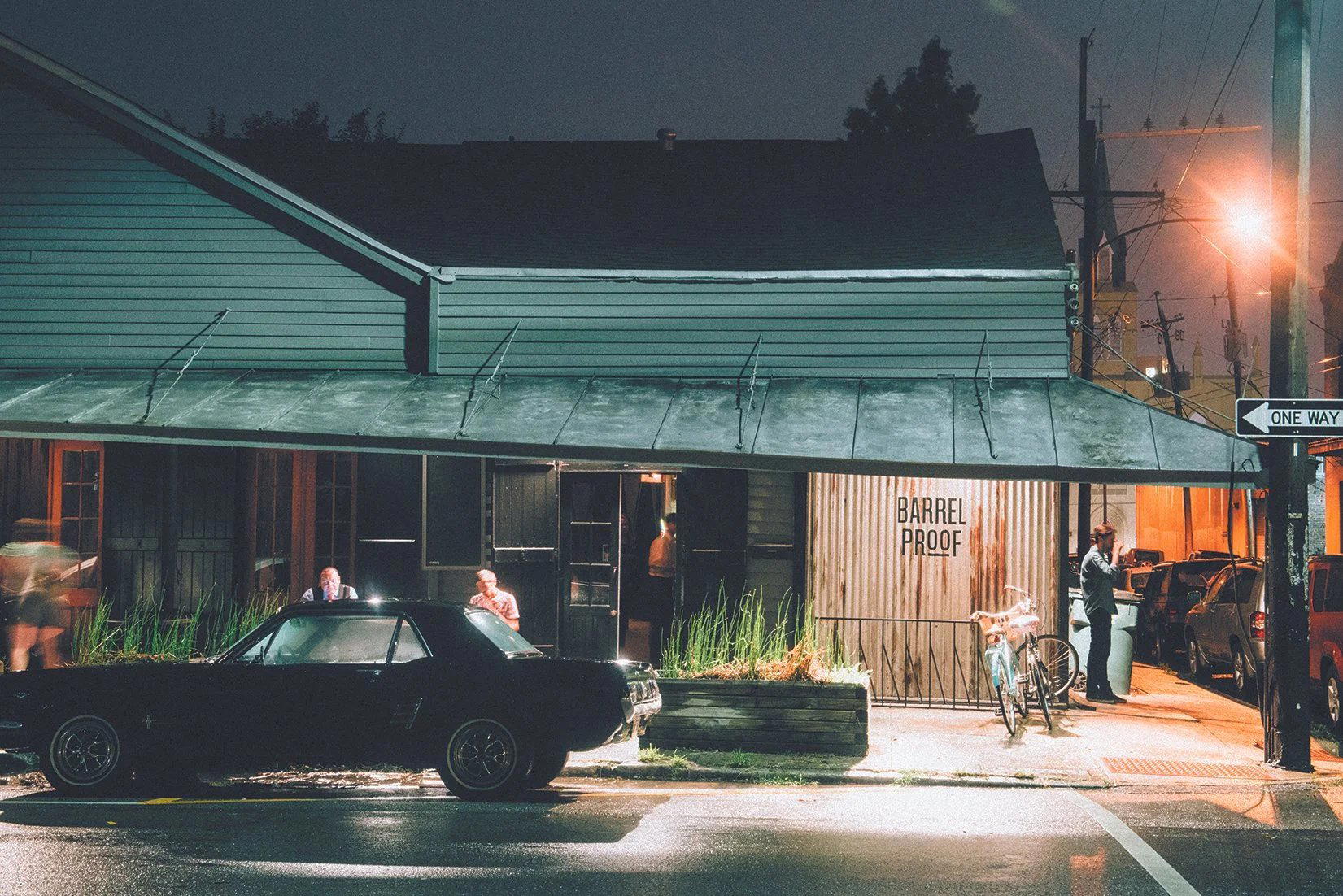
Magazine Street and the Serious Drinker's Bar
New Orleans has always had two drinking modes running in parallel: the performative pageant of the French Quarter, where the drink is secondary to the spectacle, and the quieter, more considered bar culture that the city's actual residents rely on. Magazine Street, running through the Lower Garden District, sits firmly in the second camp. The stretch around 1201 has long attracted bars with something to say beyond volume and novelty, and Barrel Proof fits that pattern precisely. Walking in, the aesthetic does the talking before any drink arrives: shelves stacked with bottles in configurations that communicate purpose rather than decoration, low lighting, and a room that rewards lingering over rushing.
In the broader context of American whiskey bar culture, Barrel Proof occupies a specific position. The country's serious whiskey bars have proliferated over the past decade as the bourbon boom expanded both the pool of available product and the audience willing to pay attention to it. What separates the reference addresses from the bottle-count performers is usually curation and the ability of the floor staff to guide guests through a selection that can overwhelm even experienced drinkers. Barrel Proof has built a reputation on the latter: the knowledge sits with the people behind the bar, and that makes the depth of the back bar functional rather than decorative.
Whiskey as the Editorial Spine
American whiskey bars split broadly into two models. The first uses rare and allocated bottles as status signals, pricing them to match and creating an atmosphere closer to a collectibles market than a bar. The second uses a wide, well-chosen selection to create genuine discovery opportunities, where a guest can move through Kentucky bourbons, Tennessee whiskeys, and American ryes in a progression that builds understanding. Barrel Proof operates in the second model, which is a more durable and ultimately more interesting approach for a serious drinker.
The selection spans categories in a way that positions Barrel Proof alongside the handful of American bars that treat whiskey the way a wine-focused restaurant treats its cellar: as a living argument about quality, region, and style. Comparable bars in other cities — Julep in Houston for its Southern spirits focus, ABV in San Francisco for its depth of spirits programming, and Kumiko in Chicago for its precision-led approach — all share the characteristic that the selection is an argument, not just an inventory. Barrel Proof belongs in that conversation.
Cocktails round out the program without displacing the spirits focus. The approach typical of bars at this tier is to build cocktails that serve the whiskey rather than obscure it: short-format drinks, clean ratios, minimal intervention. This keeps the cocktail list coherent with the bar's identity rather than pulling it in two directions. For guests arriving with a specific bottle in mind, the bar's staff orientation toward guidance means a neat pour with context will generally be a better decision than a complex cocktail.
The Team and the Floor
The editorial angle that defines Barrel Proof over time is the relationship between the bar's back-of-house knowledge and the front-of-house delivery. Whiskey bars at this level succeed or fail on whether the people serving can translate a large, technically complex selection into coherent guidance for guests who range from initiated to deeply expert. The bars that last, and Barrel Proof has lasted in a competitive city, are the ones where that translation happens naturally, without condescension or showmanship.
This team dynamic places Barrel Proof in a different category from New Orleans bars built primarily around spectacle or legacy. Jewel of the South works from a historically grounded cocktail program rooted in the city's own traditions. Beachbum Berry's Latitude 29 makes the case for tiki as a serious format. Cure helped establish the template for New Orleans' modern cocktail movement. Barrel Proof's contribution to this ecosystem is different: it is the room where the whiskey goes deep and the conversation follows. Each of these bars represents a distinct argument about what a bar should do, and the city is better for having all of them within reach. For a fuller map of what New Orleans offers across every category, the EP Club New Orleans guide covers the full range.
Internationally, the bar-as-specialist-spirits-room format has proven durable across very different drinking cultures. Bar Leather Apron in Honolulu applies a similar discipline to Japanese whisky and spirits-forward cocktails in a Pacific context. Allegory in Washington, D.C. runs a program grounded in storytelling and precision. Superbueno in New York City applies the same focus to agave spirits. The Parlour in Frankfurt demonstrates that the serious-spirits bar format translates across continents.
Planning Your Visit
Barrel Proof sits at 1201 Magazine Street in the Lower Garden District, a stretch of Magazine that runs through a residential-commercial mix quite different from the French Quarter's tourist density. The neighborhood allows for a more relaxed pace, and the bar's atmosphere reflects that. Magazine Street is accessible by the St. Charles streetcar to a connecting walk, or directly by cab or rideshare from most central New Orleans hotels. For guests combining an evening here with the broader Magazine Street corridor, the area supports an easy progression from dinner to drinks without requiring significant transit.
Booking logistics at whiskey bars of this type typically favor walk-ins over reservations, though weekend evenings at a bar with Barrel Proof's standing in the city can compress seating at the bar rail. Arriving before 8 p.m. on a Friday or Saturday is a more reliable strategy than arriving after 10 p.m. and expecting immediate space. The bar skews toward serious drinkers and repeat visitors rather than first-time tourists, which sets the ambient temperature of the room: conversation is possible, and the volume stays at a level that allows for the kind of guidance the staff can provide. For guests also wanting to cover 2 Phat Vegans or other nearby addresses in the same evening, the Lower Garden District's walkable character makes multi-stop planning direct.
Price and Positioning
Comparable venues nearby, for context on price, style, and recognition.
| Venue | Cuisine | Price | Notes |
|---|---|---|---|
| Barrel ProofThis venue — the venue you are viewing | Central City, Bar | Not listed | Not listed |
| Vaughan's Lounge | Not listed | $20–30 | Bywater, dive_bar |
| The Courtyard Brewery | Central City, Bar | Not listed | Not listed |
| Bayou Wine Garden | Not listed | $30–50 | Mid-City, wine_bar |
| Cooter Brown's Tavern | Not listed | $20–30 | Black Pearl, sports_bar |
| Old Absinthe House | Not listed | $20–30 | French Quarter, cocktail_bar |
Continue exploring
More in New Orleans
Bars in New Orleans
Browse all →
Restaurants in New Orleans
Browse all →
Details
- Rustic
- Cozy
- Classic
- After Work
- Casual Hangout
- Late Night
- Standalone
- Seated Bar
- Whiskey
- Craft Cocktails
- Craft Beer
Current opening hours
- Monday
- 4 PM–1 AM
- Tuesday
- 4 PM–1 AM
- Wednesday
- 4 PM–1 AM
- Thursday
- 4 PM–1 AM
- Friday
- 4 PM–1 AM
- Saturday
- 4 PM–1 AM
- Sunday
- 4 PM–1 AM
Hours can change for holidays and private events. Last verified .
Dark woods, wood-paneled ceiling, long wooden bar with brass detailing, creating a cozy and rustic interior.