
Viña Undurraga in Maipo Valley is a historic estate winery producing terroir-driven wines with modern precision. Signature offerings include the Terroir Hunter series, premium reserve selections, and a sparkling picnic cuvée served in the park. Celebrated since its founding in 1885 and the first Chilean exporter to the United States in 1903, Viña Undurraga pairs vineyard provenance with cellar finesse. Tastings move from mineral-driven Cabernet and classic Carmenère to ageworthy reserve bottlings, delivering bright red-fruit, graphite, toasted oak and saline finishes in a gracious garden setting.
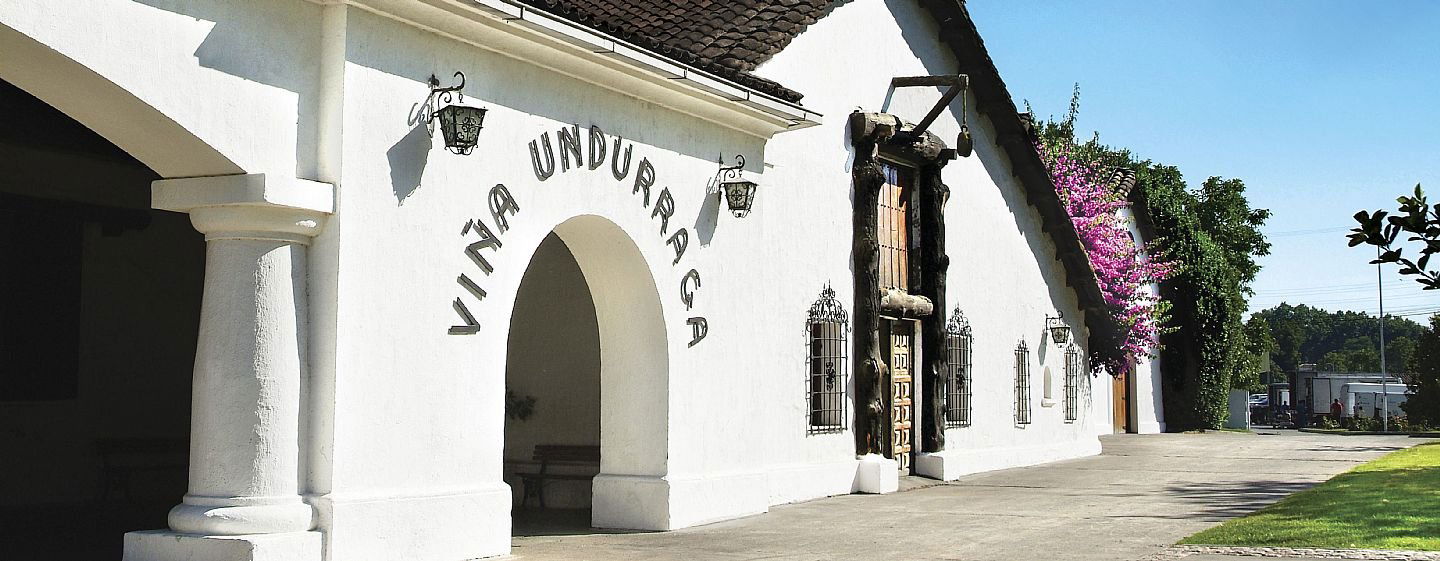
Where the Maipo Valley Floor Speaks Through the Glass
The drive out to Talagante from Santiago takes you through a slow transition: the city's western sprawl gives way to agricultural flatland, and the Andes recede in the rearview mirror while the coastal range edges closer on the horizon. By the time you reach the gates of Viña Undurraga on Camino a Melipilla, the temperature has softened and the air carries the dry, mineral character of the Maipo Valley's lower reaches. This is not the refined, rocky Maipo Alto terrain that supplies Cabernet Sauvignon to Chile's most discussed red wine labels. This is the valley floor, an older and less fashionable address in international wine conversation, but one with its own particular logic shaped by alluvial soils, moderate coastal influence, and a long growing season that builds concentration without aggressive heat stress.
Undurraga is among the older names in Chilean wine production, which places it in a specific historical tier: the houses that predate modern export positioning and built their reputations across domestic markets first. That lineage matters not as biography but as context for what you encounter here. The vineyards, the processing infrastructure, the architectural footprint of the estate itself — these are the accumulated decisions of multiple generations, and they give the property a weight and spatial scale that newer, design-led boutique wineries in Chile tend not to possess. Visitors interested in how Chilean viticulture evolved from large-estate colonial models toward the export-oriented, appellation-aware industry it is today will find more physical evidence of that arc here than at most addresses in the region.
Maipo Terroir and What the Valley Floor Produces
Chile's wine geography rewards scrutiny at the sub-valley level, and Talagante's position within the Maipo Valley illustrates why. The Maipo as a whole is the country's most celebrated red wine zone, with Cabernet Sauvignon as its anchor variety. But elevation and distance from the Andes divide the valley into meaningfully different growing environments. The upper sub-zones near the Andes benefit from rocky, well-drained soils and cool nights; the valley floor around Talagante sits on deeper alluvial deposits, with the Maipo River's historic sediment layering providing a different mineral signature and water retention profile.
These conditions favor varieties and styles that can take advantage of longer hang time and the moderating effect of Pacific air channeled through the coastal range. The result is a terroir that tends toward aromatic generosity rather than structural austerity — a contrast to the more tightly wound, age-worthy profile associated with Maipo Alto Cabernet. For producers working from this territory, the challenge is in harnessing that expressiveness without sacrificing precision, and the choice of varieties, harvest timing, and winemaking intervention all become visible in the glass as a record of those decisions. Understanding what the Talagante sub-zone can and cannot do helps frame what Viña Undurraga's wines are attempting, independent of any single vintage or label tier.
For broader context on how different Chilean regions approach terroir expression, the comparison is instructive: Viña De Martino in Isla de Maipo operates from adjacent Maipo territory with its own organic and minimal-intervention positioning, while Viña Casa Silva in San Fernando works the Colchagua Valley floor with a similar scale of production but a different varietal emphasis. Both offer useful reference points for readers calibrating expectations by region and style. Further north, Viña Falernia in Vicuña demonstrates how altitude and the Elqui Valley's extreme aridity produce an entirely different register of Chilean terroir expression.
A 2025 Pearl 3 Star Prestige Recognition
In 2025, Viña Undurraga received a Pearl 3 Star Prestige designation, a trust signal that places it within the tier of Chilean wine producers warranting deliberate attention from travelers and collectors. Within Chile's competitive winery landscape, where a significant number of estates pursue international recognition with varying consistency, prestige-tier ratings function as a filter: they separate addresses where the visit or the wine justifies specific travel from those better suited to opportunistic tastings on a broader itinerary.
For Chilean wine specifically, the Pearl 3 Star Prestige tier is meaningful because Chile's international reputation has historically clustered around a handful of names, leaving quality producers in less-marketed sub-regions underrepresented in the global conversation. Recognition of this caliber helps rebalance that picture, affirming that the Talagante stretch of the Maipo Valley has estates operating at a level consistent with the leading addresses in our full Talagante wineries guide. For comparison, other Chilean wineries holding high recognition include Viña Seña in Panquehue, which operates in the higher-altitude Aconcagua Valley and has built a different kind of international profile based on its Bordeaux-blend positioning.
Planning a Visit: What to Expect in Talagante
Talagante sits roughly 35 kilometers southwest of Santiago by road, accessible via the Route 78 corridor that also serves the broader wine tourism route through Isla de Maipo. The journey takes under an hour from the city center under normal traffic conditions, making this a viable day trip without requiring an overnight in the area, though the pace of the estate and the depth of any tasting program may argue for a slower schedule. Visitors arriving by private car will find the estate address on Camino a Melipilla clearly signposted from the main approach road.
Given that specific hours, booking methods, and current tasting formats are not confirmed in EP Club's verified data at time of publication, reaching out to the estate directly via their official website is the advisable first step before planning any visit. Winery visit structures in Chile vary considerably: some operate open-door daily programs while others require advance reservation for guided experiences, and the format affects how much time to budget and whether to arrive with a group or as individuals. Checking current availability before committing to a specific date is standard practice for Chilean wine estates at this recognition tier.
For visitors building a broader Maipo itinerary, Viña MontGras in Palmilla and Viña Santa Rita in Buin represent different points on the Maipo wine tourism circuit and are worth combining depending on which sub-zones you want to cover. Santiago-based visitors can also round out a trip with reference to our full Talagante restaurants guide, our full Talagante hotels guide, and our full Talagante experiences guide for context on what surrounds the wine tourism offer in the area.
For those interested in comparing Chilean wine production against international peer contexts, El Gobernador (Miguel Torres Chile) in Curicó offers a reference point where Spanish investment and methodology meet Chilean terroir, while Pisco Alto del Carmen Distillery in Huasco broadens the Chilean spirits picture for travelers interested in the full range of the country's viticulture-linked production. International winery comparisons can extend to Abadía Retuerta in Sardón de Duero and Aberlour in Aberlour, both of which operate within prestige tiers in their respective categories and geographies. For a complete picture of Talagante's food and drink offer, our full Talagante bars guide covers the area's broader beverage scene.
Frequently Asked Questions
- How would you describe the overall feel of Viña Undurraga?
- Viña Undurraga sits in Talagante, on the Maipo Valley floor southwest of Santiago, and carries the spatial and architectural character of a long-established Chilean estate rather than a contemporary boutique operation. Its 2025 Pearl 3 Star Prestige recognition places it in a tier of properties that merit deliberate travel, and the setting reflects both the scale of its production history and the particular agricultural rhythm of the lower Maipo.
- What do visitors recommend trying at Viña Undurraga?
- Specific current tasting menus and featured wines are not confirmed in EP Club's verified data at time of publication. What the estate's terroir and its Pearl 3 Star Prestige (2025) recognition suggest is a focus on wines that reflect the Maipo Valley's alluvial soil character and the valley floor's particular growing conditions. Checking the estate's current program directly before visiting will give the most accurate picture of what is being poured.
- What's the main draw of Viña Undurraga?
- The primary draw is the combination of Maipo Valley terroir expression and the depth of the estate's production history in Talagante, recognized at Pearl 3 Star Prestige level in 2025. For visitors comparing Chilean wine addresses, few estates in this sub-zone offer the same combination of historical scale and current recognition.
- What's the leading way to book Viña Undurraga?
- Specific booking channels, phone contacts, and website details are not confirmed in EP Club's verified data at time of publication. For a Pearl 3 Star Prestige estate in Talagante, the standard approach is to contact the winery directly via their official website before visiting, as guided tasting formats at this level typically require advance reservation rather than walk-in availability.
- How does Viña Undurraga's Talagante location compare to other Maipo Valley wine addresses?
- Talagante occupies the lower, alluvial section of the Maipo Valley, which produces a different soil and climate profile than the refined Andean sub-zones more commonly cited in premium red wine discussions. Viña Undurraga's Pearl 3 Star Prestige recognition in 2025 signals that the estate is working at a level that positions it alongside other recognized Chilean producers, while its specific valley-floor address gives its wines a terroir signature distinct from higher-altitude Maipo estates. Visitors calibrating a Chilean wine itinerary should treat Talagante as a sub-zone with its own logic rather than an extension of Maipo Alto.
Peers in This Market
A compact comparison to help you place this venue among nearby peers.
| Venue | Classification | Awards | First Vintage | Notes |
|---|---|---|---|---|
| Viña Undurraga | 1 awards | This venue | ||
| Viña Santa Rita | World's 50 Best | |||
| Viña Viu Manent | World's 50 Best | |||
| Bodegas RE | World's 50 Best | |||
| Viña Almaviva | World's 50 Best | |||
| Viñedos de Alcohuaz | World's 50 Best |
Access the Cellar?
Our members enjoy exclusive access to private tastings and priority allocations from the world's most sought-after producers.
Access the Concierge