Abadía Retuerta


A twelfth-century monastery on the Duero River that now functions as one of Castile's most considered winery estates, Abadía Retuerta earned four Decanter medals in 2025, including Gold, and holds a Pearl 3 Star Prestige rating. The estate produces wines drawn from a mosaic of soil types across its historic grounds, with overnight stays available in the converted abbey buildings.
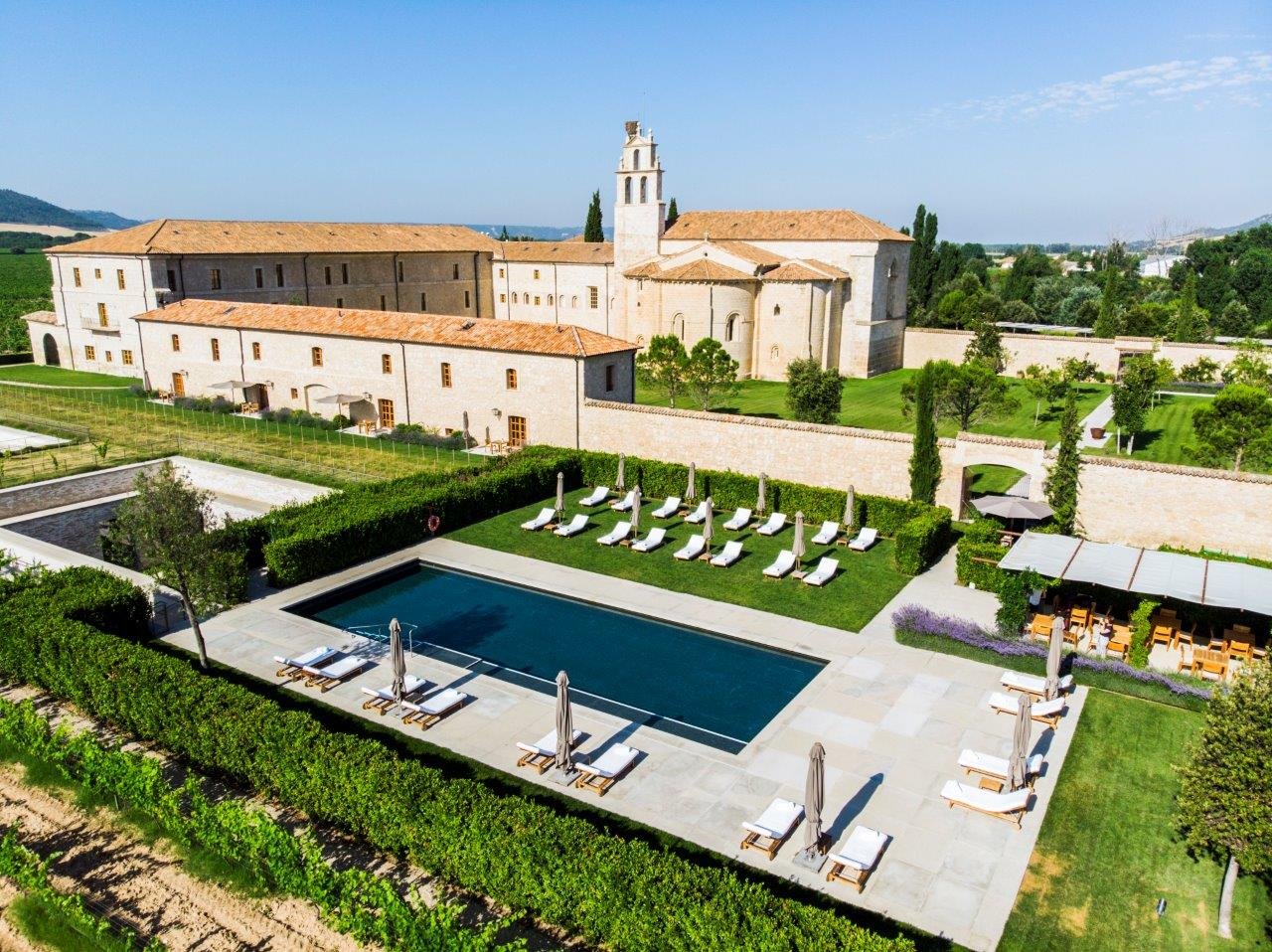
Stone, Soil, and the Long Memory of the Duero
Approach Sardón de Duero on the N-122 and the landscape announces itself before the wine does. The Duero valley here runs wide and dry, the plateau soils shifting between sandy alluvials and older clay-limestone deposits that have shaped viticulture in this corridor for centuries. Ribera del Duero's reputation was built downstream, around Peñafiel and Pesquera, but the western edge of the appellation, where Sardón sits, carries its own agricultural logic: lower yields, more exposed sites, and growing conditions that push Tempranillo toward structure rather than softness.
Abadía Retuerta occupies a particularly charged position in this corridor. The estate predates the Ribera del Duero DO by eight centuries, and the monastery that anchors it has watched the river valley change hands, denomination boundaries shift, and winemaking fashions cycle through. That historical depth is not merely decorative. It means the estate holds detailed knowledge of soil variation across its vineyard parcels, knowledge that accumulated before modern viticulture had a vocabulary to describe it.
What the Land Produces
The terroir argument at Abadía Retuerta is not a simple one. The estate sits technically outside the Ribera del Duero DO boundary, which means its wines carry the Vino de la Tierra de Castilla y León designation rather than the appellation's more recognisable label. This is not a disadvantage. The classification frees the estate from varietal and blending restrictions, allowing winemaking decisions to follow what the individual parcels actually produce rather than what the rules require.
That parcel-level thinking matters here because the estate's land is genuinely varied. Sandy soils in lower sections tend toward aromatic wine with less tannic grip; the heavier clay-limestone parcels higher up build wines with more extractable structure and aging potential. Tempranillo is the anchor variety, as it is across the broader Duero arc, but the estate's classification freedom allows Cabernet Sauvignon, Syrah, and others to appear in blends where soil conditions make the argument for them. For drinkers used to comparing single-appellation bottlings, this blending latitude is worth understanding before approaching the portfolio.
The 2025 Decanter results give the portfolio a concrete reference point. Four wines received medals, with the distribution running to one Gold, two Silver, and one Bronze. A Gold at Decanter, where the competition attracts entries from major producing regions worldwide, places the winning wine in a tier above most estate-level production in Castile. For context, peers like Arzuaga Navarro in Quintanilla de Onésimo and Bodegas Protos in Peñafiel operate in broadly similar quality tiers within the Duero valley, making the Decanter performance a useful comparative signal rather than an isolated data point.
The Abbey as Setting
The physical environment at Abadía Retuerta is not incidental to the wine experience. The monastery dates to the twelfth century, and its architecture, vaulted ceilings, original stonework corridors, and the proportions of a building designed for permanence rather than convenience, frames encounters with the wine in a way that neither a purpose-built winery nor an urban tasting room can replicate. The estate has introduced contemporary design elements and technical facilities alongside the historic fabric, which means the working winery meets current production standards while the heritage spaces remain navigable and coherent.
This juxtaposition of old structure and new technology is a deliberate curatorial choice, one that several Spanish wine estates have pursued, but few have the raw architectural material to execute convincingly. The combination of twelfth-century stone and operational winemaking infrastructure places Abadía Retuerta in a narrow peer set that includes estates like Bodegas Vivanco in Valle de Mena and, further afield, monastic wine properties across Burgundy and the Rhône, where the continuity of place is itself an argument for the wine.
The Pearl 3 Star Prestige rating the estate holds in 2025 reflects this combined offer: the physical setting, the wine quality as evidenced by competition results, and the hospitality infrastructure that makes an overnight stay or extended visit viable. Properties at this tier in Spain's premium wine tourism circuit are not numerous. The conversion of a working monastery into a functioning luxury hotel while maintaining active wine production is an operational challenge that most estates in the region have not attempted.
Sardón de Duero in the Wider Spanish Wine Context
Sardón de Duero sits within a broader network of serious wine destinations across northern Spain. Ribera del Duero, Rioja, Priorat, and Cava country each attract visitors for different reasons, and understanding where Abadía Retuerta sits within that map helps frame the visit. Unlike the high-volume routes through Codorníu in Sant Sadurní d'Anoia or the architectural tourism circuit that brings visitors to Bodegas Ysios in Laguardia, Abadía Retuerta draws visitors who are primarily interested in depth of estate experience rather than marquee design moments. The comparison with Emilio Moro in Pesquera de Duero is instructive: Pesquera sits fully within the Ribera DO and trades on appellation recognition, while Sardón operates slightly outside that framework, which means visitors arrive with a degree of prior knowledge rather than pure appellation curiosity.
For visitors building a northern Spain wine itinerary, the estate functions as a natural anchor point. The Valladolid connection, the estate sits in Valladolid province along the N-122, puts it within reasonable reach of the broader Ribera del Duero corridor. International visitors typically approach via Valladolid or Madrid. The address, Abadía Retuerta N-122, km. 332.5, places the property on a well-mapped route rather than down unmarked rural tracks, which matters for itinerary planning. Booking directly through the estate is the standard approach for both winery visits and accommodation; given the Pearl 3 Star Prestige standing, advance planning is advisable, particularly during the harvest window in September and October when estate visits carry the most sensory and agricultural context.
Planning the Visit
The range of things to do in and around Sardón de Duero extends beyond the estate itself. Our full Sardón de Duero restaurants guide, our full Sardón de Duero hotels guide, our full Sardón de Duero bars guide, our full Sardón de Duero wineries guide, and our full Sardón de Duero experiences guide provide the surrounding context for building a complete stay in the area. For those extending across northern Spain, the contrast with properties like CVNE in Haro, Clos Mogador in Gratallops, or further afield with Aberlour and Accendo Cellars in St. Helena illustrates how different terroir-led models play out across regions.
Frequently Asked Questions
What's the vibe at Abadía Retuerta?
The atmosphere is defined by the physical weight of the monastery, twelfth-century stone, vaulted ceilings, and proportions that predate any concept of wine tourism. Contemporary design elements and working winery technology sit alongside the historic fabric, so the setting reads as serious and unhurried rather than theatrical. The Pearl 3 Star Prestige rating confirms an offer pitched at visitors who expect both production quality and considered hospitality. Abadía Retuerta does not share the Ribera del Duero DO designation that governs better-known nearby estates, which shapes the clientele: those who arrive here tend to come specifically for the estate rather than as part of a general appellation tour.
What should I taste at Abadía Retuerta?
2025 Decanter results provide the clearest entry point: four medals across the portfolio, with the Gold-awarded wine the most evidenced reference for the estate's upper tier. The wines are classified under Vino de la Tierra de Castilla y León rather than a specific DO, which reflects the estate's position just outside the Ribera del Duero boundary and gives the winemaking team latitude to blend across varieties according to parcel character. Tempranillo forms the structural core of most bottlings, but the estate's soil variation across sandy and clay-limestone sections means the wines at different price points can read quite differently from one another. Tasting across more than one label is worth planning for if the visit allows it.
Access the Cellar?
Our members enjoy exclusive access to private tastings and priority allocations from the world's most sought-after producers.
Access the Concierge