
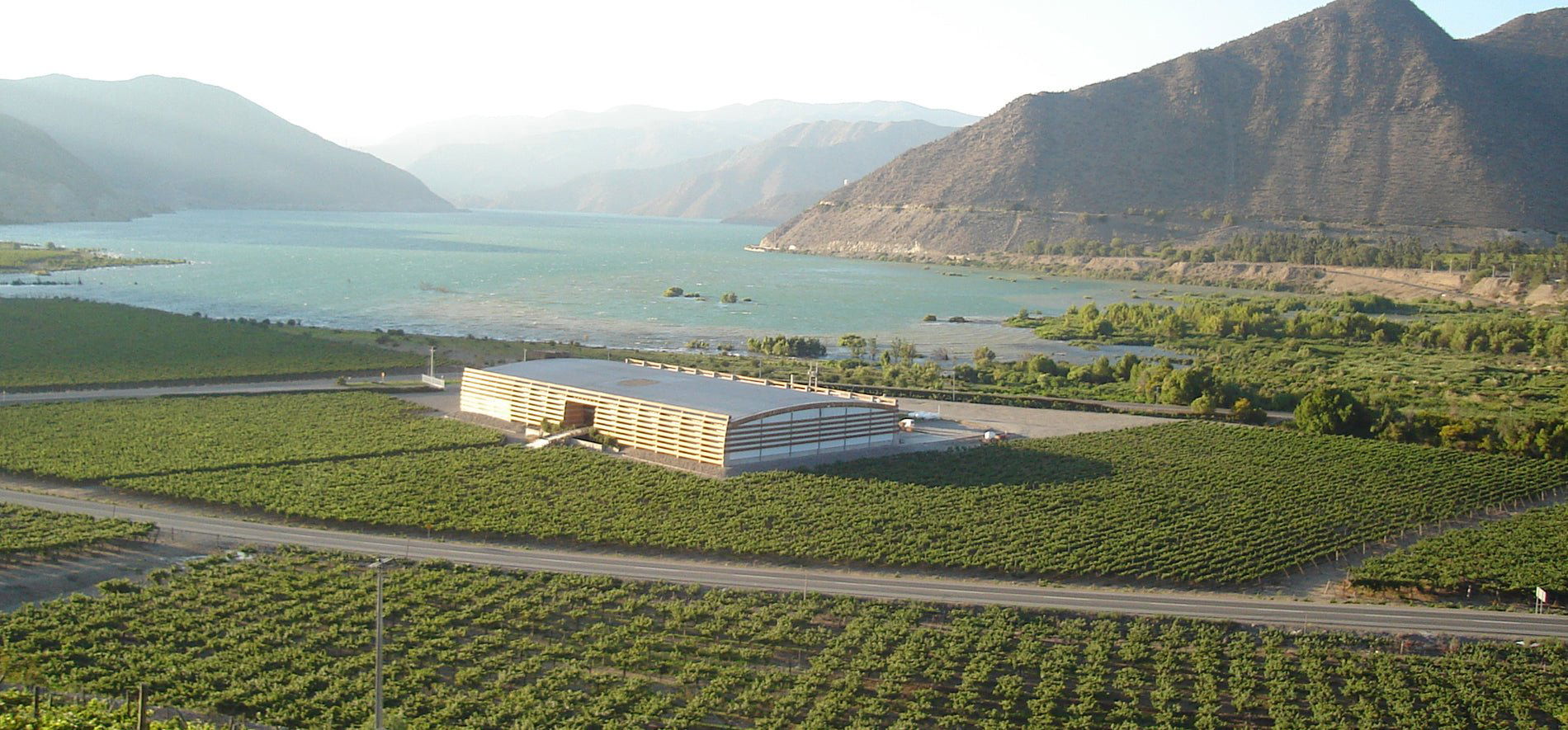
Viña Falernia sits in the Elqui Valley outside Vicuña, one of Chile's most geographically extreme wine-growing corridors, where the Atacama Desert meets altitude viticulture at elevations exceeding 2,000 metres. The winery holds a Pearl 3 Star Prestige rating (2025), placing it among the Coquimbo region's most formally recognised producers. For visitors, the combination of desert scenery, clear skies, and wines shaped by dramatic diurnal temperature swings makes it a reference point for understanding what high-altitude viticulture produces at this latitude.
Where the Desert Earns Its Place in the Glass
The Elqui Valley approaches viticulture from conditions that most wine regions would consider hostile. The valley floor runs northeast from the Pacific coast into the foothills of the Andes, narrowing as the terrain rises, with the Atacama pressing from the north and altitude climbing steadily. By the time you reach the vineyards around Vicuña, the air is dry, the light is sharp, and the temperature can swing 20 degrees Celsius between afternoon and midnight. That thermal gap is not incidental to what ends up in the bottle — it is the primary mechanism behind the aromatic intensity and acid retention that define wines from this corridor.
Viña Falernia operates within this environment and has received a Pearl 3 Star Prestige rating in 2025, a trust signal that places it at the upper tier of formally evaluated producers in the Coquimbo region. In a valley where the majority of agricultural output historically went to pisco production, a winery achieving that level of recognition represents a meaningful departure from the regional default. The producers that have built serious wine programs here — Falernia among them , have done so by working with varieties that respond to altitude stress: Syrah, Carménère, and the Muscat family, which thrives in the valley's intense solar radiation.
The Physical Reality of Elqui Viticulture
To understand Falernia, it helps to understand what high-altitude desert viticulture demands of a site. The Elqui Valley sits between 1,000 and 2,100 metres above sea level across its productive parcels, with some blocks among the highest commercially farmed vineyards in South America. The same cloudless skies that have made the valley a global centre for astronomical observation , the European Southern Observatory maintains infrastructure nearby , deliver ultraviolet intensity that accelerates phenolic development in the grapes while the cold nights preserve freshness. The result is fruit with concentrated colour and flavour that still carries structural acidity, a combination that mid-altitude Chilean valleys struggle to replicate consistently.
Water is rationed, not abundant. Elqui viticulture depends on Andean snowmelt channelled through irrigation systems, which constrains yields and concentrates what the vines do produce. This is categorically different from the irrigated abundance of the Central Valley further south, and the wines reflect that difference in density and length rather than volume of production. Visitors who arrive expecting the scale of a Maipo or Colchagua operation will find something smaller, more site-specific, and more technically demanding to grow.
Where Falernia Sits in the Vicuña Producer Map
Vicuña hosts a cluster of producers that spans the full range from industrial pisco distilleries to boutique wine estates. The Capel Pisco Plant and Pisquera ABA represent the valley's established distilling tradition, while Doña Josefa de Elqui (Pisco) and Pisco Mal Paso work the artisan tier of that same category. Viña Mayu is among the wine-focused estates sharing the valley's upper reaches with Falernia. Within this producer mix, Falernia's Pearl 3 Star Prestige rating distinguishes it as a wine producer operating at a tier above the regional baseline, making it a natural anchor point for any serious visit to the valley's wine offer.
The comparison extends beyond Vicuña. Against Chilean wine producers rated at equivalent or adjacent tiers, such as Viña Casa Silva in San Fernando or El Gobernador (Miguel Torres Chile) in Curicó, Falernia occupies a genuinely different environmental niche. Those producers work the cooler, wetter conditions of the Central Valley's longitudinal corridor. Falernia's point of difference is altitude and desert margin , terroir that few Chilean producers share at this level of formal recognition.
Planning a Visit: Practical Considerations
Vicuña sits roughly 65 kilometres east of La Serena, the nearest city with full transport infrastructure and accommodation depth. The road follows the Elqui River upstream and is easily driveable. La Serena connects to Santiago by domestic flight (approximately 45 minutes) and by overnight bus for travellers combining the Elqui Valley with broader north-south Chilean itineraries. For context on where to stay and eat around a Falernia visit, our full Vicuña hotels guide and our full Vicuña restaurants guide map the supporting infrastructure. Our full Vicuña bars guide and our full Vicuña experiences guide extend the picture to evenings and activities beyond wine.
The valley's climate is warm and dry from October through April, which corresponds to both harvest season (February to April) and the peak of the astronomical tourism calendar. Visiting during harvest connects the winery experience directly to the production cycle and typically brings higher activity levels at the estate. The shoulder months of May and September offer cooler conditions and fewer visitors, which suits those prioritising focused engagement over the harvest atmosphere.
For visitors building a broader Chilean wine itinerary, Falernia represents the northernmost serious wine stop on what is a very long north-to-south wine corridor. Pairing it with a southern winery of equivalent standing, such as Viña Casa Silva in San Fernando, makes the climatic contrast between Chile's wine extremes tangible in a single trip. For those exploring international reference points, Abadía Retuerta in Sardón de Duero and Aberlour in Aberlour illustrate how estate-based wine and spirits producers at premium recognition tiers operate in European contexts , useful calibration for assessing what Falernia has achieved at the remote northern edge of Chile's wine map.
Specific visiting hours, tasting formats, and booking requirements are not confirmed in available data, and the winery's website details are not currently listed. Direct contact or checking through our full Vicuña wineries guide is the most reliable path to current operational information before planning a trip.
What the Rating Signals About the Experience
A Pearl 3 Star Prestige rating in 2025 does not exist in isolation. Across the EP Club framework, ratings at that tier reflect consistent quality evidence rather than a single strong performance. For Elqui Valley wines, the rating carries additional weight because the region lacks the deep evaluation history of Maipo, Colchagua, or Casablanca , meaning recognition has to be earned against a lower baseline of prior formal assessment. That Falernia holds the rating is evidence that the operation has been producing at a standard that stands up to external scrutiny, not simply benefiting from regional novelty.
The broader Chilean wine scene has shown increasing international interest in high-altitude northern expressions over the past decade, with Elqui and Limarí attracting attention from critics who had previously focused on the Central Valley. Falernia has been part of that conversation long enough that its 2025 recognition reflects sustained output rather than a recent pivot. For the visitor, that continuity is practically relevant: the quality floor is documented, not speculative.
Frequently Asked Questions
- What wines is Viña Falernia known for?
- Falernia produces wines from the Elqui Valley in the Coquimbo region, where altitude viticulture at some of South America's highest commercially farmed sites shapes the style. The valley's conditions favour varieties with strong aromatic profiles and structural acidity , Syrah, Carménère, and Muscat-family grapes appear across serious Elqui producers. The winery holds a Pearl 3 Star Prestige rating (2025), which within the EP Club evaluation framework indicates sustained quality at a level above the regional baseline.
- Why do people go to Viña Falernia?
- The combination of geographic setting and formal recognition drives most visits. The Elqui Valley outside Vicuña offers desert terrain, high-altitude vineyard scenery, and proximity to some of the world's clearest skies , the same conditions that support major observatories in the area. Falernia is the valley's most formally rated wine producer (Pearl 3 Star Prestige, 2025), making it a logical focus for visitors whose primary interest is wine rather than pisco. The estate also functions as an accessible entry point to understanding how extreme Chilean terroir differs from the more familiar Central Valley producers.
- How far ahead should I plan for Viña Falernia?
- Vicuña is a small town, and the supporting accommodation infrastructure is more limited than in La Serena, 65 kilometres to the west. During harvest (February to April) and peak astronomical tourism season, accommodation and transport options in the valley book ahead. If the winery requires advance booking for tastings or tours , specific policies are not confirmed in current data , harvest period visits will need the most lead time. Outside peak months, the valley operates at lower capacity and shorter booking windows are generally workable, though direct confirmation with the winery is advised before finalising plans.
- Is Viña Falernia worth visiting if you already know Chilean wine from the Central Valley?
- Falernia specifically addresses the part of Chile's wine map that Central Valley estates cannot replicate: desert-margin, high-altitude production from the Coquimbo region, where Vicuña's elevation and thermal extremes produce structurally different wines from those of Maipo or Colchagua. Its Pearl 3 Star Prestige rating (2025) confirms the quality is not merely geographic curiosity , the wines hold up under formal evaluation. For anyone who has covered the Central Valley circuit, the Elqui Valley offers a technically distinct reference point within the same country.
What It’s Closest To
A small peer set for context; details vary by what’s recorded in our database.
| Venue | Classification | Awards | First Vintage | Notes |
|---|---|---|---|---|
| Viña Falernia | 1 awards | This venue | ||
| Capel Pisco Plant | 1 awards | |||
| Doña Josefa de Elqui (Pisco) | 1 awards | |||
| Pisquera ABA | 1 awards | |||
| Viña Mayu | 1 awards | |||
| Pisco Mal Paso | 1 awards |
Access the Cellar?
Our members enjoy exclusive access to private tastings and priority allocations from the world's most sought-after producers.
Access the Concierge