

Viña Santa Rita sits in the Maipo Valley appellation south of Santiago, holding a Pearl 3 Star Prestige rating from EP Club in 2025. The estate's 40-hectare vineyard is navigable by horse-drawn carriage or pedal bar, making it one of the more experiential wine properties in Chile's central valley. The format suits visitors who want direct engagement with the land rather than a purely tasting-room encounter.
Where the Maipo Valley Makes Its Case
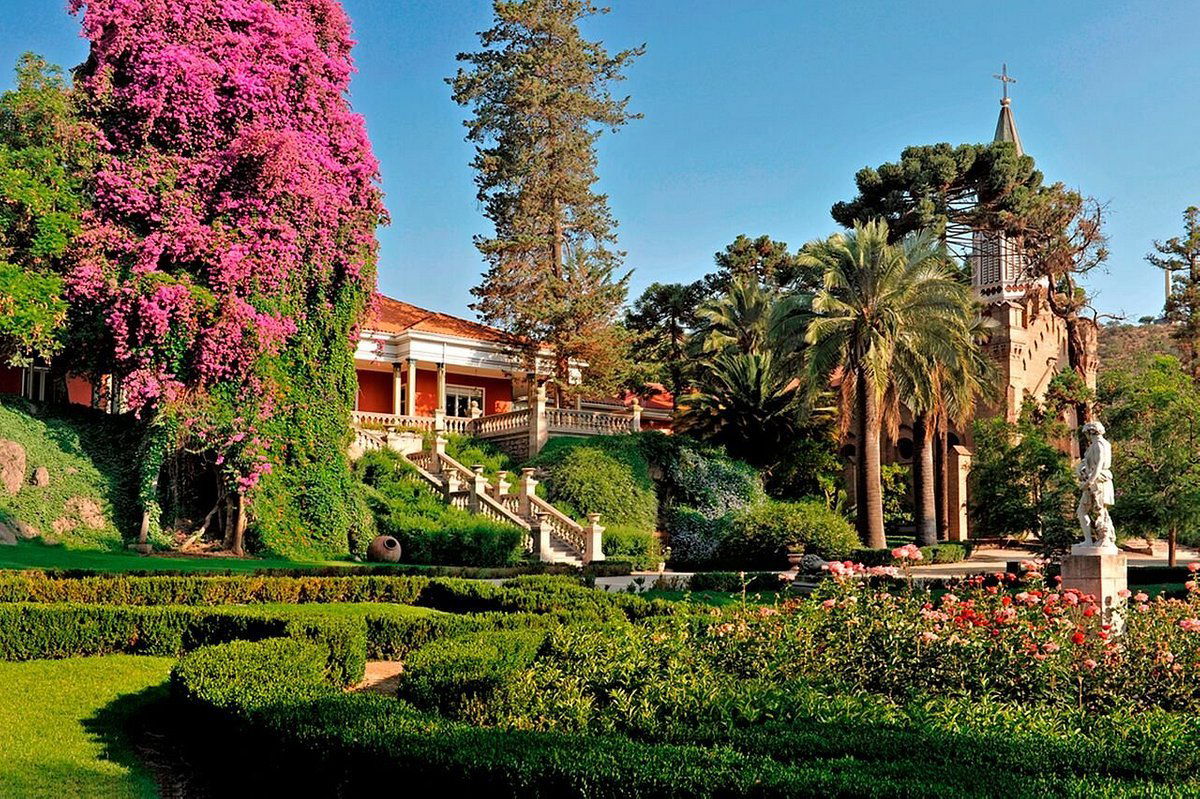
The road south from Santiago to Buin passes through a corridor of vineyard country that has shaped Chilean wine's international identity more than any other appellation. The Maipo Valley's combination of Andean snowmelt irrigation, well-drained alluvial soils, and a dry Mediterranean climate with warm days and cold nights produces conditions that Cabernet Sauvignon finds difficult to resist — and which Chilean producers have refined over more than a century of commercial viticulture. Viña Santa Rita operates within that tradition, a property whose 40 hectares of cultivated vines sit inside a landscape that explains as much about Chilean terroir as any technical summary could.
EP Club awarded Viña Santa Rita a Pearl 3 Star Prestige rating in 2025, a signal that positions it among the more considered wine estate experiences in the central valley. That rating reflects the totality of the visit rather than a single dimension — the vineyard setting, the format options, and the engagement with the land all factor in, which is what separates a prestige-tier estate from a standard tasting stop.
The Vineyard as the Starting Point
What sets Viña Santa Rita apart from the majority of Chilean wine estates is that the vineyard itself is the primary experience, not a backdrop to a tasting room. Visitors can cover the 40-hectare property by horse-drawn carriage or by pedal bar , two formats that encourage different relationships with the terrain. The carriage moves at a pace that allows the rows of vines, the soil texture, and the scale of the property to register properly; the pedal bar introduces a group dynamic that works particularly well for wine tourism parties who want both exercise and conversation before sitting down to taste.
Neither format is incidental. In a Chilean wine context, where many estates prioritize cellar architecture or restaurant credentials over genuine vineyard access, the ability to move through the vines at ground level is a meaningful differentiator. The Maipo's soils , a mix of sandy loam and gravel deposits in many sections , tell a story that only becomes legible when you are close enough to observe them. This is how terroir translates from abstract concept to something a visitor can actually read in the ground.
Across the Maipo Valley and into the broader central valley, this emphasis on experiential vineyard access is a point of comparison worth considering. Viña De Martino in Isla de Maipo and Viña Undurraga in Talagante both operate within the same general appellation geography, while Viña MontGras in Palmilla and Viña Casa Silva in San Fernando extend the comparison southward into Colchagua. Each property has its own approach to visitor engagement; the question is always how directly the estate connects the experience to the vine and the soil rather than to the hospitality infrastructure that surrounds them.
Terroir Signals in the Maipo Context
The Maipo Valley's position as Chile's most historically significant red wine appellation is not simply a marketing claim , it is rooted in specific geographic conditions. The valley sits at a latitude where growing-season sunshine accumulates reliably, while the proximity of the Andes creates thermal variation between day and night that preserves acidity in the fruit. The result, particularly for Cabernet Sauvignon, is a combination of structural ripeness and freshness that distinguishes Maipo from the warmer Colchagua and Rapel zones to the south.
Buin occupies the southern section of the valley, a sub-zone where the soils tend toward deeper alluvial deposits with higher clay content in places , a profile that moderates vine vigor and concentrates berry development differently than the lighter, gravel-dominant soils closer to Santiago. This geographic specificity matters when reading the wines produced here. The 40 hectares at Viña Santa Rita are a working expression of those conditions, not a decorative landscape.
For reference points outside Chile's central valley, Viña Falernia in Vicuña operates in the Elqui Valley under dramatically different terroir conditions , high altitude desert viticulture that produces a contrasting expression of Chilean grape varieties. Further afield, El Gobernador (Miguel Torres Chile) in Curicó represents the Spanish-owned sector of Chilean wine, a tradition of long-term investment in Chilean appellations by European houses. Comparing these estates helps map the range of conditions under which Chilean wine is produced, with Maipo sitting at the warmer, structurally serious end of the central valley spectrum.
How to Plan the Visit
Buin sits roughly 35 kilometres south of central Santiago along the Pan-American Highway, making it accessible as a half-day or full-day excursion from the capital without requiring an overnight stay. The practical question for visitors is whether to combine Viña Santa Rita with other Maipo Valley properties or to treat it as a standalone destination. Given the experiential format , horse-drawn carriage or pedal bar across 40 hectares , a standalone visit with adequate time is the more logical approach. Rushing through a property of this scale defeats the point of the format.
As a Pearl 3 Star Prestige property, Viña Santa Rita sits in a tier where advance planning is advisable rather than optional. Walk-in availability at prestige-rated estates in Chile is inconsistent, particularly during the harvest season between February and April when demand from international wine tourism groups peaks. Confirming arrangements directly with the estate before travelling south from Santiago is the sensible approach, particularly for carriage or pedal bar experiences that may have capacity constraints or minimum group requirements.
For broader planning across the region, our full Buin wineries guide maps the appellation's key properties, while our Buin restaurants guide covers dining options around the valley. If the visit extends into an overnight stay, our Buin hotels guide provides relevant accommodation context, and our Buin bars guide and experiences guide round out the available options in the area.
Visitors building a longer Chilean wine itinerary should also consider Pisco Alto del Carmen Distillery in Huasco for a contrast with the valley's table wine tradition, or Viña Seña in Panquehue for a high-end Aconcagua Valley reference point. For international comparison, Abadía Retuerta in Sardón de Duero offers a Spanish estate experience at a comparable prestige tier, and Aberlour in Aberlour represents the distillery end of the premium estate-visit spectrum in Scotland.
Frequently Asked Questions
- Is Viña Santa Rita more formal or casual?
- The format leans toward the experiential rather than the ceremonial. Horse-drawn carriage and pedal bar tours across 40 hectares suggest a property that prioritises engagement with the vineyard over a formal tasting-room register. That said, as a Pearl 3 Star Prestige property, the overall quality standard is high , casual in pace, considered in substance.
- What is the wine to focus on at Viña Santa Rita?
- The Maipo Valley's defining strength is Cabernet Sauvignon, and any property of this standing within the appellation will anchor its range around that variety. The Buin sub-zone's soil profile and growing conditions make it a logical focus. Specific label recommendations require direct confirmation with the estate, as range details are not published in the current EP Club database record.
- What makes Viña Santa Rita worth visiting?
- The Pearl 3 Star Prestige rating from EP Club in 2025 reflects a visit format that goes beyond a standard tasting stop. The 40-hectare vineyard is accessible by horse-drawn carriage or pedal bar , a level of direct land engagement that is less common than the format suggests. For visitors whose interest is terroir rather than hospitality infrastructure, that distinction has real value.
- Do they take walk-ins at Viña Santa Rita?
- Specific booking policies are not confirmed in the current EP Club record. Given the prestige rating and the structured nature of carriage and pedal bar tours, it is advisable to contact the estate directly before arriving. Walk-in availability at this type of property is not reliable, particularly during harvest season from February through April.
A Tight Comparison
A compact peer snapshot based on similar venues we track.
| Venue | Classification | Awards | First Vintage | Notes |
|---|---|---|---|---|
| Viña Santa Rita | World's 50 Best | This venue | ||
| Viña Viu Manent | World's 50 Best | |||
| Bodegas RE | World's 50 Best | |||
| Viña Almaviva | World's 50 Best | |||
| Viñedos de Alcohuaz | World's 50 Best | |||
| El Gobernador (Miguel Torres Chile) | 1 awards |
Access the Cellar?
Our members enjoy exclusive access to private tastings and priority allocations from the world's most sought-after producers.
Access the Concierge