
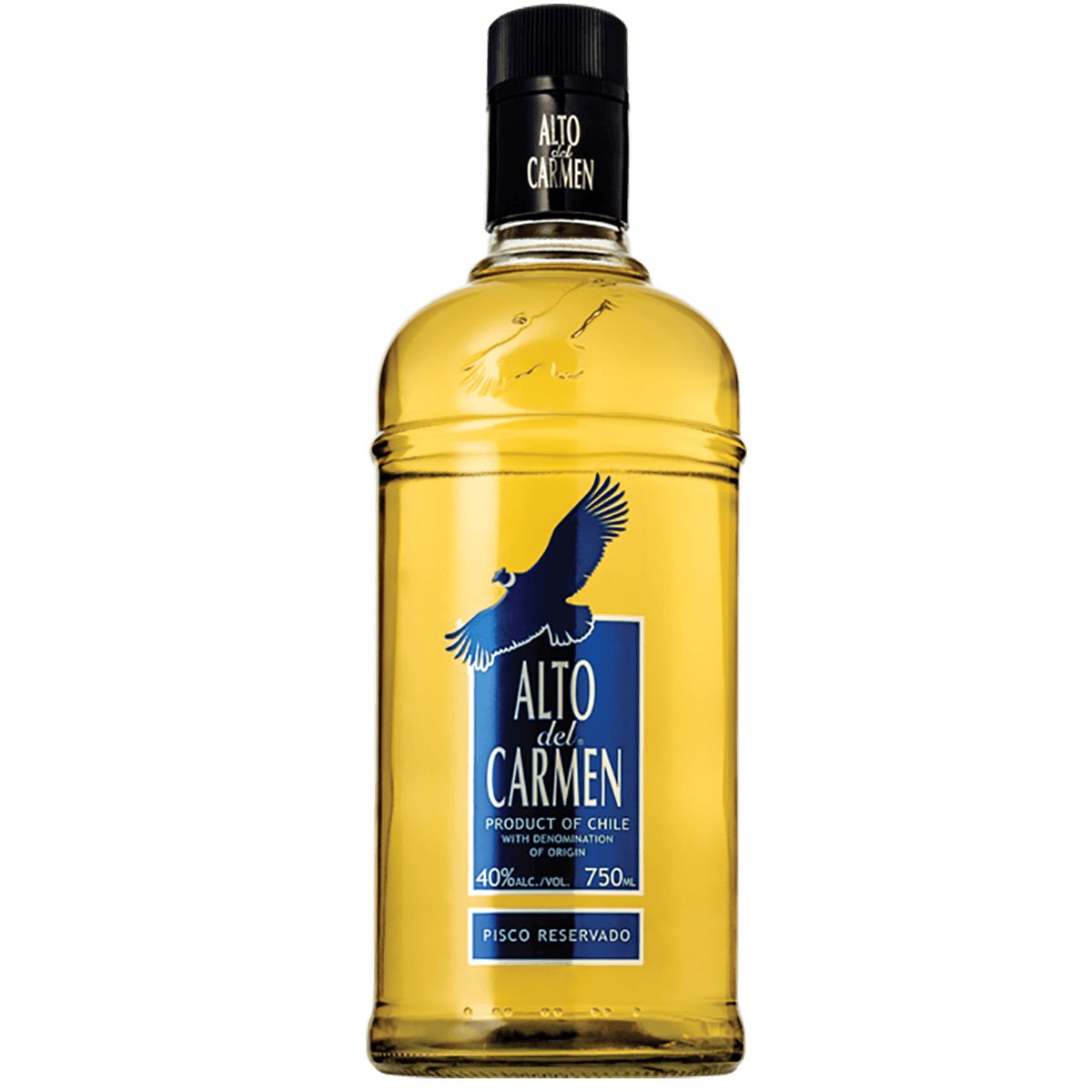
In Chile's far-north Atacama region, Pisco Alto del Carmen Distillery operates in one of the country's most geographically extreme production zones, where the Huasco Valley's desert-edge terroir shapes every aspect of the spirit. Recognised with a Pearl 3 Star Prestige award in 2025, it sits at the upper tier of Chilean pisco producers making a case for place-specific distillation over industrial volume.
Desert Latitude and the Logic of Northern Terroir
The Huasco Valley sits at the southern edge of the Atacama Desert, roughly 600 kilometres north of Santiago, in a zone where viticulture and distillation operate under conditions that have no real parallel in Chile's more celebrated central wine regions. The valley floor is dry and mineral-dense, fed by Andean snowmelt rather than rainfall, and the vines that supply pisco production here are among the most geographically isolated in the country. That isolation is not incidental — it is the defining condition of what northern Chilean pisco production can produce when it leans into its terrain rather than smoothing it away.
Pisco Alto del Carmen Distillery draws directly from this context. The broader Alto del Carmen appellation is one of two designated production zones for Chilean pisco under law, alongside the more northerly Elqui Valley, and it has historically sat in Elqui's shadow when it comes to international recognition. What the Huasco Valley trades in spectacle of name recognition, it compensates for in the quieter specificity of its production conditions: altitude variation, extreme diurnal temperature swings, and soils with a minerality that registers differently in finished spirits than the sandy, alluvial profiles further north. For producers working seriously within this zone, those conditions are not a constraint — they are the argument.
Where the Spirit Sits in Chile's Pisco Tier
Chilean pisco occupies a contested middle ground in the global spirits conversation. It shares its name , though not always its methods or grape varieties , with Peruvian pisco, and that dispute has historically pulled attention away from the quality differentiation happening within Chile's own production zones. At the premium end of Chilean pisco, a smaller group of producers has worked to reposition the category away from mass-market blending and toward appellation-specific, variety-forward expressions that reward serious attention.
Pisco Alto del Carmen's 2025 Pearl 3 Star Prestige recognition places it firmly in that upper tier. The Pearl award system grades producers across quality, provenance, and production credibility, and a 3 Star Prestige designation signals a level of production integrity that separates it from the volume-oriented segment of the Chilean pisco market. For context, the Chilean producers that EP Club tracks across the country's wine and spirit regions , from [Viña Falernia in Vicuña](/wineries/via-falernia-vicua-winery) in the Elqui Valley to [Viña De Martino in Isla de Maipo](/wineries/via-de-martino-isla-de-maipo-winery) in the Maipo Valley , reflect how Chilean producers across categories are increasingly earning external validation through consistency and regional specificity rather than scale.
The Huasco Valley's position within this conversation is instructive. It is not yet the first address international buyers reach for when sourcing Chilean pisco, but that relative obscurity is precisely what makes producers operating at the 3 Star Prestige level interesting to track. The same dynamic applies in the wine world: [Viña Casa Silva in San Fernando](/wineries/via-casa-silva-san-fernando-winery) and [Viña MontGras in Palmilla](/wineries/via-montgras-palmilla-winery) built strong international reputations from regions that the market had previously underestimated. Production quality eventually moves the conversation.
Terroir Expression in Pisco: What the Huasco Valley Argument Looks Like
The editorial angle on premium pisco , as on premium wine , increasingly returns to terroir as the distinguishing variable. In a category long dominated by neutral, consistent blending, the producers making the more interesting case are those using specific grape varieties tied to specific soils and microclimates. Chilean pisco law permits production from a defined set of Muscat varieties, and within the Alto del Carmen appellation, those varieties are shaped by conditions that differ meaningfully from what Elqui Valley producers work with.
Altitude is a significant factor in the Huasco context. Higher-elevation vineyards in the Andes foothills produce grapes with more aromatic concentration and natural acidity than low-lying coastal growing zones, and that structure carries through distillation when producers choose to preserve rather than correct it. The extreme diurnal temperature variation common at these latitudes , hot desert days followed by cold Andean nights , slows grape maturation and retains freshness in a way that lower-altitude growing at the same latitude would not. The resulting spirits carry a tension between fruit richness and structural freshness that is difficult to replicate outside this specific growing envelope.
This is the same logic that applies to prestige distillation in other high-altitude production zones globally. Whether you are looking at Andean gin producers sourcing botanicals at 3,000 metres, Scottish distilleries like [Aberlour in Aberlour](/wineries/aberlour-aberlour-winery) drawing on the specific mineral character of Speyside water, or wine estates like [Abadía Retuerta in Sardón de Duero](/wineries/abada-retuerta-sardn-de-duero-winery) mapping micro-plots for site expression, the underlying argument is consistent: place produces differentiation that process alone cannot manufacture.
The Huasco Valley as a Travel Destination for Serious Visitors
Huasco sits in Chile's Atacama Region, a part of the country that draws attention primarily for its astronomical conditions , the Elqui Valley to the north has the highest concentration of major observatories in the southern hemisphere , and for the desert landscape that provides a dramatic production backdrop. The Huasco Valley specifically runs east toward the Andes from the Pacific coast, and the combination of coastal influence and high-altitude interior creates a microclimate layering that shapes both viticulture and, by extension, pisco production in ways that the flatter, more uniform agricultural zones further south do not replicate.
For visitors planning a serious spirits or wine itinerary through northern Chile, the Huasco Valley warrants attention as a production zone with a coherent geographic identity. The infrastructure for visitor experiences at this latitude is sparser than in Colchagua or Casablanca, which means producers that do receive visitors operate in a more focused, less tourism-saturated environment. [Our full Huasco experiences guide](/cities/huasco) covers the range of what the valley currently offers in that regard, and [our full Huasco wineries guide](/cities/huasco) maps the broader production landscape that contextualises a visit to Alto del Carmen producers.
Travel logistics for the Huasco Valley require more planning than a standard Santiago-adjacent wine day trip. The region is accessible from Copiapó to the north or from the Ruta 5 Pan-American Highway, but distances are significant and the sparse population density means accommodation planning matters. [Our full Huasco hotels guide](/cities/huasco) and [our full Huasco restaurants guide](/cities/huasco) provide the supporting context for a stay of sufficient length to do the valley justice. Those combining a northern Chile itinerary with wine estate visits further south might also cross-reference [Viña Seña in Panquehue](/wineries/via-sea-panquehue-winery), [Viña Santa Rita in Buin](/wineries/via-santa-rita-buin-winery), and [Viña Undurraga in Talagante](/wineries/via-undurraga-talagante-winery) to build a north-to-south Chilean production route that shows the full range of the country's geographic ambition. [El Gobernador (Miguel Torres Chile) in Curicó](/wineries/el-gobernador-miguel-torres-chile-curic-winery) offers another reference point for how international investment has engaged with Chilean terroir across the central valleys. [Our full Huasco bars guide](/cities/huasco) rounds out the on-the-ground picture for evenings in the valley.
Planning a Visit
Specific booking details, opening hours, and contact information for Pisco Alto del Carmen Distillery are not confirmed in current EP Club data. Visitors intending to tour the distillery should plan ahead and verify visit arrangements directly before travelling, given the remote location of the Huasco Valley and the limited visitor infrastructure at this latitude. The 2025 Pearl 3 Star Prestige designation confirms its standing as a serious production facility worth the planning effort required. For broader regional orientation, the EP Club Huasco guides above cover the supporting logistics.
Frequently Asked Questions
- What kind of setting is Pisco Alto del Carmen Distillery?
- Pisco Alto del Carmen Distillery operates in the Huasco Valley of Chile's Atacama Region, one of the country's most remote and geographically extreme production zones. The desert-edge environment, fed by Andean snowmelt and shaped by high diurnal temperature variation, defines the production conditions here. Its 2025 Pearl 3 Star Prestige award confirms it operates at a level that warrants the travel effort, though visitors should note the valley's sparse infrastructure relative to Chile's central wine regions.
- What do visitors recommend trying at Pisco Alto del Carmen Distillery?
- Given the distillery's Pearl 3 Star Prestige recognition in 2025, the strongest case for a visit centres on its Muscat-based pisco expressions from the Alto del Carmen appellation, a production zone that differs meaningfully from the better-known Elqui Valley to the north. The Huasco Valley's altitude and mineral soil profile create conditions that the most focused producers in the region use to produce spirits with structural freshness not common in lower-altitude Chilean pisco. Specific current offerings should be confirmed directly with the distillery before visiting.
- What is Pisco Alto del Carmen Distillery leading at?
- Its 2025 Pearl 3 Star Prestige designation places it at the upper tier of Chilean pisco producers making a credible case for appellation-specific, terroir-driven distillation. Within the Huasco Valley context, its positioning reflects the broader shift in premium Chilean spirits production away from volume blending and toward geographic specificity. That argument is the distillery's clearest strength, and it is one the Pearl award system has formally recognised.
- Do I need a reservation for Pisco Alto del Carmen Distillery?
- Current booking and visit information for Pisco Alto del Carmen Distillery is not confirmed in EP Club's database. Given its remote location in the Huasco Valley, arranging a visit in advance through direct contact with the distillery is advisable before travelling. The valley's limited visitor infrastructure means unplanned visits carry more risk than at more tourism-oriented production regions further south in Chile.
- How does the Alto del Carmen appellation differ from Elqui Valley as a pisco production zone?
- Chile's pisco denomination covers two geographically distinct production zones: the Elqui Valley and the Alto del Carmen appellation in the Huasco Valley. Alto del Carmen sits further south and at different altitude profiles, producing conditions with distinct diurnal temperature ranges and soil mineralogy that register differently in finished spirits from those produced in Elqui. Pisco Alto del Carmen Distillery's Pearl 3 Star Prestige recognition in 2025 positions it as one of the producers actively making that geographic distinction legible through production quality rather than volume.
Comparable Spots, Quickly
A short peer set to help you calibrate price, style, and recognition.
| Venue | Classification | Awards | First Vintage | Notes |
|---|---|---|---|---|
| Pisco Alto del Carmen Distillery | 1 awards | This venue | ||
| Viña Santa Rita | World's 50 Best | |||
| Viña Viu Manent | World's 50 Best | |||
| Bodegas RE | World's 50 Best | |||
| Viña Almaviva | World's 50 Best | |||
| Viñedos de Alcohuaz | World's 50 Best |
Access the Cellar?
Our members enjoy exclusive access to private tastings and priority allocations from the world's most sought-after producers.
Access the Concierge