Viña Viu Manent


Viña Viu Manent sits at kilometre 37 of the Ruta del Vino in Chile's Colchagua Valley, where some of the estate's oldest vineyard blocks have been cultivated for generations. Awarded Pearl 2 Star Prestige recognition in 2025, the property offers one of the valley's most distinctive estate experiences, including carriage tours through plots that trace Colchagua's winemaking history at ground level.
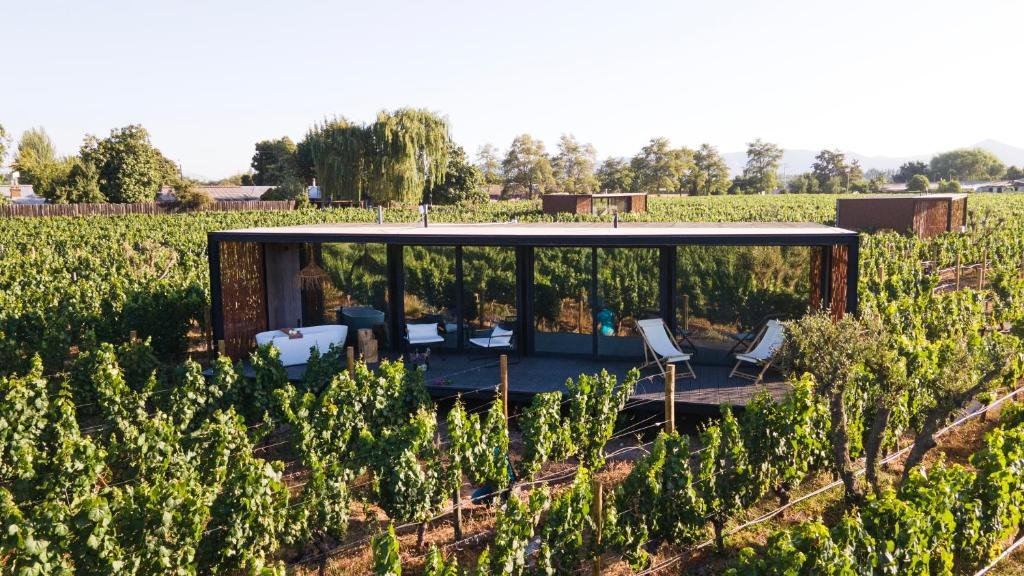
Colchagua at Ground Level
Chile's Colchagua Valley has spent the past two decades positioning itself as the country's answer to Napa: sun-drenched, Cabernet-weighted, and increasingly serious about estate tourism as a complement to the bottle. Along the Ruta del Vino, the road that stitches together the valley's major producers, the properties range from polished visitor centres built for throughput to working estates where the experience is shaped by the land itself. Viña Viu Manent, at kilometre 37, belongs to the second category. The scale of the vineyard, the age of certain plots, and the way the estate has structured its visits around physical contact with that land set it apart from properties where the tasting room is the entire point.
The Colchagua Valley sits within the O'Higgins region roughly 180 kilometres south of Santiago, a geography that delivers the warm, dry growing conditions responsible for the concentration that defines the valley's red wines. That climate, combined with alluvial and clay-loam soils across different sub-zones, gives producers here a canvas wide enough to work with Carménère, Malbec, and Cabernet Sauvignon alongside smaller plantings of white varieties. Viu Manent occupies a substantial footprint within that valley, with some of its finest plots planted across multiple decades, giving the estate a chronological depth that younger operations cannot replicate.
The Carriage Route and What It Shows You
Estate winery tourism across South America has largely converged on a familiar format: a guided walk through a barrel hall, a tasting of three to five wines, a gift shop. Viu Manent diverges from that template through a mode of transport that is both practical and, in its own way, argumentative about how wine country should be experienced. The antique horse-drawn carriage tour moves visitors through the estate's extensive Colchagua vineyards at a pace that makes observation possible. You are not walking quickly between stations or being transferred by vehicle; you are moving slowly enough through the vine rows to register the variation in terrain, the age differences between blocks, and the way the valley floor opens toward the hills.
This matters because Colchagua's character as a wine region is most legible in the vineyard, not the glass. Understanding why the valley's Carménère tends toward a different structure than examples from Maipo, or why certain Malbec blocks here develop differently from those in Mendoza across the Andes, requires seeing how the vines are positioned relative to drainage, elevation change, and sun exposure. A carriage tour at walking pace through mature vines, some of which have been in production for generations, is a more instructive format than any tasting-room presentation.
Among Colchagua Valley producers open to visitors, the format is distinctive. [Clos Apalta (Casa Lapostolle)](/wineries/clos-apalta-casa-lapostolle-santa-cruz-winery) and [Viña Montes](/wineries/via-montes-santa-cruz-winery) both offer estate experiences, but the approach at each property reflects different priorities. Viu Manent's carriage format makes the physical scale of the vineyard legible in a way that a tasting room visit, however polished, does not.
The Wines and Their Positioning in the Valley
Colchagua produces wine across a wide price and quality spectrum, from high-volume export labels to small-production single-vineyard bottlings that receive serious international attention. Viu Manent operates across several of those tiers, with a portfolio that includes everyday-drinking ranges alongside reserve and single-vineyard wines that reflect the estate's older plantings and more carefully managed blocks.
Carménère is the variety that has defined Chilean winemaking identity since its rediscovery in the early 1990s, when DNA analysis confirmed that what growers had long called Merlot was in fact this Bordeaux variety, largely abandoned in France after phylloxera. Colchagua has become one of the variety's most consistent addresses in Chile, with the warm, extended growing season allowing Carménère to reach the ripeness it requires without the green, pyrazine-heavy character that cooler-climate examples can carry. Viu Manent's vineyard age within this context is relevant: older vines typically produce fruit with greater concentration and complexity than younger plantings, a pattern consistent across regions and varieties.
Malbec presents a different argument. The Andes corridor connecting Argentina's Mendoza with Chile's central valley has generated genuine debate about whether Chilean Malbec occupies a distinct stylistic position from its Argentine counterpart. At lower elevations in warmer valleys like Colchagua, Chilean Malbec tends toward riper, rounder profiles with less of the floral lift that high-altitude Mendoza examples produce. Viu Manent's work with the variety reflects that regional character, and the estate's older Malbec blocks contribute to the depth of the reserve-tier wines.
The 2025 Pearl 2 Star Prestige award, part of EP Club's recognition framework, positions Viu Manent within the tier of Chilean wine estates where experience quality, wine quality, and visitor offering combine to a level above the basic estate visit. For regional context, this places it alongside other recognised producers in the O'Higgins area, including [Viña Casa Silva in San Fernando](/wineries/via-casa-silva-san-fernando-winery), and distinguishes it from high-volume producers whose visitor infrastructure is built primarily around throughput.
Colchagua in the Broader Chilean Wine Picture
Chile's wine geography runs north to south across more than 1,300 kilometres, from the dry Atacama fringes down to the cool, wet Bio-Bio and Itata valleys in the south. The central valleys, Maipo, Cachapoal, Colchagua, Maule, have historically dominated export volume and critical reputation. Among those, Colchagua has attracted the most concentrated investment in premium estate infrastructure over the past two decades, making the Ruta del Vino one of the more developed wine tourism circuits in South America.
Producers elsewhere in Chile take different approaches to visitor experience. [El Gobernador (Miguel Torres Chile) in Curicó](/wineries/el-gobernador-miguel-torres-chile-curic-winery) brings a Spanish producer's perspective to the Curicó Valley, while [Viña De Martino in Isla de Maipo](/wineries/via-de-martino-isla-de-maipo-winery) anchors its offering in the cooler Maipo context. In the north, [Pisco Alto del Carmen Distillery in Huasco](/wineries/pisco-alto-del-carmen-distillery-huasco-winery) represents the entirely different tradition of pisco production. Viu Manent's position on the Ruta del Vino places it at the geographic and experiential centre of Chilean wine tourism as it currently stands.
For visitors combining the estate with other Colchagua producers, [Viña Apaltagua](/wineries/via-apaltagua-santa-cruz-winery) offers a contrasting approach in the same valley, while [Appleton Estate](/wineries/appleton-estate-santa-cruz-winery) extends the regional picture further. The town of Santa Cruz, the nearest urban centre to most Colchagua estates, provides accommodation and restaurant options that make multi-day visits practical. See our [full Santa Cruz wineries guide](/cities/santa-cruz) for the complete regional picture, and our [Santa Cruz restaurants guide](/cities/santa-cruz), [Santa Cruz hotels guide](/cities/santa-cruz), [Santa Cruz bars guide](/cities/santa-cruz), and [Santa Cruz experiences guide](/cities/santa-cruz) for planning a full visit.
For international comparison, the estate visit format at Viu Manent has closer parallels to European domaine experiences than to the more transactional winery tourism common in parts of the New World. Properties like [Abadía Retuerta in Sardón de Duero](/wineries/abada-retuerta-sardn-de-duero-winery) in Spain represent the upper tier of that European estate visit model, where landscape access and vinous depth combine. The carriage format at Viu Manent achieves something structurally similar within a South American context.
Planning Your Visit
Viu Manent sits at kilometre 37 of the Ruta del Vino, address Carretera del Vino km 37, Santa Cruz, O'Higgins, postcode 3130000. The estate is most accessible by car from Santa Cruz, which sits roughly 180 kilometres south of Santiago via the Ruta 5 and local roads into the valley. The harvest season, running from late February through April in the Southern Hemisphere, brings the vineyards to their most active and visually compelling state, though the estate operates year-round. Booking the carriage tour in advance is advisable, particularly between December and March when Colchagua's visitor numbers peak. Current hours, pricing, and booking options should be confirmed directly with the estate, as seasonal schedules vary.
Frequently Asked Questions
What wines should I try at Viña Viu Manent?
Colchagua's strongest suit as a region is red wine, and Viu Manent's portfolio reflects that. Carménère and Malbec from the estate's older planted blocks represent the most direct expression of what the property and the valley do well. The single-vineyard and reserve-tier wines draw on vine age that younger Colchagua estates cannot match. As a general principle with Chilean wine at this level: ask which wines come from the estate's oldest blocks, as vine age is one of the more reliable proxies for complexity and concentration in the Viu Manent range.
What's the defining thing about Viña Viu Manent?
The combination of genuine vineyard age, scale, and the carriage tour format makes Viu Manent distinctive within the Colchagua visitor circuit. The 2025 Pearl 2 Star Prestige recognition from EP Club confirms its position above the basic estate-visit tier. Among Colchagua wineries open to visitors, it occupies a specific position: large enough to offer structured experiences, old enough that the vineyard itself has something to say, and format-specific enough that the visit involves actual contact with the land rather than a polished sequence of indoor presentations.
Recognition, Side-by-Side
These are the closest comparables we have in our database for quick context.
| Venue | Classification | Awards | First Vintage | Notes |
|---|---|---|---|---|
| Viña Viu Manent | World's 50 Best | This venue | ||
| Appleton Estate | 1 awards | |||
| Viña Montes | World's 50 Best | |||
| Clos Apalta (Casa Lapostolle) | World's 50 Best | |||
| Viña Apaltagua | 1 awards |
Access the Cellar?
Our members enjoy exclusive access to private tastings and priority allocations from the world's most sought-after producers.
Access the Concierge