Viñedos de Alcohuaz


Viñedos de Alcohuaz sits high in the Elqui Valley's rocky Andean foothills, where grapes have been grown on the estate for over a decade at altitude. Awarded Pearl 2 Star Prestige by EP Club in 2025, it occupies a narrow niche within Chilean wine: a mountain producer working extreme elevation to shape character rather than volume. The address alone — Route D485, past Horcón — signals that this is not a casual detour.
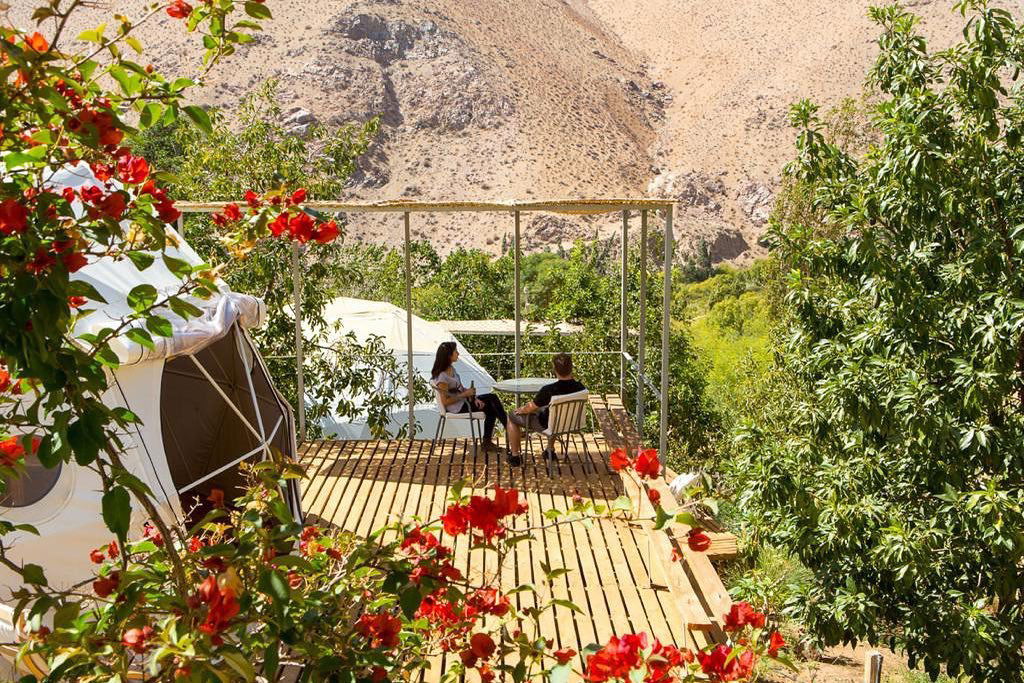
Where the Elqui Valley Runs Out of Road
The Elqui Valley's wine story does not begin in a tasting room with climate-controlled shelving and a gift shop. It begins somewhere on Route D485, past the village of Horcón, where the paved certainty of the Andean foothills gives way to something more demanding. At 3.5 kilometres beyond Horcón, the terrain announces itself: rocky, steep, exposed to ultraviolet light at intensities that lower-altitude growing regions never encounter. This is where Viñedos de Alcohuaz sits, and the physical approach is the first argument the estate makes for what ends up in the bottle.
Chile's wine geography has historically been framed around the Central Valley — Maipo, Colchagua, Curicó, the familiar appellations that built the country's export reputation. The Norte Chico, which takes in Atacama and Coquimbo, has operated as a distinct and less discussed category. Within Coquimbo, the Elqui Valley sits at the far northern edge of what most international buyers recognise as Chilean wine country, which means the producers who establish themselves here are making a deliberate argument: that the conditions at this latitude and altitude are worth the logistical difficulty and the smaller yields that come with them. For our full Elqui Valley wineries guide, the concentration of producers making that argument grows each vintage.
Altitude as the Core Variable
High-altitude viticulture in South America is not a novelty — Argentina's Mendoza has used elevation as a quality signal for years, and certain Bolivian and Peruvian producers operate at heights that challenge even those benchmarks. What makes the Elqui Valley's mountain tier specific is the combination of elevation, desert aridity, and dramatic diurnal temperature variation. Nights drop sharply even in summer, and that thermal contrast is what preserves acidity in fruit that might otherwise ripen fast and flat under the same intense sun that makes this corridor one of the clearest skies on earth.
Viñedos de Alcohuaz was founded in 2005, and grapes have been grown on the estate for over ten years. That timeline matters. Vines in difficult, rocky terrain take time to establish root systems capable of reaching deep water and mineral reserves. The estate's foothills setting, with the Andes providing the underlying geology, means the vine stress that produces concentrated, structured fruit is not engineered through irrigation management alone , it is intrinsic to the site. EP Club's Pearl 2 Star Prestige rating in 2025 reflects a producer whose terroir argument has reached a point of expression worth taking seriously.
For comparison across the Chilean wine spectrum, the Central Valley producers , Viña De Martino in Isla de Maipo, Viña Casa Silva in San Fernando, and Viña MontGras in Palmilla , work with the deep alluvial soils and reliable rainfall patterns that define that corridor. The Elqui Valley proposition is structurally different: thinner soils, granite and schist underlays, no commercial-scale irrigation infrastructure, and the constraint of altitude on growing season length. These are not conditions that produce high volumes. They are conditions that, when managed correctly, produce wines that carry a very specific geological and climatic signature.
The Norte Chico Tradition and Where Alcohuaz Sits Within It
The Elqui Valley's strongest traditional association in Chilean spirits and wine culture is with pisco, the grape-based spirit that defines the region's agricultural identity and remains its most visible export. The Pisco Alto del Carmen Distillery in Huasco represents one pole of that tradition. Fine wine production in the valley represents a younger, more contested claim , an argument that the same Muscat-dominant viticulture that feeds the pisco industry can be redirected, or that other varieties can be introduced, to produce still wines with genuine critical standing.
That argument has found traction internationally, though the Elqui Valley wine category remains small by Chilean standards. Viña Falernia in Vicuña is among the producers who have worked to establish the valley's table wine credibility. Alcohuaz sits in the upper altitude tier of that emerging category, in a sub-zone where the conditions are more extreme and the production volumes are accordingly modest. Within the broader framework of EP Club's Chile coverage, which extends from Viña Santa Rita in Buin through to the mountain producers of the north, Alcohuaz occupies the end of the spectrum where terroir intensity and low-intervention production converge.
Getting There and Planning the Visit
The address , Route D485, 3.5 kilometres past Horcón , is both a precise instruction and a fair warning about what kind of visit this is. The Elqui Valley runs east from the coastal city of La Serena, with Vicuña as the main interior hub. From Vicuña, the road toward Paihuano and then Horcón climbs into increasingly narrow canyon terrain. The final kilometres to Alcohuaz require a vehicle suited to mountain roads. This is not a winery positioned for high visitor turnover, and the physical access self-selects for visitors who have planned the trip rather than added it as a casual addition to a coastal itinerary.
La Serena, roughly 120 kilometres from the upper valley, is the nearest city with commercial flights and a range of accommodation. The Elqui Valley's accommodation options are covered in our full Elqui Valley hotels guide, with properties ranging from small lodge-format stays in the valley towns to more rural options closer to the agricultural zones. The valley's restaurant scene, documented in our full Elqui Valley restaurants guide, clusters around Vicuña and Pisco Elqui, with a character shaped by the region's agricultural produce and strong emphasis on local ingredients. For evening options, our full Elqui Valley bars guide covers the lighter end of the valley's hospitality offering, and our full Elqui Valley experiences guide maps the stargazing, hiking, and cultural programming that make the valley worth more than a single-day winery excursion.
Given the estate's altitude tier and the niche it occupies within Chilean fine wine, booking ahead is advisable. The estate does not operate at the scale of a Central Valley visitor centre, and unannounced arrivals at remote mountain wineries in Chile rarely produce a structured tasting experience. Contact directly before planning the drive; the reward for advance coordination is access to a site that most visitors to Chile's wine regions never reach.
The Broader Reference Frame
EP Club's coverage of mountain and high-altitude wine production extends well beyond Chile. For readers building a comparative framework, producers like Viña Seña in Panquehue offer a different expression of Chilean terroir ambition , iconic Aconcagua foothills production with a different geological base and a different market position. Further afield, Abadía Retuerta in Sardón de Duero and El Gobernador (Miguel Torres Chile) in Curicó represent Old World and Central Valley reference points for estate-scale production with strong terroir identity. Aberlour in Aberlour sits in a different category entirely, but appears in EP Club's broader prestige producer coverage for readers building a cross-category reference library.
What distinguishes Alcohuaz in that company is not scale or output volume, but geographic specificity. The Elqui Valley's mountain tier is one of the more geologically dramatic wine-growing sites in South America, and a producer established there since 2005 with a 2025 Pearl 2 Star Prestige rating has had long enough to develop a house style shaped by those conditions rather than imposed on them. That is the argument worth making the drive to assess firsthand.
Frequently Asked Questions
- Is Viñedos de Alcohuaz more low-key or high-energy?
- Low-key, by design and geography. The estate sits at altitude in the Elqui Valley's upper Andean foothills, accessed via a mountain road 3.5 kilometres past Horcón. The physical setting and production scale place it firmly in the specialist, small-producer tier , closer to a focused estate visit than a full visitor-centre experience. Its EP Club Pearl 2 Star Prestige (2025) reflects critical standing rather than commercial scale.
- What wines should I try at Viñedos de Alcohuaz?
- The estate does not publish a detailed public portfolio, but its location in the Elqui Valley's high-altitude zone points toward wines shaped by extreme diurnal variation, granite and rocky soils, and the intense UV exposure that characterises this corridor. The valley has traditionally produced Muscat-dominant fruit for pisco, while table wine producers like Alcohuaz have worked with varieties suited to altitude conditions. Ask at the estate for current releases; the EP Club Pearl 2 Star Prestige rating in 2025 confirms there is serious wine to find here.
- What is Viñedos de Alcohuaz known for?
- Alcohuaz is known within Chilean fine wine circles as a mountain producer working the extreme upper end of the Elqui Valley, founded in 2005 with grapes grown on the estate for over a decade. Its reputation is built on altitude viticulture in a region more commonly associated with pisco production , a deliberate positioning at the specialist end of the Elqui Valley wine category, confirmed by its EP Club Pearl 2 Star Prestige award in 2025.
- How far ahead should I plan for Viñedos de Alcohuaz?
- Given the estate's remote location on Route D485 in the Elqui Valley and its small-production character, advance planning is strongly recommended. There is no published booking system or phone contact in the current EP Club record. The most practical approach is to reach the estate through its website or direct inquiry before making the drive from Vicuña or La Serena. Treat it as a destination visit requiring coordination, not a drop-in winery stop.
In Context: Similar Options
A fast peer set for context, pulled from similar venues in our database.
| Venue | Classification | Awards | First Vintage | Notes |
|---|---|---|---|---|
| Viñedos de Alcohuaz | World's 50 Best | This venue | ||
| Viña Santa Rita | World's 50 Best | |||
| Viña Viu Manent | World's 50 Best | |||
| Bodegas RE | World's 50 Best | |||
| Viña Almaviva | World's 50 Best | |||
| El Gobernador (Miguel Torres Chile) | 1 awards |
Access the Cellar?
Our members enjoy exclusive access to private tastings and priority allocations from the world's most sought-after producers.
Access the Concierge