Viña Almaviva


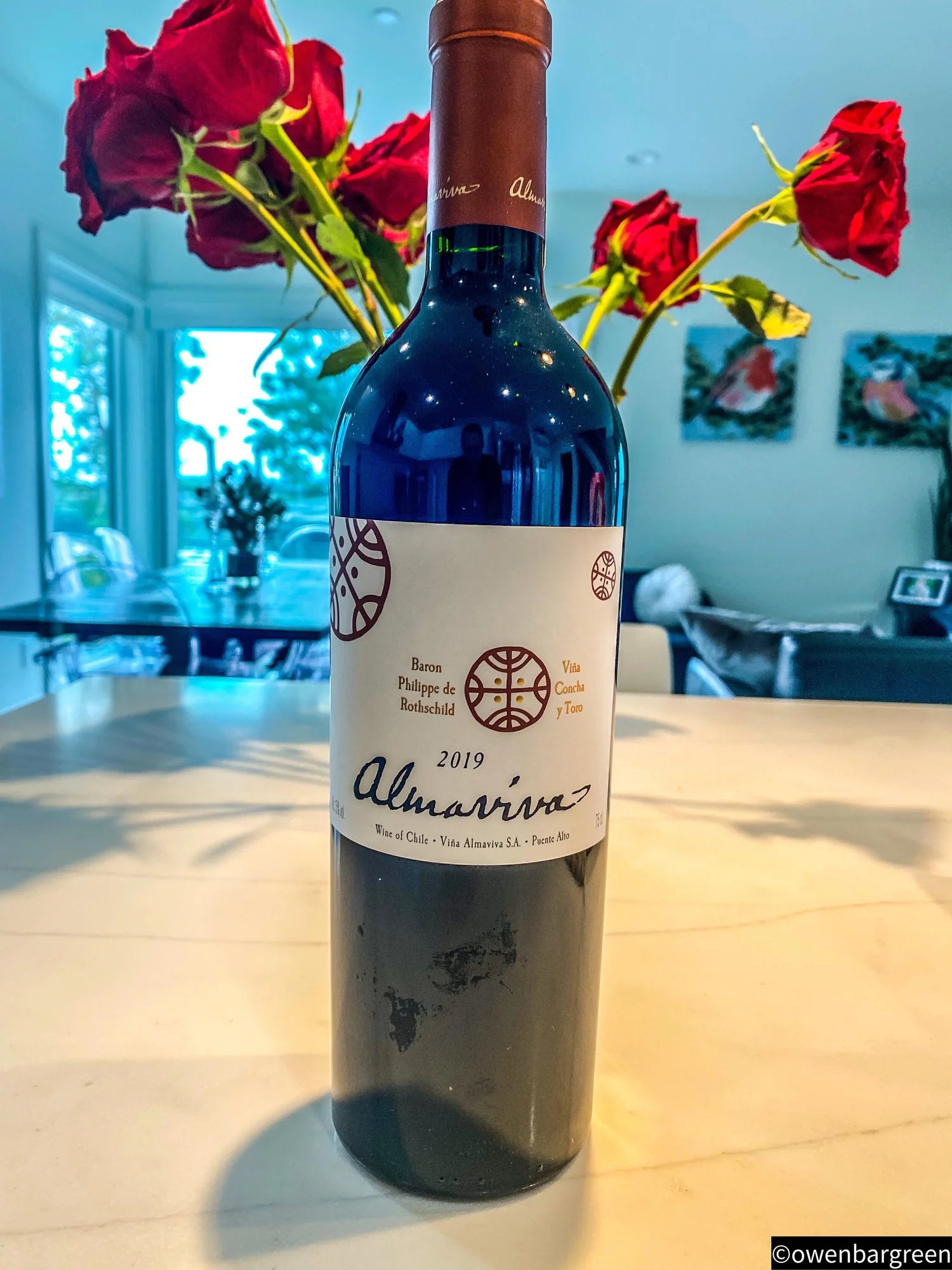
Viña Almaviva is a Franco-Chilean estate in Puente Alto, south of Santiago, built around the model of a classic Bordeaux château and co-owned by the house behind Château Mouton Rothschild. Awarded EP Club Pearl 2 Star Prestige in 2025, it occupies the upper tier of Chilean fine wine and draws Bordeaux enthusiasts who want to trace how the Maipo Valley's alluvial soils translate a European tradition into something distinctly Andean.
Where the Andes Meet Bordeaux
Approach Viña Almaviva from the sprawling southern edge of Santiago and the shift is immediate. The Maipo Valley floor opens up, the Andes rise in the east with a clarity that the city never permits, and the estate itself announces its references before you've stepped through the gate. The architecture draws on the classic French château model: ordered, proportioned, deliberate. It is a statement about intention — that what grows here should be measured against the grands crus of the Médoc, not just against Chilean neighbours.
That framing is not accidental. Almaviva is a joint venture between Concha y Toro, Chile's largest wine producer, and Baron Philippe de Rothschild S.A., the négociant house that controls Château Mouton Rothschild. The late Baroness Philippine de Rothschild, actress and steward of Mouton through its most celebrated decades, was a central figure in the estate's formation. That lineage places Almaviva in a specific competitive conversation: not Chilean wine broadly, but the question of whether Maipo can produce a wine that demands the same critical attention as first-growth Bordeaux.
The Maipo Valley's Argument in Soil and Climate
The terroir case for Puente Alto rests on geology as much as climate. The soils here are alluvial deposits carried down from the Andes over millennia, deep and free-draining, with a gravel and clay mix that controls vine vigour and concentrates the fruit. Daytime temperatures in the valley are warm enough to achieve phenolic maturity in Cabernet Sauvignon, but nights cool sharply as cold air descends from the cordillera, preserving acidity and slowing the final stages of ripening. The result is fruit that reads ripe but not heavy, with a structural backbone that needs time in bottle to resolve.
Cabernet Sauvignon is the dominant variety at Almaviva, as it is across the high-end Maipo sub-appellation of Puente Alto. The variety found its footing here earlier than almost anywhere else in Chile, and the oldest blocks carry vine age that adds textural complexity younger plantings cannot replicate. Carménère, the variety that defines Chilean winemaking as a separate tradition from Bordeaux rather than an imitation of it, also appears in the blend alongside Cabernet Franc and Petit Verdot — the classic supporting cast of the left bank, deployed in a place where the climatic logic differs entirely from the Gironde. For Bordeaux enthusiasts, that comparison is the point: same grape logic, different climate physics, different outcome.
Almaviva sits in the same Puente Alto address that gives [Viña Chadwick](/wineries/via-chadwick-puente-alto-winery) its own Cabernet-dominant identity. The two estates define this sub-appellation's premium tier and, between them, set the benchmark against which other Maipo producers are assessed. [Our full Puente Alto wineries guide](/cities/puente-alto) maps that peer set in full.
A Franco-Chilean Model, Tested Over Time
The international joint-venture winery is not a new format in Chile, but Almaviva remains among the most scrutinised examples of it. When it launched its first commercially released vintages in the 1990s, the critical question was whether the Rothschild involvement would translate into a genuinely distinctive wine or simply a commercially positioned label. The answer arrived gradually through the vintages: the wine earned its own critical standing, separate from the halo of its co-owner's Médoc address.
EP Club awarded Almaviva a Pearl 2 Star Prestige rating in 2025, placing it in the upper tier of the platform's assessed estates. That recognition lands in a year when Chilean fine wine is receiving renewed international attention, partly because the exchange rate makes Maipo's top tier more accessible than comparable bottles from Napa or Pomerol, and partly because the critical consensus on Chilean Cabernet has matured. Almaviva has been part of that conversation long enough to be assessed on its own track record rather than on its founding parentage.
For comparison within Chile's wider estate landscape, the range of approaches across regions is significant. [El Gobernador (Miguel Torres Chile) in Curicó](/wineries/el-gobernador-miguel-torres-chile-curic-winery) and [Viña De Martino in Isla de Maipo](/wineries/via-de-martino-isla-de-maipo-winery) represent different philosophies , the former with Spanish European roots, the latter with a focus on old-vine and coastal terroir exploration. Further south, [Viña Casa Silva in San Fernando](/wineries/via-casa-silva-san-fernando-winery) operates from the Colchagua Valley with a family-estate model, while [Viña MontGras in Palmilla](/wineries/via-montgras-palmilla-winery) and [Viña Falernia in Vicuña](/wineries/via-falernia-vicua-winery) expand the geographic argument to the Elqui Valley's extreme northern conditions. [Viña Santa Rita in Buin](/wineries/via-santa-rita-buin-winery) occupies the mid-Maipo corridor. Almaviva, measured against all of them, is operating in a narrower and more expensive register.
Outside Chile, the Franco-international estate model has parallels. [Abadía Retuerta in Sardón de Duero](/wineries/abada-retuerta-sardn-de-duero-winery) offers a comparable case of European fine-wine logic transplanted into a different national context. [Pisco Alto del Carmen Distillery in Huasco](/wineries/pisco-alto-del-carmen-distillery-huasco-winery) illustrates how far Chile's wine and spirit geography extends beyond the Maipo corridor, while [Aberlour in Aberlour](/wineries/aberlour-aberlour-winery) shows the contrast with Old World production traditions operating in entirely different categories.
Planning a Visit
Almaviva sits in Puente Alto, which is accessible from central Santiago by road in under an hour depending on traffic. The estate's address in the La Pintana area of the Región Metropolitana puts it within the broader southern Santiago wine corridor. Because specific booking arrangements, tour formats, and hours are not confirmed through current verified channels, anyone planning to visit should contact the estate directly or consult updated official sources before travel. The Maipo Valley's visit season tends to concentrate around the post-harvest months of April through June, when the weather remains mild and estate programs are typically active, and again in the southern spring from September onward when the growing cycle begins again. For broader area planning, [our full Puente Alto restaurants guide](/cities/puente-alto), [hotels guide](/cities/puente-alto), [bars guide](/cities/puente-alto), and [experiences guide](/cities/puente-alto) cover what the area offers beyond the wineries themselves.
Frequently Asked Questions
- What should I taste at Viña Almaviva?
- Almaviva's principal wine is a Cabernet Sauvignon-dominant Bordeaux-varietal blend drawing on the Puente Alto sub-appellation's alluvial soils and Andean-cooled nights. The estate's Pearl 2 Star Prestige recognition from EP Club in 2025 was built on this flagship release. Visitors with a background in left-bank Bordeaux will find the comparison instructive: similar grape architecture, a structurally different climate, and Carménère in the blend as the specifically Chilean inflection. Confirm current tasting formats directly with the estate before visiting.
- What is Viña Almaviva known for?
- Almaviva is known as Chile's most prominent Franco-Chilean joint-venture estate, co-owned by the house behind Château Mouton Rothschild and based in the Puente Alto appellation of the Maipo Valley. It sits at the premium end of Chilean Cabernet Sauvignon production and earns its critical position through vintage track record rather than brand association alone. The EP Club Pearl 2 Star Prestige award in 2025 reflects its standing within the assessed upper tier of South American fine wine estates.
- How far ahead should I plan for Viña Almaviva?
- Because specific booking windows, tour capacity, and reservation methods are not confirmed through current public records for Almaviva, the safest approach is to contact the estate directly well before your intended travel dates. Premium Chilean estate visits, particularly those at Pearl-tier properties in the Maipo Valley, tend to operate with structured programs that fill during peak season. Building in at least four to six weeks of lead time is a reasonable baseline, with more buffer during harvest season in March and April.
- Who tends to like Viña Almaviva most?
- Almaviva draws visitors who approach Chilean wine through a Bordeaux reference point: collectors familiar with left-bank Cabernet blends, those who followed the Rothschild estate's international ventures, and travellers making a dedicated wine itinerary through the Maipo Valley. The EP Club Pearl 2 Star Prestige designation places it in the upper price bracket of Chilean estates, so it attracts an audience prepared for a premium visit experience rather than a casual tasting stop. Puente Alto's concentration of serious Cabernet producers makes it a logical anchor for a focused fine-wine day out from Santiago.
- How does Viña Almaviva's joint-venture model differ from other premium Chilean estates?
- Unlike Chilean family estates or domestically owned producers, Almaviva was structured from the outset as a collaboration between Concha y Toro and the Rothschild family's négociant arm , bringing Médoc production philosophy directly into the Maipo Valley's terroir. That structure means the estate's winemaking decisions have always been made with one eye on the Bordeaux grand cru reference rather than on Chilean market conventions. The EP Club Pearl 2 Star Prestige rating in 2025 suggests that framework has produced a wine assessed on its own merits, separate from the inherited prestige of its co-owners.
The Quick Read
A fast peer set for context, pulled from similar venues in our database.
| Venue | Classification | Awards | First Vintage | Notes |
|---|---|---|---|---|
| Viña Almaviva | World's 50 Best | This venue | ||
| Viña Santa Rita | World's 50 Best | |||
| Viña Viu Manent | World's 50 Best | |||
| Bodegas RE | World's 50 Best | |||
| Viñedos de Alcohuaz | World's 50 Best | |||
| El Gobernador (Miguel Torres Chile) | 1 awards |
Access the Cellar?
Our members enjoy exclusive access to private tastings and priority allocations from the world's most sought-after producers.
Access the Concierge