
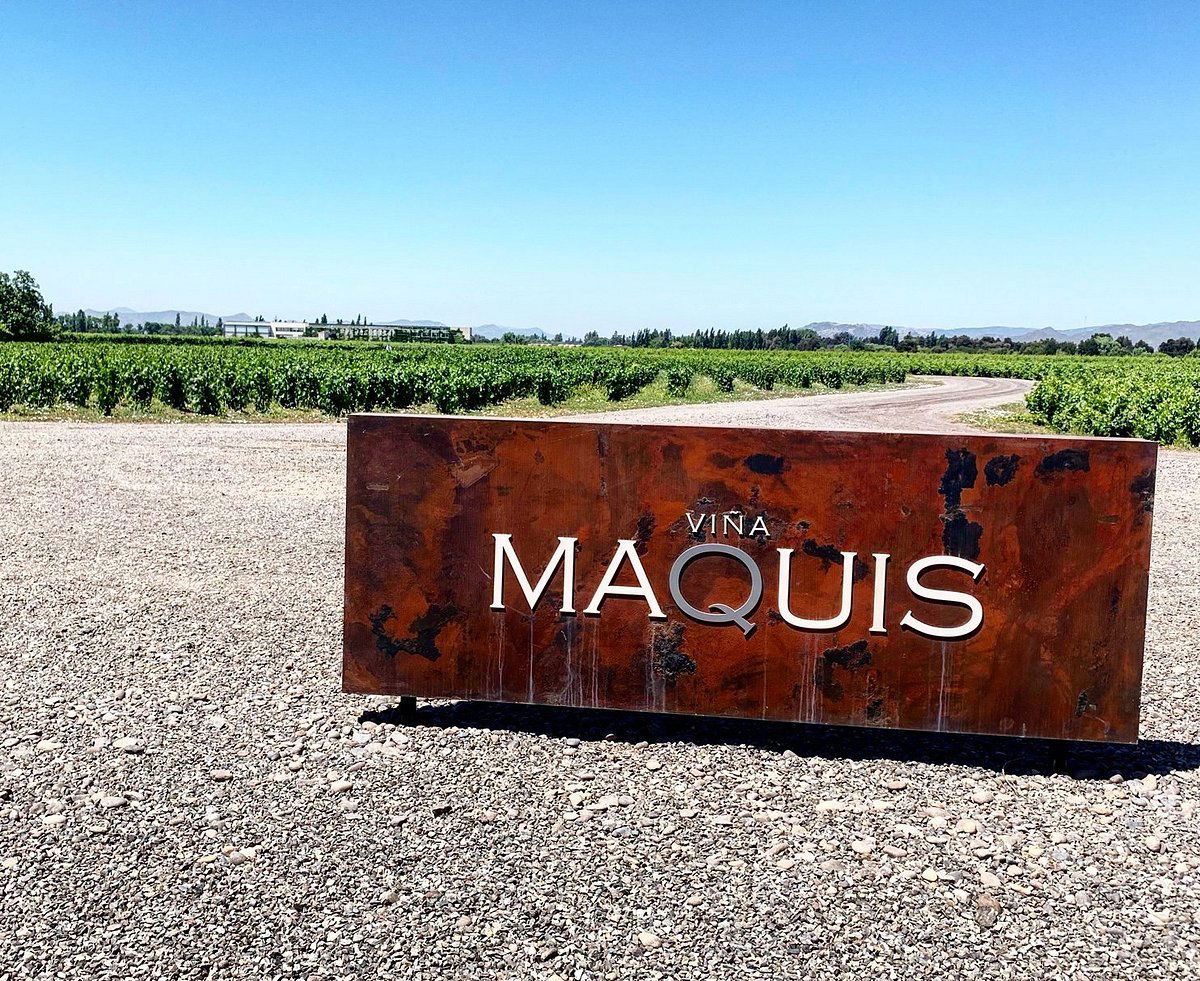
Viña Maquis sits in Chile's Colchagua Valley near Palmilla, earning EP Club's Pearl 2 Star Prestige recognition in 2025. The estate operates within a wine region shaped by Andean-influenced soils and a pronounced dry season, placing it among a small tier of Chilean producers whose terroir expression has drawn sustained critical attention. For visitors and collectors approaching the O'Higgins region, it represents a reference point for understanding what this valley's land can do.
What the Colchagua Valley Asks of Its Producers
The road into Palmilla runs through a landscape that explains everything about the wines made here before a single bottle is opened. The Colchagua Valley floor sits in Chile's O'Higgins Region, flanked by the Coastal Range to the west and the Andes to the east, and the combination produces a growing environment that is, in viticultural terms, highly specific: warm days, cold nights, low rainfall during the growing season, and soils that shift from clay-loam on the valley floor to alluvial fans and granite-influenced hillside material as you climb toward the cordillera. These are conditions that reward producers who read the land carefully and punish those who try to impose a house style onto terrain that already has strong opinions of its own.
Viña Maquis sits within this context, its vineyards positioned in the Palmilla appellation, which occupies the eastern, Andean-facing portion of the broader Colchagua designation. That distinction matters. Eastern Colchagua receives greater diurnal temperature variation than the valley's central or coastal zones, which tends to preserve aromatic precision and extend the window between phenolic and sugar ripeness — a window that defines the difference between wines that carry their structure elegantly and wines that carry it as weight. EP Club's Pearl 2 Star Prestige recognition in 2025 places Maquis within the upper tier of Chilean estate producers, a position that reflects consistent performance across vintages rather than a single standout year.
Colchagua's Competitive Field and Where Maquis Sits
Chilean viticulture has undergone a meaningful reorganisation over the past two decades. The broad national identity built on high-volume Cabernet Sauvignon and Carménère exports has given way to a more stratified field, where a smaller group of estate producers — focused on single-origin fruit, lower yields, and appellation-specific expression , operates with a different logic and a different customer. Within the Colchagua Valley, this upper tier includes estates whose wines price and allocate against peers in Napa, Bordeaux's right bank, and the Rhône rather than against Chilean commodity production.
Maquis shares a regional address with Viña MontGras, another Palmilla producer working the eastern valley, and the two estates represent a broader pattern in which the Colchagua interior has emerged as a concentration point for terroir-focused Chilean wine. Further south, Viña Casa Silva in San Fernando anchors a comparable argument for the Colchagua appellation's diversity, while estates such as Viña De Martino in Isla de Maipo and Viña Seña in Panquehue demonstrate how Chile's premium wine identity has spread across multiple valleys and elevations, each producing a distinct argument about what Chilean soil can express at its leading.
That said, Colchagua retains a particular character among Chile's premium zones. It is warmer and more opulent than Casablanca or San Antonio, less austere than the high-altitude Elqui or Limarí zones where producers like Viña Falernia in Vicuña work with desert-influenced terroir. What Colchagua does well, when producers allow it to, is produce red wines of concentration and structure that can nonetheless carry freshness , wines where the tannins arrive as architecture rather than obstruction.
Reading the Land: Soils, Elevation, and the Andean Factor
The terroir argument for the Palmilla zone rests on several interacting variables. Elevation above the valley floor moderates temperature extremes, allowing grapes to reach full phenolic maturity without accumulating excessive sugar. Andean snowmelt feeds the Tinguiririca River, which has historically deposited alluvial material across the eastern valley, creating heterogeneous soil profiles that vary meaningfully over short distances. This soil complexity is part of what makes single-vineyard or block-specific production in the area coherent rather than arbitrary: different parcels genuinely behave differently.
Carménère, Chile's adopted signature variety, thrives in this environment. A late-ripening grape historically abandoned in Bordeaux for its sensitivity to spring frost and uneven fruit set, it found in Chile a climate without the frost risk, extended growing seasons that allow full pyrazine dissipation, and soils complex enough to support genuine character rather than generic red-fruit production. Cabernet Sauvignon in eastern Colchagua benefits similarly: the warm days build structure, but the cold nights and mountain soils preserve the acidity that prevents structure from becoming density without direction.
For visitors tracing the larger story of South American terroir expression, the contrast between Colchagua's Andean fringe and Chile's northern valleys is instructive. Producers in the Atacama-adjacent zones, including the pisco-focused operations around Huasco such as Pisco Alto del Carmen Distillery, work with an entirely different climatic logic: extreme aridity, intense sun, and high-altitude river valleys that produce spirit grapes rather than wine grapes. That distance reinforces how specific and coherent Colchagua's identity is within Chile's diverse viticultural geography.
Planning a Visit to the Palmilla Wine Zone
The Colchagua Valley is accessible from Santiago, with the Palmilla area sitting roughly 170 kilometres south of the capital via Route 5 , the Panamerican Highway , followed by a turn toward the Andean interior. The zone is concentrated enough that a two-day visit can cover multiple estates without excessive driving, and the region has developed enough hospitality infrastructure that winery visits can be combined with local accommodation.
Visitors to the area should contact Viña Maquis directly to confirm current visit and tasting formats, as booking arrangements for Chilean estate wineries in the premium tier typically require advance reservation rather than walk-in access. The harvest period, running roughly from late February through April depending on variety and vintage conditions, represents the most active time at any Colchagua estate, while the austral summer months of December and January offer the easiest travel conditions.
For broader context on what the Palmilla zone and the wider Colchagua Valley offer, our full Palmilla wineries guide maps the regional producers in detail. Those extending a visit to the broader O'Higgins region or building a longer Chilean itinerary can also reference our full Palmilla restaurants guide, our full Palmilla hotels guide, our full Palmilla bars guide, and our full Palmilla experiences guide for a complete picture of the area.
Among the Chilean estates that have drawn sustained international attention, several share the logic of terroir specificity that characterises the Palmilla zone. Viña Santa Rita in Buin anchors the Maipo Valley tradition, while El Gobernador (Miguel Torres Chile) in Curicó represents the longer European investment in Chilean viticulture. For those approaching Chilean wine through a comparative international lens, the conversation extends beyond South America: premium estate wine built around place-specific identity connects this valley to producers in entirely different contexts, from Abadía Retuerta in Sardón de Duero to single-malt producers such as Aberlour in Aberlour, where the argument about place expressing itself through a product operates with the same underlying logic.
Frequently Asked Questions
- What wine is Viña Maquis famous for?
- Viña Maquis works within the Colchagua Valley's eastern Palmilla zone, where Carménère and Cabernet Sauvignon have historically produced the strongest results from Andean-influenced terroir. The estate holds EP Club's Pearl 2 Star Prestige recognition for 2025. Specific current labels and winemaker details are leading confirmed directly with the estate.
- What's the defining thing about Viña Maquis?
- Its position in the Palmilla appellation within the Colchagua Valley places it within a specific climatic and soil zone that differs meaningfully from the broader valley floor. The 2025 Pearl 2 Star Prestige award from EP Club reflects the estate's sustained place at the upper end of Chilean wine production. That combination of geographic specificity and recognised quality is what separates this tier of Colchagua producer from the region's volume output.
- Can I walk in to Viña Maquis?
- Premium estate wineries in Colchagua's Palmilla zone typically require advance booking rather than accepting walk-in visitors, and Viña Maquis should be contacted ahead of any planned visit to confirm current tasting formats and availability. No phone number or website is listed in our current database, so reaching out through regional tourism channels or a local wine specialist is the practical approach. The area's location in the O'Higgins Region interior also means planning logistics before arrival is sensible.
- Who tends to like Viña Maquis most?
- Visitors with a specific interest in terroir-driven Chilean red wine, particularly those exploring the distinction between Colchagua's various sub-zones, are likely to find the most value here. The EP Club Pearl 2 Star Prestige recognition in 2025 signals a level of production that appeals to collectors and informed drinkers rather than casual tourists. Those building a Colchagua itinerary around the premium estate tier, rather than high-volume visitor experiences, are the natural audience.
- How does Viña Maquis compare to other Colchagua Valley producers in the premium tier?
- Within the Palmilla zone specifically, the estate shares the eastern Colchagua address that distinguishes this sub-area from the warmer, lower-elevation valley floor. EP Club's 2025 Pearl 2 Star Prestige places Maquis within a select group of Chilean producers recognised for consistent quality at the upper end of the country's wine output. Compared to neighbours like Viña MontGras, which operates from the same Palmilla base, the productive focus and style differences are leading assessed through direct tasting rather than broad generalisations.
Side-by-Side Snapshot
A quick snapshot of similar venues for side-by-side context.
| Venue | Classification | Awards | First Vintage | Notes |
|---|---|---|---|---|
| Viña Maquis | 1 awards | This venue | ||
| Viña Santa Rita | World's 50 Best | |||
| Viña Viu Manent | World's 50 Best | |||
| Bodegas RE | World's 50 Best | |||
| Viña Almaviva | World's 50 Best | |||
| Viñedos de Alcohuaz | World's 50 Best |
Access the Cellar?
Our members enjoy exclusive access to private tastings and priority allocations from the world's most sought-after producers.
Access the Concierge