

World's 50 Best #50 · Falstaff Winery - 4 Stars
Taittinger places Reims Champagne in direct contact with its chalk foundation: the visit is built around cellars cut into fourth-century quarries beneath the city. For travellers comparing the grandes maisons, the draw is less about spectacle than geology, age, and scale, with the house's first vintage in 1943 and Alexandre Ponnavoy now attached to the winemaking direction.

Pearl is the En Primeur Club membership app — saves, bookings, and concierge access live there. Same editors, same standards.
- Address
- 9 Place Saint-Nicaise, 51100 Reims
- Phone
- +33 3 26 85 84 33
- Website
- book-a-visit.taittinger.fr
- Directions
- Get directions
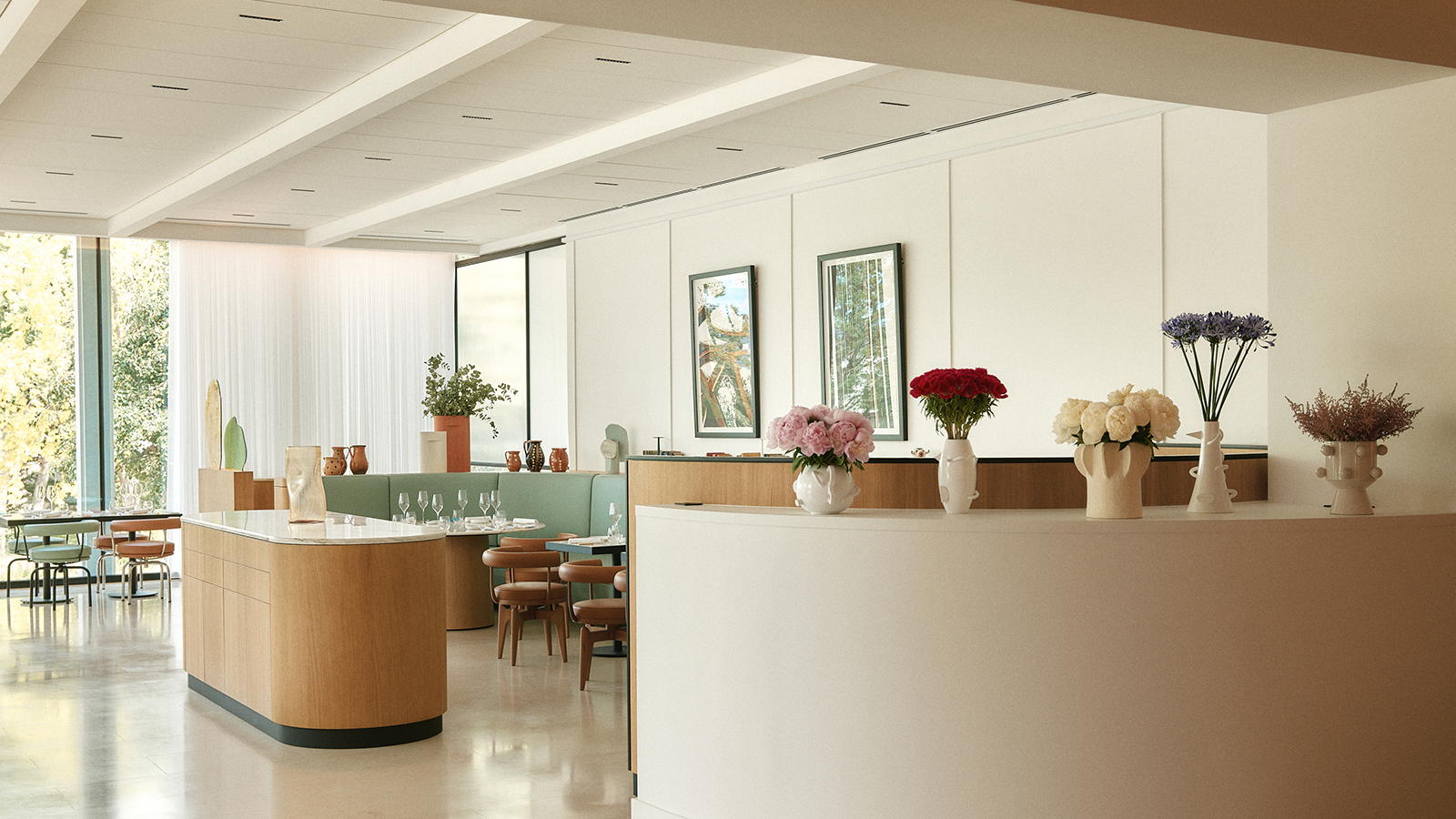
Chalk is the first serious argument in Reims. Beneath the city, the temperature drops, sound tightens, and Champagne stops being an abstract luxury category and becomes tied to place. At Taittinger, the setting is central: a labyrinth of cellars dug into fourth-century chalk quarries beneath Reims, the kind of underground architecture that explains why this city is so closely associated with Champagne.
That physical context matters because Champagne is often sold through labels, lineage, and ceremony, while the cellars make a quieter case. The verified draw at Taittinger is not an invented service format or a long list of unconfirmed extras; it is the chance to encounter Champagne Taittinger in one of Reims's atmospheric chalk-cellar settings.
Reims chalk, not branding, carries the argument
Champagne's grandes maisons can feel interchangeable when reduced to prestige cuvées and polished presentation. Reims corrects that quickly. The city's chalk cellars are part of the region's identity, and Taittinger's cellars belong to that conversation. Their fourth-century quarry origin gives the visit a historical depth that does not need embellishment.
The broader Reims comparison is useful. Ruinart is often discussed through the drama of its crayères, while Krug occupies a different psychological space: more about house identity and Champagne prestige than a simple cellar-first reading. Henriot gives another side of the local conversation. Taittinger sits close to the architectural and geological strand of the discussion, with the underground setting doing much of the editorial work.
Rather than inventing menus, prices, tasting formats, or service details, the useful way to read Taittinger is as a Champagne visit whose strongest confirmed feature is its setting beneath the city.
How the cellar format changes the way Champagne is read
Terroir in Champagne is often discussed through villages, crus, and grape composition. In Reims, the cellar setting deserves attention too. A visitor who only thinks of Champagne above ground misses part of the cultural force of the city: its underground chalk spaces are central to how many travellers understand the region.
That is where Taittinger has a clear editorial advantage over a generic tasting-room description. The experience is not best explained through unverified claims about seat counts, menus, rare pours, or a particular service routine. The reliable point is simpler and stronger: the visit is tied to chalk walls, subterranean scale, and the sense of descent beneath Reims.
For travellers building a Reims itinerary, this makes the house useful as a cellar-led stop. After that, comparisons sharpen naturally: Krug, Henriot, Lanson, Ruinart, and Veuve Clicquot Ponsardin each suggest different ways to think about Champagne houses in and around Reims. The point is not to rank them in a simple hierarchy; it is to understand that Reims is a city of distinct Champagne arguments, not a single house-to-house checklist.
The strongest visitors here are the ones who care about the conditions and context behind the bottle. Anyone chasing only restaurant-style service, detailed food programs, or highly specific tasting formats should confirm those details directly before planning around them. For the traveller trying to connect chalk, city, and cellar into one coherent Champagne lesson, Taittinger's verified setting has substance.
Planning a Reims wine day around cellars and context
Reims rewards pacing. A cellar visit carries more weight when it is paired with time elsewhere in the city or across another house with a different emphasis. The mistake is treating maison visits as interchangeable appointments. Choose one for the cellar architecture, another for a contrasting house identity, and leave room for the city itself.
Useful planning starts with the wider city, not only the bottle. Our full Reims wineries guide is the cleanest place to compare cellar-led houses with producers whose appeal sits elsewhere. Food matters too: our full Reims restaurants guide helps turn a tasting day into a proper meal plan, while our full Reims hotels guide is the better reference for staying close enough to avoid turning Champagne into a logistics exercise. For aperitif hours and late drinking, use our full Reims bars guide; for non-cellar cultural formats, use our full Reims experiences guide.
Travellers extending beyond Reims should think in contrasts without relying on unverified claims about Taittinger's own programming. Other Champagne villages and producers can reframe the discussion around place, scale, and house identity, while Reims itself remains the anchor for cellar-focused visits. Keep practical details flexible and verify current booking information through official channels.
Taittinger is strongest when judged as a Reims cellar experience rather than as a generic Champagne stop. Its value lies in the direct link between the city's chalk substructure and the long cultural memory of Champagne. In a region where prestige can flatten nuance, that is a useful correction.
Quick Comparison
Comparable venues by cuisine and price in the same metro.
| Venue | Cuisine | Price | Awards |
|---|---|---|---|
| TaittingerThis venue — the venue you are viewing | Cellars don't get much more atmospheric than the labyrinth dug into fourth century chalk quarries beneath the city of Reims. Let Champagne Taittinger usher you; Cellars don't get much more atmospheric than the labyrinth dug into fourth century chalk quarries beneath the city of Reims. Let Champagne Taittinger usher you; Cellars don't get much more atmospheric than the labyrinth dug into fourth century chalk quarries beneath the city of Reims. Let Champagne Taittinger usher you | $50–100 | World's 50 Best #50 · Falstaff Winery - 4 Stars |
| Ruinart | Not listed | Not listed | World's 50 Best #8 · Falstaff Winery - 4 Stars |
| Lanson | Not listed | $30–50 | Falstaff Winery - 3 Stars |
| Krug | Not listed | Not listed | Falstaff Winery - 5 Stars |
| Henriot | Not listed | Not listed | Falstaff Winery - 4 Stars |
| Veuve Clicquot Ponsardin | Not listed | Not listed | World's 50 Best #51 |
Recognition history
Dated appearances from independent guides and award organizations, with the underlying list record or original source where available.
World's 50 Best Vineyards #50
World's 50 Best
Falstaff Winery - 4 Stars
Falstaff
Full recognition history (5 entries)
World's 50 Best Vineyards #15
World's 50 Best
World's 50 Best Vineyards #13
World's 50 Best
World's 50 Best Vineyards #28
World's 50 Best
Continue exploring
More in Reims
Wineries in Reims
Browse all →
Bars in Reims
Browse all →
Restaurants in Reims
Browse all →
Details
- Elegant
- Classic
- Well Known
- Sophisticated
- Historic
- Wine Education
- Special Occasion
- Celebration
- Cave Tasting
- Historic Building
- Vineyard Tour
- Sustainable
- Vineyard
- Chardonnay
- Pinot Noir
- Pinot Meunier
- Sparkling
- Still White
- Still Rosé
- Private Tasting
- Cave Tasting
- English
- French
Elegant and atmospheric underground cellars with cool, dimly lit chalk tunnels evoking centuries of Champagne history.