Raventós i Blanc

Raventós i Blanc sits at the principled edge of Penedès viticulture, producing Cava de Paraje Calificado from certified organic and biodynamic vineyards on the limestone-clay soils around Sant Sadurní d'Anoia. Holding a Pearl 3 Star Prestige rating for 2025, the estate operates as one of the region's most credentialed advocates for low-intervention sparkling wine. Visitors come for cellar access, vineyard immersion, and wines that argue clearly for terroir over volume.
 Discover on Pearl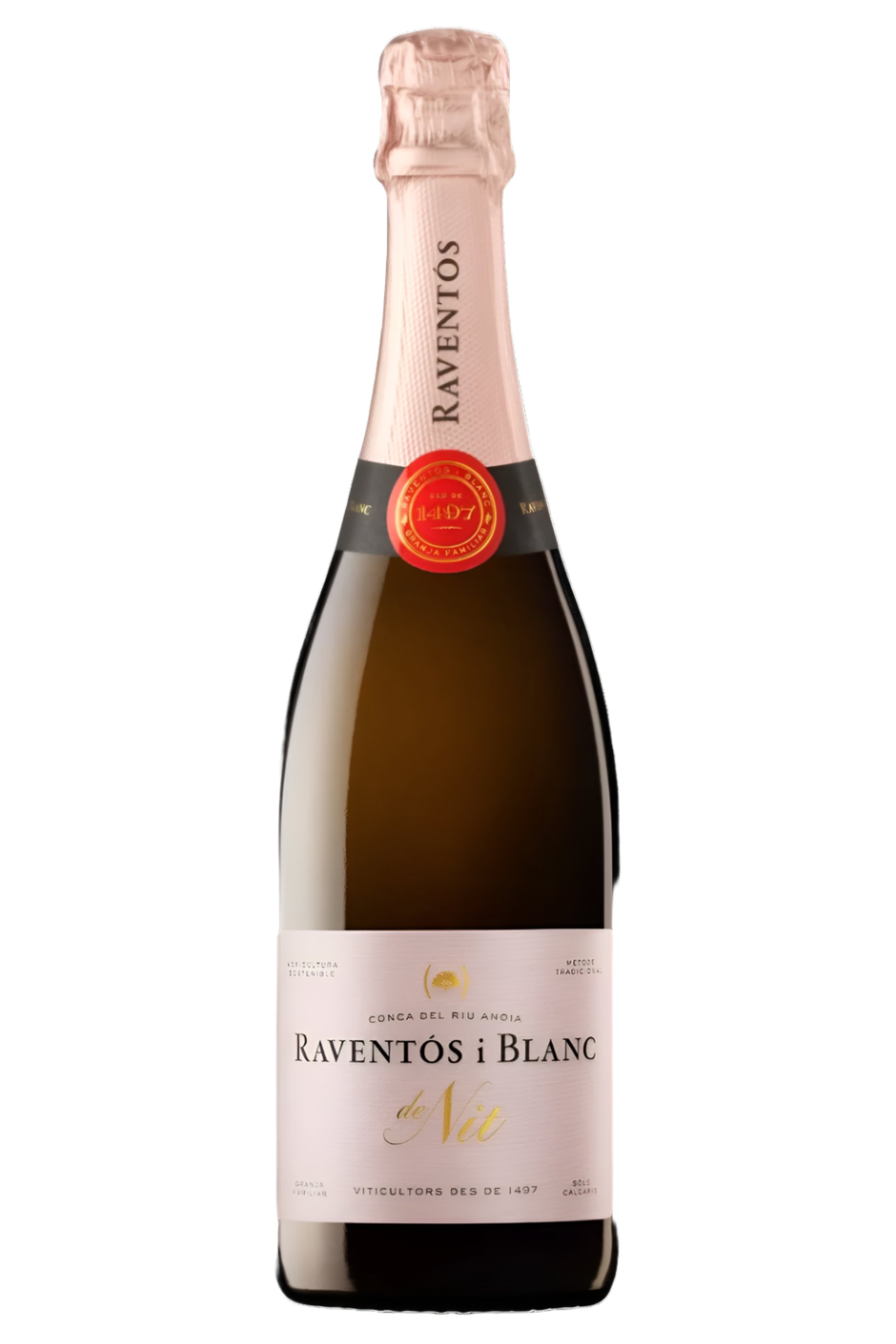
Limestone, Discipline, and the Other Side of Sant Sadurní
The town of Sant Sadurní d'Anoia is, above all else, a production town. The Penedès basin that surrounds it generates somewhere in the range of 250 million bottles of Cava annually, and the largest names in that trade, including Codorníu and Freixenet, have shaped its skyline and its economy for well over a century. Within that context, Raventós i Blanc represents a deliberate counter-position: a family estate that formally resigned from the Cava DO in 2012 and has since operated under the more exacting Conca del Riu Anoia appellation, prioritizing parcel-specific viticulture over volume-driven winemaking.
Arriving at Plaça del Roure, the estate's address in Sant Sadurní d'Anoia, the physical character of the property signals something different from the industrial-scale operations nearby. The scale is human. The vineyards are close. The architecture does not perform grandeur so much as assert continuity with the land around it, which is precisely the editorial position the wines themselves take.
What Biodynamic Viticulture Actually Requires Here
The Penedès is one of the warmer Mediterranean wine regions of Catalonia, which makes the commitment to organic and biodynamic farming more demanding than it would be in cooler, damper climates. Managing disease pressure without synthetic intervention on limestone-clay soils at these temperatures requires precision in canopy management, soil microbiology investment, and seasonal timing that industrial producers in the same postcode simply cannot afford to replicate at scale.
Raventós i Blanc's vineyards are certified organic and managed biodynamically, which places them in a small cohort within Sant Sadurní alongside estates like Gramona and Recaredo, both of which have made similar long-term investments in low-intervention viticulture. What separates these producers from the broader DO field is not simply certification, but the consequent limitation on yield and the acceptance that certain vintages will produce less wine, or wine of a different character, than market planning would prefer. That is a structural commitment, not a marketing adjustment.
The indigenous varieties central to the estate's work, Macabeu, Xarel-lo, and Parellada, are the same trio that underpins conventional Cava production. The difference lies in how the land expresses them when it is farmed without synthetic fertilizers or pesticides across successive growing seasons. Soil health compounds over years, and wines from biodynamically farmed vineyards in the Penedès show measurably different mineral profiles once the farming has had time to shift the vine's relationship with the subsoil. That process takes roughly a decade before the results are legible in the glass.
The Conca del Riu Anoia Framework
When Raventós i Blanc departed the Cava DO, the decision was explicitly about regulatory ambition. The Cava framework, as structured at the time, permitted sourcing from across a vast geographic zone in Spain and did not require disclosure of specific parcel origins. For an estate anchored to a particular set of limestone-clay vineyards in the Anoia river basin, those rules were incompatible with what the wines were actually trying to say.
The Conca del Riu Anoia designation, which Raventós i Blanc helped to establish, operates with stricter geographic definition, minimum vine age requirements, and extended aging periods that align more closely with Champagne's Cru system than with standard Cava regulation. Other quality-focused estates working in Sant Sadurní d'Anoia, including Juvé & Camps, have pursued quality signals within the DO framework through the Cava de Paraje Calificado category. Raventós chose exit over internal reform, a rarer and more structurally costly move that has nonetheless created a clearer positioning in export markets where Cava's generic associations are difficult to overcome.
This is the broader pattern that Raventós i Blanc's trajectory illustrates: in regions where a large, commercially permissive appellation dominates, the producers most serious about terroir expression tend to either push for a sub-category (as Recaredo and Gramona have done) or exit the appellation entirely. Both strategies require absorbing the cost of consumer re-education. The reward, where it lands, is a price premium and a collector audience that tracks allocations rather than browsing retail shelves.
Peer Context: Where Raventós Sits in the Regional Conversation
Sant Sadurní d'Anoia's premium tier is genuinely small relative to the volume produced in the region. The estates operating at the level of extended aging, single-vineyard sourcing, and low-intervention farming, including Gramona, Recaredo, and Raventós i Blanc, represent a fraction of total regional output but a disproportionate share of international critical attention. Raventós i Blanc's Pearl 3 Star Prestige rating for 2025 from EP Club places it in the upper tier of that peer group, a recognition grounded in the estate's sustained commitment to appellation integrity and farming discipline over commercial scale.
For visitors comparing itineraries across Spanish wine regions, the Penedès premium tier sits in a different register from, say, the Ribera del Duero estates of Abadía Retuerta or Arzuaga Navarro, or from Bodegas Protos in Peñafiel. The wines are structurally different, the farming philosophy diverges, and the visit format at a family-scale biodynamic estate is more intimate and less stage-managed than the tourist infrastructure that larger operations have built. That intimacy is the point.
Planning a Visit to Raventós i Blanc
Sant Sadurní d'Anoia sits roughly 40 kilometres southwest of Barcelona, accessible by the R4 regional train line in under an hour from Plaça de Catalunya. That proximity makes the estate workable as a focused day trip from the city, though staying overnight in the area allows for visits to multiple producers without the time pressure of a return train. The EP Club Sant Sadurní d'Anoia guides, including our full Sant Sadurní d'Anoia restaurants guide, our full Sant Sadurní d'Anoia hotels guide, our full Sant Sadurní d'Anoia bars guide, our full Sant Sadurní d'Anoia wineries guide, and our full Sant Sadurní d'Anoia experiences guide, cover the surrounding area for those building a longer itinerary.
Visits to the estate should be arranged in advance. No phone or direct booking channel is listed in the EP Club database, so contact through the estate's official website is the recommended approach. Given the scale of the operation, walk-in access is unlikely to yield the depth of experience the estate offers through its structured cellar and vineyard formats. Those planning the visit around harvest or spring farming windows will see biodynamic practices at their most active. For comparison with premium estates operating in different traditions and geographies, EP Club also covers Aberlour in Aberlour and Accendo Cellars in St. Helena.
Frequently Asked Questions
Peer Set Snapshot
These are the closest comparables we have in our database for quick context.
| Venue | Awards | Notes |
|---|---|---|
| Raventós i Blanc | Pearl 3 Star Prestige | This venue |
| Gramona | 50 Best Vineyards #25 (2025); Pearl 2 Star Prestige | |
| Codorníu | Pearl 3 Star Prestige | |
| Freixenet | Pearl 3 Star Prestige | |
| Juvé & Camps | Pearl 3 Star Prestige | |
| Recaredo | Pearl 2 Star Prestige |
Access the Cellar?
Our members enjoy exclusive access to private tastings and priority allocations from the world's most sought-after producers.
Get Exclusive Access