
Pingus occupies a singular position in Ribera del Duero — a small-production Tempranillo estate in Quintanilla de Onésimo where winemaker Peter Sisseck has, since the mid-1990s, made one of Spain's most scrutinised and allocated wines. Holding both Pearl 3 Star and Pearl 4 Star Prestige awards in 2025, it sits at the apex of the region's critical recognition and benchmarks against the world's most sought-after cult wines.
Terroir Before Everything
In Ribera del Duero, where the Duero River carves through the high Castilian plateau at elevations between 700 and 900 metres, the growing season is compressed and the temperature swings between day and night are among the most dramatic in any serious wine region on the Iberian peninsula. Frost can arrive in May; August afternoons regularly exceed 35°C. The soils shift between chalky limestone, sandy alluvium, and clay-rich pockets that hold moisture through the dry summers. These are not comfortable conditions for viticulture. They are, however, conditions that produce grapes with concentration and acidity in tension — the defining character of the region's finest Tempranillo.
Pingus sits directly inside that terroir argument. The estate, located in Quintanilla de Onésimo in the province of Valladolid, draws from old-vine Tempranillo plots whose root systems reach deep enough to access subsoil moisture and mineral reserves that younger vines cannot. The result is wine whose structure reflects the plateau's extremes rather than filtering them out — which is exactly the point.
What Pingus Represents in the Regional Hierarchy
Ribera del Duero's premium tier has consolidated around a handful of producers whose wines trade on allocation rather than availability. Pingus, under winemaker Peter Sisseck, belongs to that group and has done so consistently since the estate's first releases in the 1990s brought international attention to what was then still a region finding its identity. At that time, Ribera del Duero was emerging from the shadow of Rioja as Spain's prestige red wine region, and a small number of estates were demonstrating that Tempranillo, grown at altitude on the Castilian meseta, could produce wines with the density and longevity to compete at the highest international level.
Sisseck, Danish-born and trained in Bordeaux, approached the region's potential through the lens of Burgundian single-vineyard philosophy applied to Spanish raw material. That cross-regional thinking placed Pingus in a different competitive set from its neighbours almost immediately. Where many Ribera del Duero producers were scaling up to meet export demand, Pingus stayed small. That constraint , whether strategic or circumstantial , aligned it with an allocation-driven model more common in Burgundy's grand cru tier or in California's most closely held cult Cabernets, such as Accendo Cellars in St. Helena, than with the volume output that defines the region's broader commercial identity.
For broader regional context across Ribera's range of styles and scales, our full Ribera del Duero wineries guide maps the complete peer set, from large historic bodegas to boutique single-vineyard estates.
The Soil Beneath the Label
Pingus draws from plots in and around Quintanilla de Onésimo, a village whose soils are among the most heterogeneous in the appellation. The combination of limestone subsoil and varying topsoil compositions across the estate's parcels means that each harvest is read differently , the vintage character expresses through the interaction of vine age, soil drainage, and the plateau's unforgiving climate rather than through cellar intervention designed to homogenise the result.
Old-vine Tempranillo in Ribera del Duero behaves differently from the variety as grown further south or at lower altitude. The smaller berry size typical of old, low-yielding vines concentrates both phenolic structure and aromatic intensity. At altitude, the longer hang time before harvest allows phenolic ripeness to develop while retaining the acidity that gives the wine its spine. These are the conditions that generate the structural profile Pingus has become known for , wines that require time in bottle to open and that reward patience in a way that younger-vine or higher-yield Tempranillo rarely does.
That philosophy connects Pingus to a wider conversation happening across Spain's premium wine regions. At Clos Mogador in Gratallops, Priorat producers have developed a parallel argument around old Garnacha and Cariñena on llicorella slate soils. At Abadía Retuerta in Sardón de Duero, just upstream along the river, a different approach to Tempranillo blending on a larger estate demonstrates how varied the region's interpretation of terroir can be. The contrast is instructive: Pingus operates at a scale that makes terroir expression a precise rather than averaged argument.
Awards and Critical Position
Pingus holds both Pearl 3 Star Prestige and Pearl 4 Star Prestige recognition from EP Club in 2025 , a dual-tier acknowledgment that places it among the most rigorously assessed properties in the region's critical infrastructure. These ratings function as position markers within the allocation-tier peer set: estates that hold both designations are, by definition, operating at a level where demand structurally exceeds supply and where secondary market pricing reflects that imbalance.
That critical position is consistent with Pingus's long track record of high scores from international wine press, which have reinforced its status since the late 1990s. For producers across Ribera at different price and production tiers, the range of critical recognition is wide. Arzuaga Navarro in Quintanilla de Onésimo and Bodegas Protos in Peñafiel represent established estates with deeper production volumes and broader distribution, offering a useful comparison point for understanding where Pingus sits in terms of accessibility and price tier.
Planning a Visit
Quintanilla de Onésimo lies within the western stretch of Ribera del Duero, roughly midway between Valladolid and Peñafiel along the Duero valley corridor. The village is small, and Pingus operates at a scale consistent with that setting. Given the estate's allocation-based production model, visits are not walk-in affairs; advance contact through the estate's address at Calle Millán Alonso, 49, Quintanilla de Onésimo, Valladolid, is the appropriate route. Phone and website details are not publicly listed in standard directories, which is consistent with how tightly allocated estates across the world manage access , Burgundy's most sought-after domaines operate on similar terms.
The leading window for visiting the region broadly falls in late spring and early autumn. Harvest typically runs through October at this altitude, and the post-harvest period gives visitors the chance to see the winery in its working state. Summers in Castile are hot and dry; the plateau light in July and August is striking but the heat limits the appeal of extended outdoor exploration.
For accommodation in the region, our Ribera del Duero hotels guide covers options across the valley. Those planning a wider circuit of the appellation should also consult our restaurants guide, bars guide, and experiences guide for a complete picture of the region. Beyond Ribera, Spanish wine travel frequently extends to Rioja, where CVNE in Haro and Bodegas Ysios in Laguardia offer contrasting perspectives on the country's other dominant red wine tradition. For Cava production, Codorníu in Sant Sadurní d'Anoia rounds out a nationally oriented itinerary. Further afield but thematically relevant, Bodegas Vivanco in Valle de Mena combines serious wine production with one of the most significant wine culture museums in Europe. For those whose wine travel extends to Scotland, Aberlour in Aberlour offers a different but equally rigorous conversation about terroir expression in spirit form.
Frequently Asked Questions
- Is Pingus more low-key or high-energy?
- Low-key, by every available measure. The estate is located in a small village in rural Castile, operates at minimal production scale, and does not maintain a public-facing visitor infrastructure in the conventional sense. The wines carry significant critical weight , including dual Pearl Prestige recognition in 2025 , but the setting and access model are deliberate in their restraint. This is not a destination with tasting room events or hospitality programming; it is a working estate that produces one of Spain's most closely followed wines in conditions that reflect exactly that priority.
- What is the wine to seek out at Pingus?
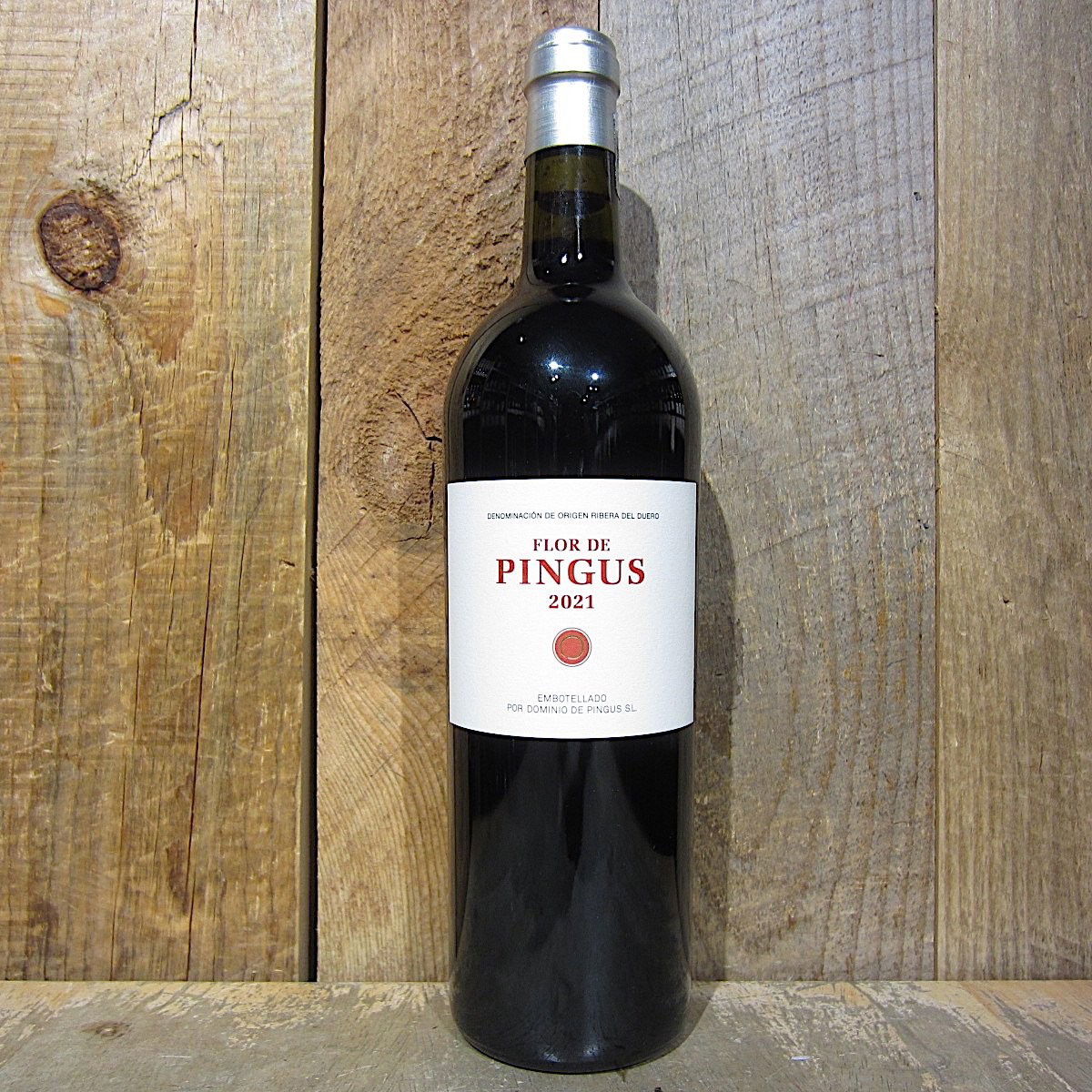
- The flagship Pingus itself is the reference point , an old-vine Tempranillo from Quintanilla de Onésimo that has accumulated international critical recognition since the mid-1990s and now trades primarily on allocation. The estate also produces Flor de Pingus from younger vines and broader Ribera del Duero sourcing, which functions as the more accessible entry point into winemaker Peter Sisseck's style. Both wines are anchored in the same terroir argument: altitude-grown Tempranillo expressing the Castilian plateau's extremes rather than softening them.
- What is the standout thing about Pingus?
- The combination of production scale and critical position is what makes Pingus structurally different from most of its Ribera del Duero peers. Holding both Pearl 3 Star and Pearl 4 Star Prestige awards in 2025, the estate operates at a level of recognition that places it in an international peer set of cult-production wines while remaining physically rooted in the Quintanilla de Onésimo village context of rural Castile. That contrast , global allocation demand, local agricultural reality , is the tension that defines both the wine and the estate's identity within the region.
A Quick Peer Check
These are the closest comparables we have in our database for quick context.
| Venue | Cuisine | Price | Awards | Notes |
|---|---|---|---|---|
| Pingus | Pearl 3 Star Prestige (2025); Pearl 4 Star Prestige (2025) | This venue | ||
| Abadía Retuerta | ||||
| Arzuaga Navarro | ||||
| Bodegas Protos | ||||
| Bodegas Vivanco | ||||
| Bodegas Ysios |
Access the Cellar?
Our members enjoy exclusive access to private tastings and priority allocations from the world's most sought-after producers.
Access the Concierge