Bodegas Vivanco

Established in 1915 in the Briones enclave of Rioja Alta, Bodegas Vivanco sits against the Cantabrian foothills with views across vine-covered hillsides that have shaped this region's identity for generations. Home to a 4,000-square-metre Museum of Wine Culture, it holds a Pearl 3 Star Prestige rating (2025) and occupies a position at the centre of Riojan wine heritage rather than its margins.
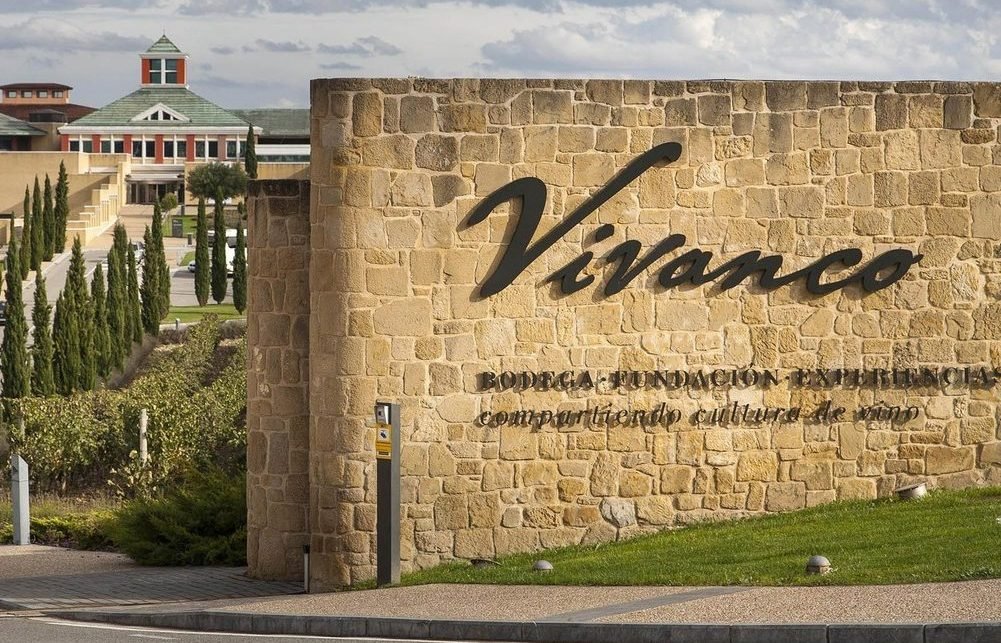
Where the Cantabrian Foothills Begin to Shape the Wine
Approach Briones from the south and the Cantabrian mountains sit hard on the horizon, close enough to feel like a wall but far enough to create the thermal buffer that defines Rioja Alta's growing conditions. This is the geological argument for why the wines from this specific enclave differ from those produced further east in Rioja Baja: the altitude moderates summer heat, the mountains intercept Atlantic moisture, and the Ebro valley floor channels a diurnal temperature swing that preserves acidity in fruit that would otherwise ripen flat. Bodegas Vivanco, established in 1915 and positioned along the N-232 corridor through Briones, sits at the heart of this terroir conversation rather than at its edge.
The setting reads before you open a bottle. Surrounding hills carry the kind of topographical variation that forces viticulturalists to think in parcels rather than in bulk — different elevations, different soil compositions (the iron-rich clay-limestone mix of Rioja Alta differs sharply from the more alluvial, sandier profiles further downriver), and microclimatic pockets that reward patient observation. This is the physical context against which a century of production at Vivanco should be read.
A Museum That Earns Its Square Footage
Wine culture institutions in producing regions tend to fall into two camps: the architectural gesture that prioritises form over content, and the serious interpretive programme that treats the visitor as intellectually capable. The 4,000-square-metre Museum of Wine Culture at Bodegas Vivanco positions itself firmly in the latter. At that scale, this is not an ancillary visitor centre attached to a tasting room but a dedicated institution in its own right, one of the largest wine museums in Spain by footprint.
The significance of that scale matters editorially. Rioja as a denomination has long traded on heritage as a differentiator from newer New World appellations, but heritage requires institutional investment to function as more than a marketing claim. A museum of this size, integrated into an active production winery established over a century ago, makes the heritage argument in concrete terms. For the wider Rioja Alta scene, Vivanco functions as a cultural anchor in much the same way that the historic quarter of Haro, with its cluster of century-old bodegas, anchors the denomination's northern edge. Visitors exploring the region's wine identity find a physical address for that inquiry here.
This connects Vivanco to a pattern visible across Spain's most self-aware wine regions: the investment in cultural infrastructure as a parallel track to wine quality. [Bodegas Ysios in Laguardia](https://www.enprimeurclub.com/wineries/bodegas-ysios-laguardia-winery) commissioned a Santiago Calatrava building as its statement; [CVNE (Cune) in Haro](https://www.enprimeurclub.com/wineries/cvne-cune-haro-winery) leans into its 1879 founding and barrel hall heritage. Vivanco's response is the museum, a choice that stakes its identity on depth of documentation rather than architectural spectacle.
The 2025 Pearl 3 Star Prestige Recognition
The EP Club Pearl 3 Star Prestige rating awarded in 2025 places Bodegas Vivanco in a tier reserved for producers whose combination of wine quality, visitor experience, and cultural contribution warrants sustained attention. Within the competitive set of Rioja Alta producers that have invested in serious visitor infrastructure, this recognition reflects the degree to which Vivanco has integrated its production legacy with its public-facing programme, treating both as inseparable rather than as parallel operations that happen to share a postcode.
For context, the Pearl Prestige tier within EP Club's winery assessments typically signals producers that outperform pure tasting-room operations, offering a visit architecture that justifies the travel independently of any single wine purchase. Vivanco's century-plus production history and its museum programme together make that case with relatively little effort.
Reading Rioja Alta Through the Briones Lens
Briones itself is a small medieval village that sits on a promontory above the Ebro, its position giving it a vantage point over vineyards that drop toward the river. The village predates the modern Rioja DOCa designation by several centuries, and the wine culture here carries that temporal depth. The Cantabrian foothills that backdrop Vivanco's vineyards create cooler, longer growing seasons than the warmer zones toward Logroño and beyond, which is why Rioja Alta has historically produced wines with more structural tension and longer ageing potential than the sun-riper styles associated with the eastern zones.
Tempranillo, the backbone of Rioja production, expresses differently here than in warmer sub-zones. The higher acidity preserves freshness through extended barrel ageing, which is why traditional Gran Reserva production in this area has always leaned on time as a tool. Producers in this enclave are working with raw material that can absorb oak and time without losing its spine, a characteristic that fundamentally separates Rioja Alta's ageing trajectory from what you find at, say, [Clos Mogador in Gratallops](https://www.enprimeurclub.com/wineries/clos-mogador-gratallops-winery) in Priorat, where Garnacha and Carignan in slate-driven soils produce a different structural argument entirely.
Comparing across Spain's premium wine regions sharpens the picture. [Abadía Retuerta in Sardón de Duero](https://www.enprimeurclub.com/wineries/abada-retuerta-sardn-de-duero-winery) and [Arzuaga Navarro in Quintanilla de Onésimo](https://www.enprimeurclub.com/wineries/arzuaga-navarro-quintanilla-de-onsimo-winery) work with Tempranillo on the limestone and clay of the Duero plateau, where continental extremes produce a denser, more muscular fruit profile. [Bodegas Protos in Peñafiel](https://www.enprimeurclub.com/wineries/bodegas-protos-peafiel-winery) and [Emilio Moro in Pesquera de Duero](https://www.enprimeurclub.com/wineries/emilio-moro-pesquera-de-duero-winery) operate in similar Ribera del Duero territory. Rioja Alta's Tempranillo, shaped by Atlantic influence and higher elevation, sits in a different register: less monolithic on extraction, more reliant on aromatic development over time. Vivanco's century of production has been calibrated to that register.
Planning a Visit
Bodegas Vivanco sits on the Carretera Nacional 232 in Briones, a road that connects Haro to the west with Logroño to the east and serves as the spine of Rioja Alta wine country. The address (Carretera Nacional 232, 26330 Briones) puts it within easy driving distance of Haro, which functions as the natural base for anyone exploring the western half of the denomination. Visitors staying in Haro can reach Vivanco in under fifteen minutes by car, making it a logical anchor for a day that might also include the historic bodegas quarter in Haro's Barrio de la Estación.
The museum programme means a visit here warrants more time than a standard winery tasting; allow at least two to three hours to engage with the cultural institution properly before moving to the production and tasting components. Given that Vivanco draws visitors specifically for the museum, arriving early in the morning or on weekdays avoids the peak flow of regional tour groups that congregate at major heritage sites during summer and holiday weekends. For broader regional planning, our [Valle de Mena wineries guide](https://www.enprimeurclub.com/wineries/valle-de-mena) maps the wider network of producers in this part of northern Spain, and our [Valle de Mena experiences guide](https://www.enprimeurclub.com/experiences/valle-de-mena) covers the cultural and outdoor programming that frames a longer stay. Accommodation options are detailed in our [Valle de Mena hotels guide](https://www.enprimeurclub.com/hotels/valle-de-mena), while restaurant and bar recommendations for the region are covered in our [Valle de Mena restaurants guide](https://www.enprimeurclub.com/restaurants/valle-de-mena) and [Valle de Mena bars guide](https://www.enprimeurclub.com/bars/valle-de-mena).
For those building a broader Spanish wine itinerary, [Codorníu in Sant Sadurní d'Anoia](https://www.enprimeurclub.com/wineries/codornu-sant-sadurn-danoia-winery) offers a similarly scaled heritage visit in Catalonia's Cava country, while [Accendo Cellars in St. Helena](https://www.enprimeurclub.com/wineries/accendo-cellars) and [Aberlour in Aberlour](https://www.enprimeurclub.com/wineries/aberlour-aberlour-winery) represent analogous commitments to place-driven production in different hemispheres entirely. The comparison underscores how rarely a producer manages to embed cultural infrastructure as deeply as Vivanco has within the fabric of its wine identity.
Frequently Asked Questions
What is the atmosphere like at Bodegas Vivanco?
The setting is defined by geography before architecture: the Cantabrian foothills form a close backdrop, and the vineyards around Briones drop toward the Ebro valley with enough topographical variety to make the landscape read as a working agricultural argument rather than a scenic backdrop. The estate itself, established in 1915, carries the weight of a century of production, and the 4,000-square-metre Museum of Wine Culture gives the visit a serious, institution-grade register that separates it from direct tasting-room experiences. The Pearl 3 Star Prestige rating (2025) reflects that combination of production legacy and cultural depth. Visitors should expect an experience oriented toward education and cultural engagement at least as much as toward commercial wine tasting.
What wines should I try at Bodegas Vivanco?
Bodegas Vivanco works within the Rioja Alta sub-zone, where the Cantabrian foothills and Atlantic influence produce Tempranillo with higher natural acidity and greater structural tension than warmer Rioja sub-zones. This profile makes the estate's aged expressions the most revealing point of entry: Gran Reserva-tier wines from this enclave are built for time in bottle and benefit from the cooler, longer ripening that defines Briones growing conditions. The museum's documentation of Riojan wine history provides useful framing for understanding why these wines develop as they do, connecting the tasting experience to the terroir and historical context that produced it. For a comparative reference point within the region, [Bodegas Ysios in Laguardia](https://www.enprimeurclub.com/wineries/bodegas-ysios-laguardia-winery) and [CVNE (Cune) in Haro](https://www.enprimeurclub.com/wineries/cvne-cune-haro-winery) represent different stylistic positions within the same denomination and reward comparison visits.
Comparison Snapshot
These are the closest comparables we have in our database for quick context.
| Venue | Cuisine | Price | Awards | Notes |
|---|---|---|---|---|
| Bodegas Vivanco | Pearl 3 Star Prestige (2025); Vinous culture is celebrated in every from at Bodegas Vivanco, established in 1915 and home to a Museum of Wine Culture that encompasses 4,000 square metres of; Leading Riojan culture. Established in the Briones enclave of Rioja Alta in the Cantabrian foothills, with peerless views of the surrounding hills and valleys,; Leading Riojan culture. Established in the Briones enclave of Rioja Alta in the Cantabrian foothills, with peerless views of the surrounding hills and valleys,; Leading Riojan culture. Established in the Briones enclave of Rioja Alta in the Cantabrian foothills, with peerless views of the surrounding hills and valleys, | This venue | ||
| Pingus | ||||
| Abadía Retuerta | ||||
| Arzuaga Navarro | ||||
| Bodegas Protos | ||||
| Bodegas Ysios |
Access the Cellar?
Our members enjoy exclusive access to private tastings and priority allocations from the world's most sought-after producers.
Access the Concierge