

Bodegas Ysios sits at the foot of the Sierra Cantabria in Laguardia, its Santiago Calatrava-designed building as much a statement about Rioja Alavesa's ambition as the Tempranillo grown on its doorstep. The winery holds a Pearl 3 Star Prestige award for 2025 and represents a corner of the appellation where architecture, terroir, and winemaking intent converge in a single address.
Where the Sierra Cantabria Meets the Glass
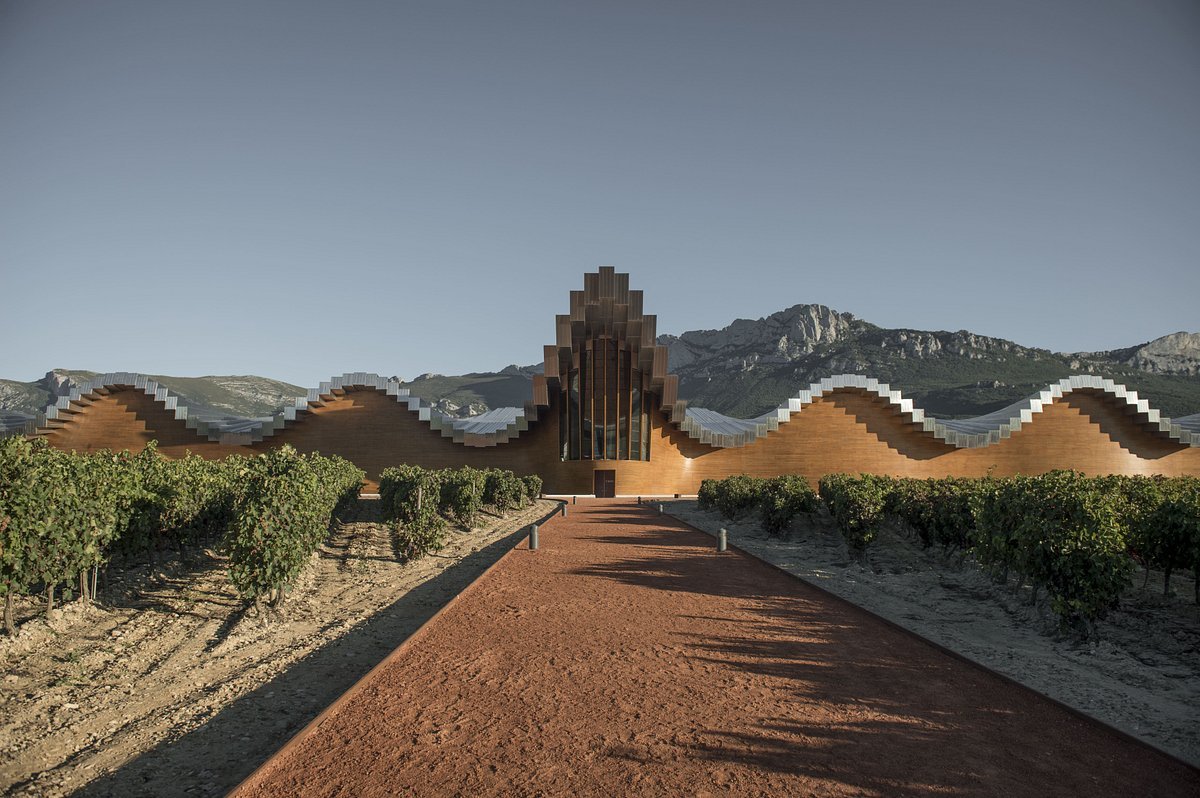
Approach Bodegas Ysios from the road below Laguardia and the building announces itself before the vines do. Santiago Calatrava's wave-roofed structure runs along the base of the Sierra Cantabria like a physical echo of the ridgeline behind it — a deliberate architectural choice that aligned the winery's identity with the terrain from the moment it opened. That relationship between built form and landscape is not incidental. In Rioja Alavesa, the mountain range acts as a climatic wall, shielding vineyards from Atlantic weather and creating a microclimate that sits meaningfully apart from the flatter, hotter conditions further south in Rioja Alta and Rioja Baja. The wines grown here carry that geographic logic into the bottle.
Laguardia itself is one of the more compelling bases for wine travel in northern Spain: a medieval walled town perched on a hill, surrounded by vineyards on three sides, with the Cantabrian peaks as a constant backdrop. For context on where to stay and eat while visiting, see our full Laguardia hotels guide and our full Laguardia restaurants guide. The density of serious producers in and around the town makes it one of the few places in Spain where a two-night stay can cover a dozen winery visits without a long drive between any of them.
The Terroir Case for Rioja Alavesa
Rioja Alavesa produces a distinct style of Tempranillo that the broader Rioja denomination has sometimes obscured under a single regional identity. The soils here are predominantly clay-limestone — the same Cretaceous-era base that runs through much of the Basque Country's wine country , and they drain well while retaining enough moisture through the summer to moderate stress on the vines. The Sierra Cantabria amplifies this by cutting Atlantic rain clouds and forcing cooler overnight temperatures, which slow ripening and preserve acidity in ways that distinguish the fruit profile from warmer sub-zones.
Bodegas Ysios, located at La Hoya Bidea in Laguardia, sits in the heart of this sub-zone. The winery's vineyards occupy the lower slopes of the sierra, where altitude brings diurnal temperature swings that are wider than the valley floor. This is the kind of terroir that, across multiple vintages, tends to produce wines with structure and longevity rather than immediate, fruit-forward approachability , the opposite of what you'd expect from a winery that built its public profile partly on architectural spectacle.
The appellation's leading producers have increasingly argued for Rioja Alavesa as a distinct classification within the broader DO, a conversation that remains unresolved at a regulatory level but that shapes how individual estates position their wines commercially. Ysios is part of a cohort that has staked its reputation on terroir specificity rather than volume. For a broader look at serious Rioja and Ribera del Duero producers operating in a similar register, CVNE (Cune) in Haro and Bodegas Vivanco in Valle de Mena offer useful comparative reference points within the northern Spain wine corridor.
Architecture as Editorial Statement
The Calatrava building deserves more than passing mention because it changed what visitors expected from a winery visit in Spain. When Ysios opened, the dominant model for premium Spanish bodegas was either a historic converted monastery or an anonymous industrial shed. Calatrava's design , the undulating aluminium roof, the cedar-clad facade, the way the structure seems to grow from the vineyard rather than being placed on leading of it , set a precedent that several subsequent Rioja Alavesa projects self-consciously followed. The Frank Gehry-designed Hotel Marqués de Riscal in Elciego, which opened a few years later, is the most cited example of this architecture-as-wine-tourism thesis, but Ysios arrived first and argued it more quietly.
What the building does practically is create a visitor experience where the vineyard is always visible. The main barrel hall runs parallel to the vines, and the glazing at both ends frames the Sierra Cantabria in a way that keeps the terroir conversation active throughout a tour. This is not accidental: the design reinforces the editorial point the winery has consistently made about its wines.
Ysios in Its Competitive Set
Bodegas Ysios holds a Pearl 3 Star Prestige rating from EP Club for 2025, which places it in the higher tier of the Laguardia and Rioja Alavesa winery set. That rating reflects a combination of production quality, visitor experience, and the kind of sustained reputation that positions it against premium comparators rather than tourist-volume operations.
Within the broader Spanish wine estate category, the relevant peer group includes properties that combine serious winemaking with considered visitor infrastructure , estates where a cellar tour is worth planning around rather than filling a spare afternoon. Abadía Retuerta in Sardón de Duero and Arzuaga Navarro in Quintanilla de Onésimo occupy a comparable position in Ribera del Duero, where the combination of estate accommodation, restaurant, and wine production creates a self-contained destination. Bodegas Protos in Peñafiel adds another useful comparison: a Richard Rogers-designed building in a medieval town, where architecture and wine identity are similarly intertwined.
Further afield, Clos Mogador in Gratallops represents how Priorat's leading producers have built global reputations through terroir specificity rather than volume , a parallel to what the leading Rioja Alavesa estates have attempted within their own appellation. For sparkling wine context, Codorníu in Sant Sadurní d'Anoia shows how Spanish wine history and architecture can intersect, though the commercial register is quite different. Outside Spain entirely, Emilio Moro in Pesquera de Duero and Accendo Cellars in St. Helena illustrate how smaller, focused production estates build allocation-based reputations in Tempranillo and Cabernet respectively.
Planning a Visit
Ysios is located at La Hoya Bidea, s/n, in the 01300 postal district of Araba , just outside the walls of Laguardia, close enough to walk from the old town in under fifteen minutes. The surrounding area has a concentration of wine-focused addresses that makes advance scheduling worthwhile: the leading tours at premium producers in Rioja Alavesa book out several days ahead, particularly from April through October when the visitor season peaks. Arriving outside peak months, particularly November through February, tends to allow more flexibility and brings the advantage of seeing the vineyards in their post-harvest state, which often makes the terroir reading more immediate.
For the full picture on what else the area offers, our full Laguardia wineries guide covers the broader producer set, while our full Laguardia bars guide and our full Laguardia experiences guide map the rest of what makes an overnight stay here worth extending. For international reference points on single-malt and alternative premium beverages that share a terroir-driven philosophy, Aberlour in Aberlour offers a useful comparison from Speyside.
Frequently Asked Questions
What is the atmosphere like at Bodegas Ysios?
The atmosphere is shaped more by architecture and landscape than by any hospitality formula. The Calatrava building gives the experience a considered, almost institutional seriousness , this is not a rustic farmhouse tasting room. The vineyard views from inside the winery are persistent throughout a visit, which keeps the focus on the land rather than on the brand. Visitors with a strong interest in terroir and architectural design will find the combination more rewarding than those looking for a casual drop-in tasting. Ysios holds a Pearl 3 Star Prestige rating for 2025, which signals that the visitor experience sits at the upper end of the Laguardia winery set.
What is the wine to try at Bodegas Ysios?
Ysios built its production identity around Rioja Alavesa Tempranillo, the grape that the sub-zone's clay-limestone soils and Sierra Cantabria microclimate express most coherently. The winery's position on the lower slopes of the sierra, with the attendant diurnal temperature variation, shapes wines with structural density rather than pure fruit weight. In the absence of specific current release data, the editorial recommendation is to focus on the estate's reserve-tier offerings if available during your visit , those are typically the wines where the terroir logic of the site is most legible. For winery-to-winery context across Spain, the EP Club winery guides for Rioja, Ribera del Duero, and Priorat provide a reference framework for understanding how Ysios fits into the national picture.
Comparable Spots, Quickly
These are the closest comparables we have in our database for quick context.
| Venue | Cuisine | Price | Awards | Notes |
|---|---|---|---|---|
| Bodegas Ysios | Pearl 3 Star Prestige (2025); Awaiting info; Awaiting info | This venue | ||
| Pingus | ||||
| Abadía Retuerta | ||||
| Arzuaga Navarro | ||||
| Bodegas Protos | ||||
| Bodegas Vivanco |
Access the Cellar?
Our members enjoy exclusive access to private tastings and priority allocations from the world's most sought-after producers.
Access the Concierge