

Founded in 1987 beneath the Gothic silhouette of Peñafiel Castle, Pago de Carraovejas is one of the Ribera del Duero's defining estate wineries. Its red-stone bodega overlooks terraced Tempranillo vineyards that have earned it a Pearl 2 Star Prestige rating for 2025. A visit combines cellar access, dramatic landscape, and wines that sit at the serious end of the appellation's quality tier.
Where the Castle Meets the Vineyard
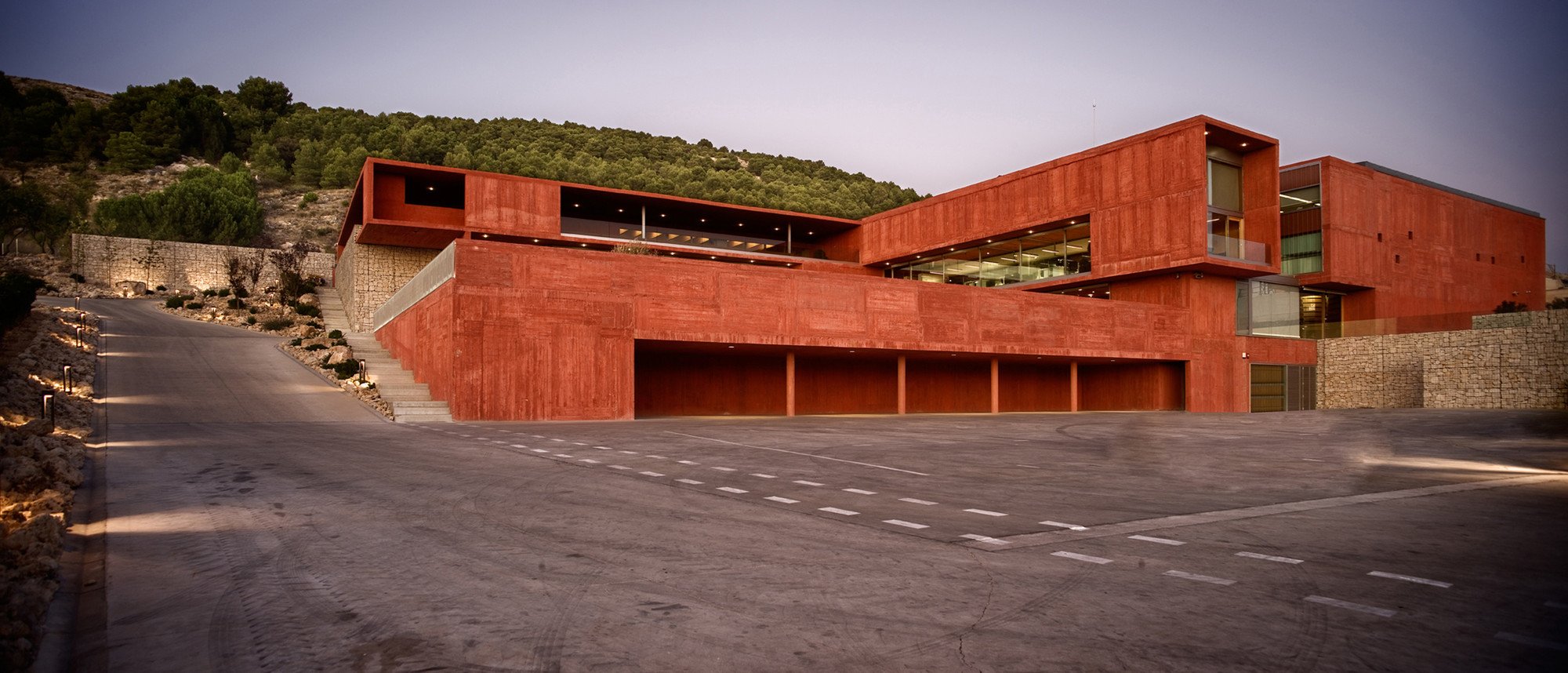
Approach Peñafiel from the south and the landscape organises itself around two fixed points: the Gothic castle strung along its ridge like a stone ship, and below it, the red-walled estate of Pago de Carraovejas. The bodega sits at the base of that ridge, its architecture built from the same ochre and terracotta tones as the castle above. Vineyards drop away from its walls in terraced rows, and on clear days the entire Duero valley opens out in both directions. This is not a winery that relies on interior design to make an impression. The site does the work.
Founded in 1987, Pago de Carraovejas arrived at the moment Ribera del Duero was beginning to establish a distinct identity separate from Rioja. The appellation had only received Denominación de Origen status in 1982, and the early estates were effectively writing the region's quality grammar in real time. Carraovejas was part of that founding generation, and its position today, holding a Pearl 2 Star Prestige rating for 2025, reflects continuity of intent across nearly four decades of production.
Ribera del Duero's Quality Architecture
To understand where Pago de Carraovejas sits within Spain's wine hierarchy, it helps to understand what Ribera del Duero has become since the 1980s. The appellation built its reputation almost entirely on Tempranillo, known locally as Tinto Fino, grown at altitudes between 700 and 900 metres on the Castilian plateau. Those altitudes produce diurnal temperature swings that preserve acidity in what would otherwise be a hot-climate grape, giving Ribera wines a structural signature that separates them from lower-altitude Tempranillo expressions.
The appellation now operates on a clear quality gradient. At the volume end, large cooperatives and branded wines dominate shelf space internationally. In the middle tier, a substantial group of estate wineries produce Crianza and Reserva wines with consistent regional character. At the leading, a smaller cohort of single-estate producers focuses on plot-level work, extended maceration, and wines intended for extended cellaring. Pago de Carraovejas occupies this upper tier, with a production philosophy that emphasises estate fruit rather than purchased grapes and a winemaking approach calibrated to the specific soils of the Carraovejas site. Nearby, Bodegas Protos offers another strong reference point for the appellation's range, operating from the town itself with a different scale and visitor format.
The Philosophy Behind the Label
Winemaking in Ribera del Duero has historically leaned on oak as a structural and flavour tool. The appellation's ageing requirements for Crianza, Reserva, and Gran Reserva classifications were built around that assumption. Over the past two decades, however, a group of producers across Spain's premium appellations began pulling back from heavy oak influence, prioritising fruit expression, site transparency, and finer tannin structures that come from canopy management and harvest timing rather than barrel regimen.
Pago de Carraovejas fits into this shift. The estate's vineyards are not a single homogenous block but a collection of plots at varying elevations and exposures on the Carraovejas hillside. This kind of site complexity tends to produce wines with more textural layers than flat-ground estates, and the winemaking approach here is oriented toward capturing that differentiation rather than smoothing it out. The result is a range where the Reserva sits at the appellation's serious end without the extractive weight that characterised much of Ribera's output in the 1990s. For a broader view of how this winemaking philosophy plays out across Spain's premium regions, the contrast with producers like Abadía Retuerta in Sardón de Duero or Arzuaga Navarro in Quintanilla de Onésimo is instructive, each estate reflecting distinct interpretations of what Duero Tempranillo should express at the premium tier.
Beyond Ribera, the broader conversation about estate-focused Spanish winemaking connects Carraovejas to a peer set that includes Clos Mogador in Gratallops and producers in Rioja like Bodegas Ysios in Laguardia and CVNE in Haro, all of whom are negotiating similar questions about oak, extraction, and the relationship between place and style.
The Estate Experience
Ribera del Duero is not a wine region built for casual tourism in the way that Rioja or the Penedès has become. The plateau is sparsely populated, the villages are modest, and the landscape can feel severe in winter and scorched in August. But that austerity is precisely what draws serious wine travellers here. Visits feel purposeful rather than curated, and the estates that do receive visitors tend to treat the experience as an extension of the wine itself.
At Pago de Carraovejas, the physical setting carries the visit. The red stone architecture, the working winery infrastructure, and the vineyard views toward the castle create a coherent sense of place that purpose-built visitor centres rarely achieve. The estate earned its Pearl 2 Star Prestige rating for 2025 partly on the strength of this integrated experience. Timing matters: spring visits in April and May offer the vines in early growth against a landscape that has not yet dried out; harvest season from late September into October places visitors in the middle of the year's most active moment; winter visits are quieter and the light on the castle is at its sharpest. For context on similar visit formats across Spain's wine regions, Bodegas Vivanco in Valle de Mena offers a comparative example of how Rioja producers have developed visitor infrastructure at scale, while Codorníu in Sant Sadurní d'Anoia shows how Cava's heritage estates have approached the same challenge with different architectural vocabulary.
Planning Your Visit to Peñafiel
Peñafiel sits roughly 60 kilometres east of Valladolid, accessible by road through the Duero valley. The town is small enough that most accommodation, dining, and bar options are concentrated within a few minutes of the main square. Carraovejas itself is a short drive from the town centre, signposted off the main road toward the castle. Visits to the winery are by appointment; the estate does not operate as a walk-in facility, so contact in advance is necessary regardless of group size. The Valladolid region's tourism pattern means that weekends from May through October see the highest visitor volumes, and booking a week or more ahead during those months is advisable.
For a full picture of what Peñafiel offers beyond the winery, EP Club has detailed planning resources across all categories. Our full Peñafiel restaurants guide covers the town's dining options, from the castle-view terrace restaurants to the modest local bars serving roast lamb from the clay ovens that are Valladolid's most reliable culinary tradition. Our full Peñafiel hotels guide addresses accommodation at both the town-centre and rural levels. Our full Peñafiel bars guide maps the smaller venues where Ribera wines are poured without ceremony alongside the region's cured meats. Our full Peñafiel wineries guide situates Carraovejas within the broader cluster of estates that make the valley worth a multi-day itinerary, and our full Peñafiel experiences guide covers the castle museum and other non-winery draws that round out a visit to this part of Castile.
For travellers building a wider Spanish wine itinerary, the contrast between Ribera's high-altitude austerity and the gentler, oak-forward style of producers in other Old World regions or the Californian precision of Accendo Cellars in St. Helena sharpens the sense of what makes the Duero plateau specific. Pago de Carraovejas, seen in that comparative frame, is a precise expression of a place that has spent four decades learning how to put its particular landscape into a bottle.
Frequently Asked Questions
- What wine is Pago de Carraovejas famous for?
- Pago de Carraovejas is known primarily for its Tempranillo-based reds produced under the Ribera del Duero Denominación de Origen, with the estate Reserva the reference point for the winery's quality tier. The estate was part of the founding generation of serious Ribera producers, established in 1987, and its wines sit within a peer set that includes other single-estate Duero producers operating at the appellation's upper quality level. The 2025 Pearl 2 Star Prestige rating reflects recognised quality across the range.
- What is Pago de Carraovejas known for?
- The estate is known as much for its setting as its wine. Located in Peñafiel, Valladolid, the bodega sits beneath the town's Gothic castle with vineyard views that are among the most dramatic in the Duero valley. Founded in 1987, it holds a Pearl 2 Star Prestige rating for 2025. Visits are by appointment and combine cellar tours with tastings. The estate represents the serious, single-estate end of Ribera del Duero production, with pricing that reflects its position within the appellation's premium tier.
Price and Recognition
A fast peer set for context, pulled from similar venues in our database.
| Venue | Price | Awards | Notes |
|---|---|---|---|
| Pago de Carraovejas | Pearl 2 Star Prestige (2025); From the red stone walls of the Pago de Carraovejas winery, founded in 1987, you look down onto tumbling vineyards and up to the Gothic Peñafiel Castle. These v | This venue | |
| Pingus | |||
| Bodegas Protos | |||
| Abadía Retuerta | |||
| Arzuaga Navarro | |||
| Bodegas Vivanco |
Access the Cellar?
Our members enjoy exclusive access to private tastings and priority allocations from the world's most sought-after producers.
Access the Concierge