Ox-Eye Vineyards

Ox-Eye Vineyards sits in the Shenandoah Valley wine country at the edge of Staunton, earning a Pearl 2 Star Prestige designation in 2025. The property represents a quieter tier of Virginia wine production, where elevation, limestone-influenced soils, and continental climate shifts do the primary work. For those tracing the eastward expansion of serious American viticulture, Staunton is an increasingly credible stop.
 Discover on Pearl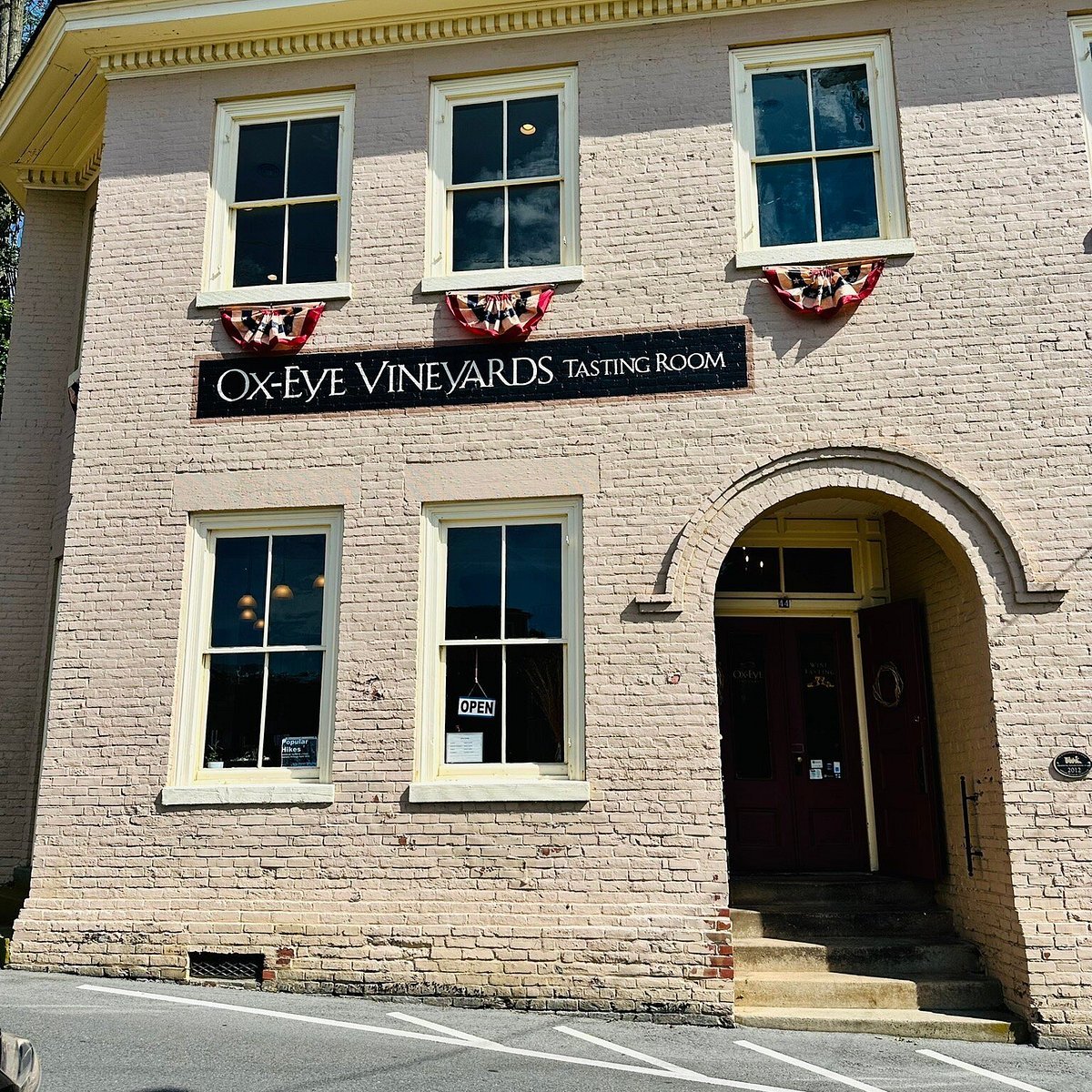
Shenandoah Valley on the Glass
The Shenandoah Valley does not announce itself the way Napa does. There are no billboard-size harvest reports or tasting room queues stretching into parking lots. What the valley offers instead is a quieter argument about terroir: the Blue Ridge to the east, the Alleghenies to the west, a corridor of elevation and limestone-threaded soil that separates Virginia wine from the humid, disease-pressured growing conditions that have historically complicated eastern viticulture. Ox-Eye Vineyards, located at 44 Middlebrook Ave in Staunton, sits within that argument. Its 2025 Pearl 2 Star Prestige recognition from EP Club places it in the tier of Virginia producers where the conversation is no longer about whether the region can make serious wine, but about how precisely the land expresses itself in each bottle.
Staunton itself is worth understanding as a wine town context before arriving. It is a small city in Augusta County with a well-preserved Victorian downtown, more commonly associated with the Blackfriars Playhouse and the Woodrow Wilson Presidential Library than with viticulture. That relative underexposure is part of what makes the wine scene here function differently from the more trafficked tasting corridors of Loudoun County or the Charlottesville AVA belt. Visitors who arrive for the wine do so with intention, and the pace of the experience reflects that. For a fuller picture of what Staunton offers beyond the vineyard, our full Staunton wineries guide maps the wider scene, and the Staunton restaurants guide covers where to eat before or after a tasting.
The Land Behind the Wines
Virginia's wine identity has spent two decades consolidating around a specific terroir thesis: that the state's varied geology, combined with its position at the convergence of continental and maritime air patterns, produces a growing environment unlike the Pacific Coast, and that the wines worth paying attention to are those that lean into that difference rather than imitate a California or European template. The Shenandoah Valley AVA, where Ox-Eye operates, runs along the Great Appalachian Valley and sits at elevations that moderate summer heat accumulation and extend the diurnal swing between day and nighttime temperatures. That swing is the primary mechanism behind acid retention in grapes, and acid retention is the single most important structural factor distinguishing Virginia whites and reds from the softer, flatter profiles that warm-climate eastern growing can produce.
Limestone and shale soils in this corridor drain efficiently and stress the vine in ways that concentrate flavor without the intervention that poorer-draining sites require. The comparison set for this style of terroir-driven production is instructive: producers like Adelaida Vineyards in Paso Robles have built their identity around calcareous soils with similar drainage logic, while Adelsheim Vineyard in Newberg demonstrates what extended diurnal range does for Pinot Noir in a cool-climate continental corridor. Ox-Eye's positioning in the Shenandoah Valley draws on an analogous set of conditions, though the specific varietal expression is shaped by the Atlantic-influenced humidity cycles that make Virginia a distinct growing environment rather than a facsimile of either Oregon or California.
What the 2025 Pearl 2 Star Prestige Recognition Signals
EP Club's Pearl 2 Star Prestige designation in 2025 places Ox-Eye Vineyards in a defined tier of American wine production: properties where quality markers are consistent enough to justify a premium positioning relative to the broader regional category, but where the story is still being written in terms of national recognition. This is a meaningful distinction. The 2 Star level in the Pearl system indicates a property that has passed the threshold of mere regional interest and is operating with the rigor expected of a serious tasting room destination. For context on how this tier functions across American wineries, producers like Accendo Cellars in St. Helena and Alpha Omega Winery in Rutherford occupy the upper end of the premium California tier. The Shenandoah Valley equivalent operates under different pricing assumptions and different visitor expectations, but the quality commitment signaled by the Pearl designation is the common denominator.
Virginia's wine award landscape has historically been thin compared to California or Oregon, which makes third-party recognition more legible when it does appear. A prestige-level designation in 2025 is a signal worth taking seriously, particularly given that it coincides with a broader critical reassessment of the Mid-Atlantic as a producing region rather than a curiosity. For those building a wine itinerary around credentialed stops rather than proximity alone, Ox-Eye warrants the detour from more obvious Virginia wine routes. The Staunton experiences guide provides context for structuring a visit that extends beyond a single tasting.
Approaching the Property
Arriving at 44 Middlebrook Ave puts you at the edge of Staunton's commercial fringe, close enough to the historic downtown that the two can be combined in a half-day itinerary without requiring a car between stops. The address places Ox-Eye in a transitional zone between the city's walkable core and the agricultural openness that begins at Augusta County's outer precincts. That positioning is common among Shenandoah Valley producers who have opted for accessibility over the more isolated hilltop format favored by some Virginia wineries. The practical advantage is that a visit here pairs naturally with Staunton's food and hospitality infrastructure. The Staunton hotels guide and Staunton bars guide cover overnight and evening options for those treating this as a base rather than a day trip.
Booking logistics, hours, and pricing information were not available at the time of publication. Visitors should contact the winery directly or check current listings before planning. Given the Pearl 2 Star designation and the growing profile of Shenandoah Valley wine tourism, weekend availability during harvest season (generally September through early November in Virginia) is likely tighter than off-peak periods.
Virginia in the Wider American Wine Conversation
The Mid-Atlantic wine belt occupies an unusual position in American wine culture: geographically close to the country's largest consumer markets, but historically underrepresented in the prestige conversation dominated by Napa, Sonoma, Willamette Valley, and the Santa Barbara corridor. Producers like Alban Vineyards in Arroyo Grande built their reputations on Rhône varietal advocacy in California; Andrew Murray Vineyards in Los Olivos extended that argument in Santa Barbara County. Virginia's equivalent advocacy has centered on Viognier and Cabernet Franc, two varieties that perform consistently in the state's climate and that serve as the most legible entry points for wine drinkers coming from French reference points. Whether Ox-Eye's program emphasizes these varieties or branches into broader experimentation is a detail that the winery's current portfolio would answer more precisely than general regional analysis.
For those who track American viticulture at the estate level across multiple regions, comparison points extend to international terroir-driven programs as well. Abadía Retuerta in Sardón de Duero represents the kind of serious estate commitment that prestige-level production requires regardless of continent, and Artesa Vineyards and Winery in Napa shows how Spanish-trained winemaking translates into a California terroir context. The through-line across all of these is a site-first philosophy, and the Shenandoah Valley's growing body of credentialed producers suggests that Ox-Eye is contributing to that argument from a genuinely differentiated geographic position.
Frequently Asked Questions
- What should I expect atmosphere-wise at Ox-Eye Vineyards?
- Ox-Eye sits on the accessible edge of Staunton, close to the city's historic downtown, which means the atmosphere is quieter and more deliberate than the high-traffic tasting rooms found in better-publicized Virginia wine corridors. The Pearl 2 Star Prestige designation (2025) suggests a tasting experience calibrated for quality rather than volume. Visitors should expect a setting more suited to focused conversation about the wine than to large-group social formats.
- What wines should I try at Ox-Eye Vineyards?
- Specific current releases were not confirmed at publication, so deferring to the tasting room staff on arrival is the most reliable approach. In the Shenandoah Valley AVA broadly, Viognier and Cabernet Franc have the strongest regional track record as varieties that express the valley's limestone soils and diurnal temperature range. The 2025 Pearl 2 Star Prestige recognition indicates that whatever the current portfolio includes, it has been assessed positively at a credentialed level.
- What is Ox-Eye Vineyards leading at?
- Based on the EP Club Pearl 2 Star Prestige recognition in 2025, Ox-Eye operates at a tier where terroir expression and production consistency have been validated beyond regional novelty. Within the Staunton wine scene, it represents one of the area's more credentialed options for serious tasting. Visitors prioritizing wine quality over social programming will find the positioning appropriate.
- How hard is it to get in to Ox-Eye Vineyards?
- Specific booking requirements were unavailable at publication. Given the Pearl 2 Star Prestige designation and Virginia's active wine tourism season from late spring through early November, planning ahead is advisable, particularly for weekend visits. Check the winery's current website or contact them directly for hours and reservation requirements before traveling from outside Staunton.
- How does Ox-Eye Vineyards fit into the broader Virginia wine scene compared to other AVAs?
- Virginia has several distinct wine corridors, with Loudoun County and the Monticello AVA near Charlottesville drawing the largest visitor volumes. The Shenandoah Valley AVA, where Ox-Eye operates, functions as a smaller, less-trafficked tier within that system. The Pearl 2 Star Prestige recognition in 2025 places Ox-Eye among the more credentialed producers within that quieter corridor, making it a logical stop for visitors building a statewide itinerary rather than concentrating exclusively on the higher-profile regions. See our full Staunton wineries guide for how it compares locally.
Peer Set Snapshot
These are the closest comparables we have in our database for quick context.
| Venue | Awards | Notes |
|---|---|---|
| Ox-Eye Vineyards | Pearl 2 Star Prestige | This venue |
| Robert Mondavi Winery | 50 Best Vineyards #39 (2025); Pearl 3 Star Prestige | Geneviève Janssens, Est. 1966 |
| Jordan Vineyard & Winery | 50 Best Vineyards #13 (2025); Pearl 3 Star Prestige | |
| Brooks Winery | 50 Best Vineyards #35 (2025); Pearl 2 Star Prestige | |
| Aperture Cellars | 50 Best Vineyards #14 (2025); Pearl 2 Star Prestige | |
| Joseph Phelps Vineyards | 50 Best Vineyards #37 (2025); Pearl 4 Star Prestige | Ashley Hepworth, Est. 1973 |
Access the Cellar?
Our members enjoy exclusive access to private tastings and priority allocations from the world's most sought-after producers.
Get Exclusive Access