Humberto Canale
One of Patagonia's oldest estates, Humberto Canale operates from Chacra 186 in General Roca, Río Negro, where the high-desert valley floor produces wines of a character distinct from Mendoza's mainstream..

Pearl is the En Primeur Club membership app — saves, bookings, and concierge access live there. Same editors, same standards.
- Address
- Chacra 186, Gral. Roca, Río Negro, Argentina
- Phone
- +54 298 454-9396
- Hours
- Mon–Fri 9 AM–12 AMSat–Sun Closed
- Website
- bodegahcanale.com
- Directions
- Get directions
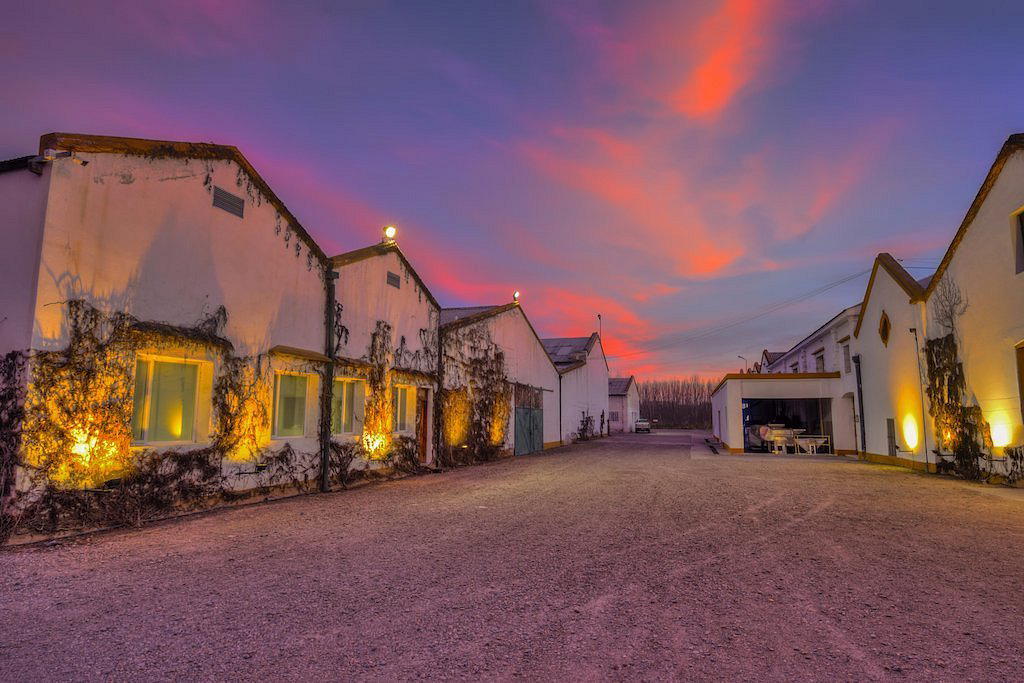
The Río Negro Valley and What the Desert Does to a Vine
Patagonia's wine credentials are often framed as a novelty, a counterpoint to the Andean mainstream that runs from Mendoza south through San Rafael. That framing underestimates the Río Negro Valley. Situated roughly 650 kilometres south of Mendoza, the valley floor around General Roca sits at a latitude where cool nights, arid conditions, and persistent Andean winds create a growing environment that has nothing in common with the warm basins further north. Soils here are sandy, alluvial, and low in organic matter. The vines work harder. What they produce, when the estate knows what it is doing, carries a tautness that warmer-region equivalents rarely replicate.
Humberto Canale, at Chacra 186 in General Roca, is the estate most associated with that argument. It is not a recent arrival to cool-climate positioning. The property has operated across multiple generations, which places it in a different category from the wave of design-forward wineries that colonised Patagonia's profile in the 2000s and 2010s. Estates like Familia Schroeder in San Patricio del Chañar arrived with architecture and tourism infrastructure as part of their founding logic. Humberto Canale's identity is rooted earlier, in the agricultural history of the upper Río Negro, before Patagonian wine became a marketing category.
What Sandy Soils and Patagonian Wind Actually Produce
The terroir argument in the Río Negro Valley centres on a few well-documented facts. Diurnal temperature variation here regularly exceeds 20°C during the growing season. That gap between daytime heat accumulation and night-time cold retention is what preserves acidity in the grape and extends the hang time on the vine. In warmer Argentine regions, winemakers compensate for rapid sugar accumulation and acid loss through cellar intervention. In General Roca, the climate does the work instead. The result is wines where acidity is structural rather than added, and where aromatic definition in white varieties and Pinot Noir comes from genuine phenolic development rather than from early picking to preserve freshness.
Sandy soils add a second layer to that argument. Low-fertility, well-drained alluvial ground forces the vine to develop deep root systems and limits vigour. Lower crop loads, achieved naturally rather than through green harvest, concentrate flavour in the fruit that remains. This is the same principle that makes sandy coastal soils in parts of Bordeaux and the Maremma produce wines of character despite low production volumes. In General Roca, it operates at altitude and in a semi-arid environment that adds UV intensity to the equation. The combination produces phenolic ripeness at lower sugar levels than would be typical in Mendoza's valley floor sites.
That structural difference is what separates the Río Negro Valley's upper-tier estates from their northern counterparts when assessed side by side. Mendoza's premium tier, where producers like Bodega Norton in Luján de Cuyo, Escorihuela Gascón in Godoy Cruz, and Terrazas de los Andes in Mendoza operate, builds its case on altitude and the thermal regulation of high-elevation sites. The Río Negro Valley's case is built on latitude and wind, which produces a different textural outcome in the glass.
That classification matters most as a comparative signal.
Salta's premium producers, including Bodega Colomé in Molinos and Bodega El Esteco in Cafayate, build their identity around extreme altitude and the Torrontés and high-elevation Malbec argument. The competitive differentiation for Humberto Canale runs on a different axis: latitude, cool climate, and a long-established presence in a valley that is harder to reach and therefore less visited than the Cuyo wine corridor. The 2025 award signals that the estate's quality benchmark is being recognised within a national framework, not just within the regional narrative.
For comparison of scale and approach across the broader Argentine scene, Bodega Trapiche, Rutini Wines in Tupungato, and Bodega Antigal in Maipú represent the Mendoza mainstream that Humberto Canale's terroir-based identity runs counter to. Each operates in warmer conditions with a different set of varietal priorities. The contrast is useful for understanding why the Río Negro Valley's position in Argentine fine wine discussion has strengthened over the past decade.
Getting There and Setting Expectations
General Roca sits in the province of Río Negro, in northern Patagonia. The nearest commercial airport is in Neuquén, roughly 70 kilometres to the west, with regular connections to Buenos Aires. From Neuquén, the drive to General Roca runs east along the Río Negro valley, through fruit-growing country where apple and pear orchards share the landscape with vineyard plots. The valley in this stretch looks more agricultural than the dramatic desert scenery associated with southern Patagonia, which surprises first-time visitors expecting remote wilderness. The setting is productive, flat, and characterised by irrigation channels that have sustained farming here for over a century.
Humberto Canale is at Chacra 186, a chacra being the traditional Argentine term for a small farming plot within an irrigated district. The address itself communicates the estate's integration into the valley's agricultural fabric rather than its positioning as a destination winery constructed for tourism. Visitors making the trip should plan around the Neuquén hub and allow time for the drive; this is not a winery that sits adjacent to a tourist corridor. That relative distance from the Mendoza circuit is part of its character. Estates like Bodega Bressia in Agrelo or Bodega DiamAndes in Tunuyán are accessible within a short drive of Mendoza city; reaching Humberto Canale requires deliberate planning, and visitors who make that effort tend to arrive with a different frame of reference.
For a broader view of what the General Roca area offers beyond wine, our full General Roca restaurants guide covers the surrounding food and hospitality scene in detail.
Where Humberto Canale Sits in the Wider Picture
Cool-climate Argentine wine is a category that is still consolidating its identity internationally. The Mendoza premium tier is well understood by collectors and critics; the Salta altitude story has been told often enough to have a shorthand. The Río Negro Valley remains the least-mapped of the three major Argentine fine wine narratives, which means that estates operating here at a recognised quality level carry a degree of specificity that their Cuyo counterparts have largely lost.
For those building a comparative picture of Argentine wine production across its full geographic range, placing Humberto Canale alongside northern producers like Fratelli Branca Distillery in Buenos Aires or international reference points like Aberlour and Accendo Cellars in St. Helena clarifies how distinct the Patagonian production model is within a global context. The latitude, the soils, the wind, and the long agricultural history of the Río Negro Valley all pull in the same direction: wines that express the specificity of where they are grown rather than conforming to a house style built for a broader market.
Fast Comparison
Comparable venues nearby, for context on price, style, and recognition.
| Venue | Cuisine | Price | Notes |
|---|---|---|---|
| Humberto CanaleThis venue — the venue you are viewing | Malbec, Pinot Noir | $150–200 | Not listed |
| Fernet Vittone Distillery | Winery | Not listed | Villa Mercedes |
| La Providencia Distillery | Winery | Not listed | Tigre |
| Destilería TAVASA | Winery | Not listed | Buenos Aires |
| Destilería Flipá | Winery | Not listed | Mendoza |
| Pasaron Cosas Distillery | Winery | Not listed | Jacinto Arauz |
Continue exploring
More in General Roca
Details
- Scenic
- Romantic
- Classic
- Rustic
- Elegant
- Romantic Getaway
- Group Outing
- Wine Education
- Special Occasion
- Family
- Corporate Event
- Vineyard Tour
- Estate Grounds
- Barrel Room
- Historic Building
- Panoramic View
- Private Tasting
- Picnic Area
- Organic
- Sustainable
- Vineyard
- Garden
- Mountain
- Malbec
- Pinot Noir
- Cabernet Sauvignon
- Riesling
- Semillon
- Sauvignon Blanc
- Merlot
- Torrontés
- Viognier
- Still Red
- Still White
- Still Rosé
- Sparkling
- Guided Tasting
- Barrel Room Tasting
- Vineyard Tour With Tasting
- Spanish
- English
Current opening hours
- Monday
- 9 AM–12 AM
- Tuesday
- 9 AM–12 AM
- Wednesday
- 9 AM–12 AM
- Thursday
- 9 AM–12 AM
- Friday
- 9 AM–12 AM
- Saturday
- Closed
- Sunday
- Closed
Hours can change for holidays and private events. Last verified .
Warm and welcoming atmosphere with thoughtfully curated dining experiences in picturesque settings among vineyards, poplars, and fruit trees; natural lighting from expansive grounds; intimate yet grand in scale.