


Star Wine List · World's Best Wine Lists Awards WBWL 2-Star
Our verdict
Taizu on Menachem Begin Road brings an architectural concept rooted in the five elements of Chinese philosophy to the Tel Aviv dining scene, producing a format that sits outside the city's dominant Israeli-Mediterranean tradition. The restaurant holds a 2-Star Accreditation from the World of Fine Wine & Lifestyle Awards, placing it among a small tier of critically recognised addresses in the country.

Pearl is the En Primeur Club membership app, where members save venues, book tables and use the concierge.
The menu
What to order
- Black forest dessert
- Tikka masala tofu skewer
- Yam curry
Where Tel Aviv's Asian-Inflected Ambition Found a Home
Tel Aviv's restaurant scene has spent the better part of two decades consolidating around a confident Israeli-Mediterranean identity: open kitchens, fire-forward technique, local produce pulled from the Levantine larder. The city has produced remarkable work in that register, from the ferment-driven rooms of the north to the Jaffa-adjacent tables that blend Arab and Jewish culinary traditions. But a parallel current has always run beneath that consensus, one that asks what happens when Israeli cooking stops looking west toward Europe and turns east toward China, Southeast Asia, and the broader pan-Asian tradition. Taizu, on Menachem Begin Road, has been one of the most deliberate answers to that question the city has produced.
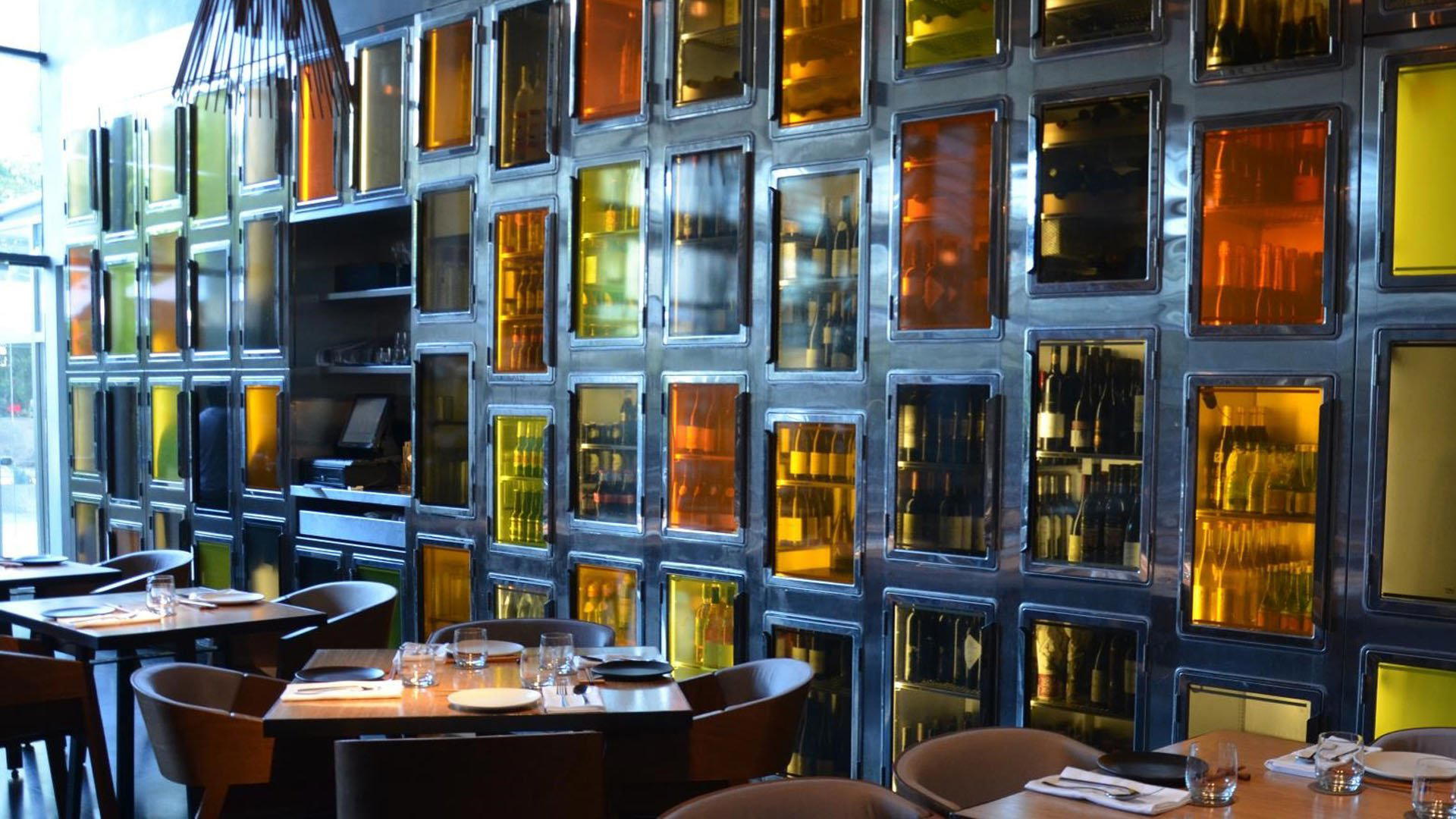
Arriving at Taizu, the design signals its intentions before you have ordered anything. The restaurant's conceptual framework draws on the five classical elements of traditional Chinese philosophy, wood, fire, earth, metal, water, and translates that system into spatial and material decisions. This is not superficial Asian-restaurant shorthand; the philosophy shapes the food as much as it shapes the room. It is an approach that places Taizu in a distinct category: not a fusion concept in the diluted sense, and not a strict regional Chinese or Southeast Asian house, but a philosophically grounded pan-Asian kitchen operating from an Israeli base.
Critical Reception and Industry Standing
Taizu holds a 2-Star Accreditation from the World of Fine Wine & Lifestyle Awards, a recognition that places it inside a relatively small group of Israeli addresses operating at that level of critical scrutiny. The accreditation system is not the same as a Michelin star, but in a market where Michelin's Israel guide is a recent and still-developing presence, the World of Fine Wine & Lifestyle framework carries weight among internationally oriented diners and trade professionals. Two-star level recognition implies consistent execution across food, service, and environment, not a single strong dish, but a repeatable experience across multiple visits and covers.
For context on what 2-Star accreditation implies about positioning: in markets where this framework has operated for longer, the two-star tier generally captures restaurants that have moved past the initial recognition phase and established a sustained argument for their place in the upper bracket. It does not guarantee perfection, but it does suggest that the critical apparatus has returned more than once and found the proposition coherent. In the Tel Aviv context, that matters: the city's dining scene rewards originality and audacity, and sustained recognition across those criteria is harder to maintain than a single moment of excitement.
Taizu's standing in the local scene also reflects something broader about how Tel Aviv's dining establishment has expanded its reference points. Restaurants like Alena at The Norman and Claro have built reputations working in different registers, and the range of critically recognised addresses now covers more territory than the Israeli-Mediterranean consensus alone. George & John and Dr. Shakshuka represent further poles in the city's diversity of offer. Taizu occupies a position that none of these venues contest directly.
The Philosophy on the Plate
The conceptual architecture of five-element Chinese philosophy is not merely decorative at Taizu, it drives the food programme. In that system, the five elements correspond to flavours, seasons, cooking methods, and organ systems in traditional Chinese medicine. Applying that framework to a modern kitchen means making choices about balance, contrast, and the relationship between heat, acid, salt, and sweetness that go beyond conventional Western brigade logic. It produces menus that read differently from Israeli-Mediterranean restaurants and that require a different kind of attention from the diner.
Pan-Asian cooking in a Tel Aviv context also raises an interesting supply question: how much of the larder is sourced locally, and how much arrives via import? Israeli agriculture is sophisticated and varied, and the country's position on the eastern Mediterranean means access to produce that overlaps with both Middle Eastern and broader Asian pantries. Restaurants working in this space often negotiate between ingredient authenticity and local availability, and the results of those negotiations are visible on the plate.
This positions Taizu differently from restaurants at the other end of the formality spectrum, such as Machneyuda in Jerusalem or Abu Hassan in Jaffa, both of which are deeply embedded in specifically Israeli and Arab culinary traditions. Taizu is asking a different question entirely, and the answer it provides has been recognised at the industry level.
Tel Aviv's Broader Dining Map
Understanding where Taizu fits requires some sense of the city's competitive field. Tel Aviv now has a density of serious restaurants that comfortably matches mid-tier European capitals, even if the global recognition machinery has been slower to catch up. The city's dining culture runs late, favours sharing formats, and tends toward informality in atmosphere even at higher price points, a pattern it shares with cities like San Francisco's Lazy Bear end of the market, where the room feels relaxed but the kitchen is serious. At the formal end of the international spectrum, the comparison set would include venues like Le Bernardin in New York City or 8½ Otto e Mezzo Bombana in Hong Kong, though Taizu operates with a different philosophy of hospitality than either of those rooms.
For diners building a Tel Aviv itinerary that extends beyond the city, Pescado in Ashdod and Helena in Caesarea represent strong day-trip options in the broader region. Within Tel Aviv itself, the full picture is available through our full Tel Aviv restaurants guide. Those planning a longer stay should also consult our full Tel Aviv hotels guide, our full Tel Aviv bars guide, our full Tel Aviv wineries guide, and our full Tel Aviv experiences guide for a complete view of the city's offer.
Planning Your Visit
Taizu is located at Menachem Begin Road 23, a central address that sits within reach of most of the city's major hotel districts and is accessible by public transit or taxi from the seafront hotels and the northern neighbourhood corridors. The restaurant's profile and critical standing suggest demand that merits booking ahead rather than attempting a walk-in, particularly on weekend evenings when Tel Aviv's dining culture peaks. Given the 2-Star accreditation and the restaurant's reputation in the local market, reservations made at least several days in advance are the more reliable approach. For the most current hours, booking method, and menu pricing, checking directly with the restaurant is advisable, as those details fall outside what can be confirmed at time of writing. Diners coming from outside Israel for food-focused trips often use Tel Aviv as a base and build their itinerary around a handful of accredited addresses; Taizu merits a place in that shortlist.
Frequently asked questions
What's the address for Taizu?
Taizu is located at Menakhem Begin Rd 23, Tel Aviv-Yafo, Israel, Tel Aviv.
Has Taizu won any awards?
Taizu has received recognition including: Taizu is a well-known establishment in the Tel Avivian culinary scene. The restaurant's design is unique, based on the five elements of the traditional Chinese philosophy and drives the food from the...;
What should I order at Taizu?
The menu is structured around five-element Chinese philosophy, meaning flavour profiles and cooking methods are organised by the elemental categories of wood, fire, earth, metal, and water rather than by conventional course logic. That framework makes it worth reading the menu closely before ordering rather than defaulting to familiar Asian dish categories. Given the restaurant's 2-Star World of Fine Wine & Lifestyle accreditation, the wine pairing options are worth attention alongside the food programme.
Can I walk in to Taizu?
Taizu holds a 2-Star accreditation from the World of Fine Wine & Lifestyle Awards and occupies a central position in Tel Aviv's competitive dining scene, both factors that drive consistent demand. Tel Aviv's dining culture skews late and weekend tables at recognised addresses fill quickly. Advance reservations are the practical approach; walk-in availability is more realistic at off-peak weekday times.
What do critics highlight about Taizu?
The primary accreditation on record is a 2-Star recognition from the World of Fine Wine & Lifestyle Awards, which places Taizu within a select tier of internationally reviewed restaurants. Critics and industry observers also point to the five-element conceptual architecture as a differentiator within Tel Aviv's largely Mediterranean-focused restaurant field, where Asian-inflected cooking of this ambition remains relatively rare.
Comparison Snapshot
| Venue | Cuisine | Price | Awards | Notes |
|---|---|---|---|---|
| TaizuThis venue (the venue you are viewing) | Asia Terranean Fusion | $50–100 | Star Wine List · World's Best Wine Lists Awards WBWL 2-Star | Not listed |
| Dr. Shakshuka | Israeli Shakshuka | $20–30 | Not listed | Middle Eastern |
| Ha'Achim | Modern Israeli Mediterranean | $30–50 | Not listed | Israeli |
| HaSalon | Modern Mediterranean | $100–150 | Not listed | Israeli - Mediterranean, Israeli |
| Jasmino | Israeli Charcoal-Grilled Kebab Pita | $1–10 | Not listed | Kebabs |
| Mashya | Modern Israeli Mediterranean | $50–100 | La Liste Top Restaurants | Israeli |
Recognition history
Dated appearances from independent guides and award organizations, with the underlying list record or original source where available.
Star Wine List
Star Wine List
Opinionated About Dining Casual in Europe Recommended
Opinionated About Dining
World's Best Wine Lists Awards WBWL 2-Star
World's Best Wine Lists Awards
Full recognition history (4 entries)
Opinionated About Dining Newly Added European Restaurants
Opinionated About Dining
Continue exploring
More in Tel Aviv
Restaurants in Tel Aviv
All restaurants in Tel Aviv →
Bars in Tel Aviv
All bars in Tel Aviv →

Details
- Modern
- Elegant
- Trendy
- Sophisticated
- Date Night
- Special Occasion
- Group Dining
- Open Kitchen
- Design Destination
- Extensive Wine List
- Sake Program
- Small Plates
- A La Carte
- Sake
- Wine
- Vegetarian Friendly
- Vegan Options
- Gluten Free Options
Current opening hours
- Monday
- 11 AM–2 PM, 6:30–11:30 PM
- Tuesday
- 12–3:30 PM, 6:30–11:30 PM
- Wednesday
- 12–3:30 PM, 6:30–11:30 PM
- Thursday
- 12–3:30 PM, 6:30–11:30 PM
- Friday
- 11 AM–3 PM, 6–11:30 PM
- Saturday
- 12–3 PM, 6:30–11:30 PM
- Sunday
- Closed
Hours can change for holidays and private events. Hours as of .
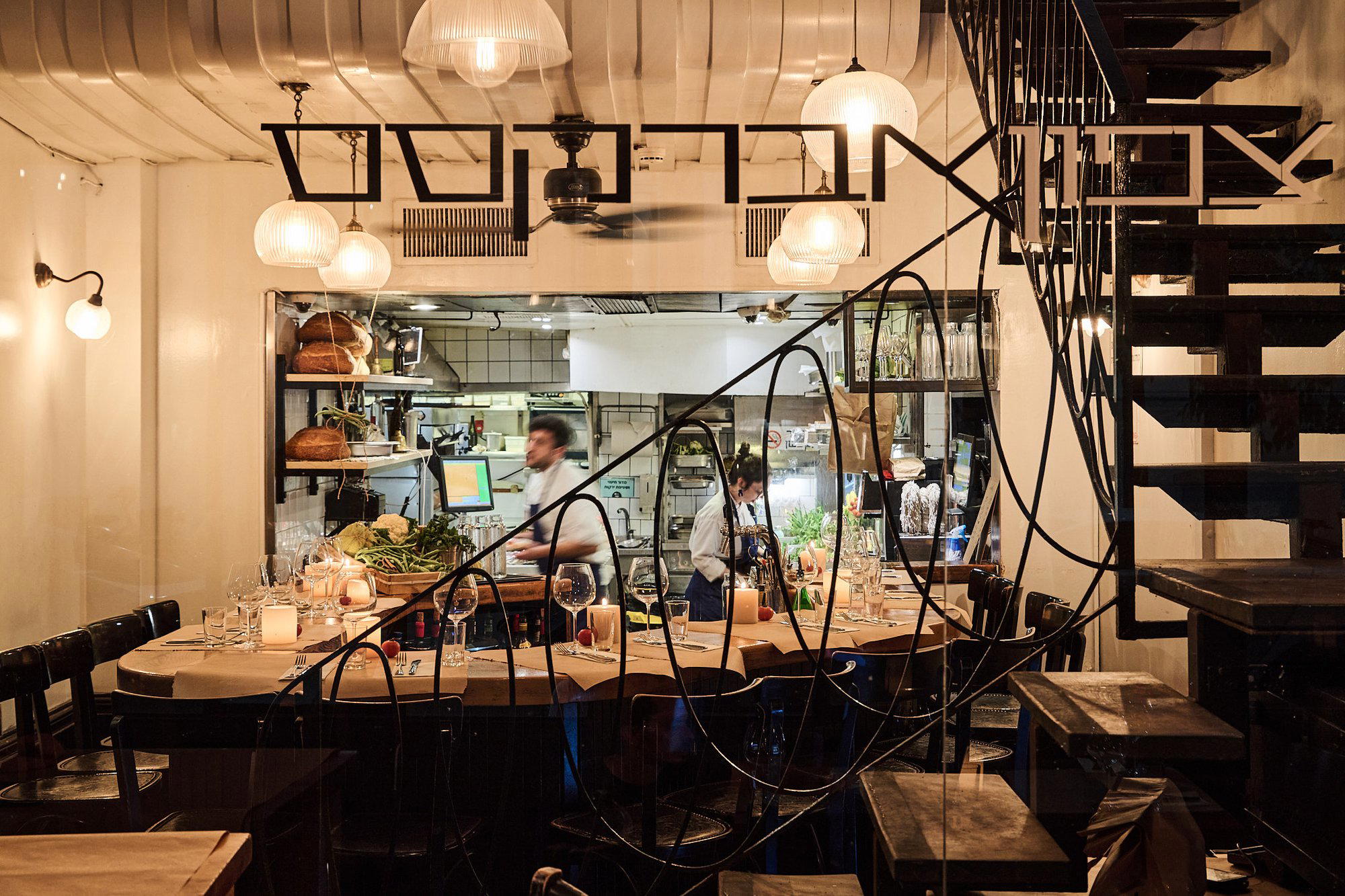
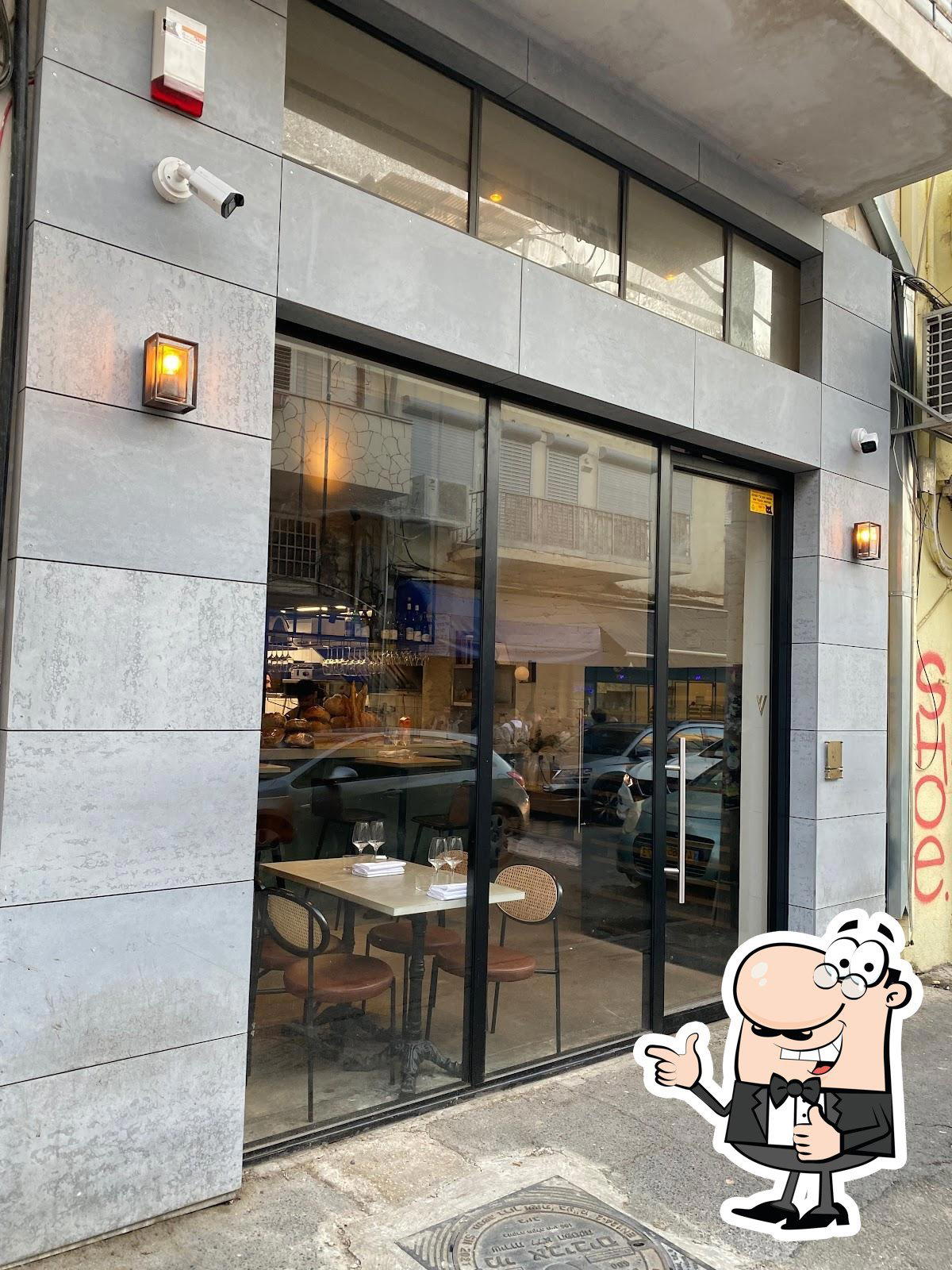
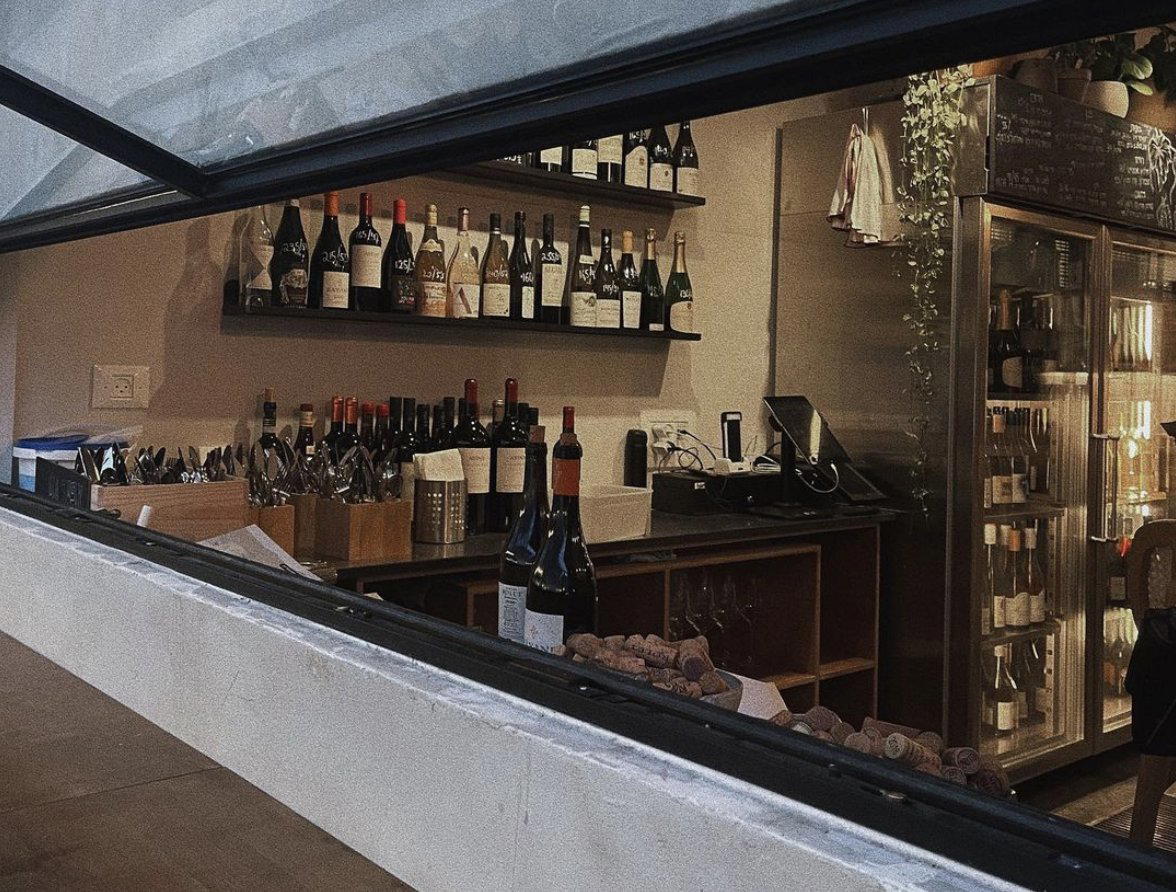
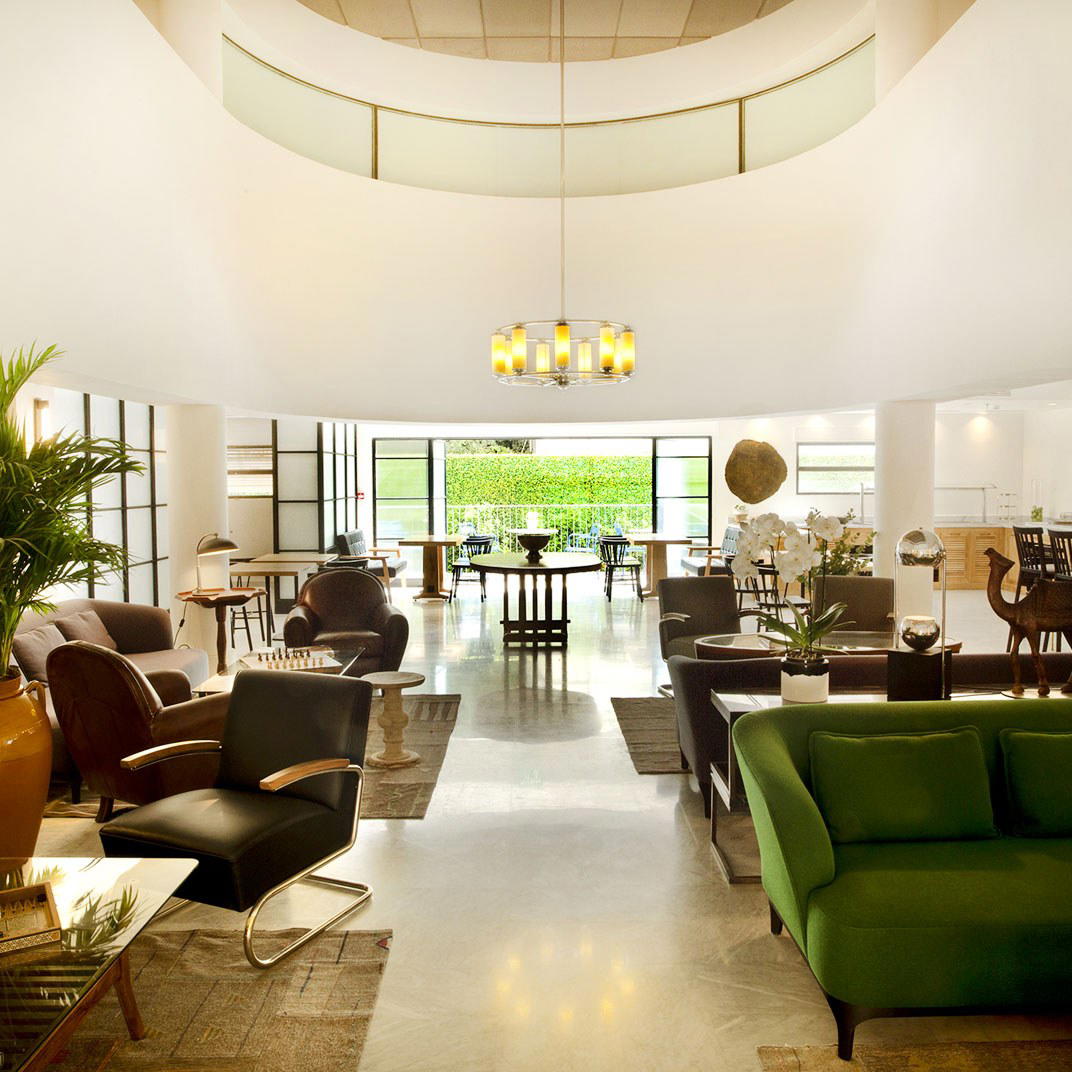
Moodily modern with vertiginous ceilings, banana leaf motifs on concrete walls, divided into five seating regions with special colors and materials, casual yet elegant atmosphere.