
One of Volnay's most storied addresses, Domaine Marquis d'Angerville has shaped the appellation's identity across generations. Holding a Pearl 2 Star Prestige rating from EP Club in 2025, the domaine sits at the upper tier of Côte de Beaune producers, with an estate presence at 4 Rue de Mont that reflects the quiet authority typical of Volnay's serious houses.
The Village That Defines Pinot Noir on the Côte de Beaune
Volnay sits on a steep limestone ridge roughly midway along the Côte de Beaune, producing Pinot Noir that the region's growers and buyers have long positioned as the most refined expression of the grape on this side of Burgundy. Where Pommard, directly downslope to the south, tends toward structure and density, Volnay trades on finesse: wines that are pale in the glass, silky in texture, and built for a decade of patience. Within that framework, a handful of domaines have defined what the appellation actually means at its upper register, and Domaine Marquis d'Angerville is among the names that appear on any serious shortlist.
The address at 4 Rue de Mont places the domaine inside the village itself, which is how the most serious Volnay houses typically operate. There is no highway signage, no tasting pavilion designed for walk-in tourism. The village is compact, its lanes narrow enough that you slow to a walk before you arrive, and the estates announce themselves through stone walls and iron gates rather than branding. That physical character sets the tone for what to expect inside.
Where d'Angerville Sits in the Volnay Hierarchy
Volnay's producer set has a clear internal hierarchy. At the entry level, negociant-bottled village wines move through Beaune merchants and reach international retailers without difficulty. One tier above that, domaine-bottled premier cru wines from recognized lieu-dits like Champans, Clos des Ducs, Taillepieds, and Caillerets occupy a more competitive space, where house reputation and allocation relationships determine who gets access. Domaine Marquis d'Angerville operates in that upper tier and has done so with consistency that the market reflects in both pricing and allocation depth.
EP Club's 2025 Pearl 2 Star Prestige rating places the domaine inside a peer group of producers recognized not just for wine quality in isolation, but for the combination of site, pedigree, and the kind of institutional credibility that sustains long-term collector interest. Among the comparable Volnay houses, Domaine de la Pousse d'Or, Domaine de Montille, Domaine Michel Lafarge, and Domaine Thomas Bouley each bring distinct stylistic profiles, but all share the same fundamental positioning: domaine-bottled premier cru fruit from a tightly controlled estate, sold to a small, consistent buyer base.
What separates d'Angerville within that group is partly historical and partly structural. The domaine's involvement in the fight against adulteration in Burgundy during the early twentieth century gave it a credibility that outlasted the controversy itself, and that reputation has compounded across decades. Buyers in Burgundy's most attentive markets treat this kind of institutional history as a signal of consistency, which is why allocation access here tends to track relationships rather than open-market availability.
The Tasting Format and What to Expect
Visiting a domaine of this standing in Volnay is not the same as booking a hotel tasting experience or walking into a winery with a retail shop at the front. The format across most serious Côte de Beaune houses is appointment-based, with access granted through prior contact, a trade or press relationship, or an introduction through an existing buyer. For individual collectors visiting from outside France, the practical approach is to reach out well ahead of a Burgundy trip, ideally several weeks in advance, and to come with a clear sense of which appellations and vintages are relevant to your buying interests.
Tastings in this category typically take place in the cellar or a dedicated tasting room within the estate, poured either by the winemaker or a senior member of the team. The atmosphere is functional rather than theatrical: the focus is on the wine, the barrels, and the vintage in discussion, not on ambient staging. You are there as a serious participant in a conversation about wine, not as a guest in a hospitality experience. That distinction matters both for what you get out of the visit and for how you should prepare for it.
For those making a broader Burgundy itinerary, Volnay itself warrants a full day or more. The village is close enough to Beaune to be combined with a morning in town but has enough depth on its own that rushing through it misses the point. Our full Volnay wineries guide covers the wider producer set in detail. For dining and overnight stays in the area, our full Volnay restaurants guide and our full Volnay hotels guide are the practical starting points. If the village has more to offer in the evenings than you expect, the bars guide and experiences guide fill in the rest.
The Wines: Appellation Logic and What to Focus On
Volnay's premier cru map is one of the most consistently argued-over in Burgundy, with growers disagreeing about which sites deserve the most attention and critics periodically re-ranking the lieu-dits based on vintage-by-vintage evidence. The Clos des Ducs, a monopole held entirely by d'Angerville, sits at the leading of most serious assessments of the appellation, occupying a walled parcel on the upper slope where drainage and sun exposure combine in the way that Burgundy growers describe as exceptional microclimate. A monopole of this standing rarely appears on the open market at release; it moves through the domaine's established allocation network and surfaces at auction in mature vintages.
Beyond the Clos des Ducs, the domaine works across multiple premier cru sites, which gives a tasting visit structural range: you can follow a single vintage across different parcels and see how soil composition and slope position shift the profile of wines made from the same grape in the same year. That kind of comparative tasting is one of the most instructive things Burgundy offers, and few domaines provide a more legible version of it than those operating at this level in Volnay.
For context on how Volnay's premium Pinot Noir compares to other regional traditions in France, the contrast with Alsace's variety-driven model is worth considering. Albert Boxler in Niedermorschwihr represents what serious estate work looks like in a completely different French framework, where grape variety and single-vineyard terroir interact along different axes. Similarly, looking beyond France to understand what prestige-tier estate work means in other traditions, Abadía Retuerta in Sardón de Duero shows how different a single-estate model can look when built around Tempranillo-dominant blends in Castile.
Other reference points for understanding the range of what serious estate production looks like across Europe include Château Bastor-Lamontagne in Preignac and Château Batailley in Pauillac, both of which operate in the Bordeaux tradition where blending and classification hierarchies produce a different kind of institutional credibility than Burgundy's domaine model. The contrast between the two systems is one of the more useful frameworks for understanding why d'Angerville's position in Volnay means what it does to serious buyers.
For those with interests that extend beyond wine entirely, Chartreuse in Voiron and Aberlour in Aberlour represent how different production traditions in France and Scotland build comparable levels of institutional prestige through entirely different means, which is useful context for thinking about what makes a producer at d'Angerville's level worth a dedicated visit rather than a bottle purchase from a merchant.
Planning the Visit
Volnay is accessible from Beaune by car in under fifteen minutes, and Beaune itself connects to Lyon and Paris by TGV with reasonable frequency. The Côte de Beaune harvest season runs roughly from mid-September through early October depending on the vintage, and visiting during or just before harvest offers a different register of access and conversation than the quieter winter months, when growers are in the cellar and more open to extended tasting discussions. Spring tastings after the previous vintage's bottling give buyers the clearest view of new release character. The domaine's address at 4 Rue de Mont, Volnay 21190, is the contact point for visit enquiries; direct correspondence is the standard approach for estates at this level.
Frequently Asked Questions
What should I expect atmosphere-wise at Domaine Marquis d'Angerville?
The atmosphere is characteristic of serious Côte de Beaune estates: spare, focused, and built around the cellar rather than a hospitality environment. Access is appointment-based. If you arrive with genuine interest in the wines and a prepared set of questions about vintages and parcels, the visit tends to be substantive. EP Club's 2025 Pearl 2 Star Prestige rating reflects a domaine operating at a level where the visit is a professional exchange rather than a consumer experience. Visitors without prior Burgundy tasting experience may find a trade introduction useful.
What wines should I try at Domaine Marquis d'Angerville?
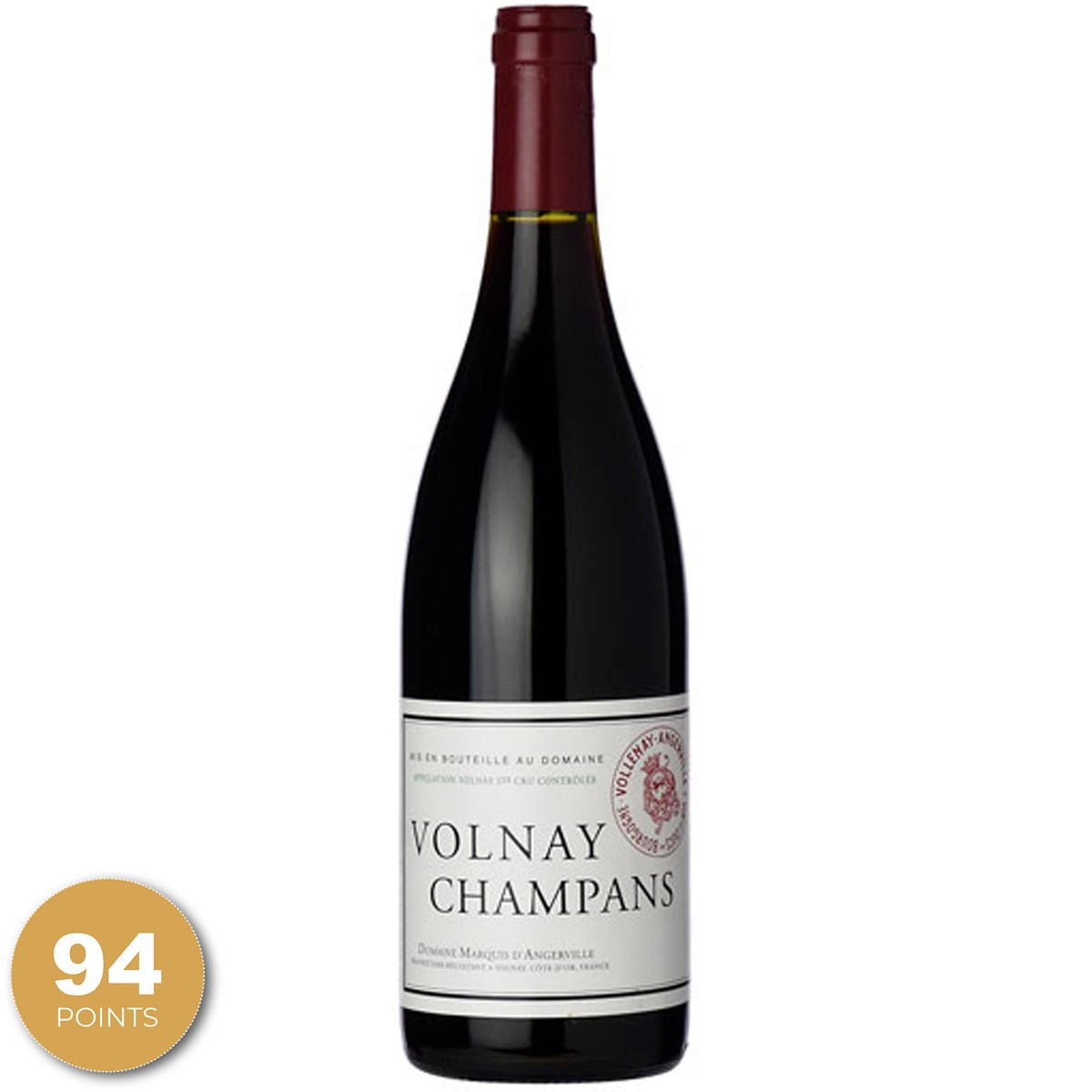
The Clos des Ducs monopole is the reference wine for the domaine and among the most discussed premier cru sites in Volnay, though allocation access is limited and it rarely appears outside established buyer relationships. A tasting that covers multiple premier cru parcels in the same vintage, including Champans and Taillepieds, gives the clearest picture of the domaine's range and how site differences express themselves in Volnay's Pinot Noir. The 2025 Pearl 2 Star Prestige recognition aligns the domaine with Burgundy's most credentialed producer tier.
What's the standout thing about Domaine Marquis d'Angerville?
Clos des Ducs monopole is the single most compelling reason to engage with the domaine at a serious level, but the broader point is institutional: few Volnay houses combine historical depth, consistent critical recognition, and tight allocation discipline in the same way. The 2025 EP Club Pearl 2 Star Prestige rating confirms ongoing relevance at the leading of the appellation's producer set. For collectors building exposure to premier cru Volnay, this address sits at the centre of the conversation rather than at its edges.
Where It Fits
A quick look at comparable venues, using the data we have on file.
| Venue | Cuisine | Awards | Notes |
|---|---|---|---|
| Domaine Marquis d'Angerville | Pearl 2 Star Prestige (2025) | This venue | |
| Domaine de la Pousse d'Or | |||
| Domaine de Montille | |||
| Domaine Michel Lafarge | |||
| Domaine Thomas Bouley |
Access the Cellar?
Our members enjoy exclusive access to private tastings and priority allocations from the world's most sought-after producers.
Access the Concierge