Domaine Chandon

Domaine Chandon has anchored Yountville's wine country since its first vintage in 1976, establishing the Carneros corridor as a credible address for méthode traditionnelle sparkling wine long before the valley's Cabernet reputation calcified. Under winemaker Pauline Lhote and recognised with a Pearl 2 Star Prestige award in 2025, the estate operates as both a serious sparkling producer and one of the Napa Valley's most visited tasting destinations.
 Discover on Pearl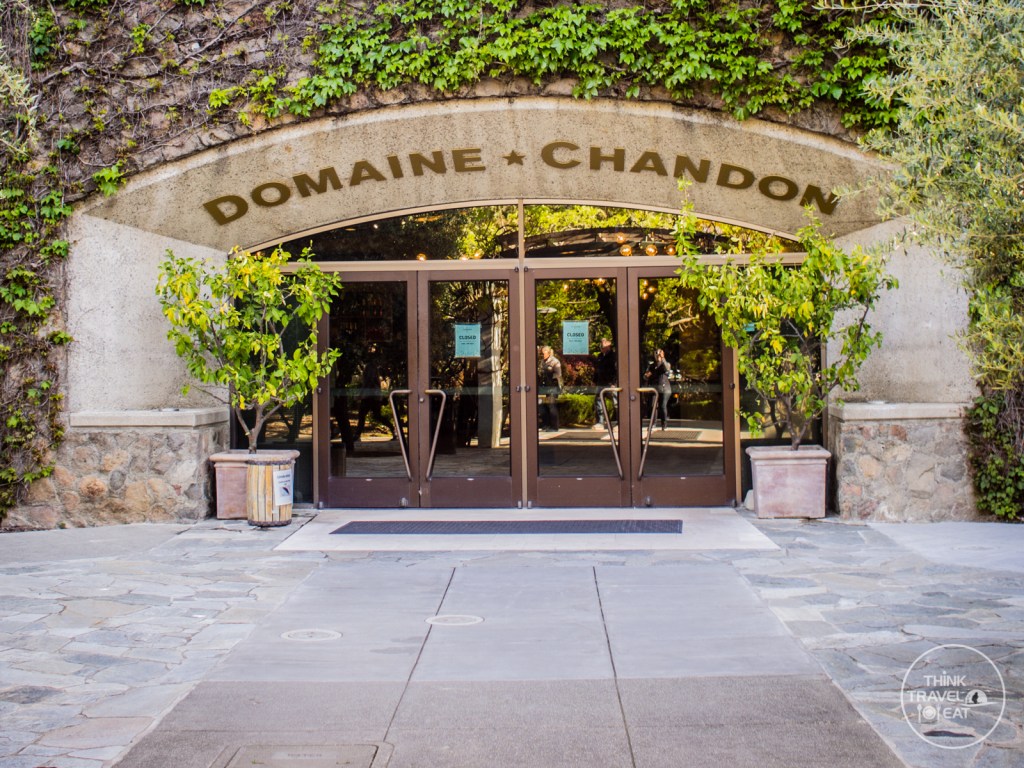
The Road Into Yountville, and What Awaits at the End of It
Arrive on California Drive in Yountville on a clear morning and the geometry of the place makes its purpose plain: manicured grounds open to a low modernist building framed by the Mayacamas foothills, with the visual grammar of a serious estate rather than a roadside tasting room. Domaine Chandon occupies a particular position in Napa's wine history that few properties can claim. Its first vintage dates to 1976, the same year as the Paris Tasting that rewired the valley's self-image, and its founding by Moët Hennessy made it the first major French investment in Napa sparkling wine. Nearly five decades later, under winemaker Pauline Lhote, it continues to operate as the benchmark against which other California méthode traditionnelle programs are measured. The estate earned a Pearl 2 Star Prestige rating in 2025, a designation that places it in a defined upper tier of the regional recognition hierarchy.
California Sparkling Wine and Where Chandon Sits in It
Napa's wine identity is built on Cabernet Sauvignon, and the valley's premium tier spends most of its energy defending that identity. Sparkling wine operates differently here. The Carneros appellation, which straddles southern Napa and Sonoma, provides the cool, fog-influenced climate that sparkling programs require, and it attracted French investment precisely because of that logic. Domaine Chandon was the first to formalise that connection at scale. The wines it produces draw on Chardonnay and Pinot Noir from Carneros and other cool-climate sites, applying secondary fermentation techniques that trace directly to Champagne methodology.
Compared to smaller allocation-model sparkling producers in the region, Chandon operates at a volume and visibility that make it a category reference rather than a niche find. That distinction matters when planning a visit. Properties like Ashes and Diamonds Winery offer a more intimate, design-forward tasting format pitched at a different type of visitor. Chandon's scale allows it to accommodate walk-in traffic, group visits, and planned tastings simultaneously, which shapes the atmosphere at the estate on any given afternoon.
Planning the Visit: Booking Logic and Timing
The editorial angle here is practical, because the gap between a considered visit to Domaine Chandon and an unprepared one is measurable. The estate sits at 1 California Drive in Yountville, a town that concentrates a disproportionate share of Napa's serious dining and wine experiences within a short stretch. That concentration means weekends, harvest season from August through October, and long weekends around national holidays drive significant foot traffic to the area. Arriving without a reservation at Domaine Chandon is possible on quieter weekday mornings, but it is not a strategy for peak periods.
Advance booking through the estate's website gives access to structured tasting formats, which offer more focused access to the range than a counter pour. For visitors planning a broader Napa day, Yountville's walkability makes Chandon a logical anchor: the estate is close enough to the town centre that a tasting can be integrated into a half-day itinerary that also includes the restaurants and bars that define the area's character. Our full Napa experiences guide maps these combinations in more detail.
Harvest timing also affects what you encounter at the estate. Late summer through early autumn brings active winemaking activity to Carneros, which adds context to a visit but also coincides with the highest visitor volumes across the valley. Spring visits, from March through May, tend to offer a more open atmosphere with vineyards in early growth and shoulder-season crowds. For context on where to eat and stay around a visit, the Napa restaurants guide, Napa hotels guide, and Napa bars guide provide current editorial coverage of the supporting infrastructure.
Winemaker Pauline Lhote and the Production Logic
California sparkling wine programs divide roughly into those that treat the category as a volume exercise and those that treat it as a technical discipline with measurable standards. Chandon has operated in the latter group since its founding, and the appointment of Pauline Lhote as winemaker represents a continuation of that approach. Lhote's background connects the estate's French origins to its California execution, a credential that matters because méthode traditionnelle is a time-intensive, technically demanding format. The wine must undergo secondary fermentation in bottle, extended aging on lees, and careful disgorgement, all before a release date that may be years after harvest. The 2025 Pearl 2 Star Prestige recognition reflects that sustained technical commitment.
For visitors comparing Chandon to still-wine producers in the region, the production timeline and the fruit-sourcing logic are meaningfully different. Properties like Darioush Winery and Blackbird Vineyards anchor their programs in Napa Valley red varieties, with site selection and barrel aging as the primary quality levers. Chandon's quality levers are blending precision, lees contact time, and the performance of cool-climate Carneros fruit in bottle fermentation. These are different crafts with different visitor experiences attached to them.
Positioning in the Napa Winery Landscape
Any serious Napa itinerary now has to contend with a tier structure that runs from open-access, no-reservation estates at one end to by-appointment-only allocation producers at the other. Domaine Chandon sits in the accessible-but-considered middle band, where the tasting experience is structured enough to reward planning but open enough to accommodate visitors who book within a day or two of arrival outside peak season.
Producers like Artesa Vineyards and Winery, set into the southern Carneros hills, occupy a comparable position in terms of access and scale, though their program focuses on still wines rather than sparkling. Clos Selene Winery operates at the opposite end of the scale spectrum, with a smaller-production model that suits a different planning calculus. Our full Napa wineries guide covers the full range of production styles and booking requirements across the valley.
For those extending a California wine trip beyond Napa, the methodological contrasts are instructive. Accendo Cellars in St. Helena produces allocation-tier Cabernet at the upper end of the valley's prestige hierarchy, while Adelaida Vineyards in Paso Robles demonstrates what limestone-influenced terroir does to Rhône varieties in a warmer coastal range. Both illustrate how California's wine geography rewards visitors who map estates to specific production traditions rather than treating the state as a monolith. Internationally, the comparison points extend further: Abadía Retuerta in Sardón de Duero and Adelsheim Vineyard in Newberg each operate in cool-climate or tradition-rooted programs that provide useful reference points for visitors developing a comparative framework across regions. And for single-estate production with a long institutional history, Aberlour in Aberlour offers a Scottish parallel in spirit production that underlines how place and founding tradition shape a producer's identity across decades.
Practical Notes for the Visit
Domaine Chandon is located at 1 California Drive, Yountville, CA 94599. Yountville is accessible from San Francisco in approximately 90 minutes by car via US-101 north and CA-29 north, making it a practical day trip or the anchor of a longer Napa stay. Booking in advance through the estate website is advisable for weekend visits and any time between August and October. Weekday mornings in shoulder season carry the least friction. The 2025 Pearl 2 Star Prestige award confirms the estate's position at the recognised upper tier of regional sparkling wine production, which is relevant context when setting expectations against the tasting fee, whatever the current rate may be at time of visit.
Frequently Asked Questions
Peer Set Snapshot
These are the closest comparables we have in our database for quick context.
| Venue | Awards | Notes |
|---|---|---|
| Domaine Chandon | Pearl 2 Star Prestige | This venue |
| Joseph Phelps Vineyards | 50 Best Vineyards #37 (2025); Pearl 4 Star Prestige | Ashley Hepworth, Est. 1973 |
| Beringer Vineyards | 50 Best Vineyards #88 (2025); Pearl 2 Star Prestige | Mark Beringer, Est. 1876 |
| Duckhorn Vineyards | 50 Best Vineyards #44 (2024); Pearl 3 Star Prestige | Renée Ary, Est. 1978 |
| Clos Selene Winery | Pearl 2 Star Prestige | Guillaume Fabre |
| Kenzo Estate | Pearl 2 Star Prestige | Heidi Barrett, Est. 2005 |
Access the Cellar?
Our members enjoy exclusive access to private tastings and priority allocations from the world's most sought-after producers.
Get Exclusive Access