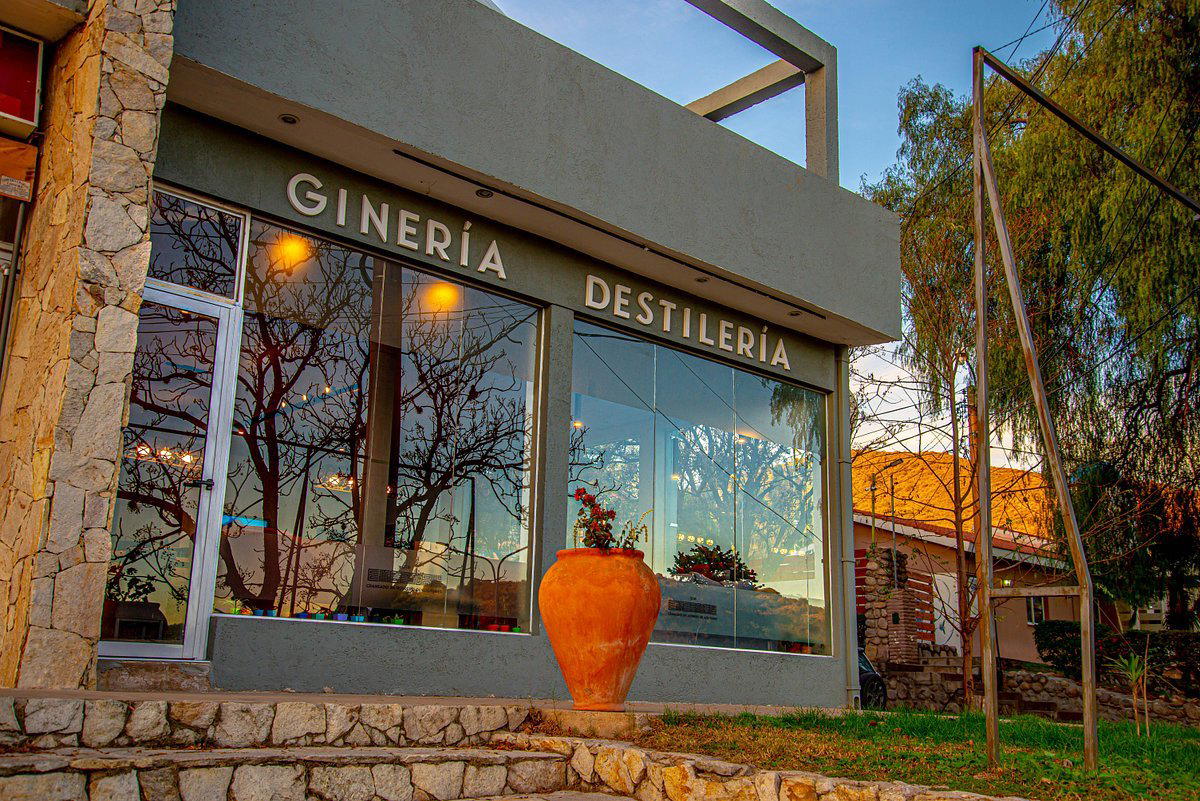
Destilería San Luis sits in Potrero de los Funes, a mountain-lake district that is among Argentina's least-mapped premium production territories. The operation earned a Pearl 2 Star Prestige rating in 2025, placing it in a select tier of Argentine producers recognised for craft at altitude. For travellers moving through San Luis province, it represents a category distinct from the Mendoza corridor.
 Discover on Pearl
Pearl is the En Primeur Club membership app — saves, bookings, and concierge access live there. Same editors, same standards.
- Address
- Aguaribay, Los Paraísos y, D5704 Potrero de los Funes, San Luis, Argentina
- Phone
- +542665030552
- Website
- gineternal.com
High Desert, High Altitude: The San Luis Production Context
Argentina's premium drinks map is drawn across several regions, with Mendoza and Salta among the most established corridors. Bodega Norton in Luján de Cuyo, Terrazas de los Andes in Mendoza, and Bodega El Esteco in Cafayate dominate the international conversation, with their Andean altitude credentials and decades of export infrastructure behind them. San Luis province sits east of that well-worn circuit, and Potrero de los Funes, the lakeside mountain enclave where Destilería San Luis operates, does not appear on most itineraries drafted in Buenos Aires or abroad.
That relative obscurity is a condition of geography more than quality. The Sierras de San Luis rise sharply from the central Argentine plain, creating a distinct microclimate: dry air, significant diurnal temperature variation, and an environment that exerts pressure on any production process dependent on local water and ambient conditions. For a distillery rather than a vineyard, these factors translate differently than they do for Malbec, but the underlying principle of terroir expression, the idea that place shapes product, applies equally to spirits and wine.
San Luis province as a whole has invested significantly in tourism infrastructure around Potrero de los Funes, most visibly through the international motor racing circuit that draws visitors from across Argentina. The broader town sits at around 900 metres above sea level, within a valley of granite outcrops and the artificial lake created by the Potrero de los Funes dam. The physical environment is striking in the way that high-altitude Argentine landscapes tend to be: spare, light-saturated, and spatially open in a manner that lower-altitude production regions rarely offer.
What a Pearl 2 Star Prestige Rating Signals
In 2025, Destilería San Luis received a Pearl 2 Star Prestige rating, a recognition tier that identifies producers operating at a level of craft and consistency above the regional baseline. Within the Argentine spirits category, which has seen genuine expansion in artisan production over the past decade, this places Destilería San Luis among specialist producers rather than casual tourist-facing operations.
For context, the broader Argentine craft spirits movement has largely clustered around gin, given the country's strong botanical resources and the global gin revival that accelerated investment from the mid-2010s onward. Gin Eternal in San Luis represents the province's engagement with that particular category. Destilería San Luis, as its name indicates, operates from the same provincial base and shares the altitude and water-quality conditions that characterise the region's production environment. The 2 Star Prestige recognition indicates a standard of production that warrants deliberate attention rather than incidental discovery.
For comparison, producers in more established Argentine spirits territories, such as Fratelli Branca Distillery in Buenos Aires, operate within heavily commercialised frameworks built over generations. A newer operation earning Prestige-level recognition in a frontier territory like San Luis is, structurally, doing something different: building a category profile in a place without an inherited production reputation.
Potrero de los Funes: Arriving and Orienting
Potrero de los Funes is approximately 20 kilometres from the city of San Luis, the provincial capital. The approach road follows the lake shore and rises through a range of sierra granite and dry scrub vegetation. The address, Aguaribay, Los Paraísos y, D5704 Potrero de los Funes, places the distillery within the residential and small-hospitality zone that has grown around the lake over the past two decades.
The town is reachable by road from San Luis city in under 30 minutes. San Luis city connects by air to Buenos Aires via Aeropuerto San Luis (LUQ), with regular domestic services. Travellers arriving from Mendoza can reach San Luis by road in approximately three hours along Ruta Nacional 7, one of Argentina's primary east-west corridors. Those building a broader Argentine spirits or wine itinerary might combine a San Luis visit with Escorihuela Gascón in Godoy Cruz or Bodega Antigal in Maipú on the Mendoza leg, then continue east into San Luis province.
Because the distillery operates in a relatively low-traffic tourism zone compared to Mendoza's established wine corridors, advance contact before visiting is advisable. Phone and website details are not published here, so advance contact before visiting is advisable.
The Terroir Argument for Argentine Spirits
Argentine wine's international credibility was built on the altitude argument: that Malbec grown at 900, 1,200, or 1,500 metres above sea level develops a structural profile that lower-altitude equivalents cannot replicate. The same geographic logic, altitude, solar intensity, diurnal variation, applies to the raw materials and production conditions for spirits, even if the conversation around spirits terroir remains less developed than it does for wine.
Producers in Patagonia, Salta, and now San Luis have all advanced the argument that Argentine geography creates distinct conditions for craft production. Bodega Colomé in Molinos, operating at some of the highest cultivated altitudes in the world, represents the extreme end of that argument in wine. For spirits, the analogous case is less documented but structurally similar: local botanicals, altitude-conditioned water sources, and lower ambient temperatures during fermentation and maturation all contribute to a product that carries a traceable relationship to place.
Destilería San Luis's location in the Sierras de San Luis, rather than the more famous Andean peaks to the west, positions it within a different topographic register than Mendoza or Salta producers. The sierras are older geological formations than the Andes, with different soil chemistry and a drier, more continental climate than the Andean foothills. Whether and how that distinction expresses itself in production is a question that visiting the distillery directly is the only way to answer with any specificity.
For travellers interested in tracking the full Argentine production geography, a comparison itinerary might also include Familia Schroeder in San Patricio del Chañar in Neuquén, Bodega DiamAndes in Tunuyán, or Rutini Wines in Tupungato, all of which operate in defined Andean subregions and offer a baseline against which San Luis's sierra-altitude character reads as genuinely distinct.
Planning a Visit: What to Expect
The Pearl 2 Star Prestige recognition positions Destilería San Luis as a specialist producer worth a deliberate detour rather than a casual stop. In practical terms, that means arriving with a degree of preparation: confirming operational hours and visit formats in advance, as smaller Argentine producers, particularly those outside the established Mendoza wine tourism circuit, do not uniformly maintain walk-in hospitality. The distillery's location in Potrero de los Funes, a resort town with seasonal visitor peaks tied to the motor racing calendar and summer lake tourism, means availability may tighten during high-demand periods.
Pricing and tasting formats are not confirmed. Those who prefer established pricing transparency before booking may wish to cross-reference locally before committing travel time from Mendoza or Buenos Aires. That said, the 2025 Prestige award is a recent and meaningful credential, the kind that typically precedes broader international discovery rather than following it. Arriving before broader discovery is often when a producer of this tier is most accessible.
Travellers interested in comparing Scottish distillery standards with South American production, perhaps as context for understanding what a Prestige-level rating means across different production traditions, might find it useful to reference Aberlour in Aberlour as a benchmark, or Accendo Cellars in St. Helena for a New World precision-production comparison point.
Comparison Snapshot
Comparable venues nearby, for context on price, style, and recognition.
| Venue | Cuisine | Price | Notes |
|---|---|---|---|
| Destilería San LuisThis venue — the venue you are viewing | Winery | , | |
| Gin Eternal (Showroom) | San Luis | $$ | Potrero de los Funes |
| Sinestesia Destilería | Buenos Aires | , | |
| Gancia (Aperitif) Argentina | Winery | , | Capilla del Señor |
| La Alazana Distillery | Winery | , | Bariloche |
| La Francesa Gin Distillery | Winery | , | Buenos Aires |
Continue exploring