Brennerei Hödl

Brennerei Hödl holds a Pearl 1 Star Prestige (2025) among Klagenfurt's specialist distillers, placing it in a tier where craft provenance and production discipline carry more weight than volume or visibility. Austria's distilling tradition runs deep in Carinthia, and Hödl operates within that lineage with the kind of low-profile seriousness that awards committees tend to notice before most visitors do.
 Discover on Pearl
Pearl is the En Primeur Club membership app — saves, bookings, and concierge access live there. Same editors, same standards.
Klagenfurt's Distilling Tradition and Where Hödl Sits Within It
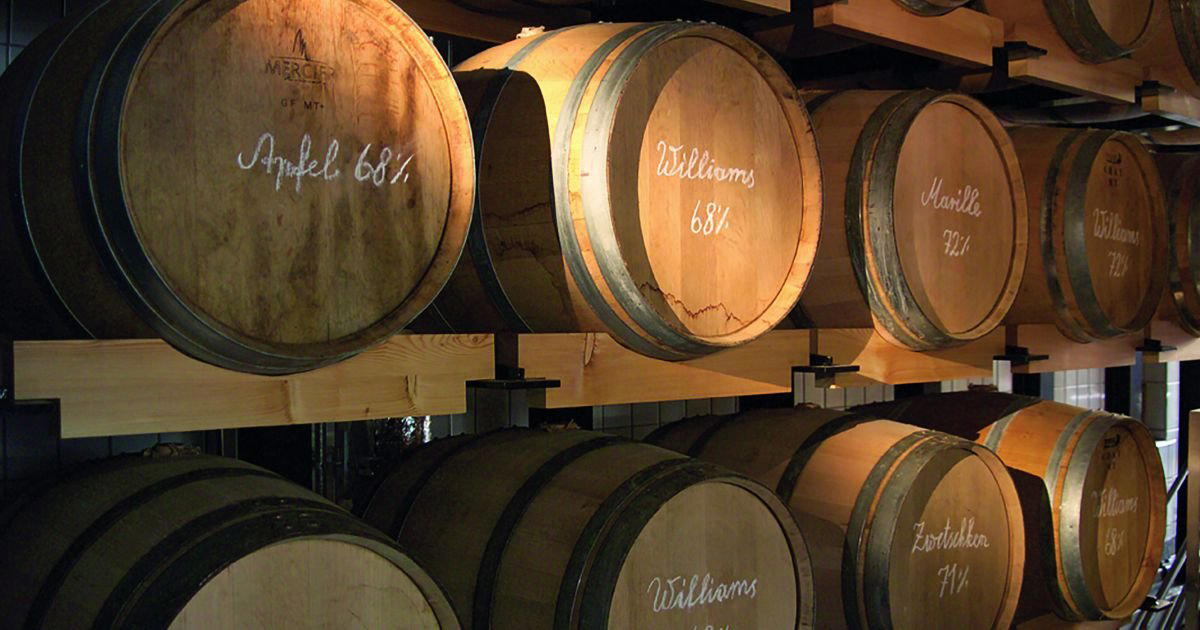
Austria's relationship with distilling is older and more geographically specific than the country's international wine reputation tends to suggest. In Carinthia, the southernmost of Austria's federal states, small-batch spirits production has long operated alongside agricultural life, drawing on local fruit, grain, and mountain spring water rather than imported botanical frameworks. The Brennerei, as a category, sits in a different cultural register from the brand-forward gin houses and single-malt operations that dominate international spirits coverage. These are producers rooted in place, oriented toward regional identity, and measured by precision in raw material selection and distillation control rather than marketing reach.
Brennerei Hödl occupies this tradition. In a category where most operations remain deliberately low-profile, recognition at this level functions as a reliable shorthand for seriousness. It is the kind of signal worth paying attention to when arriving in Klagenfurt without a local contact who can move through the regional spirits scene directly.
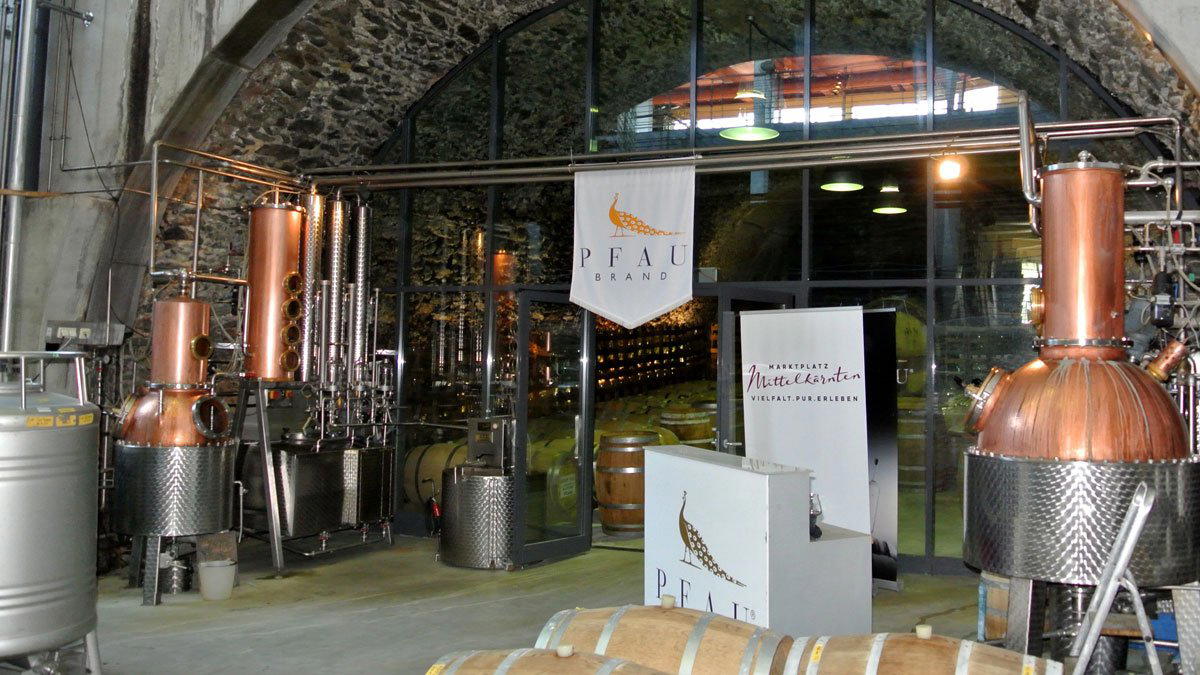
For broader context on the Austrian distilling scene, the Pfau Distillery and Stroh Austria Distillery offer useful comparison points within Klagenfurt itself, each representing a distinct approach to regional spirits production.
The Carinthian Terroir Argument
The editorial angle applied to wine, where soil composition, elevation, and microclimate shape the finished product, also applies to Alpine and sub-Alpine distillation. Carinthia's geography, bounded by the Karawanken range to the south and the Nockberge massif to the north, produces a harvest environment that differs substantially from Lower Austria's Danube corridor or Burgenland's Pannonian flatlands. Cooler growing seasons, higher diurnal temperature ranges, and distinct mineral profiles in the water supply all shape what a distillery working from local raw materials can produce.
This is the framework within which Brennerei Hödl's output is most accurately assessed. Austrian Obstbrand and grain spirits from Carinthia carry characteristics tied to that regional climate, and operations that source locally rather than blending in neutral base spirits from industrial suppliers tend to demonstrate those differences clearly in the finished product. The Pearl 1 Star Prestige (2025) awarded to Hödl indicates that the judging panel found those characteristics coherently expressed.
The terroir argument gains additional weight when positioned against Austria's wine-producing regions. Producers such as Weingut Wohlmuth in Kitzeck, operating in Styria's Sausal, and Weingut Pittnauer in Gols in Burgenland demonstrate how Austrian producers across categories have increasingly moved toward place-legible production, where the origin of the raw material is understood as the primary argument for quality rather than the secondary one. Distilleries making similar claims in Carinthia are working within that same cultural shift in Austrian production values.
The comparable set in Austrian Spirits
Austrian distilling has not attracted the same international critical infrastructure as Austrian wine. This means the reference points for assessing an operation like Brennerei Hödl are largely domestic rather than globally comparative. Pearl Star Prestige ratings, as an assessment format, provide the most consistent cross-regional benchmark available within the country, making them the relevant trust signal when other international recognition is absent.
The Austrian spirits category does have some internationally tracked names. 1516 Brewing Company Distillery in Vienna represents the urban, technically focused end of the Austrian production spectrum. Operations such as 1310 Spirit of the Country Distillery in Sierning and 1404 Manufacturing Distillery in Sankt Peter-Freienstein occupy distinct regional niches. Hödl's Klagenfurt positioning gives it a different geographic identity within that set, one shaped by Carinthia's alpine fruit culture and its distance from both Vienna's cocktail-bar demand and Styria's wine-led hospitality economy.
For readers building a broader Austrian spirits itinerary, the wine producers tracked by EP Club across the country provide useful context for understanding how Austrian production culture operates across categories. Weingut Bründlmayer in Langenlois, Weingut Emmerich Knoll in Dürnstein, and Weingut Kracher in Illmitz each reflect the same commitment to place-specific production that characterises serious Austrian distilling operations. Weingut Heinrich Hartl in Oberwaltersdorf and Weingut Scheiblhofer Distillery in Andau extend that reference set further into Lower Austria and Burgenland.
Approaching Brennerei Hödl
Klagenfurt functions as a regional city rather than a tourist-primary destination, which has practical consequences for how visitors encounter specialist producers. The city's food and drink culture is oriented toward residents and regional visitors, meaning that operations without a significant hospitality-facing component, tasting room infrastructure, or export-driven marketing tend to operate at a remove from the international traveller's default circuit. This is as true for distilleries as it is for small wine estates.
Approaching Hödl requires the kind of preparation appropriate to a specialist producer rather than a venue with walk-in access. Specific address, visiting hours, booking method, and product availability are not confirmed in EP Club's current data, so direct contact before arrival is advisable. Given the Pearl 1 Star Prestige (2025) designation, the operation is clearly active and assessable, but logistics are best confirmed in advance rather than assumed from general distillery conventions.
For international reference points within the spirits category, Aberlour in Aberlour and Accendo Cellars in St. Helena illustrate how differently premium producers across categories structure visitor access, from the open-door distillery tourism model of Speyside to the appointment-only allocation culture of Napa. Hödl, as a Carinthian operation with specialist recognition but limited public data, likely sits closer to the appointment end of that spectrum.
What the 2025 Pearl 1 Star Prestige Signals
Award structures within the Austrian spirits assessment framework operate on a scale where recognition at the Pearl Star Prestige level reflects a judged determination of production quality above the general field. It does not function as a lifestyle or hospitality award, and it is not typically conferred on the basis of brand presence or retail distribution. The 2025 date of Hödl's recognition places it in the current assessment cycle, meaning the designation reflects present production rather than historical reputation.
For a visitor using awards as a proxy for quality when local knowledge is limited, this is a meaningful signal. It places Brennerei Hödl in the company of Austrian producers assessed seriously by a specialist panel, which in a category as locally defined as Austrian Brennerei production is a more reliable indicator than general consumer ratings or international press coverage, both of which tend to underrepresent Carinthian producers relative to their actual quality level.
Planning a Visit
The city's compact centre means that combining a distillery visit with other food and drink stops, including the producers listed in our Klagenfurt city guide, is logistically manageable within a single day. Confirmed access arrangements are recommended before arrival, given the specialist nature of the operation.
Continue exploring