Bodega Norton

Bodega Norton in Luján de Cuyo, Mendoza, produces terroir-focused wines from vineyards planted in 1895. The estate’s signature offerings include the Gernot Malbec, single-varietal Malbec selections, and estate Chardonnay, each showing careful barrel aging and vineyard expression. Norton pairs historic craftsmanship—its 1919 cellar and 130-year museum—with contemporary tasting programs: guided flights, a "Winemaker for a Day" blending session, and seasonal chef menus at La Vid. Recognized for exporting Argentina’s first single-varietal Malbec to the U.S. in 1972, Bodega Norton delivers vivid mountain-influenced aromatics, dark-fruit concentration, mineral lift and supple tannins framed by toasted oak.
Where the Andes Begin to Shape the Bottle
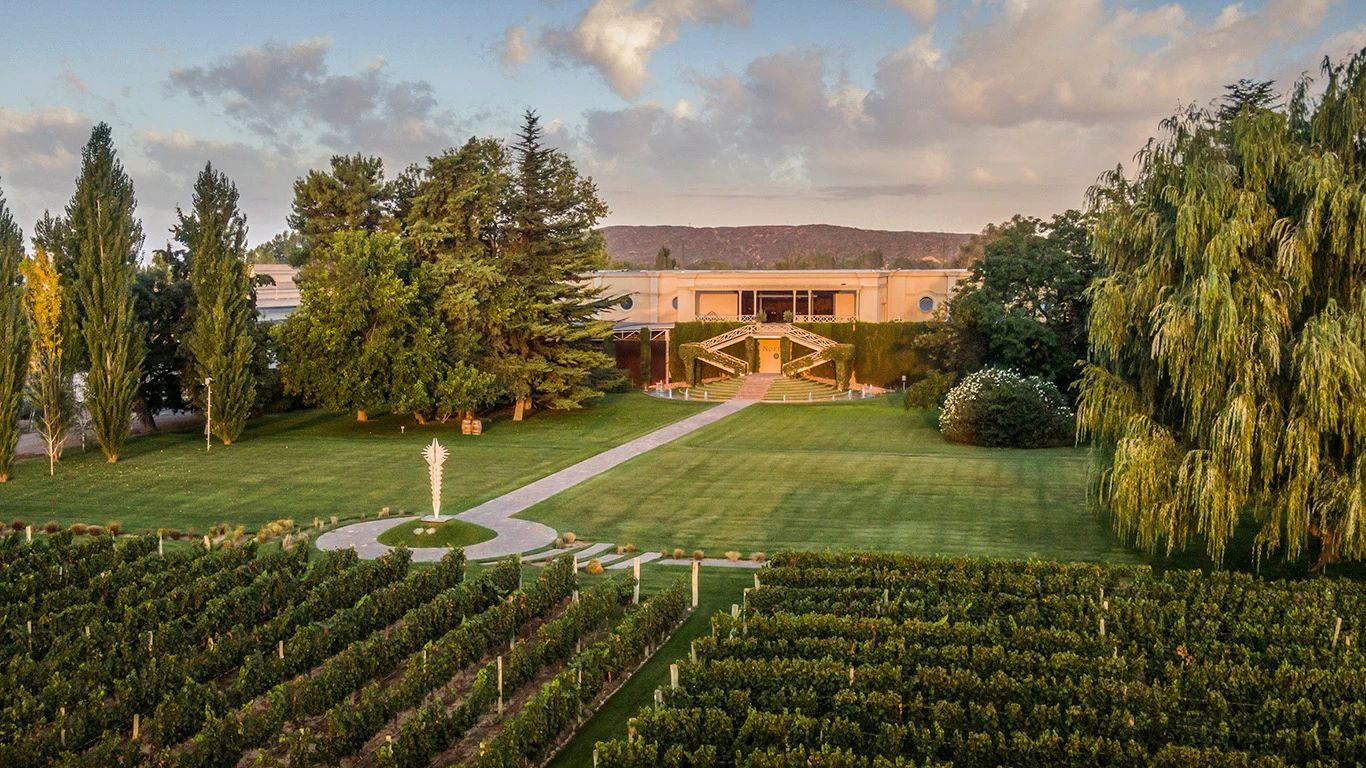
The road out to Perdriel, along RP15, does something particular to a visitor's sense of expectation. The Andes sit close enough here that their shadow falls across the vineyard rows in the late afternoon, and the air carries the dryness of altitude rather than the mugginess of lower valley floors. Luján de Cuyo has established itself as the gravitational centre of serious Argentine wine not by accident but by geography: the combination of Andean meltwater irrigation, poor sandy-loam soils, and high-altitude UV intensity creates conditions that concentrate flavour without the need for heavy intervention in the winery. Bodega Norton, situated at kilometre 23 on that Perdriel road, is among the estates where those conditions have been channelled into a sustained production program, and its 2025 Pearl 3 Star Prestige recognition from EP Club places it in the upper tier of Luján de Cuyo's winery ranking.
Sourcing as the Central Argument
Luján de Cuyo's claim to Mendoza's premium identity rests largely on a sourcing proposition: high-altitude blocks, old-vine material, and single-district fruit that can be traced to specific soils rather than blended across a broad appellation. The Perdriel district, where Norton's vineyards are concentrated, sits at the drier, higher end of Luján de Cuyo's production zone. Rainfall is negligible; irrigation is controlled; yields, in the serious blocks, remain low. These are not unique conditions in Mendoza, but they are among the most consistently managed, and the resulting fruit carries the structural density and natural acidity that give Malbec from this sub-zone its track record in international markets.
The broader pattern across Luján de Cuyo's premium tier is a shift toward origin-specific storytelling, with estates emphasising named vineyard blocks and elevation data alongside variety. Neighbours including Bodega Lagarde and Chakana Winery pursue similar sourcing arguments from their respective parcels, while Cheval des Andes positions its Perdriel-sourced Cabernet and Malbec blend against Bordeaux-first estates globally. Norton operates within that same competitive conversation, though across a wider production range that includes both entry-level and prestige tiers.
The Production Range and What It Signals
Estates of Norton's scale in Luján de Cuyo typically maintain a tiered portfolio: commercial labels that fund the operation, reserve and single-vineyard expressions that carry the prestige argument, and in some cases limited-release projects that function as calling cards for collectors and importers. The Pearl 3 Star Prestige rating suggests Norton's upper tier is performing at a level that warrants serious attention from buyers who approach Mendoza as a fine wine source rather than a value category. That distinction matters more than it might appear: the market for premium Argentine wine is smaller and more discerning than the volume category, and estates that hold recognition in both tiers occupy a genuinely useful position for visitors trying to calibrate a visit across a day in the region.
For context, Durigutti Winemakers and Nieto Senetiner represent different points on the same spectrum: Durigutti operating in a smaller, artisan-focused format with deep varietal exploration including Bonarda and Criolla, Nieto Senetiner operating at larger volume with a long-established estate in the same district. Norton's position in that peer set is as a producer with both the infrastructure for consistent large-scale output and the vineyard resources for serious prestige-tier wine.
Planning a Visit to the Perdriel District
Luján de Cuyo's winery visits are leading approached with a half-day minimum per cluster of estates; Perdriel specifically rewards a deliberate morning start when the light on the Andes is clear and tasting rooms are unhurried. The address at RP15 km 23 places Norton within reasonable distance of central Mendoza city, accessible by hired car or organised transfer, which is the practical recommendation for any visitor planning more than one estate stop. Tasting programs at prestige-tier Mendoza wineries typically require advance booking, particularly for structured tastings or cellar experiences; confirming availability directly with the estate before arriving is standard practice in this tier. For those building a wider regional itinerary, our full Luján de Cuyo wineries guide covers the district's full peer set, and our full Luján de Cuyo restaurants guide, hotels guide, bars guide, and experiences guide provide parallel curation for a full stay in the region.
How Norton Sits Within the Wider Argentine Wine Map
Luján de Cuyo is not the only address worth tracking in Argentine fine wine, and visitors building a broader understanding of the country's premium production will find meaningful comparisons across other regions. Bodega Colomé in Molinos operates at dramatically higher altitude in the Calchaquí Valleys, where elevation becomes the primary sourcing story and the wine operates in a different register entirely. Bodega DiamAndes in Tunuyán represents the Valle de Uco's competing claim to Mendoza's prestige tier, with cooler temperatures and a more recent track record building the case against Luján de Cuyo's established reputation. Bodega El Esteco in Cafayate anchors the Torrontés conversation in Salta, a variety with no serious rival elsewhere in Argentina and a flavour profile that reads as a deliberate counterpoint to Malbec dominance. For international comparison, estates like Abadía Retuerta in Sardón de Duero illustrate how estate-based prestige programs work in Spain's interior wine regions, while Aberlour in Aberlour provides a reference point for how origin-specific production operates in a non-wine context at similar prestige levels.
The Critical Angle: Does the Origin Argument Hold?
The honest assessment of Perdriel as a wine-producing district is that its reputation has been earned by a critical mass of serious producers working the same soil type over several decades, rather than by any single estate operating in isolation. Norton's presence in that district, across a range that extends from accessible commercial wines to Pearl 3 Star Prestige-rated expressions, gives visitors a useful entry point into the appellation argument without requiring them to commit to the most austere or smallest-production format in the peer set. The estate's scale means availability is more consistent than at boutique neighbours, which matters for visitors who want to take bottles home rather than taste and move on. The prestige rating is the clearest public signal that the upper end of the range is performing above the district average, which is the reason it functions as a reference point for any serious tour of Luján de Cuyo.
Frequently Asked Questions
What is the leading wine to try at Bodega Norton?
Norton's EP Club Pearl 3 Star Prestige recognition (2025) is the clearest signal that the estate's upper-tier expressions are worth prioritising over entry-level labels on a visit. In Luján de Cuyo, where Malbec from Perdriel-district vineyards is the primary prestige argument, any single-vineyard or reserve-tier Malbec from the estate is the logical starting point. The winery's location at RP15 km 23 in Perdriel places it directly within the sub-zone that produces the district's most structurally complete examples of the variety.
What is the main draw of Bodega Norton?
The combination of a Perdriel address, a wide production range, and a Pearl 3 Star Prestige rating from EP Club (2025) makes Norton one of the more accessible entry points into serious Luján de Cuyo wine without sacrificing quality signal. Visitors who want to see the full spectrum of what the appellation produces, from commercial to prestige tier, within a single estate visit, will find the format practical and the sourcing story coherent.
What is the leading way to book Bodega Norton?
Norton's website and phone contact are not listed in the EP Club database at the time of publication, so the practical approach is to contact the estate directly through their public channels or arrange a visit through a Mendoza-based wine tour operator. Prestige-tier wineries in Luján de Cuyo typically require advance booking for structured tastings; walk-in availability at the cellar door is less reliable at estates with active export programs. Confirming format and availability before travelling from Mendoza city is the standard approach for this tier of estate.
What kind of traveller is Bodega Norton a good fit for?
Norton suits visitors who want substantive engagement with Argentine wine rather than a casual tasting, but who also prefer an estate with the infrastructure to handle visitors comfortably rather than the smallest boutique format. The Pearl 3 Star Prestige rating and the Perdriel location make it a credible stop for those building a focused Luján de Cuyo itinerary alongside peers such as Bodega Lagarde and Cheval des Andes. Collectors tracking high-altitude Malbec across South America's premium sub-zones will find the estate relevant to that comparison.
How does Bodega Norton compare to other long-established Mendoza estates in the Perdriel district?
Norton is among the estates with a substantial operating history in Perdriel, which places it in a different category from newer valley arrivals in Valle de Uco. Established Perdriel producers share access to older vineyard material and a longer record of appellation-specific winemaking, which tends to show in structural consistency across vintages. The 2025 Pearl 3 Star Prestige rating from EP Club confirms Norton belongs in the upper bracket of that peer group rather than the mid-tier.
Where It Fits
A compact peer set to orient you in the local landscape.
| Venue | Cuisine | Awards | Notes |
|---|---|---|---|
| Bodega Norton | Pearl 3 Star Prestige (2025) | This venue | |
| Bodega Lagarde | |||
| Chakana Winery | |||
| Cheval des Andes | |||
| Durigutti Winemakers | |||
| Nieto Senetiner |
Access the Cellar?
Our members enjoy exclusive access to private tastings and priority allocations from the world's most sought-after producers.
Access the Concierge