Nieto Senetiner

Nieto Senetiner in Mendoza’s Vistalba, Luján de Cuyo is a heritage estate winery marrying old-vine power and modern finesse. Producing signature wines such as Nieto Senetiner Malbec DOC, the organic Don Nicanor Malbec and the Patrimonial reserve, the estate emphasizes regenerative viticulture across roughly 400 hectares. Under winemaker Santiago Mayorga—Tim Atkin’s Young Winemaker of the Year 2017—the cellar balances barrel aging and terroir-driven expression. Expect dense Malbec aromas of blackberry, violet and graphite, bright high-altitude acidity and polished tannins that echo Agrelo’s sunbaked soils and cool nights, offering a sophisticated Mendoza tasting experience for discerning visitors.
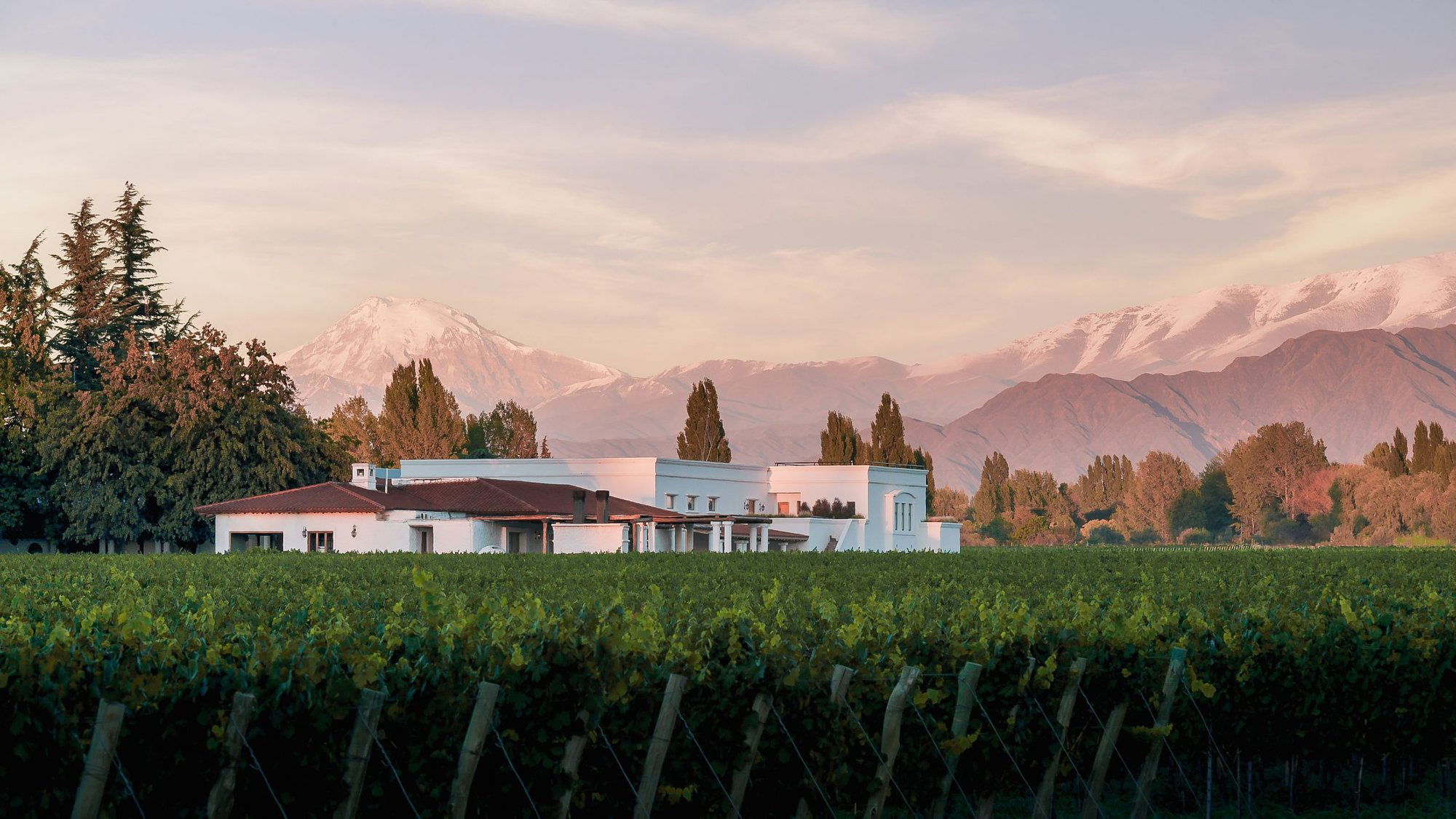
Where the Andes Come Into Focus
The road into Luján de Cuyo runs through a grid of vine rows that have been here, in various forms, since the late nineteenth century. By the time you reach Guardia Vieja 2000, the address of Nieto Senetiner, the mountains are close enough to feel structural rather than scenic. This part of Mendoza's wine country sits at altitude, where the temperature swings between day and night are wide and the soils carry the gravelly character that the region's serious Malbec programs depend on. That context matters before you even set foot inside: visiting Nieto Senetiner means arriving somewhere with deep roots in Luján de Cuyo's premium tier, now carrying a Pearl 3 Star Prestige rating from EP Club's 2025 assessment.
Luján de Cuyo is the subregion that helped put Argentine wine on the international map, and the concentration of serious bodegas here is higher than almost anywhere else in the country. [Bodega Lagarde](https://www.enprimeurclub.com/wineries/bodega-lagarde-lujn-de-cuyo-winery), [Bodega Norton](https://www.enprimeurclub.com/wineries/bodega-norton-lujn-de-cuyo-winery), [Chakana Winery](https://www.enprimeurclub.com/wineries/chakana-winery-lujn-de-cuyo-winery), [Cheval des Andes](https://www.enprimeurclub.com/wineries/cheval-des-andes-lujn-de-cuyo-winery), and [Durigutti Winemakers](https://www.enprimeurclub.com/wineries/durigutti-winemakers-lujn-de-cuyo-winery) all operate in this same corridor. Nieto Senetiner's Pearl 3 Star recognition places it in the prestige tier of that peer set, not in the entry-level category that dominates the wider Mendoza visitor circuit.
How the Experience Unfolds
Winery visits in Luján de Cuyo typically follow one of two formats: a production tour that ends in a brief pouring, or a seated tasting structured around a flight of wines. The better bodegas in the region have pushed toward the latter, building experiences with enough narrative depth that the wines arrive with proper context rather than as an afterthought. A visit to a prestige-rated bodega like Nieto Senetiner is leading understood not as a single transaction but as a progression, one where the logic of what you taste tracks with where you've just walked, what you've just seen, and how the site itself is being explained to you.
In Argentine wine tourism, the tasting arc tends to move from the lighter, earlier-harvest whites and rosés toward the structured reds that define the bodega's reputation. For Luján de Cuyo properties, that arc almost always builds toward Malbec, whether in varietal form or in blends. The altitude here, typically between 900 and 1,100 metres above sea level in the subregion's better parcels, produces a Malbec with firmer structure and more pronounced acidity than the lower-lying zones closer to Mendoza city. Understanding that geography is part of understanding the wines in the glass.
The Tasting Progression
Structured around a multi-course wine sequence, the leading visits to Luján de Cuyo bodegas work the way a tasting menu does in a serious restaurant: each pour advances the argument, rather than repeating it. A thoughtful progression at a prestige-tier bodega moves through the bodega's entry range before introducing the reserve and premium tiers, giving the visitor a reference point when the more complex wines arrive. Without that scaffolding, the premium bottles can seem arbitrary. With it, the distinctions become legible.
For Malbec specifically, the instructive comparison is usually between a younger-vine, tank-aged expression and an older-vine, French-oak-aged counterpart. The former shows the variety's fruit character and soft tannins clearly; the latter demonstrates what extended oak and vine age contribute in terms of texture and depth. That side-by-side logic is standard practice at the region's more serious producers, and it is the kind of sequencing that justifies a prestige rating over a more casual tasting format.
Visitors with a particular interest in how Luján de Cuyo compares to other Argentine wine regions can extend the conversation by considering producers farther afield. [Bodega Colomé in Molinos](https://www.enprimeurclub.com/wineries/bodega-colom-molinos-winery) operates at significantly higher elevations in Salta, where Malbec takes on a different character. [Bodega DiamAndes in Tunuyán](https://www.enprimeurclub.com/wineries/bodega-diamandes-tunuyn-winery) represents the southward expansion of premium Mendoza into the Uco Valley. [Bodega El Esteco in Cafayate](https://www.enprimeurclub.com/wineries/bodega-el-esteco-cafayate-winery) anchors the Torrontés tradition in the northwest. Each offers a different lens on Argentine viticulture, and Nieto Senetiner's Luján de Cuyo position reads differently once those alternatives are in the frame.
The Broader Luján de Cuyo Context
What distinguishes Luján de Cuyo from the rest of Mendoza's wine zones is partly geological and partly historical. The subregion was among the first to be formally demarcated as a Denominación de Origen Controlada in Argentina, a designation that recognized the area's specific soil and climate characteristics as worth protecting legally. The alluvial soils brought down from the Andes contain a high proportion of stone and gravel, which restrict vine yields and concentrate flavour in ways that flatland vineyards cannot replicate. That is the physical argument for why serious Malbec programs have clustered here rather than in more accessible parts of the province.
The international comparison that holds up over time is with Bordeaux's approach to appellation identity: the argument is not simply that the wine is good, but that the wine is good because of a specific place, and that the place is worth visiting to understand the wine properly. Bodega visits in Luján de Cuyo have always carried that implicit premise, and the prestige tier of producers, of which Nieto Senetiner is now formally a part, takes that premise most seriously.
For those building a fuller picture of the subregion, EP Club maintains a [complete Luján de Cuyo wineries guide](https://www.enprimeurclub.com/wineries/lujan-de-cuyo) that covers the range of formats and tiers available. The [Luján de Cuyo restaurants guide](https://www.enprimeurclub.com/restaurants/lujan-de-cuyo), [hotels guide](https://www.enprimeurclub.com/hotels/lujan-de-cuyo), [bars guide](https://www.enprimeurclub.com/bars/lujan-de-cuyo), and [experiences guide](https://www.enprimeurclub.com/experiences/lujan-de-cuyo) round out the planning picture for a multi-day visit, which is the format that makes the most sense given the subregion's density and the time required to visit multiple bodegas properly.
For comparison purposes outside Argentina, the question of what prestige-tier winery visits look like in other Old and New World contexts is worth considering. [Abadía Retuerta in Sardón de Duero](https://www.enprimeurclub.com/wineries/abada-retuerta-sardn-de-duero-winery) operates in Castilla y León with a similar emphasis on estate identity and structured visitor experience. [Aberlour in Aberlour](https://www.enprimeurclub.com/wineries/aberlour-aberlour-winery) sits in a different category entirely, representing the Scotch whisky tradition's approach to distillery visits. The contrast is useful for understanding what the Argentine model offers that those formats do not: altitude, Andean landscape as backdrop, and a varietal Malbec identity that has no direct parallel elsewhere.
Planning Your Visit
Nieto Senetiner sits at Guardia Vieja 2000 in Luján de Cuyo, Mendoza, which places it within the main bodega corridor of the subregion. Visitors traveling from Mendoza city typically cover the distance in under an hour by road, and the area is well-served by the network of wine tourism operators that run day trips from the city. The harvest period, running roughly from late February through April depending on variety and vintage conditions, brings the most activity to the subregion; visiting during this window means the winery is in full operation, though it also means the most visitor traffic. The shoulder seasons of spring (October to November) and late autumn (May) offer quieter conditions with the vineyards still visually active. Given Nieto Senetiner's Pearl 3 Star Prestige recognition, it is worth contacting the bodega directly to confirm visit formats and availability before arrival, as prestige-tier properties in the region often work by appointment rather than open-door access.
Frequently Asked Questions
What do visitors recommend trying at Nieto Senetiner?
Luján de Cuyo's altitude-grown Malbec is the reference point for any serious visit to the subregion, and at a Pearl 3 Star Prestige-rated bodega like Nieto Senetiner, the reserve and premium Malbec tiers are where the most informative tasting decisions happen. Visitors consistently find that the structured red wines, where oak aging and vine age interact with the subregion's gravelly soils, represent the clearest case for why Luján de Cuyo commands a premium over lower-elevation Mendoza fruit.
What should I know about Nieto Senetiner before I go?
Nieto Senetiner is located in Luján de Cuyo, Mendoza's most formally demarcated premium wine subregion, and carries a Pearl 3 Star Prestige rating from EP Club's 2025 assessments, placing it in the top tier of the regional peer set. Specific pricing for tastings and tours was not available at the time of publication, so confirming current rates and formats directly with the bodega before visiting is the practical approach. The address at Guardia Vieja 2000 puts it within the main bodega corridor, accessible from Mendoza city by road.
What is the leading way to book Nieto Senetiner?
Phone and website details were not available in EP Club's current database record, so the most reliable approach is to contact the bodega through its official channels once confirmed, or to arrange a visit through one of Mendoza's established wine tourism operators, who typically maintain direct booking relationships with prestige-tier properties in Luján de Cuyo. As a Pearl 3 Star Prestige-rated bodega, Nieto Senetiner is more likely to operate on an appointment basis than a walk-in format, which makes advance contact important regardless of the booking channel used.
How does Nieto Senetiner's prestige rating compare to others in the Luján de Cuyo corridor?
EP Club's Pearl 3 Star Prestige recognition, awarded in 2025, places Nieto Senetiner in the upper tier of the Luján de Cuyo subregion's winery peer set, alongside other seriously regarded producers in the corridor. In a subregion where the density of notable bodegas is among the highest in Argentina, a prestige-tier rating signals a visitor experience and wine quality standard that differentiates it from the wider Mendoza circuit. For visitors comparing options across the subregion, this distinction is a useful planning reference when allocating time and visits across multiple bodegas.
Cost and Credentials
These are the closest comparables we have in our database for quick context.
| Venue | Price | Awards | Notes |
|---|---|---|---|
| Nieto Senetiner | Pearl 3 Star Prestige (2025) | This venue | |
| Bodega Lagarde | |||
| Bodega Norton | |||
| Chakana Winery | |||
| Cheval des Andes | |||
| Durigutti Winemakers |
Access the Cellar?
Our members enjoy exclusive access to private tastings and priority allocations from the world's most sought-after producers.
Access the Concierge