Bodega Lagarde


One of Luján de Cuyo's oldest operating estates, Bodega Lagarde sits on San Martín 1745 in Mayor Drummond with a production history that predates Argentina's premium wine export era. The winery holds a Pearl 3 Star Prestige rating for 2025, placing it among the most credentialed addresses in the region. Visits here track the full arc from high-altitude vineyard to barrel hall.
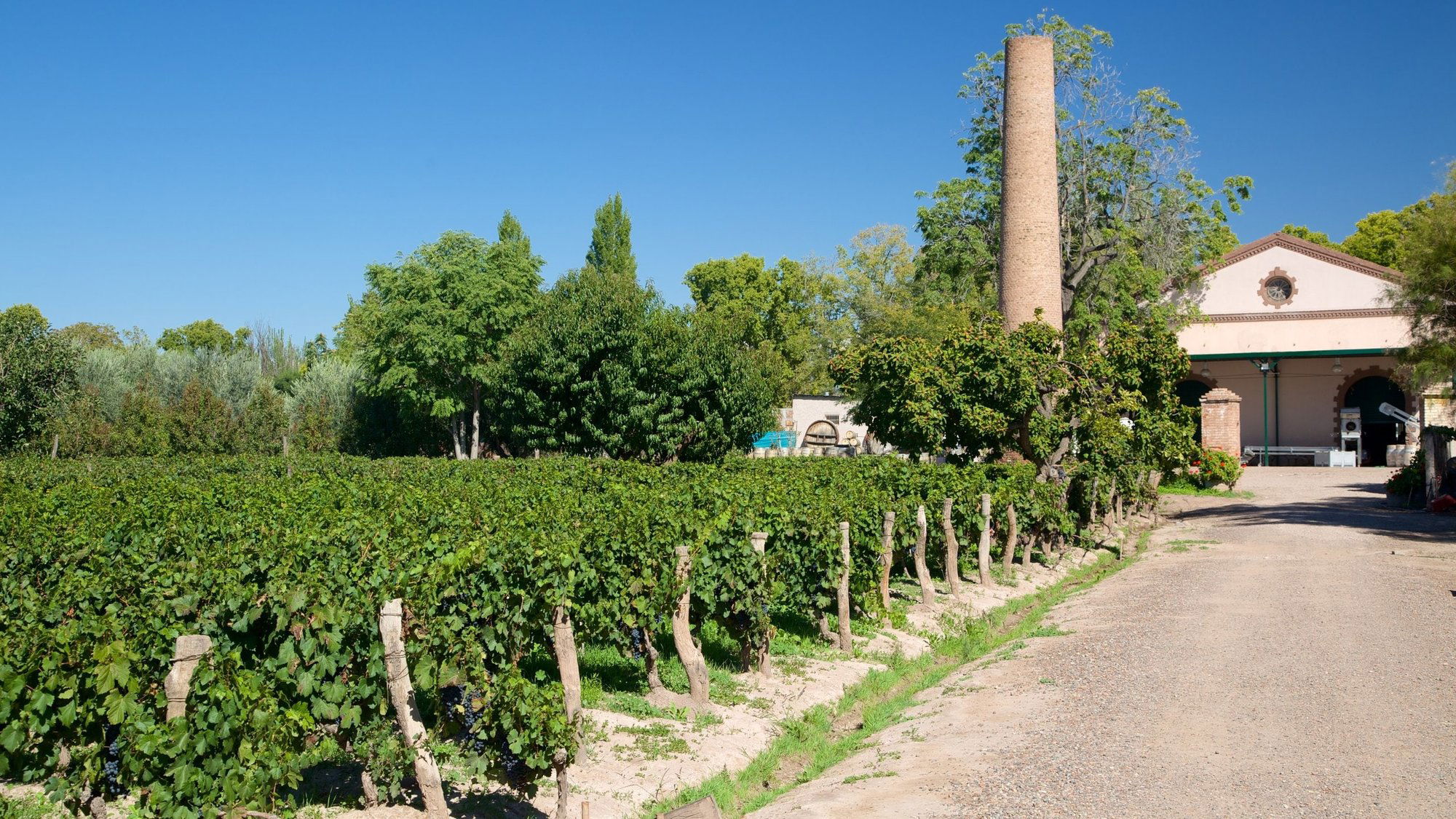
A Barrel Hall That Tells the Story of Mendoza's Elevation
Approaching Bodega Lagarde along San Martín in Mayor Drummond, the property asserts itself through architecture before the first pour. Adobe walls and century-old vines mark the entrance to one of Luján de Cuyo's most historically rooted estates, a reminder that serious Mendocino winemaking long predates the international spotlight that arrived in the 1990s. Where many regional producers have rebuilt around modern tourist infrastructure, Lagarde carries the accumulated weight of a property that has worked through multiple eras of Argentine wine, the result being that a walk through its cellar is also a walk through the region's own evolution.
Luján de Cuyo sits at elevations ranging from roughly 900 to 1,100 metres above sea level, and that altitude is foundational to the style of wine it produces. Cooler nights, intense solar radiation, and the snowmelt-fed Mendoza River irrigation system combine to produce the slow phenolic ripening that premium Malbec and Cabernet Sauvignon in this sub-region are known for. Bodega Lagarde occupies that terroir context directly, and understanding what the estate does after harvest, in the barrel room and the blending lab, makes the wines considerably more readable when you encounter them in a glass or on a retail shelf.
What Happens Between Harvest and Bottle
The premium Argentine wine trade has spent the last two decades arguing about oak, and Luján de Cuyo producers have largely shaped that debate. The shift from heavy new French oak toward shorter aging cycles, lighter toast profiles, and larger-format vessels reflects a broader regional recalibration, and Bodega Lagarde's program sits inside that arc. Aging decisions in this tier of Mendocino winemaking are not merely technical choices; they are statements about which international market the wine is targeting and how the producer reads the current critical consensus on Argentine terroir expression.
For visitors, the barrel hall is where that conversation becomes tangible. The smell of a working cellar at altitude, the particular damp-stone cool of a space that holds wine through the Andean summer, and the visual scale of serious oak inventory all give context that tasting notes alone cannot. Estate tours that route visitors through production areas rather than purely hospitality spaces tend to produce a different level of engagement, and Lagarde's address and history position it as exactly that kind of property. Comparing the cellar program here against peers like Bodega Norton or Cheval des Andes illustrates how differently estates at similar price points approach the question of when a wine is ready to leave the cellar.
Prestige Tier in a Competitive Sub-Region
Bodega Lagarde carries a Pearl 3 Star Prestige rating for 2025 from EP Club, which places it within the upper credentialed tier of Luján de Cuyo producers. That positioning matters because the sub-region now holds a competitive density that rivals any wine district in the Southern Hemisphere. Within a few kilometres of this address, you find Chakana Winery, working with organic viticulture and a different register of Malbec expression, and Durigutti Winemakers, known for site-specific work across multiple Luján parcels. Nieto Senetiner operates at scale nearby. This concentration means visitors planning a serious wine itinerary in the region have genuine choices at each quality level, and a 3 Star Prestige rating signals that Lagarde competes on substance rather than heritage alone.
The competitive context also extends beyond Luján. Argentina's wine geography has diversified significantly, with high-altitude sites in Salta producing compelling results at Bodega Colomé in Molinos and Bodega El Esteco in Cafayate. Against that backdrop, Luján de Cuyo estates have had to sharpen their identity, and the ones that have done so most effectively are those with genuine cellar depth, not just vineyard acreage. Bodega Lagarde's long operating history gives it something newer entrants cannot replicate: a library of vintages that documents how the site performs across decades of variable Andean growing seasons.
The Seasonal Case for Visiting Now
Harvest season in Mendoza runs from late February through April, depending on variety and elevation, and for visitors interested in winery tourism the distinction between visiting during and outside this period is substantial. During the March-April window, active fermentation, foot traffic through the winery, and the physical presence of fresh must and fruit at the crush pad make a cellar visit a different sensory experience from the quieter winter months. The flip side is that the Andes in July and August offer crisp, clear days, low visitor volume, and barrel halls that have settled into the meditative quiet of mid-aging, a different but equally instructive visit profile.
Spring in Mendoza, roughly September through November, brings flowering vines and the particular light quality that the Andean pre-cordillera frames so distinctively. Many wine travelers combine Luján de Cuyo with broader Mendoza city stays, and the full regional offering across restaurants, bars, and smaller producers is covered in our full Luján de Cuyo wineries guide and the parallel Luján de Cuyo restaurants guide. For accommodation, our hotels guide for Luján de Cuyo maps the range from estate guesthouses to Mendoza city properties within easy transfer distance.
How Lagarde Fits a Broader Itinerary
A serious Mendoza wine itinerary typically runs three to five days, with morning winery visits scheduled before the afternoon heat peaks. Mayor Drummond and the wider Luján corridor allow for two to three estate visits in a single day without significant transit time. Bodega Lagarde at San Martín 1745 anchors the southern part of that corridor, and the combination of historical depth and current prestige-tier standing makes it a natural anchor visit rather than a fill-in stop.
Travelers building a multi-region Argentina wine itinerary might also consider how Luján de Cuyo producers compare to the premium tier in other countries. The aging and blending decisions made at estates like Bodega DiamAndes in Tunuyán or at properties like Abadía Retuerta in Sardón de Duero in Spain share structural logic with what Lagarde does, though the terroir signatures are distinct. For those whose interest extends to distilled spirits, Aberlour in Scotland offers an instructive parallel on how aging environment shapes a finished product, different medium, same underlying argument about patience and barrel selection.
Bars and experience options in the wider region are catalogued in our Luján de Cuyo bars guide and experiences guide, both of which cover programming beyond the standard estate visit format for travelers who want a fuller picture of what the sub-region offers.
Planning a Visit
Bodega Lagarde is located at San Martín 1745 in Mayor Drummond, within the Luján de Cuyo appellation. Visitors arriving from Mendoza city typically travel by remis (private car hire) rather than public transit, as the winery addresses in this corridor are spaced across rural agricultural land. Tour and tasting bookings are generally handled through the winery's direct channels; given the prestige-tier positioning and the level of visitor interest that a 3 Star rating generates, advance contact ahead of any visit is advisable, particularly during harvest season and the peak October-November spring window.
Frequently Asked Questions
What is the signature bottle at Bodega Lagarde?
The venue data available does not specify individual wines or current releases. What can be said is that Lagarde operates within the Luján de Cuyo appellation, where Malbec and Cabernet Sauvignon at altitude form the prestige backbone for credentialed producers. The estate's 2025 Pearl 3 Star Prestige rating from EP Club reflects the overall program rather than a single bottle. For current release information, visiting the winery directly or consulting with a Mendoza specialist retailer will yield accurate and up-to-date bottle recommendations.
Why do people visit Bodega Lagarde?
The combination of historical depth, a Mayor Drummond location within one of Mendoza's most serious wine sub-regions, and a 2025 Pearl 3 Star Prestige rating draws visitors who want a cellar visit grounded in long production history rather than recent construction. Luján de Cuyo is formally recognized as Argentina's first Controlled Designation of Origin for Malbec, which gives every credentialed estate here a geographic credential that newer Mendoza producers cannot claim. Lagarde's position within that appellation, paired with its rating, places it in the tier of estates that reward visitors willing to engage with the production process rather than simply the tasting room.
What is the leading way to book Bodega Lagarde?
Contact details are not published in the current EP Club database. Visitors planning a trip to Luján de Cuyo should consult our full Luján de Cuyo wineries guide for updated booking guidance, or approach the winery through its official channels directly. For a sub-region this competitive, booking estate visits two to four weeks ahead during harvest or spring season avoids the scheduling conflicts that arise at prestige-tier properties during peak travel windows.
Comparable Options
A small set of peers for context, based on recorded venue fields.
| Venue | Cuisine | Price | Notes |
|---|---|---|---|
| Bodega Lagarde | This venue | ||
| Bodega Norton | |||
| Chakana Winery | |||
| Cheval des Andes | |||
| Durigutti Winemakers | |||
| Nieto Senetiner |
Access the Cellar?
Our members enjoy exclusive access to private tastings and priority allocations from the world's most sought-after producers.
Access the Concierge