Chakana Winery

Chakana Winery sits in Luján de Cuyo, Mendoza's most prestigious wine district, and carries a Pearl 3 Star Prestige rating for 2025. The property works within a tradition of high-altitude Malbec production that has defined this appellation for decades, placing it among the more formally recognised addresses in a competitive regional peer set.
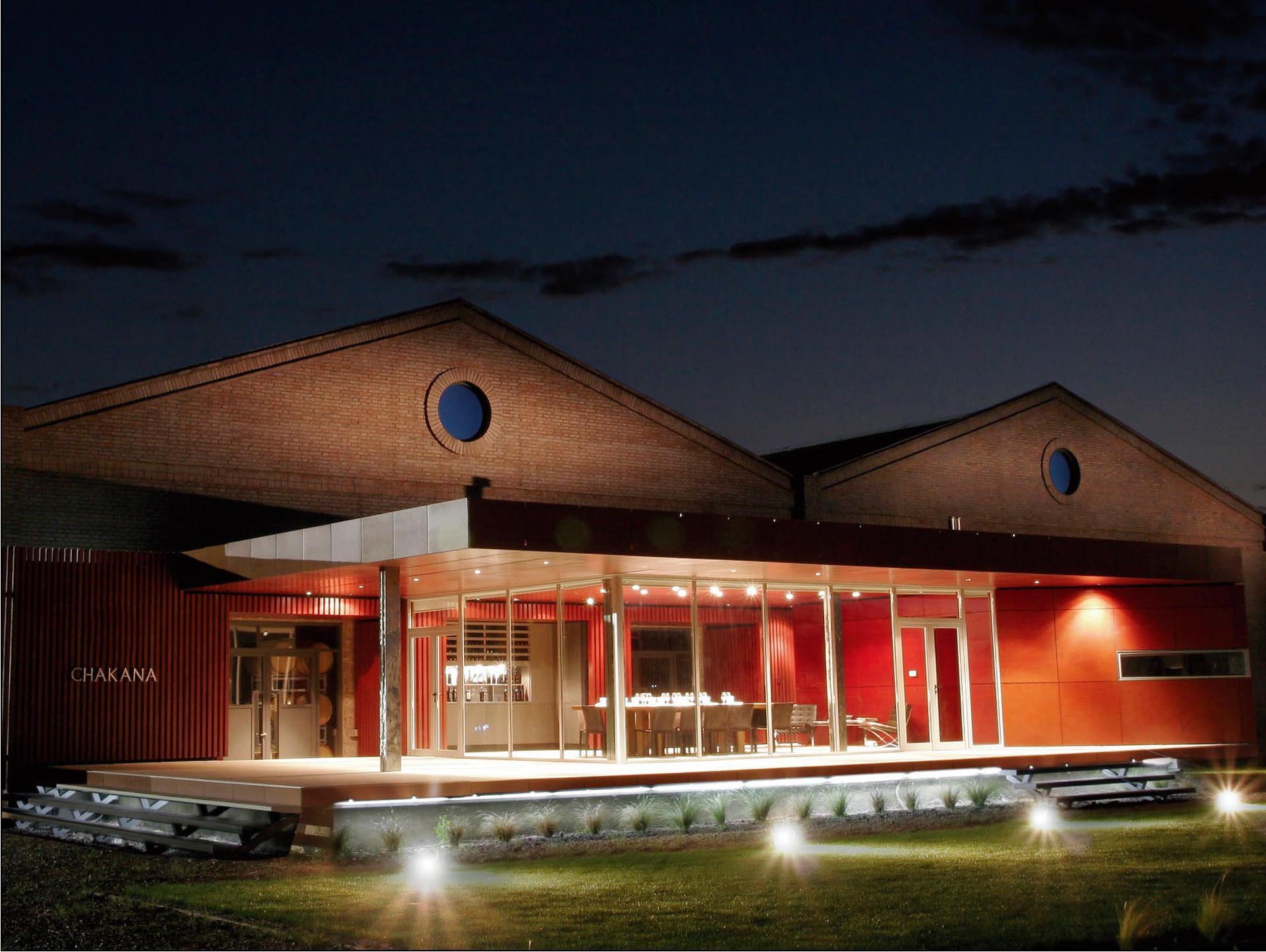
Luján de Cuyo and the Weight of Altitude
Mendoza's wine geography is more stratified than it first appears. The province covers a vast arc of pre-Andean foothills, but the parcels that draw serious attention cluster in a narrower corridor: Luján de Cuyo, whose vineyards sit between roughly 900 and 1,100 metres above sea level, where diurnal temperature swings preserve acidity and extend hang time in ways the warmer lowlands cannot replicate. This is where Argentina's Malbec identity crystallised, and where the country's most formally recognised producers have long concentrated their leading fruit.
Chakana Winery, addressed at Calle Baldini 16197 in Luján de Cuyo, sits inside that corridor. Its 2025 Pearl 3 Star Prestige designation places it in the upper tier of EP Club's rated producers for the region, a benchmark that aligns it with a peer set defined by precision viticulture and structured tasting programs rather than volume production. In Luján de Cuyo, that distinction matters: the appellation hosts everything from large export-oriented estates to small-parcel boutique houses, and the tier a producer occupies shapes the kind of visit a traveller can expect.
What the Appellation Asks of Its Producers
Luján de Cuyo earned Argentina's first Denominación de Origen Controlada designation in 1993, specifically for Malbec, a fact that signals how early and deliberately the district committed to a single-variety identity. The argument for that decision is visible in the vineyards: old-vine Malbec here, some blocks planted before the mid-twentieth century, produces grapes with a concentration and structural complexity that younger, lower-altitude plantings rarely match. The resulting wines tend toward darker fruit profiles, firm but integrated tannin, and a minerality that producers in the broader Mendoza DOC sometimes struggle to achieve.
That viticultural context is the frame for understanding any estate that has chosen to base itself in Luján de Cuyo rather than the more accessible, less elevation-driven zones further east. The choice signals intent: these producers are making a bet on terroir specificity over commercial scale. Within that context, a Pearl 3 Star Prestige rating from EP Club for 2025 functions as external confirmation that Chakana is meeting the standards its address implies.
For comparison, neighbouring producers in the district, including Cheval des Andes, Bodega Lagarde, and Bodega Norton, represent different positions across the scale, boutique-to-heritage spectrum, which illustrates how much range the appellation contains even within its prestige tier. Durigutti Winemakers and Nieto Senetiner add further texture to that local peer set, with each estate representing a distinct approach to the same base material.
Approaching the Estate
The physical approach to a Luján de Cuyo winery is rarely incidental. The district's landscape delivers the Andes in a way that Mendoza city does not: the range fills the western horizon with a clarity that shifts by season, snowcapped through the Southern Hemisphere winter and autumn, increasingly bare rock by late summer. Vineyards run in ordered rows across alluvial soils, interrupted occasionally by irrigation channels that carry meltwater from the mountains to the vines. It is a working agricultural landscape that happens to be arresting to look at, and the best-sited estates use that orientation deliberately.
Arriving at Calle Baldini 16197 places the visitor in the middle of this. The address is specific to a district where property boundaries and road names matter for navigation, and where GPS reliability can vary depending on the map source used. Travellers planning a visit are advised to confirm routing in advance, particularly if combining multiple winery visits in a single day, which is the standard approach in Luján de Cuyo given the concentration of producers.
The Regional Rhythm and When to Visit
The harvest calendar governs life in Luján de Cuyo more than in most wine regions, because the Andean melt-and-freeze cycle compresses the growing season in ways that European or Californian producers do not experience in the same form. Harvest typically falls between late February and early April, depending on the variety and altitude of the parcel. During this period, the energy of a working winery is palpable in a way that off-season visits cannot replicate: fruit arriving, decisions being made in real time, the winery operating at full capacity.
That said, the shoulder seasons offer their own logic. May through July brings cooler, quieter conditions, when the post-harvest vineyards turn gold and copper, visitor numbers thin, and the pace of a cellar visit tends toward the more deliberate. Late spring, September through November, is when the vines are leafing out and the mountains carry their maximum snow cover, producing some of the more photographically compelling conditions the region offers. For those focused on wine tourism quality over peak atmosphere, the quieter seasons at prestige-tier estates often deliver more direct engagement with the production team.
Mendoza's wine tourism infrastructure has matured significantly over the past decade. The city itself is roughly 20 kilometres from most Luján de Cuyo estates, and a network of specialist wine tourism operators now runs structured itineraries through the district. Visitors who want to cover the appellation systematically, rather than making individual bookings, find this a practical approach. For accommodation and dining planning, our full Luján de Cuyo hotels guide and our full Luján de Cuyo restaurants guide cover the key options at each price tier.
Argentina's Wine Geography Beyond Luján de Cuyo
Placing Chakana within the broader Argentine wine map is useful for travellers building a more extensive itinerary. Luján de Cuyo is one anchor of the country's premium wine tourism circuit, but the geography extends considerably further. Bodega Colomé in Molinos operates at extreme altitude in Salta province, where Torrontés and high-elevation Malbec occupy a completely different register. Bodega El Esteco in Cafayate represents the northern Calchaquí Valleys, another DOC zone with its own identity. Closer to Mendoza, Bodega DiamAndes in Tunuyán shows how the Valle de Uco, immediately south of Luján de Cuyo, has developed as a distinct and increasingly prestigious subregion.
For those whose travel reaches beyond South America entirely, the comparison set for prestige-tier winery visits extends to estates like Abadía Retuerta in Sardón de Duero and, at a very different scale and category, Aberlour in Aberlour, both of which appear in EP Club's broader global ratings.
Within Luján de Cuyo itself, our full Luján de Cuyo wineries guide covers the complete rated picture, with editorial context on how the district's producers position against each other. For visitors building a full day or multi-day program in the area, our Luján de Cuyo bars guide and our experiences guide complete the picture beyond the cellar door.
Frequently Asked Questions
- What wine is Chakana Winery famous for?
- Chakana operates in Luján de Cuyo, the appellation that holds Argentina's original Denominación de Origen Controlada designation for Malbec. Given that regional context, Malbec is the variety most associated with the district's prestige producers. Chakana's Pearl 3 Star Prestige rating for 2025 positions it among the more formally recognised estates in that Malbec-centred peer set.
- What's the main draw of Chakana Winery?
- The combination of appellation pedigree and a 2025 Pearl 3 Star Prestige designation from EP Club is the clearest measure of what Chakana offers relative to its peers. Luján de Cuyo's altitude and Andean orientation give any visit a physical context that is difficult to replicate elsewhere in Argentine wine country, and the prestige rating signals that Chakana sits in the upper bracket of what the district produces.
- Do I need a reservation for Chakana Winery?
- Contact details and booking procedures are not confirmed in EP Club's current data for Chakana. As a general principle in Luján de Cuyo's prestige-tier estates, advance contact is advisable, particularly during harvest season (February to April) when production activity can limit visitor availability. Checking directly with the estate or through a Mendoza-based wine tourism operator is the most reliable approach.
- When does Chakana Winery make the most sense to choose?
- Visitors focused on the production experience will find harvest season (late February through early April) the most active period at any Luján de Cuyo estate. Those who prefer quieter, more deliberate visits are better served by the May-to-July window or the spring shoulder season. Chakana's Pearl 3 Star Prestige status for 2025 makes it a logical inclusion in any serious Luján de Cuyo itinerary regardless of season.
- How does Chakana Winery fit into a broader Luján de Cuyo wine itinerary?
- Luján de Cuyo concentrates a high density of formally rated producers within a relatively compact geographic area, which makes multi-estate visits in a single day both practical and common. Chakana's Pearl 3 Star Prestige designation for 2025 places it in the upper tier of that local circuit, alongside peers such as Cheval des Andes, Bodega Lagarde, and Bodega Norton. A structured itinerary through EP Club's rated estates in the district gives a clear comparative picture of how different producers interpret the same Andean terroir.
Peers in This Market
A quick peer reference to anchor this venue in its category.
| Venue | Cuisine | Price | Notes |
|---|---|---|---|
| Chakana Winery | This venue | ||
| Bodega Lagarde | |||
| Bodega Norton | |||
| Cheval des Andes | |||
| Durigutti Winemakers | |||
| Nieto Senetiner |
Access the Cellar?
Our members enjoy exclusive access to private tastings and priority allocations from the world's most sought-after producers.
Access the Concierge