Balduzzi Winery
Balduzzi Winery sits in San Javier, deep in the Maule Valley, one of Chile's most historically significant wine-producing regions.

Pearl is the En Primeur Club membership app, where members save venues, book tables and use the concierge.
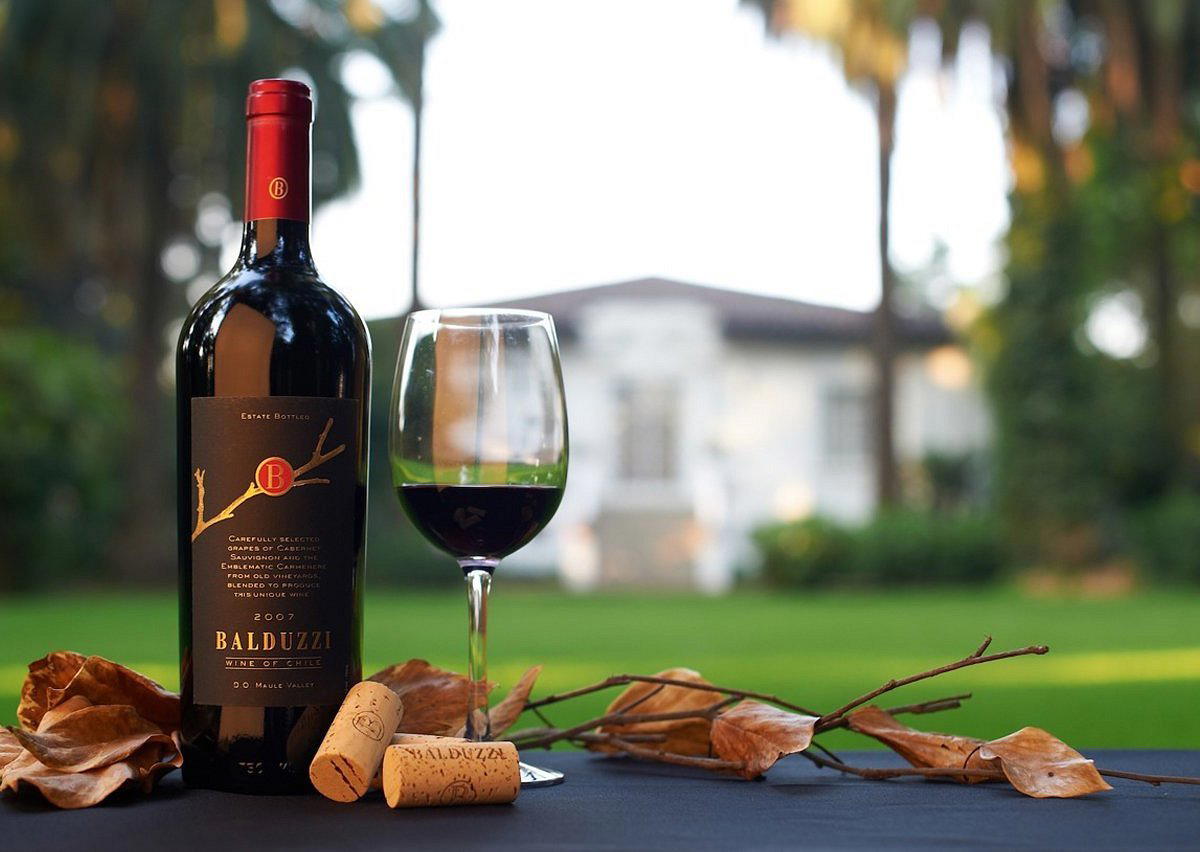
The road into San Javier de Loncomilla follows the Maule River south from Talca, past fields that shift between wheat and vine with the unhurried rhythm of an agricultural region that has never chased a trend. By the time you reach Balmaceda 1189, you are inside one of Chile's oldest and least-exported wine corridors, a zone where the growing conditions are extreme in the most productive sense: long, dry summers, cold nights, and soils that range from ancient granite decomposition to volcanic clay. This is not the polished Colchagua or the internationally marketed Casablanca. Maule is harder-edged, less curated, and arguably more interesting for it.
The Maule Valley Context
Chile's wine map concentrates marketing attention on the Central Valley's more accessible valleys, but Maule sits further south and operates at a different register. The region covers more planted area than any other Chilean wine zone, yet it has historically exported bulk wine rather than prestige bottles. That imbalance is correcting. Over the past decade, producers working with old-vine País, Carignan, and Cabernet Sauvignon have begun drawing attention from European importers and critics who recognize that the combination of low-intervention viticulture and genuinely old vines is rare at any price. San Javier sits within that repositioning, and Balduzzi Winery.
For reference on Chile's wider wine geography, properties like Viña Casa Silva in San Fernando operate in the Colchagua Valley to the north, where international varieties and export-focused production have long dominated. The Maule approach, by contrast, leans on older agricultural traditions and a more varied varietal palette. Further north still, El Gobernador (Miguel Torres Chile) in Curicó shows how Spanish capital and technical precision apply to a neighboring valley's conditions. San Javier is a different story: older, quieter, with a terroir argument built on continuity rather than investment.
What the Land Does Here
The editorial angle on Maule's wines starts with climate stress. The valley sits at a latitude where Atlantic moisture still plays a role, but the rain comes predominantly in winter, leaving vines to work through a dry growing season on whatever water their roots can find. Old-vine material, in this context, is not a marketing label but a practical survival mechanism: deep root systems access moisture and mineral content that young vines cannot reach. The resulting wines carry a tension between fruit concentration from summer heat and mineral austerity from drought stress, a combination that is difficult to engineer and essentially impossible to fake.
The soils at San Javier add another layer. Granite-based subsoils common across the valley's western slopes deliver a kind of structural restraint, keeping alcohol in check even in warm vintages and contributing a textural quality that shows differently from the clay-dominant blocks further east. This geological variation across a relatively small appellation explains why Maule is not easily summarized: the same variety grown ten kilometers apart can present differently enough to require separate treatment in the cellar.
For Chilean wine at this recognition level, the credential functions as confirmation that the wines hold up against national and regional peers, not merely local ones.
Visiting: What the Experience Looks Like
San Javier de Loncomilla is a small town in a working agricultural region, and visits here do not come with the infrastructure of Chile's more touristed wine zones. There are no resort hotels adjacent to the vines, no helicopters landing on private estates. What the town offers is proximity to production in an unmediated form: the winery at Balmaceda 1189 sits within the urban fabric of the town itself, which means the experience of visiting is closer to a working producer than a staged hospitality operation.
That distinction matters for the kind of traveler who benefits most from a visit. If the priority is understanding how Maule's climate and soil interact with vine age and variety, this is the right setting. If the priority is luxury amenity and curated experiences, the visitor would be better served elsewhere in Chile's wine country. Viña MontGras in Palmilla and Viña De Martino in Isla de Maipo represent the more polished end of Chilean winery hospitality for context.
Practical planning for a San Javier visit requires arriving by car from Talca, the nearest city with reliable transport connections from Santiago. The drive south from Santiago is roughly three hours, and Talca adds another thirty to forty minutes depending on the route. No website or phone number is publicly listed in the available record, which means confirming visit logistics in advance requires either direct contact through local tourism channels or arriving during standard winery hours, typically morning through mid-afternoon in Chilean wine country. Check our full San Javier restaurants guide for updated logistics and area context.
Properties like Viña Seña in Panquehue or Viña Santa Rita in Buin operate at international price points with global distribution.
For visitors building a broader Chilean wine itinerary, the country's production extends well beyond the Central Valley. Viña Falernia in Vicuña works in the Elqui Valley at the desert edge of Chilean viticulture, while Pisco Alto del Carmen Distillery in Huasco represents the north's tradition of distilled production entirely separate from the wine corridor. Within the Central Valley, Viña Undurraga in Talagante, Viña Valdivieso in Lontué, and Viña Ventisquero in Santiago offer varying scale and style for comparison. For those interested in how premium production translates across continents, Accendo Cellars in St. Helena and Aberlour in Aberlour provide reference points in Napa and Speyside respectively.
Planning Your Visit
Balduzzi Winery is located at Balmaceda 1189, San Javier de Loncomilla, Maule. The region is leading visited between October and April, when roads are dry and the vineyard work is active enough to give visits genuine context.
Quick Comparison
Comparable venues nearby, for context on price, style, and recognition.
| Venue | Cuisine | Price | Awards | Notes |
|---|---|---|---|---|
| Balduzzi WineryThis venue (the venue you are viewing) | Carmenere, Chardonnay | $10–20 | Not listed | Not listed |
| Hanaq Pacha Distillery | Winery | Not listed | Not listed | Coquimbo |
| Viña Caliterra | Cabernet Sauvignon, Carmenere | Not listed | Falstaff Winery - Listed | Colchagua Valley |
| Viña Sutil | Cabernet Sauvignon, Carmenere | Not listed | Not listed | Peralillo |
| Viña Santa Carolina | Cabernet Sauvignon, Carmenère | $30–50 | Falstaff Winery - Listed | Macul |
| Viña Santa Cruz | Sauvignon Blanc, Rosé | Not listed | Not listed | Lolol |
Continue exploring
More in San Javier

Details
- Rustic
- Scenic
- Classic
- Intimate
- Wine Education
- Solo Exploration
- Group Outing
- Vineyard Tour
- Estate Grounds
- Sustainable
- Vineyard
- Mountain
- Carmenere
- Chardonnay
- Still Red
- Still White
- Guided Tasting
- Spanish
- English
Relaxed and welcoming with beautiful countryside views, featuring personalized tastings in a warm, historic setting.