Zevi Cafe & Bistro
Zevi Cafe & Bistro occupies a corner of San Francisco's SoMa district at 67 5th Street, operating in a neighbourhood where casual dining formats increasingly take cues from the city's broader sustainability movement. The cafe-bistro format positions it between quick-service and sit-down dining, serving a local clientele that skews toward the ethically conscious. It sits within walking distance of several of the city's most-discussed dining institutions.
Pearl is the En Primeur Club membership app — saves, bookings, and concierge access live there. Same editors, same standards.
- Address
- 67 5th St, San Francisco, CA 94103
- Phone
- +14157570266
- Website
- zevisf.com
- Directions
- Get directions
 Saves & bookings on Pearl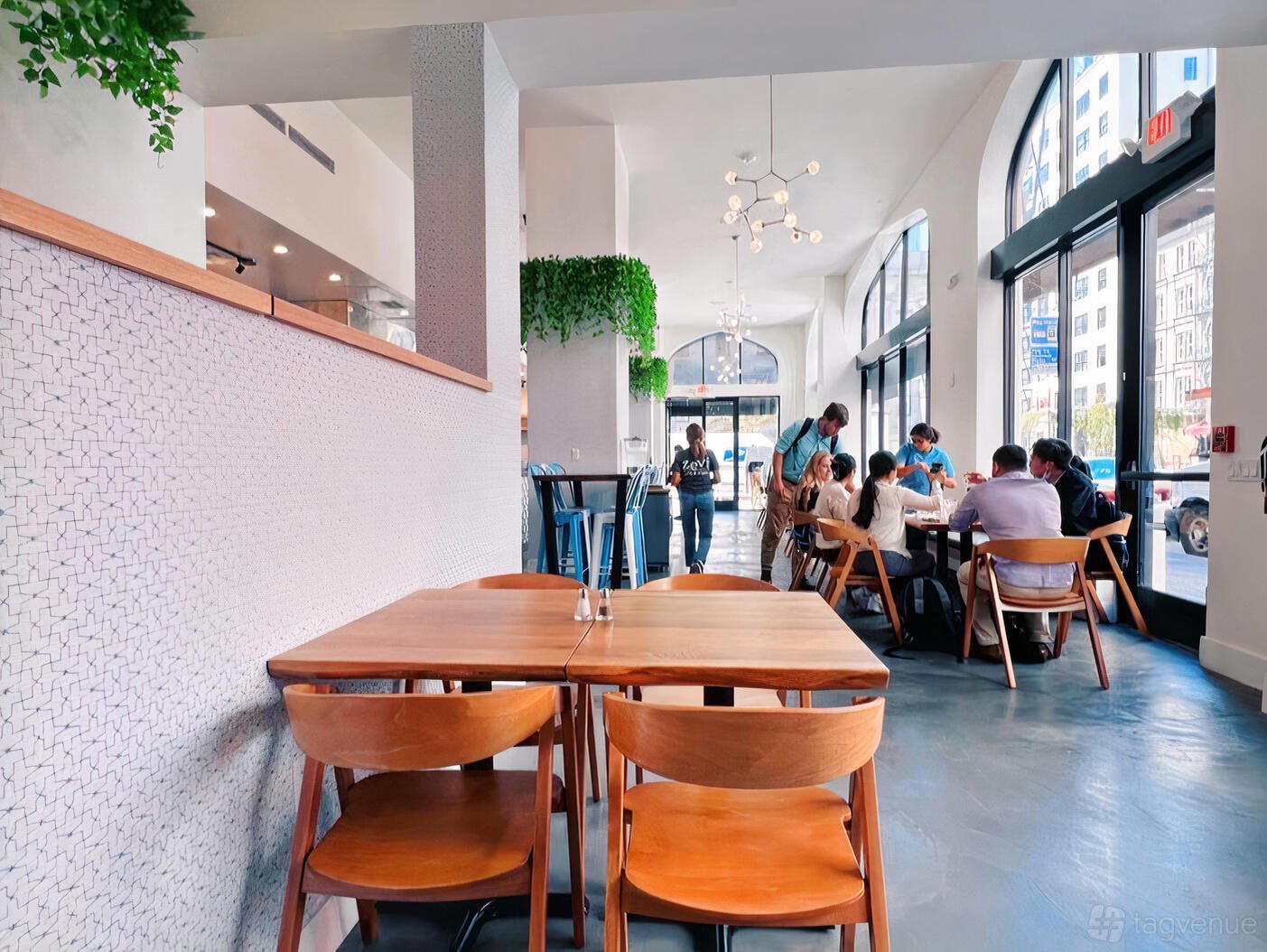
SoMa's Sustainability Shift and Where Zevi Fits
San Francisco's approach to cafe and bistro dining has changed considerably over the past decade. What was once a direct division between fast-casual and full-service has blurred, with a growing number of mid-format operators taking positions between the two. The neighbourhood of SoMa, where Zevi Cafe & Bistro operates at 67 5th Street, has been at the centre of that shift. The area's mix of tech workers, creative professionals, and long-term residents has produced a dining public that asks more questions about sourcing, waste, and supply chain transparency than most American cities outside of the Bay Area. That pressure, sustained over time, has shaped what operators in this zip code feel they need to do to hold an audience.
Zevi Cafe & Bistro sits at that intersection. The cafe-bistro format it occupies is not incidental. In San Francisco, that format has become a practical vehicle for sustainability-oriented dining: lower per-cover costs than full-service restaurants mean that ethically sourced ingredients do not have to be absorbed into a $300 tasting menu to make the numbers work. The economics allow a wider audience to encounter food produced with attention to sourcing and waste.
The Ethics of the Everyday Plate
The conversation around sustainability in American dining has often been dominated by the high-end tier. Restaurants like Blue Hill at Stone Barns in Tarrytown and Single Thread Farm in Healdsburg have built entire identities around farm-direct sourcing and seasonal discipline, and both operate at price points that limit their audience to a narrow demographic. The same logic applies to much of San Francisco's own fine-dining tier: Saison, Atelier Crenn, and Lazy Bear each engage with sustainability and provenance in different ways, but all do so within a $$$$-tier framework that assumes a specific kind of diner.
Cafe and bistro formats occupy a different position in that conversation. When a lower price-point operation commits to reducing food waste, composting, or working with regional producers, the impact per meal may be smaller in absolute terms, but the reach across a week's worth of covers can exceed what any tasting-menu counter achieves. It is a less glamorous argument, but the arithmetic is sound. California has long been the national leader in food-waste regulation, and San Francisco's operators feel that regulatory environment acutely: the city's mandatory composting ordinance, in place since 2009, was one of the first of its kind in the United States and set a standard that shaped how cafes in particular think about back-of-house operations.
SoMa as a Dining District
The block around 5th and Market has undergone significant changes since the early 2010s. The opening of the Moscone Center expansion and the consolidation of tech office space in the district brought a sustained lunch-and-coffee clientele that few other San Francisco neighbourhoods can match for weekday volume. That audience has largely driven the format choices of operators in the area: a cafe-bistro model that can move efficiently at midday while offering something more considered in the evening hours answers the neighbourhood's split demand.
For visitors to the city, SoMa is a logical starting point if the itinerary includes institutions like Benu or Quince, both of which sit within a short distance and represent the city's most decorated fine-dining tier. Using a neighbourhood cafe as a base for daytime meals before an evening reservation at one of those counters is a pattern that experienced visitors to San Francisco have adopted broadly. The logistics work: the proximity means no cross-city commute between lunch and dinner, and the price differential means the overall day's spend remains manageable.
Those planning longer stays in California might also cross-reference Addison in San Diego or Providence in Los Angeles for the bookend dinners on a multi-city itinerary, with San Francisco's cafe tier handling the between-destination meals.
How Cafe-Bistro Formats Handle Waste and Sourcing
The sustainability argument for cafe formats rests on a few structural advantages over full-service restaurants. Shorter menus mean smaller ingredient lists, which means less spoilage. Higher table turnover means that cooked food moves faster and sits less. And a focus on prepared items rather than elaborate composed dishes reduces the number of trim and offcut fractions that end up unserved. These are not philosophical commitments so much as operational realities that align neatly with ethical sourcing goals.
Across the United States, the cafe-bistro format has emerged as a practical incubator for sustainability practices that later migrate upward into fine dining. The composting programs now standard at restaurants like Alinea in Chicago and Le Bernardin in New York City were, in many cases, first normalised in the cafe and casual-dining tier, where the economics of waste reduction were simply more visible. In San Francisco specifically, that pipeline has been reinforced by the city's composting mandate and by a food-startup culture that treats supply chain transparency as a baseline expectation rather than a differentiator.
Planning Your Visit
Zevi Cafe & Bistro is located at 67 5th Street in San Francisco's SoMa district, a few blocks from the Powell Street BART station, which makes it accessible from the airport without a car. The cafe-bistro format typically operates on a walk-in basis during midday hours, though diners planning to visit during peak lunch periods, particularly on weekdays when the surrounding office district is at full capacity, should anticipate some wait time. For evening visits, the rhythm of the neighbourhood shifts considerably, with foot traffic thinning and the atmosphere moving toward something more considered. Diners with specific dietary requirements should confirm in advance, as menu flexibility can vary by day and by what's been sourced that week.
- Breakfast Burrito
- Croissant Sandwich
- Greek Salad
- Gastropub Burger
- Menemen (Shakshouka)
- Grilled Salmon
Reputation Context
Comparable venues nearby, for context on price, style, and recognition.
| Venue | Cuisine | Price | Notes |
|---|---|---|---|
| Zevi Cafe & BistroThis venue — the venue you are viewing | Mediterranean Bistro Cafe | $ | Not listed |
| Sarku Japan | Japanese Fast Food | $ | South Beach |
| Sens Restaurant | Modern Mediterranean | $$$ | Financial District/South Beach |
| Darn Good Food | Dining | $ | Not listed |
| Coco500 | California/Mediterranean | $$$ | SoMa |
| Hang Ah Tea Room | Cantonese Dim Sum | $ | Chinatown |
Continue exploring
More in San Francisco
Restaurants in San Francisco
Browse all →
Bars in San Francisco
Browse all →
Hotels in San Francisco
Browse all →
At a Glance
- Cozy
- Modern
- Casual
- Brunch
- Casual Hangout
- Solo
- Family
- Standalone
- Local Sourcing
Current opening hours
- Monday
- 7 AM–3 PM
- Tuesday
- 7 AM–3 PM
- Wednesday
- 7 AM–3 PM
- Thursday
- 7 AM–3 PM
- Friday
- 7 AM–3 PM
- Saturday
- 7 AM–3 PM
- Sunday
- 7 AM–3 PM
Hours can change for holidays and private events. Last verified .
Warm wood decor with soft lighting that transforms into a charming spot with soft jazz music in the evening; clean and modern with an inviting, cozy atmosphere.