Hang Ah Tea Room
Hang Ah Tea Room on Pagoda Place holds a particular place in San Francisco's Chinatown, operating from one of the neighborhood's oldest dim sum addresses. The room carries the weight of that history without theatrics, drawing regulars and first-timers alike to a format that predates the city's current wave of high-concept Chinese dining by decades.
Pearl is the En Primeur Club membership app — saves, bookings, and concierge access live there. Same editors, same standards.
- Address
- 1 Pagoda Pl, San Francisco, CA 94108
- Phone
- +1 415 982 5686
- Website
- hangahdimsumsf.com
- Directions
- Get directions
 Saves & bookings on Pearl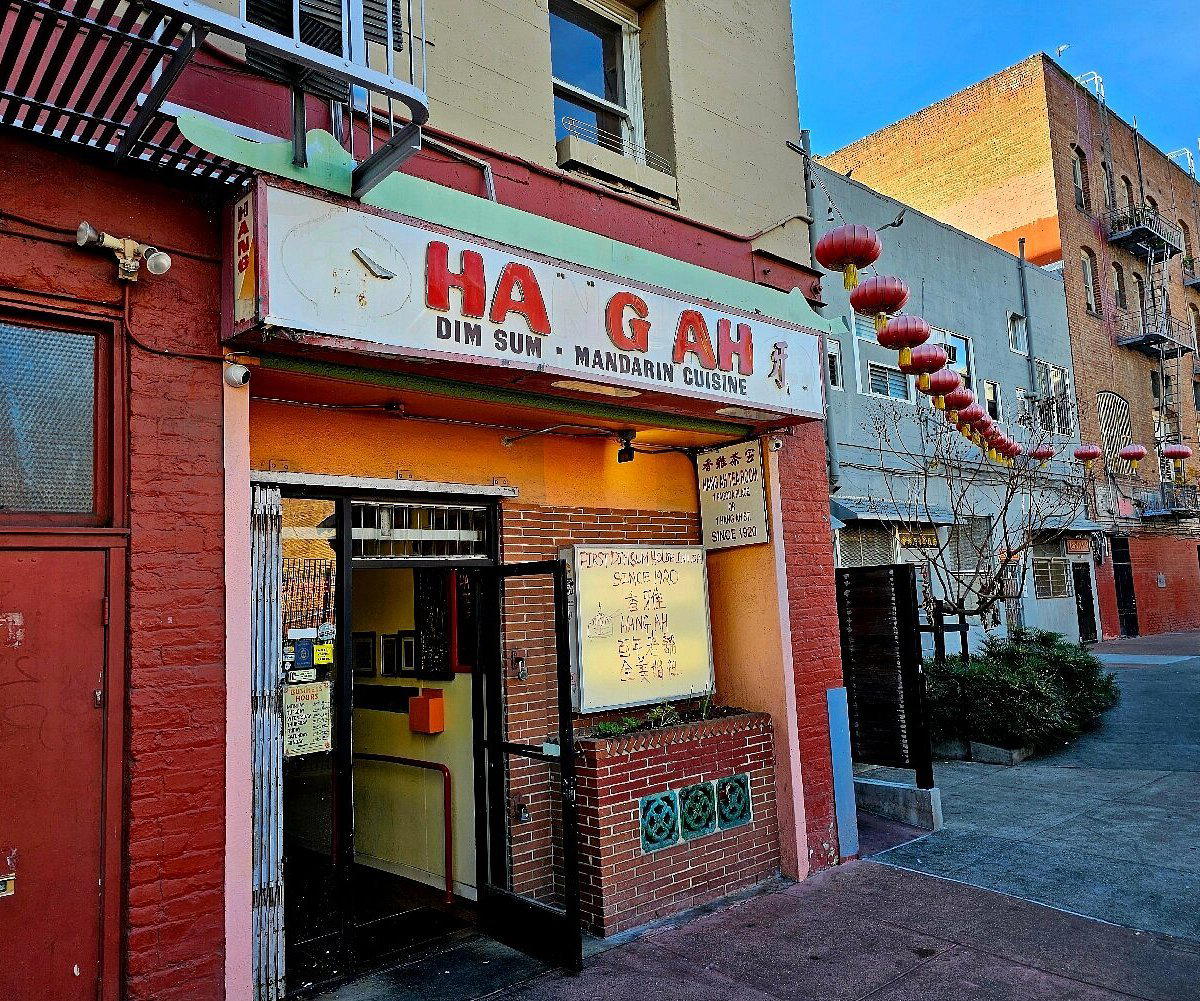
Pagoda Place and the Longer Arc of Chinatown Dim Sum
San Francisco's Chinatown is one of the oldest in North America, and its dining culture has absorbed more than a century of migration, adaptation, and generational change. The neighborhood's dim sum tradition sits at the center of that history: a format imported from Guangdong teahouse culture that became, in this city's particular version, something between a community institution and a daily ritual. Hang Ah Tea Room, tucked down Pagoda Place just off Sacramento Street, occupies one of the earliest addresses in that tradition. The laneway approach, narrow and slightly removed from the main tourist corridor of Grant Avenue, signals immediately that this is not a venue that positions itself for foot traffic.
That physical remove is part of what makes Pagoda Place worth understanding. While Chinatown's primary commercial streets have shifted progressively toward souvenir retail and tourist-facing restaurants, the side alleys have retained more of the neighborhood's functional, resident-serving character. Arriving at Hang Ah through that context reframes the experience before you've ordered anything. The room itself is unpretentious in the way that only genuinely old places are: not styled to look worn, but worn by actual use over actual decades.
Where This Sits in San Francisco's Current Dining Map
San Francisco's contemporary restaurant conversation is dominated by a cluster of tasting-menu destinations that collectively represent one of the densest concentrations of Michelin-starred fine dining on the West Coast. Benu, which draws on French and Chinese technique across a long omakase format, and Atelier Crenn, with its poetry-menu approach to Modern French cuisine, operate at the high-spend, high-concept end of the city's scene. Lazy Bear, Quince, and Saison round out the upper tier of the contemporary progressive format. Hang Ah operates in an entirely different register, one that predates the modern tasting-menu era and answers to a different set of values entirely.
The broader American fine dining circuit, from Le Bernardin in New York City to The French Laundry in Napa and Providence in Los Angeles, has spent the last decade refining a model of sourcing transparency and hyper-seasonal menu construction. Farm-to-table language has become so embedded in the premium tier that properties like Blue Hill at Stone Barns in Tarrytown and Single Thread Farm in Healdsburg have made agricultural integration the primary editorial frame for their food. Even venues like Smyth in Chicago and Addison in San Diego foreground provenance as a core identity signal. Hang Ah's relationship to sourcing is different in character: not articulated through a marketing framework, but embedded in the compressed, ingredient-efficient logic of traditional dim sum cookery itself.
Dim Sum as a Sustainable Format, Before That Was a Category
The editorial angle that contemporary dining applies to sustainability, waste reduction, and ethical sourcing is, in many ways, a formal codification of practices that traditional Asian teahouse cooking had already solved through necessity and cultural logic. Dim sum, as a format, is inherently portion-controlled: small plates served sequentially, made to order or in small batches, with limited holding time. The classical Cantonese kitchen runs on close inventory management, high vegetable and protein utilization, and techniques like steaming that require no added fat and preserve ingredient integrity. Compare this to operations like Atelier Moessmer Norbert Niederkofler in Brunico, which has built an entire identity around Alpine terroir and zero-waste philosophy, or Frasca Food and Wine in Boulder, where regional Italian sourcing is a stated value, and the contrast is illuminating. Those are deliberate sustainability programs. Hang Ah represents a cooking culture where these principles were structural from the start, not retrofitted.
Steamed dumplings, braised turnip cake, rice noodle rolls: the building blocks of a dim sum menu share a common characteristic in that none of them depend on premium single-source protein to work. They are defined by technique and proportion, not ingredient scarcity. That makes the format unusually efficient by the standards of any era, and particularly legible in 2024, when the industry is actively searching for models that reduce waste and energy without sacrificing quality. Hang Ah didn't design this. It inherited it.
The Neighborhood Context That Shapes the Visit
Visiting Hang Ah is inseparable from moving through Chinatown at a pace that allows the neighborhood to register. The alley address on Pagoda Place is not incidental. Chinatown's alleyways, a network of narrow passages that include Ross Alley, Waverly Place, and Commercial Street, were the working infrastructure of the immigrant community for generations: the site of family associations, herbal pharmacies, and food production. A dim sum meal at an address like this one sits inside that history, even if the contemporary visit is direct in logistics. The room's plainness is context, not a design failure.
Hang Ah occupies a category that none of the high-concept tasting rooms do: genuinely old-neighborhood, habitually local, and priced for daily use rather than occasion dining. It belongs in the same itinerary as the city's premium dining addresses the way that a market visit belongs alongside a three-star dinner, not as a lesser experience but as a different frequency of the same city.
On the broader national scene, Korean fine dining addresses like Atomix in New York City and gulf-coast institutions like Emeril's in New Orleans or The Inn at Little Washington in Washington carry decades of institutional memory that shapes their authority. Hang Ah's version of that authority is different in register but comparable in kind: a place whose age is itself the credential.
Planning the Visit
Hang Ah Tea Room is located at 1 Pagoda Place, San Francisco, CA 94108. The address places it in the heart of Chinatown, accessible on foot from Union Square and reachable by BART to Montgomery or Powell Street stations. Chinatown dim sum operations at this tier of longevity tend to run morning and midday service, tapering off by mid-afternoon, which follows the traditional teahouse schedule. Arriving at the opening hour or shortly after generally secures a table without a wait at venues of this format and scale.
- char siu bao
- har gow
- shu mai
- potstickers
- custard buns
- chicken feet in black bean sauce
Style and Standing
Comparable venues nearby, for context on price, style, and recognition.
| Venue | Cuisine | Price | Notes |
|---|---|---|---|
| Hang Ah Tea RoomThis venue — the venue you are viewing | Cantonese Dim Sum | $ | Not listed |
| Cheung Hing | Cantonese BBQ Chinese | $ | Sunset/Parkside |
| Yuanbao Jiaozi | Handmade Chinese Dumpling House | $ | Outer Sunset |
| Hunan Home's Restaurant | Authentic Hunan Chinese | $ | Chinatown |
| Dragon Well | Authentic Chinese | $$ | Marina |
| Hot Pot Garden | Chinese Hot Pot | $$ | Richmond |
Continue exploring
More in San Francisco
Restaurants in San Francisco
Browse all →
Bars in San Francisco
Browse all →
Hotels in San Francisco
Browse all →
At a Glance
- Classic
- Well Known
- Cozy
- Casual Hangout
- Group Dining
- Brunch
- Historic Building
- Standalone
Current opening hours
- Monday
- 10:30 AM–8 PM
- Tuesday
- 10:30 AM–8 PM
- Wednesday
- 10:30 AM–8 PM
- Thursday
- 10:30 AM–9:30 PM
- Friday
- 10:30 AM–10 PM
- Saturday
- 10:30 AM–10 PM
- Sunday
- 10:30 AM–8 PM
Hours can change for holidays and private events. Last verified .
Simple, unpretentious decor with a bustling, authentic Chinatown atmosphere; warm and welcoming despite its modest appearance.