Z & Y Peking Duck

Chinese Restaurant Awards
Our verdict
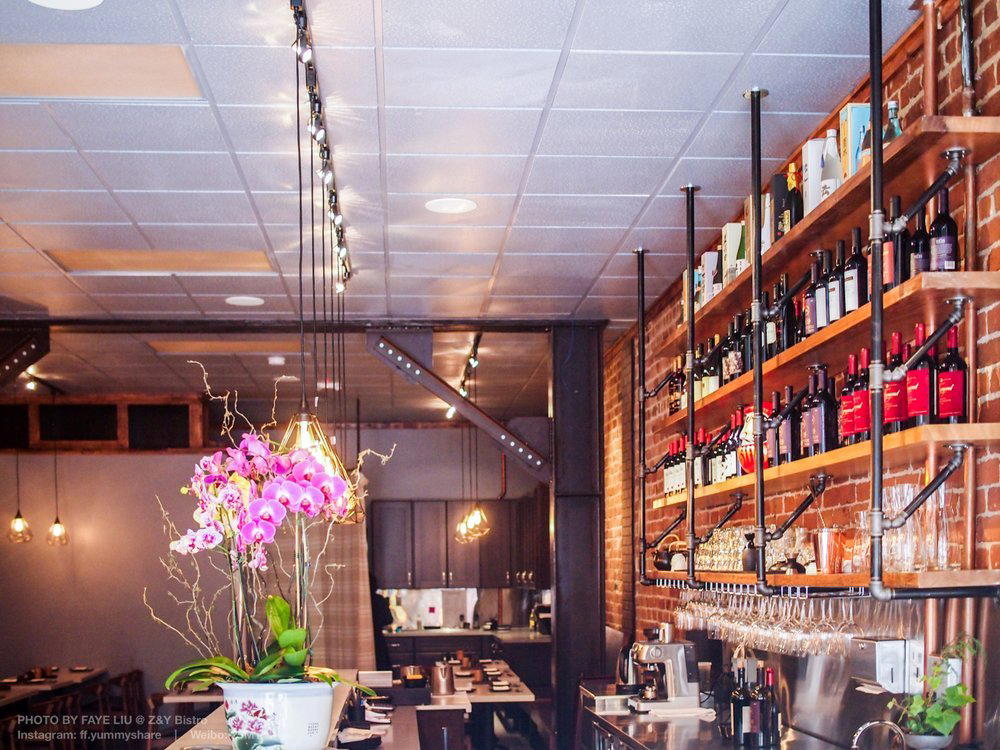
Z & Y Peking Duck on Jackson Street in San Francisco's Chinatown has built a focused reputation around the ceremonial traditions of Peking duck service. Positioned within a neighborhood that holds some of the oldest Chinese culinary history in the United States, the restaurant draws both regulars and visitors seeking a more deliberate approach to a dish that too often gets reduced to convenience.

Pearl is the En Primeur Club membership app, where members save venues, book tables and use the concierge.
The menu
What to order
- Peking Duck
- Peking Duck with Caviar
Chinatown's Long Relationship with a Single Dish
San Francisco's Chinatown is the oldest in North America, and that historical depth cuts in two directions. On one hand, it sustains an extraordinary density of Chinese culinary tradition within a few blocks of Grant Avenue and Jackson Street. On the other, it creates a tourist-facing surface layer that can obscure the more considered dining happening just behind it. Z & Y Peking Duck, at 606 Jackson Street, sits in that second category: a restaurant whose reputation rests not on spectacle or volume, but on the discipline required to execute one of Chinese cuisine's most technically demanding preparations at a consistent standard.
Peking duck as a culinary tradition traces its formal documentation to the imperial kitchens of the Yuan dynasty, with the dish reaching its refined modern form during the Qing period. The preparation demands days of work: the bird is air-dried, lacquered with maltose, and roasted in a purpose-built oven to achieve the crackling, mahogany-glazed skin that defines the dish. Few restaurants in the United States invest in the full traditional method; most compress the process to meet commercial timelines. The Chinatown context here is relevant, this is a neighborhood where the gap between what a menu promises and what a kitchen delivers can be wide, which is precisely why Z & Y Peking Duck has earned the consistent attention it has.
Where This Restaurant Sits in the San Francisco Chinese Dining Scene
San Francisco's upper tier of Chinese dining has historically been dominated by Cantonese technique, a legacy of the immigrant communities that shaped the city's culinary foundations. Peking duck, which belongs to the Northern Chinese tradition, occupies a different register. It is a ceremonial dish, often served in courses, and restaurants that treat it seriously tend to attract a clientele that understands the difference between a rushed service and a considered one.
Within the broader San Francisco restaurant scene, the high-end tasting menu format has consolidated around a small group of venues. Benu, which works across French and Chinese culinary traditions in an Asian contemporary idiom, represents one pole of that conversation. Atelier Crenn, Lazy Bear, Quince, and Saison anchor the $$$$ progressive American and European end. Z & Y Peking Duck occupies a different niche entirely: a focused, single-dish-anchored format within a neighborhood restaurant context, rather than a tasting menu operation. That positioning is worth understanding before you book, because the two dining experiences serve different purposes and different moments.
The Wine Question at a Peking Duck Restaurant
The editorial angle of wine pairing with Peking duck is one that serious dining circles have debated for decades, and the answer has become more interesting as Chinese restaurant wine programs have matured. The conventional wisdom once pointed toward Pinot Noir, its lower tannin structure and red fruit profile working against the rich, fatty skin, but the more nuanced current thinking opens toward off-dry Riesling, which cuts through the hoisin-adjacent sauces while amplifying the lacquered sweetness of the duck skin itself.
Chinese restaurants in the United States, including those in Chinatown corridors, have historically under-invested in wine programs relative to their European counterparts. The reasons are partly cultural and partly commercial: a clientele that often prefers tea, Tsingtao, or Shaoxing rice wine, combined with a price-sensitive neighborhood dining context, has not historically rewarded cellar depth. What this means practically is that diners with a serious wine interest should arrive with modest expectations for the list's depth, and consider whether a BYOB arrangement is possible. Restaurants in this category and neighborhood often accommodate that request, though the specifics for Z & Y Peking Duck are best confirmed directly with the venue. For a benchmark of what serious sommelier-driven programs look like alongside comparable culinary ambition, Le Bernardin in New York City and Alinea in Chicago represent the high-water mark of American restaurant wine curation. The French Laundry in Napa and Single Thread Farm in Healdsburg are the regional California reference points for cellar depth paired with considered cuisine.
For Asian culinary traditions more broadly, Atomix in New York City and 8 1/2 Otto e Mezzo Bombana in Hong Kong have demonstrated that serious wine programs can anchor Asian fine dining without contradiction. The gap between those programs and typical Chinatown wine lists is real, but it does not diminish the food case for Z & Y Peking Duck, it simply clarifies where the experience's value lies.
Context Beyond San Francisco
American Chinese dining at its most focused is a smaller category than it appears. Providence in Los Angeles, Addison in San Diego, Blue Hill at Stone Barns in Tarrytown, Bacchanalia in Atlanta, The Inn at Little Washington, and Emeril's in New Orleans represent different national expressions of serious American dining, and each has a different relationship to depth of preparation versus breadth of menu. Z & Y Peking Duck's bet on focus rather than breadth puts it in a philosophically distinct category.
Planning a Visit
The restaurant is located at 606 Jackson Street in the core of San Francisco's Chinatown, walkable from the Financial District and reachable from most downtown hotels in under fifteen minutes on foot. Parking in Chinatown is characteristically difficult, and public transit via BART to Embarcadero or Montgomery, followed by a short walk, is the more practical approach for most visitors. Given the restaurant's neighborhood reputation, weekend evenings tend to fill quickly; a weekday visit or an early reservation gives the most flexibility. For a fuller picture of where Z & Y Peking Duck fits within the city's dining options across all price points and cuisines, the EP Club San Francisco restaurants guide covers the range from neighborhood staples to multi-Michelin-star tasting rooms.
Frequently asked questions
What do regulars order at Z & Y Peking Duck?
The Peking duck is the anchor order and the reason most regulars return. Traditional service typically presents the duck in two or three courses, skin with accompaniments first, then carved meat, then a broth or stir-fry from the carcass, and regulars tend to follow that full sequence rather than ordering the duck as a single-course addition to a broader menu. The surrounding dishes vary, but the duck is the organizing principle of the meal.
Should I book Z & Y Peking Duck in advance?
In San Francisco's Chinatown, restaurants that have built a specific reputation around a single preparation tend to fill on weekend evenings without the booking lead time required at the city's tasting menu venues. If you're visiting on a Friday or Saturday, contacting ahead is the prudent approach.
What has Z & Y Peking Duck built its reputation on?
The restaurant's reputation rests on a commitment to the full traditional Peking duck preparation within a Chinatown context where that level of process discipline is not routine. The dish itself, requiring multi-day preparation, specific roasting equipment, and careful carving at table, is the trust signal. In a neighborhood where duck dishes appear on dozens of menus, the distinction is in the method, not the menu listing.
Can Z & Y Peking Duck accommodate dietary restrictions?
This is best confirmed directly with the restaurant. The most reliable approach is to call ahead or visit in person, particularly for allergies or complex dietary requirements, as a duck-focused menu has limited structural flexibility compared to broader Chinese restaurant menus in San Francisco.
Is Z & Y Peking Duck worth the price?
The value case depends on what you are comparing it to. Against a compressed or industrialized duck preparation, the traditional method commands a premium that is justified by the process involved. Against San Francisco's $$$$ tasting menu tier, venues like Benu, Quince, or Atelier Crenn, the comparison is different in kind rather than in degree. Z & Y Peking Duck is not competing in that space; it is offering a focused, craft-driven expression of a specific dish within a Chinatown price context, and the value equation holds for diners who understand what they are ordering.
How does Z & Y Peking Duck compare to other Peking duck restaurants in the Bay Area?
Serious Peking duck preparation in the Bay Area is a narrower field than the number of restaurants listing the dish might suggest. The traditional multi-day preparation method, purpose-built roasting equipment, and tableside carving service distinguish restaurants genuinely committed to the form from those offering an approximation. Z & Y Peking Duck's Jackson Street location and sustained neighborhood reputation place it among the addresses in the region where the full traditional process is the stated priority, rather than a menu option assembled for convenience.
Cost Snapshot
Comparable venues nearby, for context on price, style, and recognition.
| Venue | Cuisine | Price | Awards | Notes |
|---|---|---|---|---|
| Z & Y Peking DuckThis venue (the venue you are viewing) | Authentic Beijing Peking Duck & Dim Sum | $30–50 | Chinese Restaurant Awards | Not listed |
| SO | Cantonese Seafood and Dim Sum | Not listed | Not listed | South San Francisco, Cantonese Seafood and Dim Sum |
| Dumpling Time Design District | Modern Cal-Asian Dumplings | $30–50 | Not listed | Mission Bay, Modern Cal-Asian Dumplings |
| Dragon Well | Authentic Chinese | $30–50 | Not listed | Marina, Authentic Chinese |
| IPOT | All-You-Can-Eat Hotpot & Korean BBQ | $30–50 | Not listed | Inner Sunset, All-You-Can-Eat Hotpot & Korean BBQ |
| M.Y. China | Modern Chinese Noodle House | Not listed | Not listed | Chinatown, Modern Chinese Noodle House |
Recognition history
Dated appearances from independent guides and award organizations, with the underlying list record or original source where available.
Chinese Restaurant Awards
Chinese Restaurant Awards

Continue exploring
More in San Francisco
Restaurants in San Francisco
All restaurants in San Francisco →
Bars in San Francisco
All bars in San Francisco →



Details
- Lively
- Well Known
- Group Dining
- Celebration
- Special Occasion
- Open Kitchen
- Sake Program
- A La Carte
- Family Style
Current opening hours
- Monday
- 11:30 AM–3 PM, 4:30–9 PM
- Tuesday
- 11:30 AM–3 PM, 4:30–9 PM
- Wednesday
- Closed
- Thursday
- 11:30 AM–3 PM, 4:30–9 PM
- Friday
- 11:30 AM–3 PM, 4:30–9 PM
- Saturday
- 11:30 AM–3 PM, 4:30–9 PM
- Sunday
- 11:30 AM–3 PM, 4:30–9 PM
Hours can change for holidays and private events. Hours as of .
Lively and bustling Chinatown atmosphere with a focus on authentic Chinese culinary traditions.