Yume Wo Katare
On Massachusetts Avenue in North Cambridge, Yume Wo Katare occupies a specific and well-documented place in the city's dining culture: a Japanese ramen counter where the ritual of eating is almost as discussed as the bowl itself. Regulars return not just for the broth but for the cadence of the room, a format that sits well outside Cambridge's more conventional restaurant options.
Pearl is the En Primeur Club membership app — saves, bookings, and concierge access live there. Same editors, same standards.
- Address
- 1923 Massachusetts Ave, Cambridge, MA 02140
- Website
- yumewokatare.org
- Directions
- Get directions
 Saves & bookings on Pearl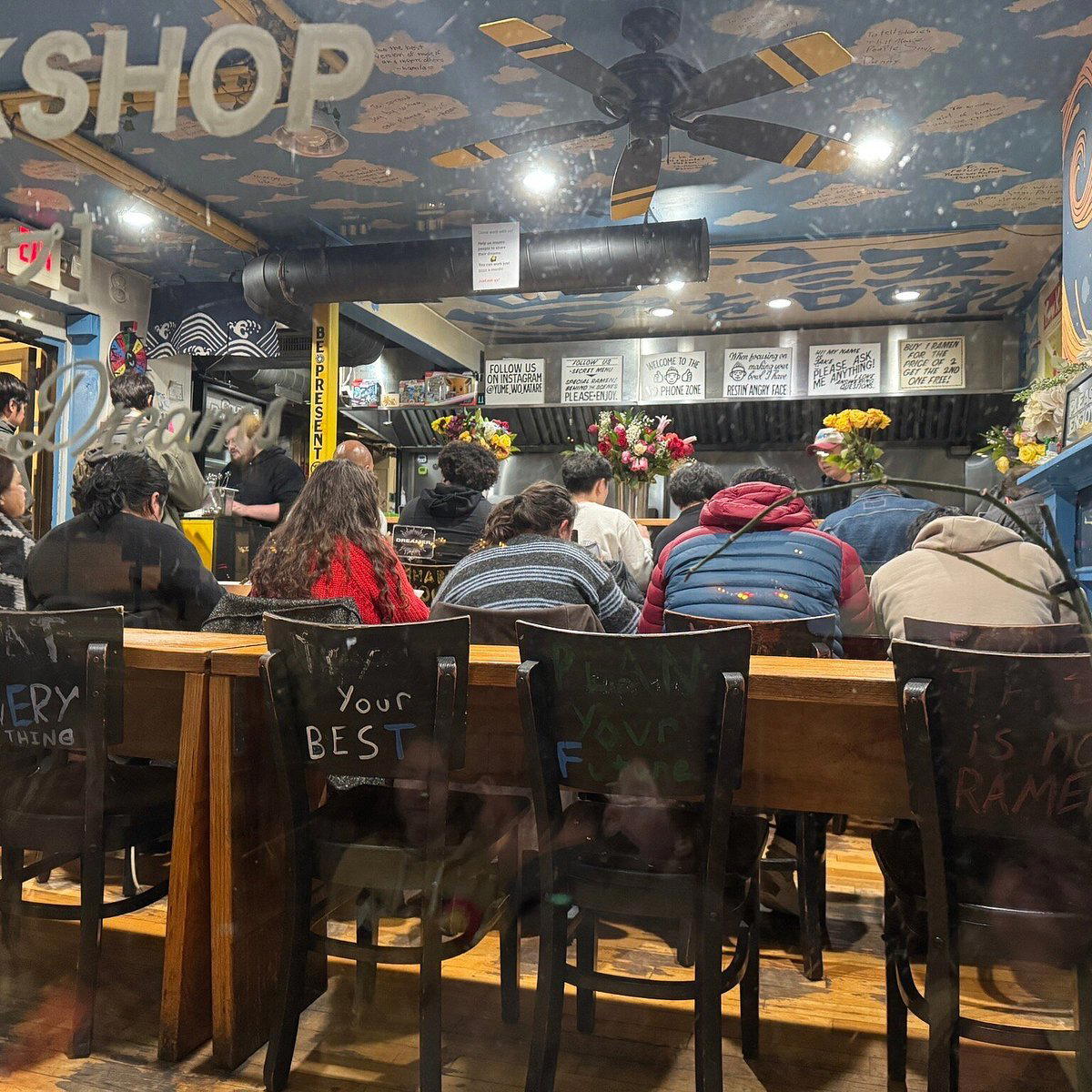
The Room Before the Bowl
Walk north along Massachusetts Avenue past Porter Square and the restaurant density thins considerably. By the time you reach 1923, the streetscape is quieter, more residential, and the line outside Yume Wo Katare tends to look anomalous against that backdrop. That line is part of the format. The queue is not a symptom of disorganization; it is the first act of a dining experience structured around collective anticipation. Inside, communal bench seating and a counter facing the kitchen reinforce the point: this is not a room designed for private conversation. It is designed for a shared event.
In a city where Cambridge's most-discussed restaurants tend toward precision tasting menus, like Midsummer House and Restaurant Twenty-Two, Yume Wo Katare operates on entirely different logic. The focus is singular: a tonkotsu-style ramen built for intensity, eaten quickly, eaten communally, and eaten with a certain expectation of participation that regulars absorb over multiple visits.
What the Regulars Understand
The phrase "Yume Wo Katare" translates roughly as "speak your dreams" in Japanese, and the restaurant leans into that with a ritual that catches first-time visitors off guard: after finishing the bowl, diners are invited to stand and declare a dream or aspiration to the room. For regulars, this is neither embarrassing nor optional in spirit. It is the social contract of the place, and those who return frequently tend to arrive with something prepared.
What keeps the regulars coming back is not variety. The menu is deliberately narrow, centred on a pork-based broth that takes considerable time to develop its depth. The decision is not poverty of imagination but a philosophical position that the Japanese ramen tradition holds with some seriousness: a single bowl, done with consistency, earns more loyalty than a rotating card. Devotees of this format across the United States have found similar pull at ramen counters from Los Angeles to New York, but in Cambridge the concentration of students, academics, and long-term residents creates a clientele that tends to be more analytical about what they are eating and why they keep returning.
The communal seating arrangement accelerates familiarity. You do not choose a quiet corner table here. You sit where you are placed, shoulder to shoulder with strangers who are, often as not, regulars themselves. The result is a dining room with a specific social texture that is difficult to manufacture and easy to destroy if the format drifts. At Yume Wo Katare, it has not drifted. That consistency is its own form of credential, and in Cambridge's dining culture, consistency at a specific format earns a particular kind of institutional respect.
Cambridge's Broader Ramen Context
Boston and Cambridge are not ramen cities in the way that New York or Los Angeles are, where dedicated counters have proliferated across price tiers and regional Japanese styles. The Greater Boston market has historically leaned toward sushi, izakaya formats, and pan-Asian casual dining rather than the specialist single-dish ramen houses that define parts of the West Coast Japanese-American dining scene. Yume Wo Katare entered that gap and remained largely alone in it for long enough to accumulate the kind of word-of-mouth credibility that formal awards do not always confer.
The contrast with Cambridge's more eclectic options is instructive. Afghan Flavour and 730 Tavern, Kitchen and Patio each occupy specific community niches in the city's food scene, as does the neighbourhood ritual of 1369 Coffee House for a different type of daily habit. Yume Wo Katare fits a different slot: it functions as a destination within a ten-minute walk, and its pull is strong enough to draw visitors from the wider Boston metro who would not otherwise travel to Porter Square for dinner.
At the national level, the restaurants most discussed for format-driven dining experiences, from Lazy Bear in San Francisco to Alinea in Chicago, invest heavily in theatrical presentation as a structural element. Yume Wo Katare achieves something adjacent with far less technical apparatus: the format itself, the queue, the communal seating, and the dream declaration create a defined arc to the meal that most casual restaurants never attempt. It is a different tier of ambition, but the intent is recognizably similar.
The Unwritten Menu
Regular visitors tend to arrive with opinions about customization: the proportion of fat in the broth, the amount of noodle remaining when you reach the bottom of the bowl, whether you eat fast or slow. These are not official options but accumulated knowledge passed between regulars and occasionally between strangers at the communal table. The noodles absorb the broth aggressively, which means pace matters more here than in most ramen formats. Experienced visitors eat with some urgency, not out of anxious consumption but because the bowl is better ten minutes in than twenty-five.
This kind of learned behaviour around a single dish is the hallmark of a restaurant that has settled into genuine neighbourhood institution status. It is a different register from the technical ambition of, say, The French Laundry or Blue Hill at Stone Barns, but the depth of repeat engagement from its regulars places Yume Wo Katare in a conversation about format loyalty that transcends price point. Cambridge has no shortage of restaurants with higher check averages and more elaborate kitchens. Very few of them generate the same density of returning visitors per square foot.
Planning Your Visit
Yume Wo Katare sits at 1923 Massachusetts Avenue, reachable from Harvard Square by bus or a short ride on the Red Line to Porter Square. The restaurant does not accept reservations. Queuing is standard practice, particularly on weekend evenings, and the line can extend significantly before the door opens. First-time visitors are leading served by arriving early in the service period. The format is counter and communal bench seating, which means solo diners are accommodated without the awkwardness that plagues single covers at table-service restaurants. For a broader picture of where Yume Wo Katare fits in the city's dining scene, EP Club's full Cambridge restaurants guide maps the options across neighbourhoods and price tiers.
Continue exploring
More in Cambridge
Restaurants in Cambridge
Browse all →
Bars in Cambridge
Browse all →
Hotels in Cambridge
Browse all →
Wineries in Cambridge
Browse all →
At a Glance
- Intimate
- Trendy
- Solo
- Casual Hangout
Current opening hours
- Monday
- Closed
- Tuesday
- Closed
- Wednesday
- 4:30–9:30 PM
- Thursday
- 4:30–9:30 PM
- Friday
- 4:30–9:30 PM
- Saturday
- 12–2 PM, 4:30–9:30 PM
- Sunday
- 11:30 AM–4 PM
Hours can change for holidays and private events. Last verified .
Tiny 18-seat space with an authentic, focused atmosphere emphasizing presence—no cell phones or talking during the meal.
Know Before You Go
- Getting there
- 1923 Massachusetts Ave, Cambridge, MA 02140