Yokocho Tofu Ten Mogami Gawa Senbon Dango

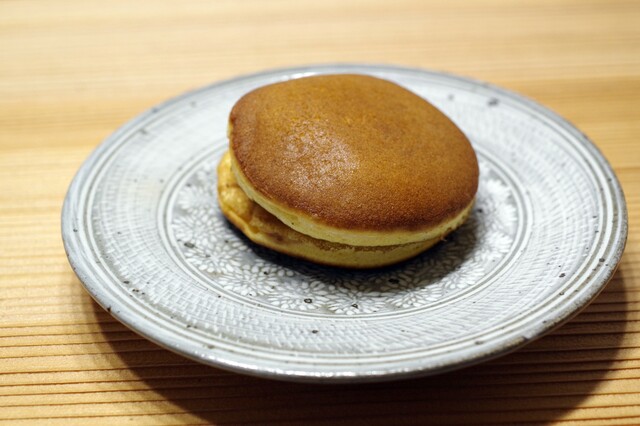
Oishida’s dango culture belongs to Yamagata’s quieter food map: rice country, river towns, and sweets built for daily use rather than ceremony. Yokocho Tofu Ten Mogami Gawa Senbon Dango sits in that tradition with a Tabelog 100 selection for Japanese traditional sweets and a casual format that makes it more regional institution than destination dining room.
Pearl is the En Primeur Club membership app — saves, bookings, and concierge access live there. Same editors, same standards.
- Address
- 乙76 Oishida, Ōishida, Kitamurayama District, Yamagata 999-4111, Japan
- Phone
- +81 237-35-2312
- Website
- ic-net.or.jp
 Saves & bookings on Pearl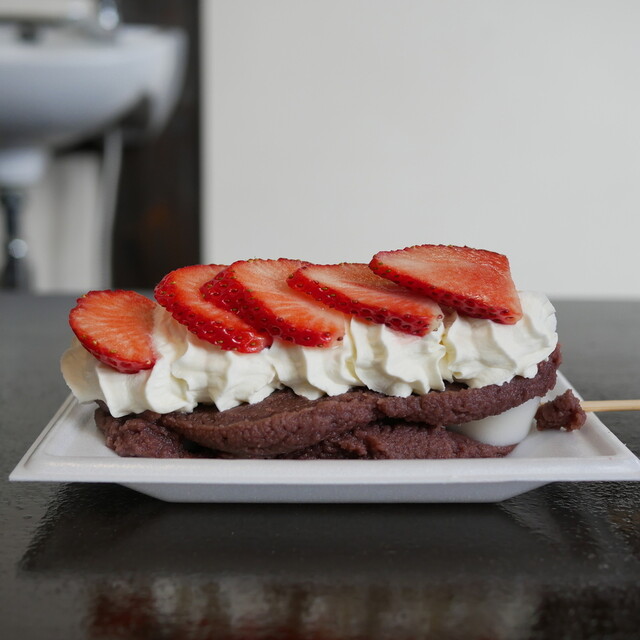
Approaching a wagashi shop in rural Yamagata is a different proposition from entering a city dessert salon. The rhythm is domestic, the scale modest, and the point is not theatre but freshness: sweets made close to the place that supplies their grain and beans, served without the elaborate choreography of a formal kaiseki counter. In Oishida, a town tied to the Mogami River and the agricultural interior of Yamagata, dango belongs to that everyday register.
Yokocho Tofu Ten Mogami Gawa Senbon Dango is useful because it clarifies what regional Japanese sweets can do when the luxury signals are stripped away. The trust signal is concrete: selection for the Tabelog 100 Japanese traditional sweets and Japanese sweets cafe list for East Japan in 2023, with a Tabelog score of 3.62. That places it in a recognized regional sweets category, not in the high-price dessert-course economy now common in larger Japanese cities.
Rice-country sweets, not plated-dessert theatre
Yamagata’s food identity is often discussed through soba, mountain vegetables, fruit, and rice, but sweets sit inside the same agricultural logic. Dango is fundamentally a rice sweet, and in a place like Oishida its appeal depends less on novelty than on texture, turnover, and the way simple toppings frame the grain. This is where the sourcing angle matters: the sweet is only as persuasive as the ingredients around it, and the region gives the format a natural advantage.
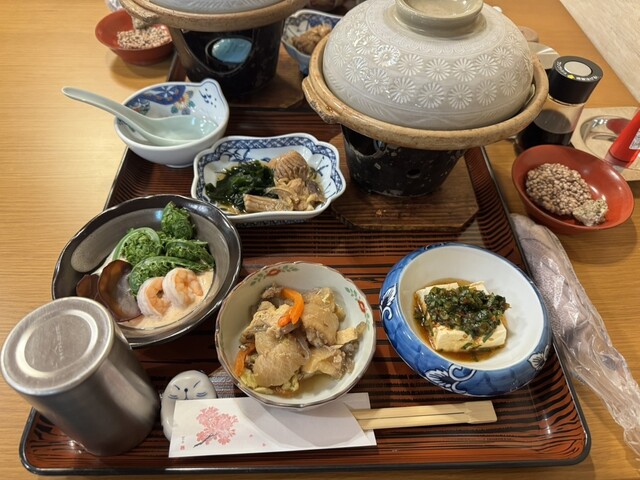
The venue’s listed categories, Japanese traditional sweets, a Japanese sweets cafe, and tofu dishes, point to a local shop rather than a specialist dessert bar. That matters for travelers who have spent time in Tokyo or Kyoto, where wagashi can become a highly coded seasonal art form. Here, the grammar is more direct. It is closer to a stop worked into a day around the river, farms, and small-town eating than a reservation-driven meal with a sommelier and a fixed sequence.
Within Yamagata’s broader casual food tier, that puts it nearer to the regional comfort of Araki Soba or Kenchan Ramen Yamagata than to the celebratory pricing of Hitsujiya. The comparison is not about cuisine; it is about how value works outside major metropolitan dining. The sweet shop, the soba house, and the ramen counter all depend on repeatable craft, local demand, and a price band that keeps the experience accessible.
A compact house format with room for families
The physical model reinforces the point. This is a house-style restaurant with 28 seats across indoor, outside, and storehouse seating, plus take-out service. That mixed format is common in regional Japan, where a shop may need to serve locals, drivers, families, and travelers passing through rather than one narrow dining audience. Private rooms and private use are unavailable, which suits the genre: this is not a closed-door meal or a formal entertaining venue.
The setup also explains why the recognition is significant. Tabelog’s sweets category covers a broad East Japan field, and a rural Yamagata address does not benefit from the foot traffic of a capital-city station district. Selection on that list gives the shop a credible marker for travelers building a food route through the prefecture. It says the place belongs in the conversation about regional wagashi without forcing it into a fine-dining frame.
For wider planning in the area, start with Our full Kitamurayama-gun restaurants guide, then pair it with Our full Kitamurayama-gun hotels guide, Our full Kitamurayama-gun bars guide, Our full Kitamurayama-gun wineries guide, and Our full Kitamurayama-gun experiences guide. Travelers comparing Japan’s casual regional formats can also cross-reference -Grilled beef Sukiyaki- KAMAKURA TANUKIAN 鎌倉 たぬき庵 in Kamakura, . 鮪と炭火焼き うお炭 秋葉原店 in Tokyo, .cafe in Osaka, .know in Kumamoto, (Shoku) Vietnam in Kawasaki, [Curry Senmon Ten] Maruyama Kyoju. in Sapporo, [ki:] in Kyoto, #肉といえば松田 奈良本店 in Kashihara, 1/3 HAMBURGER FACTORY in Kanazawa, 1000 in Yokohama, 1000mヒュッテ 1000m Hut in Kutchan, Jōdo Saké Bar in Los Angeles, and Onigiri Time in Pasadena.
How to read it against Yamagata's casual dining tier
The smart way to approach this stop is to treat it as a precise expression of place rather than a substitute for a full restaurant meal. It works because the format is narrow: sweets, cafe use, tofu-related cooking, and take-out. That focus makes sense in Oishida, where the strongest food experiences often come from specialist categories instead of broad menus designed for travelers.
Reservations are listed as available, children are welcome, and payment options include major credit cards, transportation IC cards, and PayPay. The practical lesson is simple: this is a low-barrier regional sweets stop with enough recognition to justify planning around it, especially for travelers interested in ingredient-led Japanese food outside the major-city circuit. The reason to go is not ceremony. It is the chance to see how rice, beans, soy, and a small-town service model create a different kind of Japanese sweets experience from the urban wagashi counter.
Comparable Spots, Quickly
Comparable venues by cuisine and price in the same metro.
| Venue | Cuisine | Price | Notes |
|---|---|---|---|
| Yokocho Tofu Ten Mogami Gawa Senbon Dango | Traditional Japanese dango & tofu sweets shop | $ | Oishida-machi |
| らぁめん道 あさひ食堂 | Traditional Hokkaido Miso Ramen | $ | 上川町 |
| Marusho Gyoza | Traditional Japanese Gyoza Specialist | $ | Daito City |
| Chuka Soba Hayami | Traditional Wakayama Ramen | $ | Shingu |
| こってり和歌山らーめん 清乃 | Wakayama Ramen | $ | Wakayama City Center |
| 京都 鶏白湯そば 純 | Kyoto Creamy Chicken Broth Soba | $ | Nakagyo-ku |
Recognition history
Dated appearances from independent guides and award organizations, with the underlying list record or original source where available.
Tabelog 100 #65 · No. 65
Tabelog · Tabelog 100 - Japanese traditional sweets / Japanese sweets cafe - EAST - 2023
Continue exploring
More in Kitamurayama-gun
Restaurants in Kitamurayama-gun
Browse all →

Wineries in Kitamurayama-gun
Browse all →
At a Glance
- Classic
- Cozy
- Rustic
- Solo
- Family
- Casual Hangout
- After Work
- Standalone
- Design Destination
- Local Sourcing
- Farm To Table
- Street Scene
Current opening hours
- Monday
- 9 AM–4:30 PM
- Tuesday
- 9 AM–4:30 PM
- Wednesday
- 9 AM–4:30 PM
- Thursday
- 9 AM–4:30 PM
- Friday
- 9 AM–4:30 PM
- Saturday
- 9 AM–4:30 PM
- Sunday
- 9 AM–4:30 PM
Hours can change for holidays and private events. Last verified .
A relaxed, old-fashioned countryside wagashi shop with a large but simple seating area, bright daytime light, and a calm, family-friendly atmosphere centered on freshly made dango rather than decor.