Yokita
Our verdict
Yokita operates out of Friesenbergstrasse 3 in Zürich's District 3, a neighbourhood better known for its working-class character than its restaurant scene. That address alone signals something about the venue's positioning: away from the lake-front polish, closer to the kind of sourcing-led, ingredient-focused cooking that doesn't require a gilded postcode to make its argument. For visitors tracking Zürich's emerging dining geography, it belongs on the list.

Pearl is the En Primeur Club membership app, where members save venues, book tables and use the concierge.
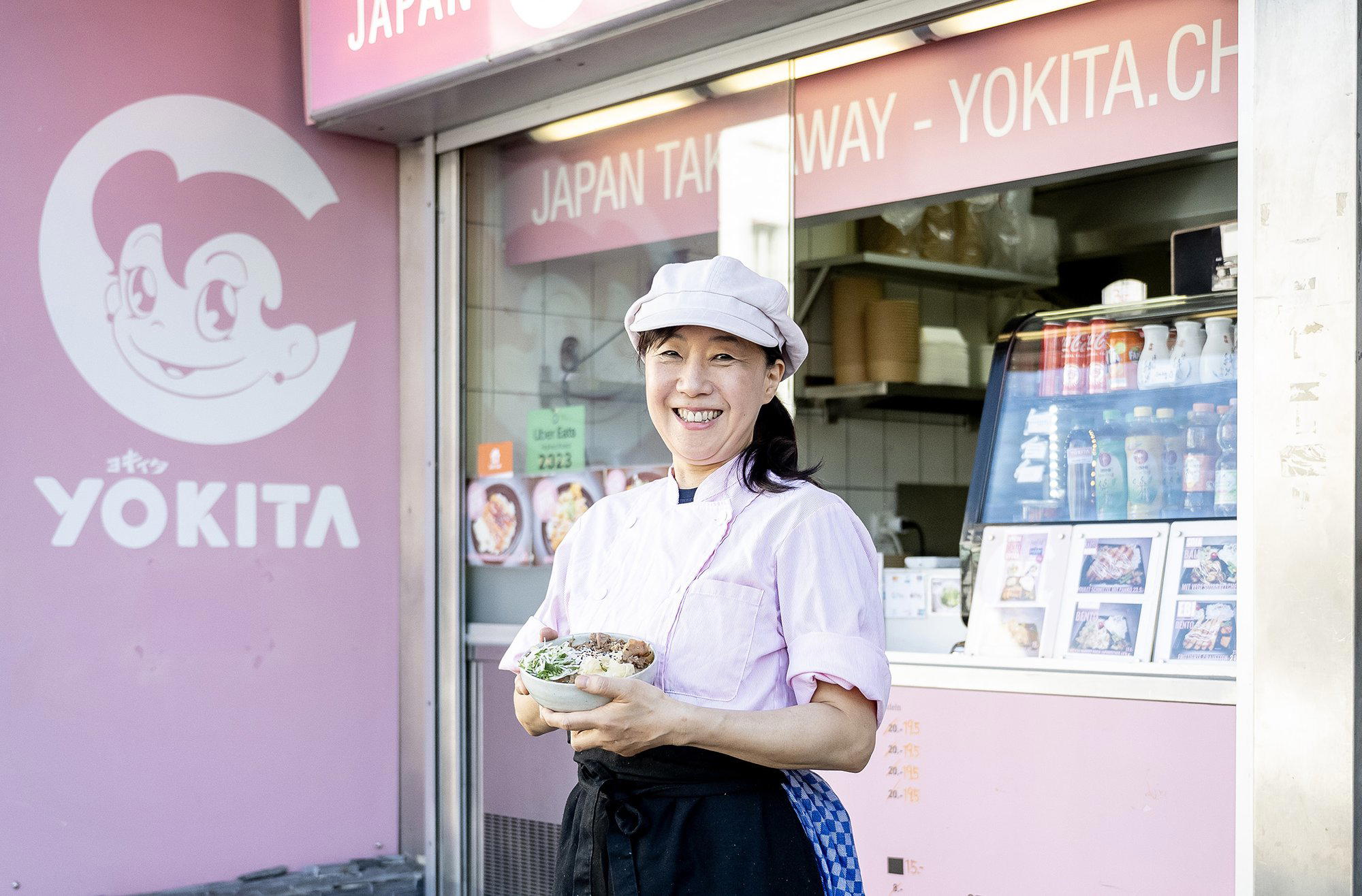
The menu
What to order
- Bento Boxen
- Poké Bowls
- Yakisoba
- Udon
- Gyoza
- Maki Sushi
District 3 and the Argument for Cooking Away from the Centre
Zürich's restaurant attention has historically concentrated along the lake, in the Niederdorf lanes, and in the design-hotel dining rooms of the Innenstadt. District 3, anchored by Friesenbergstrasse and its adjacent residential blocks, sits outside that circuit. It is a neighbourhood of tram lines, corner bakeries, and the kind of foot traffic that comes from people who live there rather than people who have arrived for the evening. Yokita, at Friesenbergstrasse 3, occupies that context deliberately. The address is not incidental, it places the restaurant inside a city geography that rewards cooking willing to make its case on the plate rather than on the postcode.
That broader pattern is worth understanding before arrival. Zürich's dining scene has been bifurcating for several years: on one side, the formal tasting-menu rooms that align with the city's financial and luxury identity (venues like The Restaurant and The Counter); on the other, a smaller cohort of neighbourhood-anchored places whose authority comes from sourcing discipline and cooking focus rather than from room design or awards positioning. Yokita belongs to that second group, or at least its address and street-level character put it firmly in that conversation.
The Sourcing Argument That Defines This Style of Kitchen
Across European cities that have developed serious neighbourhood-dining cultures, think Lyon's bouchons, Copenhagen's natural-wine bistros, the Bermondsey stretch in London, the common thread is an explicit relationship between kitchen and supply chain. The best of these restaurants are not simply buying well; they are building menus around what is available, seasonal, and grown or raised within a radius that makes traceability possible. Switzerland's agricultural geography makes that argument more accessible than in most countries: the Alps, the Mittelland, and the lake regions all produce distinct ingredients across compressed distances. A kitchen in District 3 can source dairy from the pre-Alpine foothills, freshwater fish from Swiss lakes, and market produce from the canton's farms without the logistical compromises that sourcing-led cooking requires in denser, more urbanised food systems.
That context matters for understanding what Yokita is likely doing and why it matters to the broader Zürich dining conversation. The neighbourhood format, modest address, no performance of luxury, is often the natural habitat for exactly this kind of ingredient-forward approach. The room exists to serve the cooking, and the cooking exists to serve the ingredient. Compared to IGNIV Zürich by Andreas Caminada, where the sharing format and four-star hotel context shape the entire experience, or Eden Kitchen & Bar, whose Italian frame brings its own supply-chain logic, Yokita's District 3 position suggests a different relationship between kitchen and table, closer, less mediated, and more directly accountable to what the season is actually producing.
Swiss Fine Dining Beyond the City: The Broader Reference Points
To calibrate Yokita within Swiss dining more broadly, it helps to map the country's reference kitchens. Schloss Schauenstein in Fürstenau has built its reputation in part on a kitchen garden and sourcing network that many Swiss chefs treat as a benchmark. Hotel de Ville Crissier in Crissier operates in the French-Swiss tradition of classical rigour applied to regional produce. Memories in Bad Ragaz and Cheval Blanc by Peter Knogl in Basel represent the formal end of the spectrum, where ingredient quality is a given but presentation and technique are equally weighted. 7132 Silver in Vals, Colonnade in Lucerne, Einstein Gourmet in Sankt Gallen, focus ATELIER in Vitznau, and Da Vittorio in St. Moritz each occupy a specific register in that national conversation. Internationally, the sourcing-first methodology that characterises this style of kitchen finds its sharpest expressions at places like Le Bernardin in New York City, where product quality is the non-negotiable foundation, or Atomix, where ingredient provenance is woven into the narrative of service. And in the French-Swiss register, L'Atelier Robuchon in Geneva represents a different answer to the question of how technique and product interact. Yokita does not yet carry the documented recognition of those addresses, but the category it appears to occupy, neighbourhood-serious, sourcing-attentive, outside the formal awards circuit, is one that Swiss dining has produced consistently, and one that often yields the most unguarded cooking.
How to Approach the Visit
District 3 is accessible by tram from the centre, with Friesenbergstrasse reachable without significant travel time from the Hauptbahnhof or the lakefront. The neighbourhood's character is residential and unpretentious, which means the dress code expectation is likely casual to smart-casual rather than formal. Given the limited data currently available on Yokita's booking method, hours, and seat count, advance contact is advisable rather than a walk-in assumption, neighbourhood restaurants of this type frequently run small rooms with limited covers. For broader Zürich dining planning, our full Zürich restaurants guide maps the city's dining geography by neighbourhood and register, including alternatives at the Widder for Swiss tradition in a more central setting.
Yokita vs. Nearby Zürich Alternatives at a Glance
| Venue | Cuisine / Style | Price Range | Format |
|---|---|---|---|
| Yokita | Not documented | Not documented | Neighbourhood restaurant, District 3 |
| IGNIV Zürich | Sharing | €€€€ | Hotel dining, sharing format |
| The Counter | Creative | €€€€ | Counter dining, tasting menu |
| Eden Kitchen & Bar | Italian | €€€€ | À la carte, bar seating |
| Widder | Swiss | €€€ | Hotel restaurant, traditional |
Frequently asked questions
What dish is Yokita famous for?
Can I walk in to Yokita?
What's the defining dish or idea at Yokita?
Can Yokita accommodate dietary restrictions?
Is Yokita worth visiting if I'm already planning a broader Swiss dining itinerary?
Recognition, Side-by-Side
Comparable venues nearby, for context on price, style, and recognition.
| Venue | Cuisine | Price | Notes |
|---|---|---|---|
| YokitaThis venue (the venue you are viewing) | Japanese Take-Away | $20–30 | Not listed |
| Sappo Ramen | Authentic Sapporo Ramen & Tsukemen | $20–30 | Unterstrass |
| Hoi Koi Sushi | Modern Japanese Sushi | $20–30 | Aussersihl |
| Machida Shoten Albisriederplatz | Authentic Yokohama Ramen | $20–30 | Aussersihl |
| Sando | Japanese-Inspired Smashburgers | $20–30 | Oberstrass |
| Kokoro | Swiss-Japanese Fusion | $30–50 | Aussersihl |
Continue exploring
More in Zürich
Restaurants in Zürich
All restaurants in Zürich →
Bars in Zürich
All bars in Zürich →

Details
- Casual Hangout
- Standalone
- A La Carte
- Vegetarian Friendly
Current opening hours
- Monday
- 11:30 AM–2 PM, 5:30–8 PM
- Tuesday
- 11:30 AM–2 PM, 5:30–8 PM
- Wednesday
- 11:30 AM–2 PM, 5:30–8 PM
- Thursday
- 11:30 AM–2 PM, 5:30–8 PM
- Friday
- 11:30 AM–2 PM, 5:30–8 PM
- Saturday
- 12:30–3 PM, 5:30–7:30 PM
- Sunday
- Closed
Hours can change for holidays and private events. Hours as of .
Casual take-away spot with focus on fresh, quick Japanese cuisine preparation.