Cheval Blanc by Peter Knogl





At Blumenrain 8, on the Rhine-facing edge of Basel's old town, Cheval Blanc by Peter Knogl holds three Michelin stars and a 99.5-point score from La Liste, placing it among Switzerland's most decorated classic French tables. The cooking draws on the formal traditions of haute cuisine without the museum-piece stiffness, and the room's position above the river gives the whole experience a particular geographic gravity.
Pearl is the En Primeur Club membership app — saves, bookings, and concierge access live there. Same editors, same standards.
- Address
- Blumenrain 8, 4001 Basel, Switzerland
- Phone
- +41 61 260 50 07
- Website
- chevalblancbasel.com
- Directions
- Get directions
 Saves & bookings on Pearl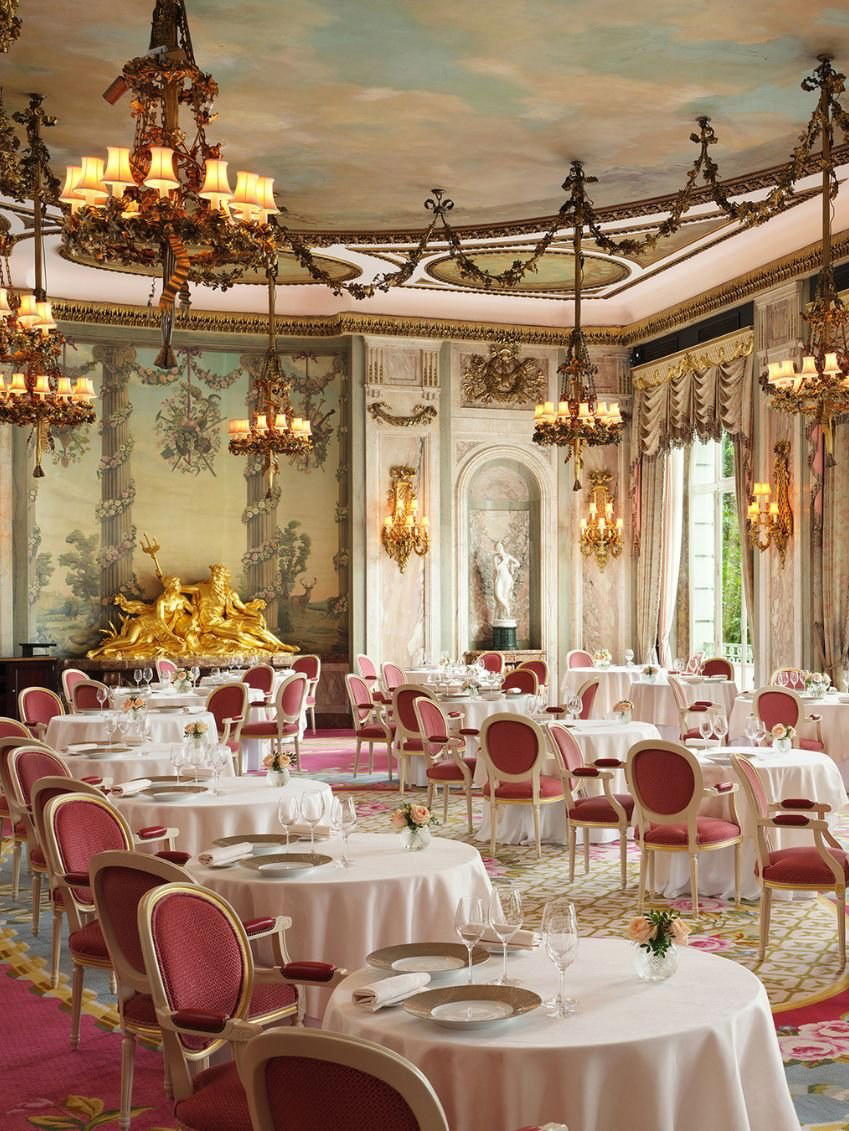
The Rhine Edge and What It Demands
Cheval Blanc by Peter Knogl is a three-Michelin-star restaurant in Basel, serving French Haute Cuisine with Mediterranean and Asian influences at Blumenrain 8. Art Basel, the city's role as a pharmaceutical hub, and its position at the junction of Switzerland, Germany, and France have all conspired to produce a dining public that is well-travelled, frequently French-influenced, and accustomed to comparing what arrives on the plate against a continental comparable set rather than a local one. That context matters when you sit at Blumenrain 8, looking out toward the Rhine from the old town's northern edge. This is not a neighbourhood that tolerates approximation.
The address itself carries a kind of civic weight. Blumenrain runs along the river on the Grossbasel side, a street where the architecture has the self-possession of a city that has been wealthy and culturally serious for a long time. Classic French cooking at the highest register is, in some ways, the natural idiom for a room with this kind of address, a cuisine that evolved in part through exactly this kind of bourgeois confidence, this assumption that precision and formality are forms of respect rather than display.
Where Cheval Blanc Sits in the Basel Hierarchy
Basel's fine dining scene has diversified considerably over the past decade. Stucki - Tanja Grandits holds two Michelin stars with a creative, colour-led contemporary French approach that reads quite differently from classical tradition. Roots, also at two stars, operates in the Flemish-influenced modern cuisine register. Elsewhere in the city, Ackermannshof covers Mediterranean ground at the same price tier, and Bel Etage takes an international approach. At the more accessible end, au violon offers classic French at a fraction of the price point.
Cheval Blanc sits apart from all of them, not simply because it holds three Michelin stars to the others' two, but because it operates in a different conceptual register entirely. Three-star kitchens are not in conversation with the two-star tier in the way that the gap might suggest, they are playing a different game, one measured against a much smaller global pool. By that measure, Cheval Blanc's comparable set in Switzerland includes Hotel de Ville Crissier in Crissier and Schloss Schauenstein in Fürstenau, while further afield the comparison extends to places like Memories in Bad Ragaz and 7132 Silver in Vals.
The La Liste score reinforces this position. A 99.5-point result in 2025, dropping fractionally to 99 in 2026, places Cheval Blanc in the narrow band at the summit of that global aggregation. La Liste draws on Michelin, Gault&Millau; and dozens of other guides simultaneously, so a score at this level reflects sustained consensus across multiple critical frameworks, not a single organisation's house style. The accompanying Les Grandes Tables du Monde recognition in 2025 adds a further layer of institutional validation from the French-led association that treats the grandes tables tradition as a living category rather than a historical one. For context on how classic French cooking at this level reads across different European settings, Waterside Inn in Bray and d'Eugénie à Emilie in Baudour occupy adjacent territory in the classic French tradition.
The Cooking: Classical Discipline in a City of Comparisons
Classic French cuisine at the three-star level is a narrower proposition than the label implies. It is not the French bistro tradition, not the contemporary Franco-Japanese hybrids that have proliferated across European capitals, and not the plant-led reformulations that have earned stars elsewhere. It is, at its most precise, a discipline with a centuries-long technical vocabulary: sauces built from long reductions, proteins treated with an almost forensic attention to temperature and resting, pastry work that functions as architecture. Peter Knogl's cooking operates within this tradition, and the awards record suggests he does so with a consistency that Michelin has confirmed across consecutive years, three stars in both 2024 and 2025.
What distinguishes the strongest practitioners of classic French at this level is not innovation in the disruptive sense but refinement: the ability to take a preparation that has been done ten thousand times and execute it with a clarity that makes it feel considered rather than rote. The discipline imposes its own form of accountability. There is no conceptual novelty to distract from a sauce that is slightly over-reduced or a terrine that has been cut too thick. The cooking has to carry the room on its own terms.
The Room and the River
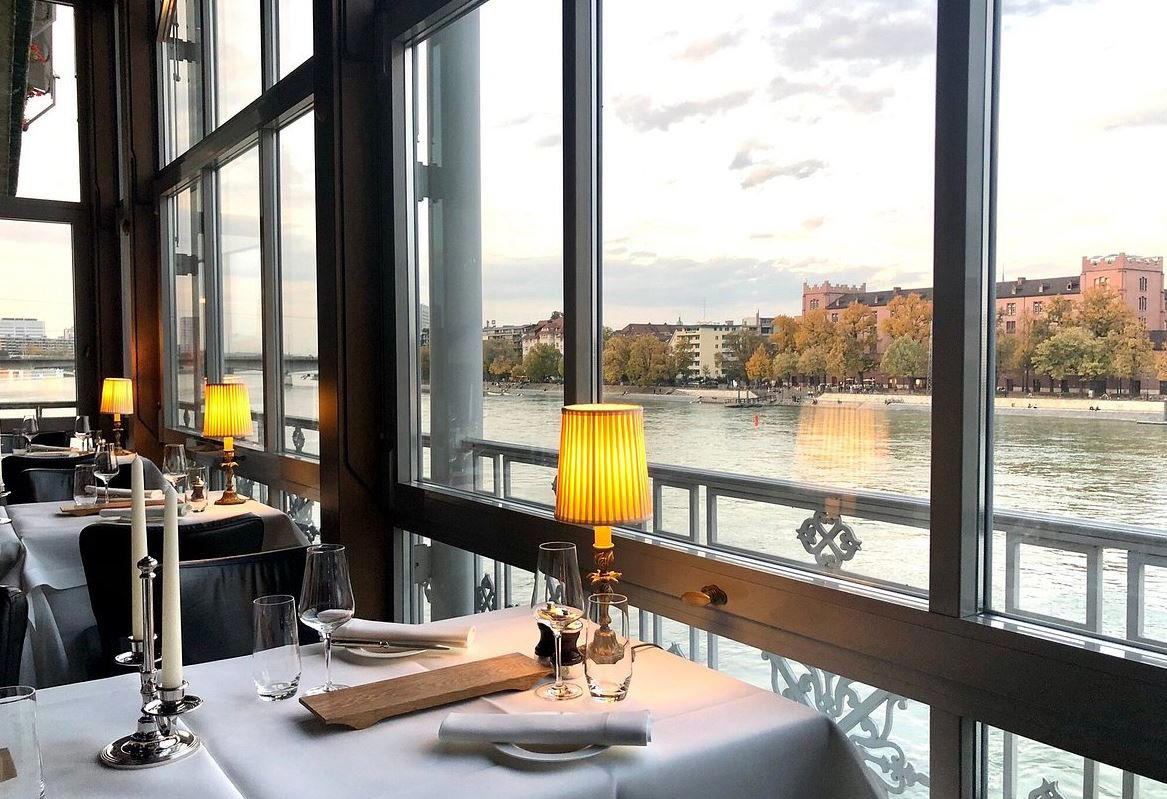
The location on Blumenrain, directly on the Rhine, is not incidental to the experience. Basel's old town has a particular quality at table level: the streets are narrow enough and the building stock old enough that there is a sense of sediment, of many generations of serious eating having happened in roughly the same rooms. That atmosphere does not come from any design decision but from the accumulated weight of the city's relationship with formal hospitality. Rooms that face the Rhine in this part of the old town carry natural light in the afternoon and a certain stillness in the evening, when the river reflects the street lamps and the foot traffic on the Rheinsprung above dies down.
This is not the kind of address that lends itself to the theatrical entrance gestures common at destination restaurants in more tourist-facing cities. Basel diners tend toward discretion, and the room is calibrated accordingly. The formality is present but not performative, which is exactly what the grandes tables tradition, at its least nostalgic, has always argued for.
Planning a Visit
Cheval Blanc by Peter Knogl is located at Blumenrain 8, 4001 Basel, in the Grossbasel old town, within walking distance of the main Basel SBB rail station and a short taxi or tram ride from the city's two other stations (Basel Bad Bf for German connections, Basel SNCF for French). Basel is also served by EuroAirport Basel-Mulhouse-Freiburg, the tri-national airport shared with France and Germany, roughly 10 kilometres from the city centre.
At the €€€€ price tier, this is one of Basel's most expensive dining commitments, which aligns with the position a three-star kitchen occupies across any European city. Booking at this level in Basel typically requires advance planning; for a restaurant with sustained Michelin recognition and a La Liste score above 99, tables on sought-after dates, Art Basel weeks in June and December particularly, will require early reservation.
For visitors building a broader Basel itinerary, For those extending a Switzerland trip to include other serious dining, Colonnade in Lucerne and Da Vittorio in St. Moritz represent contrasting high-end options in different parts of the country.
Accolades, Compared
Comparable venues nearby, for context on price, style, and recognition.
| Venue | Cuisine | Price | Awards | Notes |
|---|---|---|---|---|
| Cheval Blanc by Peter KnoglThis venue — the venue you are viewing | French Haute Cuisine with Mediterranean and Asian Influences | $$$$ | Michelin 3 Star | Not listed |
| Stucki - Tanja Grandits | Modern European Aroma Cuisine | $$$$ | Michelin 2 Star | Batterie-Nord |
| roots | Modern Vegetable-Centric European | $$$$ | Michelin 2 Star | St. Margarethen |
| Ackermannshof | Modern Mediterranean | $$$$ | Michelin 1 Star | Messe |
| Bel Etage | French-influenced Gourmet | $$$$ | Michelin Plate | Aeschen |
| Brasserie Les Trois Rois | Swiss-French Brasserie | $$$$ | Michelin Plate | Messe |
Recognition history
Dated appearances from independent guides and award organizations, with the underlying list record or original source where available.
La Liste Top Restaurants
La Liste
Les Grandes Tables du Monde Member
Les Grandes Tables du Monde
Opinionated About Dining Classical in Europe Ranked #4
Opinionated About Dining
La Liste Top Restaurants
La Liste
Michelin 3 Stars
Michelin
The Best Chef Two Knives
The Best Chef
World Culinary Awards Switzerland's Best Restaurant 2025 #1
World Culinary Awards
Michelin 3 Stars
Michelin
Continue exploring
More in Basel
Restaurants in Basel
Browse all →
Bars in Basel
Browse all →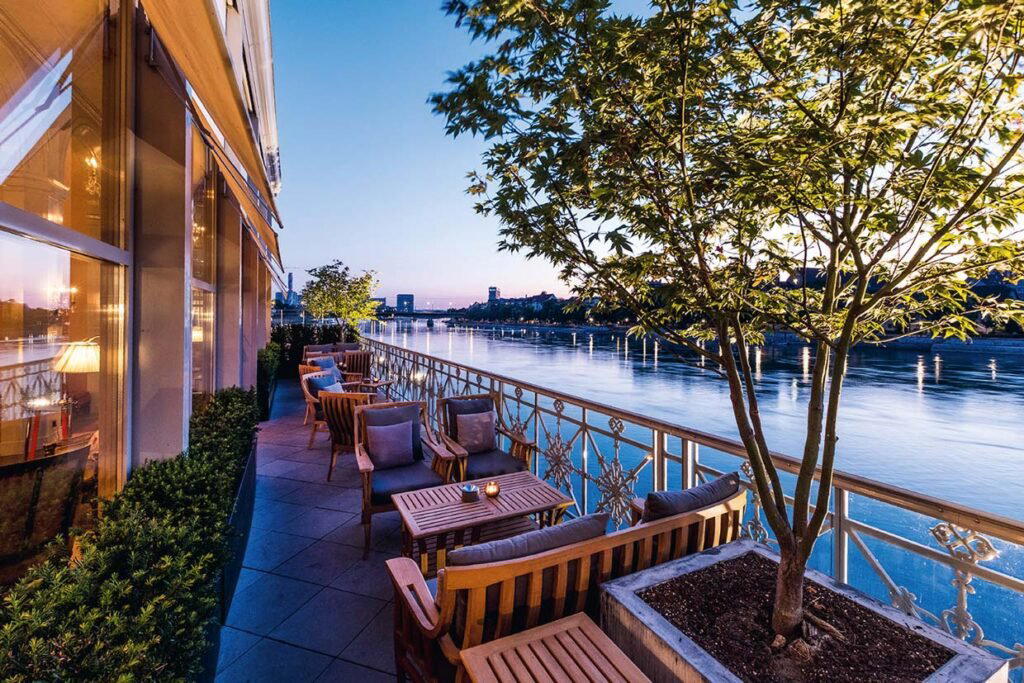
Hotels in Basel
Browse all →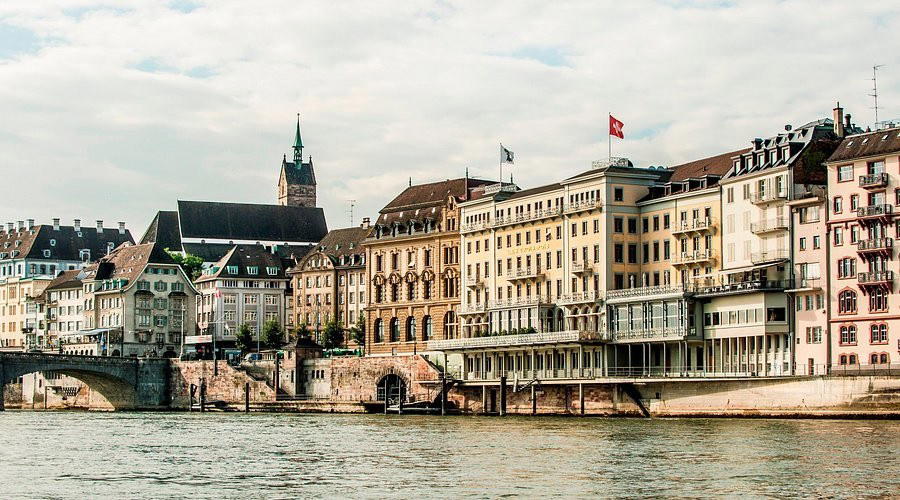

At a Glance
- Elegant
- Sophisticated
- Classic
- Ornate
- Special Occasion
- Date Night
- Business Dinner
- Hotel Restaurant
- Terrace
- Extensive Wine List
- Sommelier Led
Current opening hours
- Monday
- Closed
- Tuesday
- 7–10 PM
- Wednesday
- 12–2 PM, 7–10 PM
- Thursday
- 12–2 PM, 7–10 PM
- Friday
- 12–2 PM, 7–10 PM
- Saturday
- 12–2 PM, 7–10 PM
- Sunday
- Closed
Hours can change for holidays and private events. Last verified .
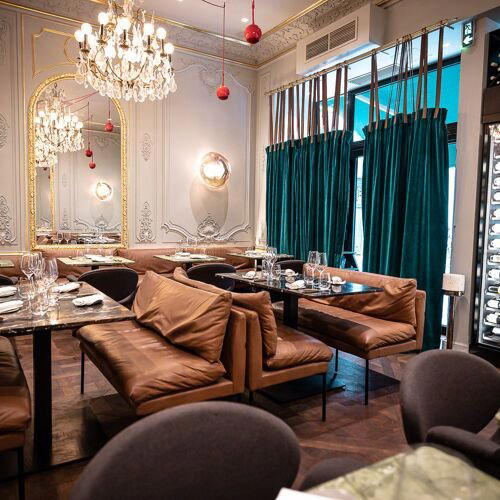
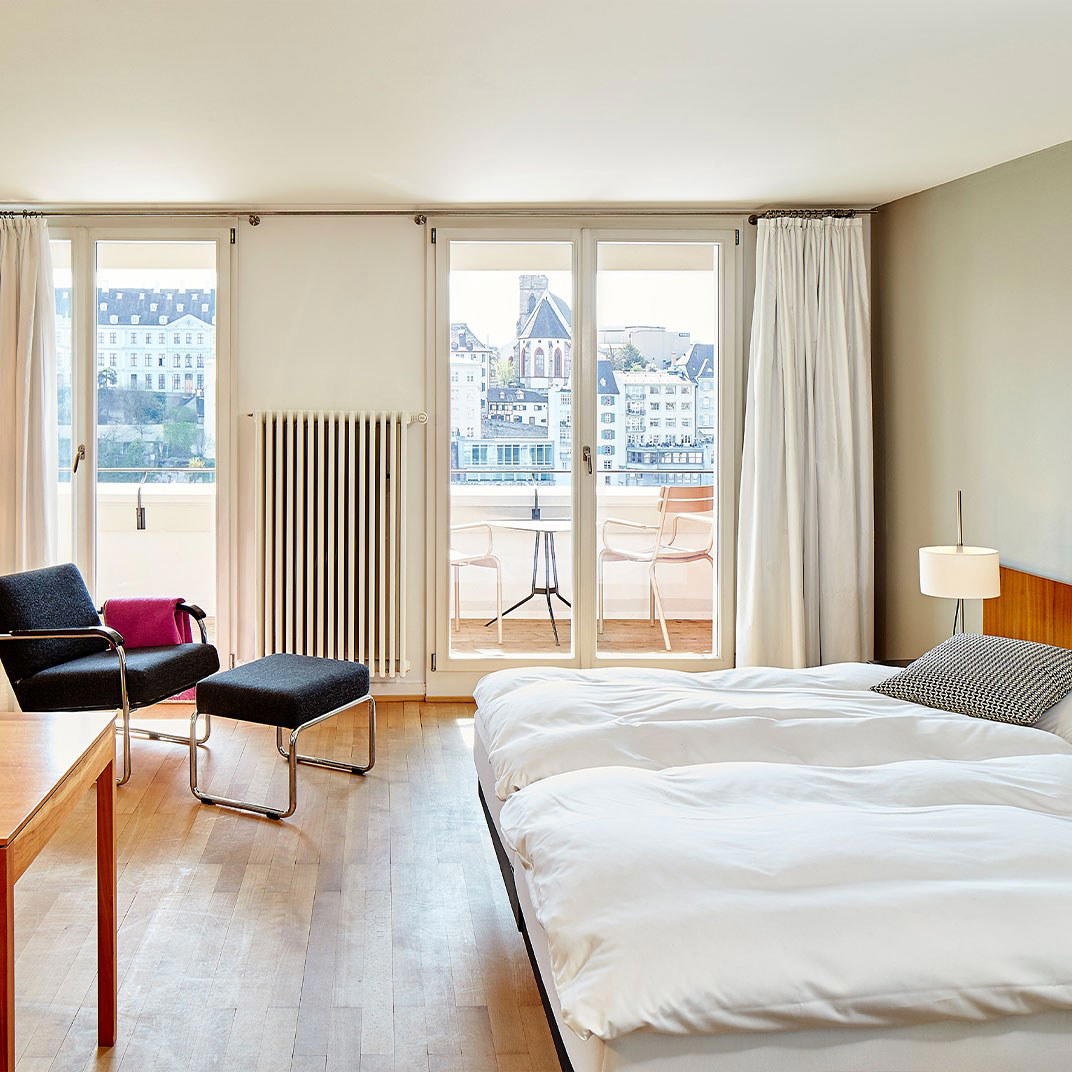
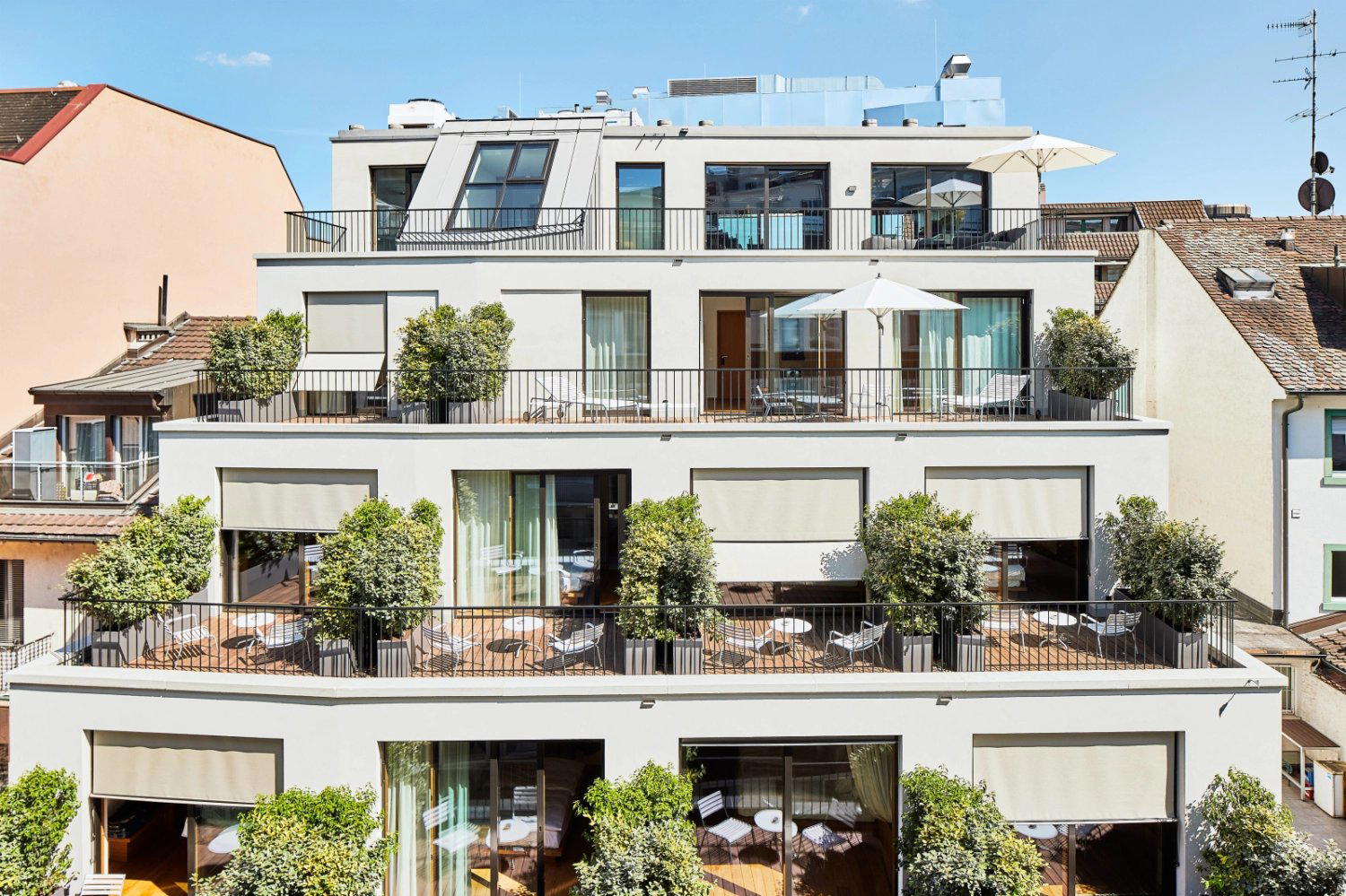
Stylish classic interior with fine antiques, glittering chandeliers, elegant fabrics, high ceilings, and terrace overlooking the Rhine.