
Tabelog 100 #5
Our verdict
Yo-shoku OKADA puts rural Gifu’s yoshoku tradition in sharp focus: omelette rice, hamburger steak and Japanese-style Western cooking treated as everyday craft rather than nostalgia. Its Tabelog 100 Yoshoku EAST 2025 selection and 3.70 score place it in a serious regional conversation, while the compact 22-seat format keeps the experience grounded and practical.

Pearl is the En Primeur Club membership app, where members save venues, book tables and use the concierge.
The menu
What to order
- Hamburg steak
- Cream croquettes
- Fried shrimp
- Omurice
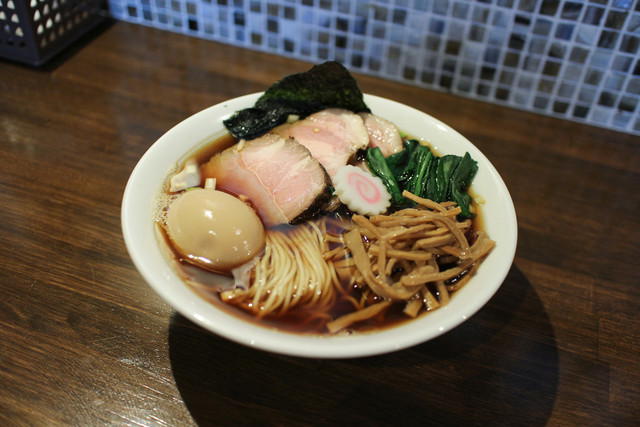
- Ramen
Approaching yoshoku in Ibi-gun means leaving behind the department-store polish and hotel-dining formality that often frame Japanese Western cooking in larger cities. The setting here is local and practical, shaped by households, solo diners and families rather than tasting-menu theatre. That matters because yoshoku has always been a cuisine of translation: Western forms adapted to Japanese rice, sauces, portioning and daily appetite. Yo-shoku OKADA belongs to that tradition, and its 2025 Tabelog Hyakumeiten recognition gives the meal a sharper point of reference than the category’s modest price tier might suggest.
Yoshoku in Gifu: everyday dishes judged by specialist standards
Yoshoku is often misread as comfort food with a loose rulebook. In Japan, the serious versions are more exacting. Omurice depends on rice texture, egg handling and sauce balance; hamburger steak asks for juiciness without heaviness; the broader genre lives or dies by whether familiar forms feel calibrated rather than merely nostalgic. In that context, an Ibi-gun restaurant appearing in a specialist Tabelog Hyakumeiten selection is useful evidence. It places a regional restaurant inside a field that also includes long-running urban yoshoku counters, family restaurants with deep local followings and small kitchens built around a few high-demand staples.
The menu category tells the story without needing embellishment: Japanese-style Western cuisine, omurice and hamburger steak. These are dishes rooted in imported technique but dependent on Japanese pantry logic, especially rice, demi-glace-style sauces, egg cookery and the seasoning restraint expected in a lunch-and-dinner setting. The value of the format is not luxury signalling. It is consistency at a level where ordinary dishes are exposed to comparison, and where a 3.70 Tabelog score carries more weight than it would in a novelty category with lighter expectations.
Ingredient sourcing is not something to overstate from the available public brief. The important point is the type of cooking: omelette rice, hamburger steak and set-meal Western-Japanese staples depend on basic inputs being handled cleanly and repeatedly. In this genre, quality shows less through spectacle than through texture, sauce integration and whether a dish holds up across a regular service.
A compact room, a practical meal, and a narrower margin for error
The restaurant is best understood through the practical scale of everyday yoshoku rather than through the expectations of a destination tasting menu. Yoshoku at this level is not about a long, choreographed progression; it is about short-format precision, fast recognition and a kitchen that can repeat familiar dishes without flattening them. A modest dining format also makes the category’s discipline more visible. There is little distance between the idea of the dish and the plate in front of the diner, and little room for the kind of diffuse hospitality that can mask uneven cooking in larger operations.
The recognition history adds weight: recognized in Tabelog Hyakumeiten in 2025. That does not turn the restaurant into a luxury address, and it should not be evaluated as one. The stronger read is that Japanese-style Western cooking outside the major tourist corridor can carry specialist credibility while staying in a price band associated with daily dining. Among nearby comparison points, Aka Renga can be considered alongside other local dining, while Kinchoen Sohonke Oogaki ekimae honten and Mochi So show how varied the broader regional food map can be. That makes Yo-shoku OKADA less a splurge than a category benchmark for travellers who care about regional cooking beyond sushi, kaiseki and ramen.
Operating details should be checked directly before visiting, because the appeal here is tied to a practical local meal rather than a highly staged reservation experience. These are not minor logistics in Ibi-gun; they define how the meal fits into a trip. A diner building a day around the area should treat this as a purposeful stop, not a flexible late-night fallback. The format reads as approachable and everyday, with lunch and dinner budgets both listed in the JPY 1,000 to JPY 1,999 range.
How to place it in an Ibi-gun itinerary
For visitors, the case for coming is strongest when yoshoku itself is the point. Japan’s regional dining culture is often reduced to destination omakase and famous ramen queues, but the more revealing meals are frequently in genres that locals use regularly. Japanese-style Western cooking is one of those categories. It reflects postwar adaptation, household taste, lunch culture and regional restaurant economics in a single plate. Here, the appeal lies in seeing that tradition judged with enough seriousness to earn Tabelog Hyakumeiten recognition, while remaining rooted in the day-to-day dining pattern of Ibi-gun.
Travellers mapping the area can pair the meal with a broader look at local food and hospitality through Our full Ibi-gun restaurants guide, then widen the route with Our full Ibi-gun hotels guide, Our full Ibi-gun bars guide, Our full Ibi-gun wineries guide and Our full Ibi-gun experiences guide. For a wider Japan dining sweep, compare how regional specialisation appears in other dining rooms across Japan and beyond, from city counters and casual cafés to specialist kitchens, mountain huts, sake bars and neighborhood snack stops.
The editorial read is direct: this is a serious yoshoku stop for travellers already moving through Ibi-gun, not a restaurant that needs ceremonial framing. The draw is the way a modest, familiar cuisine can carry award-level scrutiny without losing its local function. That is often where regional Japan is at its most instructive.
Frequently asked questions
Is Yo-shoku OKADA okay with children?
The public details provided here do not specify a child policy. Travellers with children should confirm current seating and visit conditions directly before going to Yo-shoku OKADA in Ibi-gun.
Is Yo-shoku OKADA formal or casual?
It reads as casual rather than formal. The yoshoku category and JPY 1,000–JPY 1,999 lunch and dinner budget point to an everyday meal in Ibi-gun, not a dress-code venue.
Is Yo-shoku OKADA expensive?
Pricing at Yo-shoku OKADA is listed as JPY 1,000 - JPY 1,999 JPY 1,000 - JPY 1,999.
What are Yo-shoku OKADA's hours?
Check current opening times directly before planning a visit to Yo-shoku OKADA.
How do I find Yo-shoku OKADA?
Yo-shoku OKADA is located in Ibi-gun.
At-a-Glance Comparison
Comparable venues by cuisine and price in the same metro.
| Venue | Cuisine | Price | Awards | Notes |
|---|---|---|---|---|
| Yo-shoku OKADAThis venue (the venue you are viewing) | Japanese yoshoku (Western-style) comfort food | $10–20 | Tabelog 100 #5 | Not listed |
| ウトロ漁協婦人部食堂 | Fresh Seafood Donburi from Fishermen's Wives | Not listed | Not listed | Utoro |
| Hirome Market | Kochi Street Food Market with Seared Bonito | $10–20 | Not listed | Obiyamachi |
| Grill The Butcher Nagano (グリル ザ ブッチャー 長野) | Shinshu Beef Steakhouse | $20–30 | Not listed | Nagano Station |
| Boteyan | Okonomiyaki (Japanese Savory Pancake) | $10–20 | Not listed | Toyama Station area |
| Rekka (烈火) | Spicy Yamagata-style ramen & tsukemen | $10–20 | Tabelog 100 #100 | 庄内 |
Recognition history
Dated appearances from independent guides and award organizations, with the underlying list record or original source where available.
Tabelog 100 #5 · No. 5
Tabelog · Tabelog 100 - Yoshoku - EAST - 2025
Continue exploring
More in Ono
Restaurants in Ono
All restaurants in Ono →

Details
- Cozy
- Classic
- Family
- Casual Hangout
- Group Dining
- Solo
- Standalone
- A La Carte
Current opening hours
- Monday
- 11 AM–1:30 PM, 6–8:30 PM
- Tuesday
- 11 AM–1:30 PM, 6–8:30 PM
- Wednesday
- 11 AM–1:30 PM, 6–8:30 PM
- Thursday
- Closed
- Friday
- 11 AM–1:30 PM, 6–8:30 PM
- Saturday
- 11 AM–1:30 PM, 6–8:30 PM
- Sunday
- 11 AM–1:30 PM, 6–8:30 PM
Hours can change for holidays and private events. Hours as of .
Unpretentious, small neighborhood yoshoku restaurant with a warm, down-to-earth atmosphere focused on comfort and hearty portions rather than formality.