Our verdict
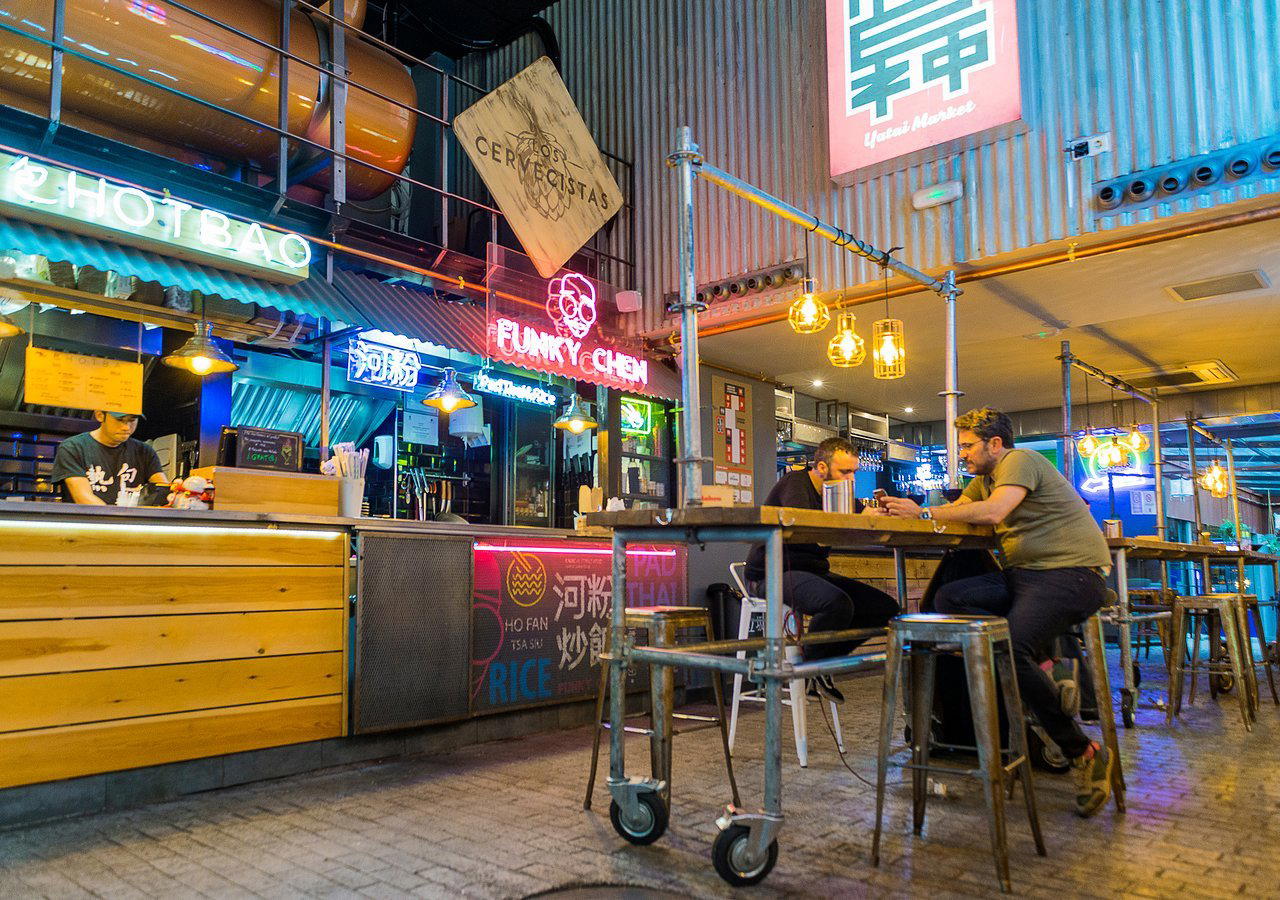
Madrid's yatai culture lands in the Centro district, where Yatai Market on Calle del Dr Cortezo channels the Japanese street-food tradition of portable, counter-served dishes into a format that fits naturally alongside the city's own bar-and-tapa rhythm. The format is social and informal, built for grazing rather than sitting through courses. It occupies a niche that Madrid's fine-dining circuit, anchored by tasting-menu houses, largely leaves open.

Pearl is the En Primeur Club membership app — saves, bookings, and concierge access live there. Same editors, same standards.
- Address
- Calle del Dr Cortezo, 10, Centro, 28012 Madrid, Spain
- Phone
- +34 911 67 25 65
- Hours
- Mon–Wed 1 PM–12:30 AMThu–Fri 1 PM–1:30 AMSat–Sun 1 PM–12:30 AM
- Website
- yataimarkets.com
- Directions
- Get directions
The menu
What to order
- Crispy rice sushi
- Baos
- Ramen
- Pad thai
- Korean fried chicken
- Dim sum
- Spring rolls
- Dumplings
Where Japanese Street Culture Meets Madrid's Counter Tradition
The yatai is one of Japan's oldest food formats: a wheeled or fixed street stall, typically lantern-lit, where a single vendor serves a short menu of hot food to whoever pulls up a stool. The format predates modern restaurant culture in Japan by several centuries, and its logic is direct — small production, immediate service, no ceremony. That ethos travels well. In cities across Europe where informal dining has overtaken the tasting-menu as the dominant mode of eating out, the yatai template maps onto existing street-food and market hall traditions more naturally than most imported formats.
Madrid is a particularly receptive host. The capital's bar culture is already built around counter service, standing consumption, and dishes designed to be finished in three bites. The city's own pintxo-adjacent snack tradition and its deeply embedded tapa rhythm mean that the yatai's social logic — order, eat, move on, requires almost no translation. Yatai Market, on Calle del Dr Cortezo in the Centro district, plants itself inside that cultural overlap.
The Centro Setting and What It Signals
Calle del Dr Cortezo sits in a pocket of central Madrid that bridges the tourist-heavy axis of Sol and the more neighbourhood-oriented streets toward Lavapiés. The address is not accidental. Centro venues in this price bracket tend to serve a mixed crowd: locals who treat the area as a transit point between districts, and visitors who have moved beyond the main plazas and are looking for something with a clearer editorial point of view. A market-hall or multi-vendor format in this location functions differently from the same format in a purpose-built leisure complex on the periphery, it becomes part of the city's existing fabric rather than an isolated destination.
Madrid's dining scene at the upper end is anchored by tasting-menu formats. DiverXO operates at the extreme of that register, with a three-Michelin-star creative programme that demands full-evening commitment. Coque, Deessa, DSTAgE, and Paco Roncero occupy a similar bracket, structured, course-driven, reservation-dependent. Market-hall formats fill that gap, and the yatai concept adds a cultural frame that distinguishes it from generic food halls.
The Cultural Weight of the Yatai Format
Understanding what a yatai market is, rather than simply what it sells, matters for calibrating expectations. In Japan, the yatai tradition is geographically specific, Fukuoka in Kyushu is the city most associated with surviving yatai culture, where dozens of licensed stalls still operate along the river each evening. The dishes served are correspondingly regional: hakata ramen, yakitori, mentaiko, local sake. The format is relational; the same vendor serves the same neighbourhood regulars across decades. Exporting the format inevitably strips some of that specificity, but what tends to survive is the social architecture, the counter, the short menu, the lack of preamble.
European market halls that invoke Japanese street-food traditions are now numerous enough to form their own genre. The stronger examples use the format's natural brevity as an editorial constraint: fewer dishes, more precision, faster feedback from the crowd. The weaker examples use the aesthetic (neon, exposed wood, Japanese script) without the underlying discipline. Where Yatai Market sits on that spectrum is leading assessed in person, but its location in a working neighbourhood of central Madrid, rather than a purpose-built leisure zone, suggests a different ambient pressure than a destination food hall.
Spain's Broader Asian Dining Shift
Madrid's relationship with Japanese food has matured significantly over the past decade. The city now supports a range of formats from high-end omakase counters to ramen specialists and izakaya-style operations. That broadening reflects a general shift in Spanish dining culture toward Asian references, not as novelty, but as a settled part of the repertoire. Spain's own avant-garde culinary tradition, represented by houses like El Celler de Can Roca in Girona, Mugaritz in Errenteria, and Azurmendi in Larrabetzu, has long incorporated Asian technique and philosophy into its creative vocabulary. At street level, that influence has filtered down into casual formats, including market concepts that draw on Japanese aesthetics while operating within Spanish service rhythms.
The contrast with Spain's fine-dining circuit is instructive. Quique Dacosta in Dénia, Arzak in San Sebastián, and Martin Berasategui in Lasarte-Oria operate in a register where the meal is the event. The yatai format operates in the opposite register, the food is the event, but the meal is incidental. Both have validity; they serve different hours, different moods, and different trip itineraries. For a broader map of where Madrid's dining sits across those registers, the full Madrid restaurants guide provides the wider picture, alongside international comparisons like Le Bernardin in New York City and Lazy Bear in San Francisco for readers calibrating Spain against other premium dining cities.
Planning Your Visit
Yatai Market sits at Calle del Dr Cortezo, 10, in the Centro district of Madrid, within walking distance of the major central metro lines and easily combined with visits to the surrounding neighbourhood. The yatai format is inherently drop-in by design, the stall tradition from which it draws does not run on advance reservations, though confirming current hours directly before visiting is advisable, as market-hall operations in Madrid frequently adjust their schedules seasonally. For context on how this format compares to other informal dining options in the Spanish network, venues like Ricard Camarena in València, Aponiente in El Puerto de Santa María, Cocina Hermanos Torres in Barcelona, and Atrio in Cáceres represent the more structured end of the spectrum, providing a useful reference point for what the casual end of the market addresses.
Frequently asked questions
Is Yatai Market good for families?
The yatai format, a short menu served across a counter or stall, suits flexible, informal eating rather than extended sit-down meals, which makes it workable for families with older children who are comfortable with that pace. The Centro location on Calle del Dr Cortezo is centrally accessible, close to Madrid's main metro connections. Families with very young children may find the counter or standing format less practical than a full table-service restaurant.
How would you describe the vibe at Yatai Market?
The yatai model draws from Japan's lantern-lit street stall tradition: informal, quick-moving, and centred on the act of eating rather than occasion-dressing. In Madrid's Centro district, that translates to an atmosphere closer to a Japanese izakaya or market hall than a sit-down restaurant. Expect noise, proximity to other diners, and a focus on the food over the room.
Is Yatai Market in Madrid faithful to the original Japanese yatai tradition?
The yatai is a format with deep roots in Japan, most concentrated in Fukuoka where licensed street stalls operate under city regulation, and replicating it outside Japan inevitably involves adaptation. At Calle del Dr Cortezo, 10 in Madrid Centro, Yatai Market positions itself within that reference point rather than as a standard Japanese restaurant. How closely the execution tracks the source tradition is something the visit itself will answer, but the framing around the yatai concept is a deliberate curatorial choice, not a generic label.
What's the best thing to order at Yatai Market?
What the yatai format typically centres on is a short, focused menu built around one or two core preparations, so ordering across the full menu rather than anchoring on a single item is usually the right approach at venues of this type.
Where do I go for Yatai Market?
Yatai Market is located at Calle del Dr Cortezo, 10, Centro, 28012 Madrid, Spain, Madrid.
What's the best way to book Yatai Market?
No booking phone number or website is currently listed for Yatai Market at Calle del Dr Cortezo, 10, Centro, Madrid. Yatai-format venues in general operate on a walk-in basis rather than advance reservations, which is consistent with the street stall tradition the format draws from. Arriving early or off-peak hours is typically the practical way to secure a spot.
What's the standout thing about Yatai Market?
The format itself is the point. Yatai markets are geographically concentrated in Japan, particularly in Fukuoka, and genuinely rare as a transplanted concept in European cities. Placing that tradition on Calle del Dr Cortezo in Madrid Centro, where the surrounding streets have their own established counter and bar culture, creates a specific kind of overlap worth paying attention to.
At-a-Glance Comparison
| Venue | Cuisine | Price | Awards | Notes |
|---|---|---|---|---|
| Yatai MarketThis venue — the venue you are viewing | Asian Street Food Market | $10–20 | Not listed | Not listed |
| DiverXO | Avant-Garde Spanish Tasting Menu | $300–500 | 3 Michelin Stars · World's 50 Best #4 | Progressive - Asian, Creative |
| Coque | Modern Spanish Fine Dining | $300–500 | 2 Michelin Stars · La Liste Top Restaurants | Spanish, Creative |
| Deessa | Modern Valencian Fine Dining | $150–200 | 2 Michelin Stars · La Liste Top Restaurants | Modern Spanish, Creative |
| Paco Roncero | Avant-Garde Spanish Fine Dining | $150–200 | 2 Michelin Stars · La Liste Top Restaurants | Creative |
| Smoked Room | Modern Japanese Fire Omakase | $200–300 | 2 Michelin Stars · La Liste Top Restaurants | Progressive Asador, Contemporary |