
Gault & Millau Türkiye 1 Toque
Our verdict
Yanyalı Fehmi Lokantası is a long-standing esnaf lokantası in Kadıköy's Osmanağa quarter, representing the everyday Turkish lunch tradition at its most direct: a short rotation of home-style dishes, served fast, eaten communally. In a neighbourhood where modern bistros and wine bars compete for attention, it holds ground as a reference point for the kind of cooking that predates restaurant culture as a concept.

Pearl is the En Primeur Club membership app, where members save venues, book tables and use the concierge.
The Lokanta Tradition and Where Kadıköy Sits in It
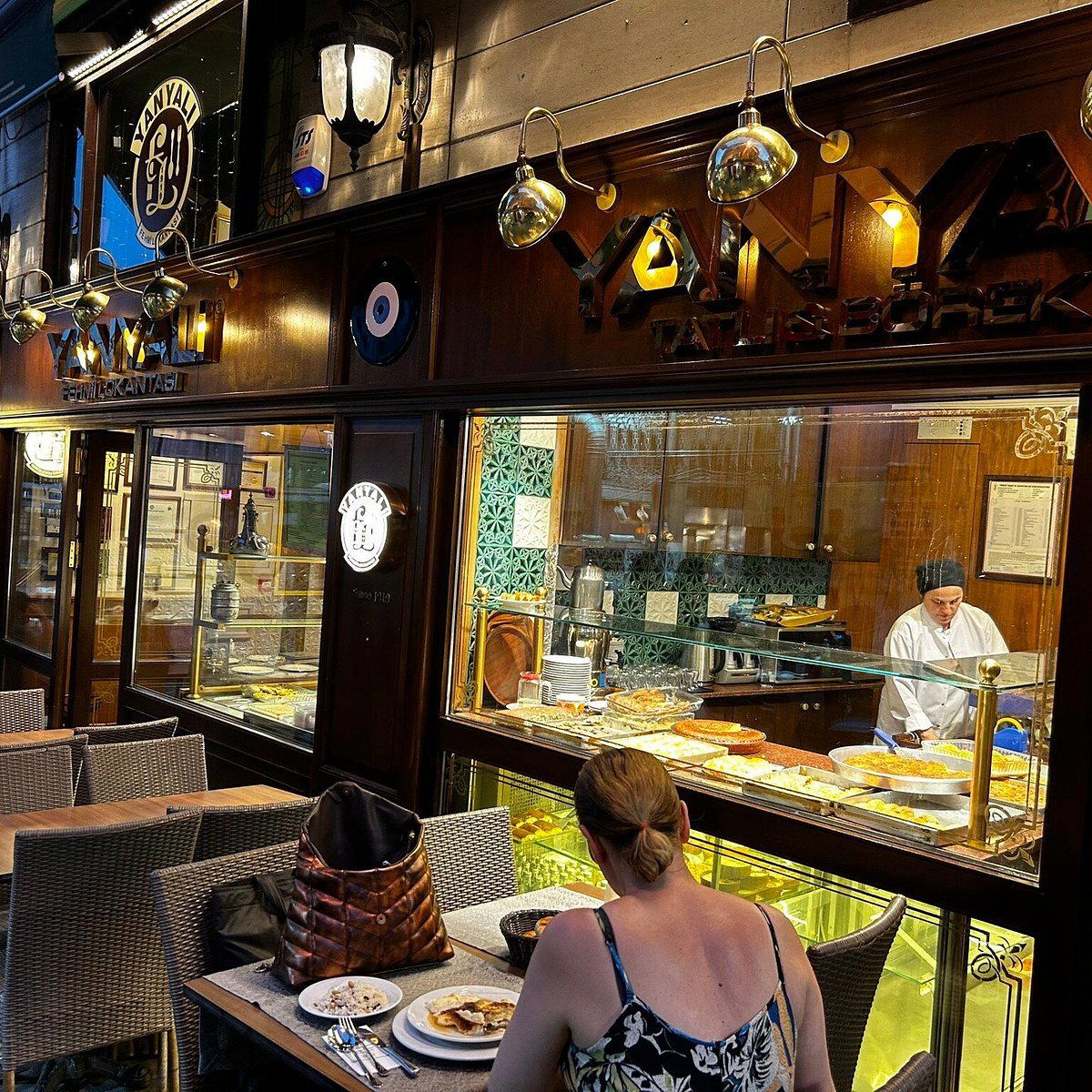
Before the tasting menu, before the bistronomy wave, before the natural wine bar, there was the lokanta. Turkey's esnaf lokantası, literally the "tradespeople's restaurant", is one of the oldest functional dining formats in the urban world: a room, a glass counter, a rotation of dishes cooked by morning and served through the lunch hour, priced so that a working person could eat well and return to work without ceremony. Yanyalı Fehmi Lokantası on Yağlıkçı İsmail Sokak in Kadıköy's Osmanağa quarter is one of the clearest surviving examples of that format on the Asian side of Istanbul.
This is not a format that photographs easily. The aesthetic logic of a lokanta, steam trays, hand-lettered boards, mismatched chairs, sits outside the visual grammar of contemporary food media. That opacity is partly why the esnaf lokantası has been overlooked in the same international coverage that has turned Turk Fatih Tutak in Istanbul and Maçakızı in Bodrum into reference points for modern Turkish cooking abroad. But the lokanta is the substrate on which all of that innovation rests. The slow-cooked legumes, the braised vegetables in olive oil, the offal preparations, these are lokanta vocabulary, and Yanyalı Fehmi has been speaking it longer than most.
Kadıköy as a Dining District
Kadıköy has undergone significant repositioning over the past decade. The neighbourhood's market streets and backstreets now hold a dense concentration of independent wine bars, modern meyhanes, and chef-led bistros that draw from both sides of the Bosphorus. Our full Kad Koy restaurants guide maps this range in detail, from the casual end through to more considered modern kitchens like Siraz.
Within that context, Yanyalı Fehmi occupies a distinct and increasingly rare position. As the neighbourhood's restaurant register has broadened, the traditional lokanta has become a smaller share of the total offering. Surviving examples that maintain format discipline, fixed daily rotation, no printed menu, counter service or near-counter service, lunch-only or lunch-primary hours, are worth tracking precisely because of their scarcity. The format's rarity is its own form of credibility.
The Osmanağa quarter, where Yanyalı Fehmi is located, sits close to the market activity of Kadıköy's core but retains a more residential, neighbourhood-facing character. This is not a destination street in the way that the surrounding bar and restaurant corridors have become. The clientele at a lokanta of this type is historically local and repeat: office workers, market traders, older residents who have been eating the same lunch rotation for years. That demographic pattern is itself a form of quality signal. A lokanta that sustains a loyal, local midday crowd over decades without pivoting to a more tourist-accessible format has passed the only test that matters.
What the Format Tells You
The esnaf lokantası format operates on a logic entirely different from the à la carte restaurant. There is no negotiation with the menu. The dishes available on any given day are the dishes available: typically a soup, two or three vegetable dishes cooked in olive oil, one or two meat preparations, a legume, rice or bulgur, and sometimes a simple dessert. The cook's skill is visible in the quality of the restraint, whether the vegetables have retained structure, whether the meat has braised correctly, whether the seasoning is calibrated for the dish rather than for novelty.
This is the cooking that Otto Lenghi's team studies on research trips. It is the foundation that chefs at Asitane in Fatih draw on when reconstructing Ottoman-era recipes. It informs the street-level cooking intelligence behind operations like Dürümzade in Beyoglu. The lokanta is not a lesser version of fine dining; it is a parallel tradition with its own rigour, one that values consistency over creativity and execution over concept.
Comparable format discipline appears at a handful of other addresses across Turkey. Hiç Lokanta in Urla applies a similar daily-rotation logic in the Aegean context. Kısmet Etliekmek ve Lahmacun Salonu in Karaman represents regional lunch-format discipline in central Anatolia. Each of these addresses operates within a tradition of cooking for the community rather than performing for an audience, and each is worth understanding on its own terms rather than through the lens of international fine dining metrics.
Turkey's food culture is wide enough to hold both registers simultaneously. They are in conversation, even when they never reference each other directly. Internationally recognised fine dining formats like Le Bernardin in New York City or Atomix in New York City operate at an entirely different register of ambition, but they share with the lokanta one foundational principle: the cooking must be correct before the concept matters.
Planning Your Visit
Frequently asked questions
Where exactly is Yanyalı Fehmi Lokantası?
Yanyalı Fehmi Lokantası is located at Osmanağa, Yağlıkçı İsmail Sok. No, Kad Koy.
How does Yanyalı Fehmi Lokantası differ from a typical Kadıköy restaurant?
Kadıköy now holds a dense concentration of bistro-format and natural wine venues, but Yanyalı Fehmi operates on entirely different terms. As a working esnaf lokantası on Yağlıkçı İsmail Sokak in Osmanağa, it serves a fixed daily preparation to a neighbourhood clientele rather than running an evening à la carte service. The pricing follows the tradesman's lunch model, making it structurally distinct from the area's newer dining openings.
What should I order at Yanyalı Fehmi Lokantası?
The esnaf lokantası format means there is no fixed menu to consult in advance. Dishes rotate daily based on what the kitchen has prepared that morning, typically including stewed vegetables, braised meats, and legume-based dishes central to Turkish home cooking. Arrive early in the lunch window for the widest selection, as popular pots sell out and are not replenished.
Should I book Yanyalı Fehmi Lokantası in advance?
Reservations are not the operating model here. Yanyalı Fehmi runs on the lokanta logic: show up, see what's in the bain-marie, take a tray. The address on Yağlıkçı İsmail Sokak in Osmanağa, Kadıköy draws a regular neighbourhood crowd, so midday on weekdays can move quickly. Walk-in is the only method.
What's the signature at Yanyalı Fehmi Lokantası?
The signature is the format itself. An esnaf lokantası operates on a single daily preparation cycle: the kitchen cooks what it cooks, displays it by midday, and closes when it's gone. At Yanyalı Fehmi in Kadıköy's Osmanağa quarter, that tradition is the draw, not a headline dish or a named chef, but the discipline of a rotation built around seasonal produce and Turkish slow-cooking technique.
Pricing, Compared
Comparable venues nearby, for context on price, style, and recognition.
| Venue | Cuisine | Price | Awards | Notes |
|---|---|---|---|---|
| Yanyalı Fehmi LokantasıThis venue (the venue you are viewing) | Traditional Ottoman Turkish Lokanta | $10–20 | Gault & Millau Türkiye 1 Toque | Not listed |
| Siraz | Iranian-Turkish Meyhane | $20–30 | Not listed | Kadikoy, Iranian-Turkish Meyhane |
| Petra Roasting Co Bebek | Turkish Cafe with Specialty Coffee | Not listed | Not listed | Bebek, Turkish Cafe with Specialty Coffee |
| Lades 2 Menemen | Traditional Turkish Breakfast & Menemen | Not listed | Not listed | Beyoğlu, Traditional Turkish Menemen |
| Albura Kathisma | Traditional Turkish Kebab House | $20–30 | Not listed | Sultan Ahmet, Traditional Turkish Kebab House |
| Karakoy Gulluoglu | Traditional Turkish Baklava and Sweets | Not listed | Not listed | Karakoy, Traditional Turkish Baklava |
Recognition history
Dated appearances from independent guides and award organizations, with the underlying list record or original source where available.
Gault & Millau Türkiye 1 Toque
Gault & Millau · Gault & Millau Türkiye 2026 - 1 Toque
Continue exploring
More in Kad Koy
Restaurants in Kad Koy
All restaurants in Kad Koy →
Bars in Kad Koy
Browse all →
Details
- Classic
- Rustic
- Historic
- Cozy
- Family
- Casual Hangout
- Historic Building
- Local Sourcing
- A La Carte
- Vegetarian Friendly
- Vegan Options
- Gluten Free Options
- Halal
Current opening hours
- Monday
- 9 AM–9 PM
- Tuesday
- 9 AM–9 PM
- Wednesday
- 9 AM–9 PM
- Thursday
- 9 AM–9 PM
- Friday
- 9 AM–9 PM
- Saturday
- 9 AM–9 PM
- Sunday
- 9 AM–9 PM
Hours can change for holidays and private events. Hours as of .
Charming multigenerational atmosphere heavy with tradition, friendly staff, and lively local energy in Kadıköy market setting.