
Tabelog 100 #36
Our verdict
Yakiniku Mizuno puts Nagakute’s beef culture into a compact, local format rather than a destination-dining costume. Its repeat selection for Tabelog’s Yakiniku EAST 100 gives it a clear credibility signal, while the appeal sits in the yakiniku fundamentals: cut selection, grill-side pacing, and a room built for families and small groups as much as enthusiasts.

Pearl is the En Primeur Club membership app, where members save venues, book tables and use the concierge.
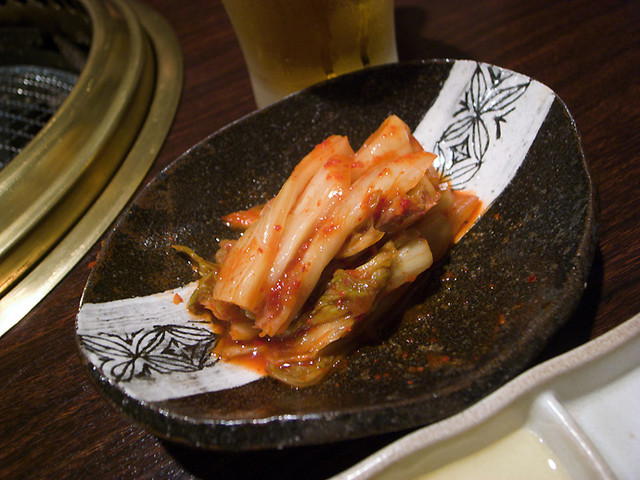
Approach Nagakute and the rhythm is suburban, not theatrical: low-rise streets, a modest local setting, and a dining room where smoke, conversation, and grill timing matter more than ceremony. That register is part of the point. Yakiniku does not need big-city counter choreography to feel serious; it needs dependable handling, well-prepared tripe, and a room where the table controls heat, pace, and appetite.
Yakiniku Mizuno is a Japanese BBQ restaurant whose reputation is built through repeat use, not spectacle. Its Tabelog score of 3.84 and 2025 Tabelog Hyakumeiten recognition place it inside a recognised bracket for yakiniku and tripe, but the signal is not glamour. It points to consistency in a genre where diners quickly notice small failures: thin slicing that dries out, offal not cleaned with care, sauces that flatten meat, or service that rushes the grill.
Beef, tripe, and the discipline of the grill
Yakiniku culture is often discussed through marbling, but serious tables are rarely only about fat. The format rewards range: leaner cuts, richer beef, organ meats, rice, condiments, and drinks that reset the palate between rounds. Mizuno’s category listing includes yakiniku and tripe, which matters because tripe immediately tests sourcing and preparation. It is less forgiving than glossy premium beef, and separates restaurants that merely sell cuts from those that understand texture.
The ingredient angle is practical rather than romantic. In a strong yakiniku meal, the printed selection is often only part of how diners understand the table: cut, texture, seasoning, and grill timing all matter. That does not mean diners should expect a secret menu or performative access. It means the table is best read as a grill house where asking what is suitable that evening can be more useful than chasing a fixed signature item.
The pacing of the meal matters in a format built around fat, smoke, and salt. Each round on the grill should reset the palate rather than exhaust it, and tripe gives the sequence a different kind of interest from richer beef. The pleasure is not only in premium cuts; it is in how the meal moves between chew, char, sauce, rice, and conversation.
A Nagakute room with local confidence, not metropolitan polish
Nagakute sits outside the most obvious dining routes, which changes the decision. This is not a quick detour between cocktail bars and hotel lobbies. It makes more sense within a suburban eating map, where the value is local regularity and category strength. For broader planning, Our full Nagakute restaurants guide gives the local dining context, while Our full Nagakute hotels guide, Our full Nagakute bars guide, Our full Nagakute wineries guide, and Our full Nagakute experiences guide help place the meal inside a wider stay.
The room should be read through yakiniku’s social grammar rather than a tasting-menu script. Shared plates, shared heat, and a table that becomes its own small kitchen are the core of the experience. The best meals in this genre are not over-directed; they give diners enough structure to eat well while leaving room for appetite, conversation, and personal grill timing.
That local confidence is important. Mizuno is not being framed as a luxury counter or a destination built around ceremony. It is better understood as a recognised Nagakute specialist where the appeal lies in grilled beef, tripe, and the steady pleasures of a meal cooked at the table.
How to read it against Japan's broader casual-specialist tier
Japan’s casual-specialist scene is full of narrow-focus restaurants that outperform their scale: ramen shops, curry rooms, sushi counters, bakeries, and beef houses. In the supplied comparison set, Menya Hanzou, Minami Indo Katei Ryori Karnataka, Miharu, and Pan no Mise Polka operate in a much lower price band, while 本郷おけい鮨 sits in a different sushi tradition. Mizuno’s value proposition is therefore not cheapness; it is a mid-priced yakiniku table with enough recognition to justify planning around it if grilled beef is the evening’s point.
That distinction matters for travellers building a Japan itinerary. A meal here will not answer the same craving as other beef formats elsewhere, where sweetness, broth, or controlled service may frame the experience differently. Nor is it part of a broader seafood or bar-led track. The relevant tradition is table grilling: a more interactive, less linear format where sourcing and preparation show themselves through sequence rather than a chef’s plated argument.
Readers mapping specialist dining across Japan can put Mizuno alongside other category-led stops without pretending they are equivalent. Other dining rooms may offer ramen, curry, sushi, bakery, cafe, or casual beef formats, but Nagakute’s grill culture is most persuasive on its own terms. Here, the point is not to collect famous names; it is to choose the format that best matches the evening.
The editorial case for Mizuno is clear: choose it for a grounded Nagakute yakiniku meal where category credentials are stronger than theatre. Other Nagakute dining rooms may suit different briefs, but this venue is for diners who want beef, tripe, and a room comfortable enough to let the grill speak.
Frequently asked questions
Can I bring kids to Yakiniku Mizuno?
Yakiniku Mizuno is best understood as a yakiniku and tripe restaurant in Nagakute. For details such as children’s policies or seating arrangements, confirm directly with the restaurant before visiting.
What's the vibe at Yakiniku Mizuno?
It reads as a grounded Nagakute yakiniku specialist rather than a polished city-room address. Its 2025 Tabelog Hyakumeiten recognition and 3.84 Tabelog score give it clear category credibility.
What price level is Yakiniku Mizuno?
Pricing at Yakiniku Mizuno is listed as JPY 6,000 - JPY 7,999.
Where is Yakiniku Mizuno located?
Nagakute.
Do I need a reservation for Yakiniku Mizuno?
For reservations and current opening details, contact Yakiniku Mizuno directly by phone at +81-561-64-2639.
Side-by-Side Snapshot
Comparable venues by cuisine and price in the same metro.
| Venue | Cuisine | Price | Awards | Notes |
|---|---|---|---|---|
| Yakiniku MizunoThis venue (the venue you are viewing) | Japanese BBQ / Yakiniku | Not listed | Tabelog 100 #36 | Not listed |
| Saunsunda Hiroko | Indonesian – West Javanese home-style cooking | $10–20 | Tabelog 100 #70 | Nagakute |
| Japanese Ramen Tomita (日本の中華そば富田) | Japanese Ramen and Tsukemen | $10–20 | Not listed | Narita |
| Hana Goori Kakigori | Japanese Kakigori (Shaved Ice) | $20–30 | Not listed | Roppongi |
| 創作とんかつ ケ晴レ | 創作とんかつ | Not listed | Not listed | 高松駅周辺 |
| Gyoza no Manshu (ぎょうざの満洲) | Japanese Gyoza Specialist | Not listed | Not listed | 新所沢 |
Recognition history
Dated appearances from independent guides and award organizations, with the underlying list record or original source where available.
Tabelog 100 #36 · No. 36
Tabelog · Tabelog 100 - Yakiniku - EAST - 2025
Continue exploring
More in Nagakute
Restaurants in Nagakute
All restaurants in Nagakute →





Details
- Classic
- Cozy
- Casual Hangout
- Group Dining
- Standalone
- A La Carte
Warm, direct yakiniku atmosphere centered on meat quality rather than formal presentation.