
Tabelog 100 #29
Our verdict
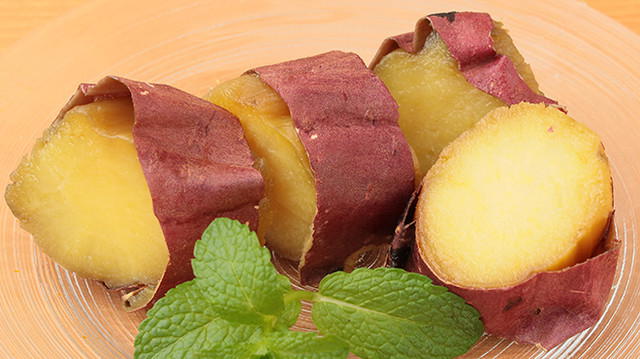
Yakiimo Maru Jun treats sweet potato as the main event rather than a side note, placing roasted sweet potato, daigakuimo, café sweets and kakigori inside Hekinan’s quieter food circuit. Its Tabelog 100 selection for Japanese traditional sweets and sweets cafés in EAST 2023 gives the stop a clear credential, while the format stays casual, produce-led and accessible.

Pearl is the En Primeur Club membership app, where members save venues, book tables and use the concierge.
The menu
What to order
- Cold roasted sweet potato “Hiehie-kun”
- Yakiimo pudding Anno-imo purple
- Whole Anno-imo soup
- Smoked semi-dried sweet potato snack
- Yakiimo & ice cream
The approach is modest: a sweets shop and café in Hekinan built around the smell and seasonality of roasted sweet potato rather than the ceremony of a formal dining room. In Aichi, where everyday food culture often rewards specialization, that focus matters. Sweet potato is not treated here as a garnish or a nostalgic snack, but as the organizing ingredient for a compact world of yakiimo, daigakuimo, café items and shaved ice.
That ingredient-first identity puts Yakiimo Maru Jun in a different lane from Hekinan’s conventional restaurant conversation. A city can have higher-spend dinners such as Ittou, but this venue works at the opposite end of the commitment scale: quick, casual, produce-centered and still serious enough to earn recognition through Tabelog Hyakumeiten in 2023. The useful comparison is not between luxury and simplicity, but between formats that ask for a long meal and formats that compress local food intelligence into a short stop.
Sweet potato as a serious regional ingredient
Japan’s roasted sweet potato culture has always been more technical than it first appears. Variety, storage, heat and moisture change the result dramatically, and specialty shops succeed when they make those differences legible to ordinary customers. Yakiimo Maru Jun sits inside that tradition with a menu identity that names roasted sweet potato, daigakuimo, café and kakigori as core categories. The appeal is not breadth. It is repetition with variation.
The Tabelog Hyakumeiten recognition is useful because Japanese sweets cafés are a crowded field. A 2023 listing signals that this is not just a neighborhood snack counter operating on sentiment. It has been sorted into a wider sweets conversation where product clarity and customer pull both count. The score attached to the listing, 3.56, also places it in the range where Japanese review culture tends to reward consistency rather than spectacle.
The ingredient angle is the point. Sweet potato is a crop that makes seasonality easy to taste without needing fine-dining language. Roasting concentrates sugar; frying and glazing shift the texture toward daigakuimo; shaved ice turns the same ingredient family into a café format that works in warm weather. None of that requires elaborate framing. It requires cooking the ingredient with enough precision that the shop can stay narrow without feeling thin.
A café format with practical, local rhythm
The experience reads more like a local sweets stop than a destination restaurant, and that matters for planning. This is the sort of place that suits a focused pause during a Hekinan day rather than building an evening around a reservation-led meal. Its categories point clearly toward casual sweets: roasted sweet potato, daigakuimo, café and kakigori.
Low spend also changes the critical frame. In Japanese dining, inexpensive does not mean unserious; it often means the shop has stripped the proposition down to one category and removed everything that does not support it. Here, the category is sweet potato, with shaved ice and café service broadening the visit without moving away from the ingredient. The listed budget is firmly everyday: dinner and lunch are both shown at - JPY 999.
For travelers, the location rewards a Hekinan-specific itinerary rather than a fly-by checklist. The broader city context is better read at ground level: practical, local and far from the density of Nagoya’s restaurant corridors. That makes the shop useful for visitors who want a food stop with local texture, especially when the goal is a compact specialist address rather than a long formal meal.
Where it fits in a Hekinan food day
Hekinan does not operate like a major dining capital, and that is precisely why a specialist sweets address can carry editorial weight. The city’s food map is more dispersed, less performative and more dependent on purpose-built stops. A sweet potato café with Tabelog Hyakumeiten recognition gives the area a different kind of draw: not a tasting menu, not a counter seat, but a calibrated expression of one ingredient at an everyday price point.
The smart use case is a daytime pause, especially for travelers already moving through Hekinan as part of a wider Aichi or Mikawa itinerary. Pair it with other Hekinan planning rather than forcing it into a formal restaurant slot. For the broader city context, see our full Hekinan restaurants guide, plus the companion guides to Hekinan hotels, Hekinan bars, Hekinan wineries and Hekinan experiences.
Readers mapping Japan more widely can use the contrast productively. A casual sweets specialist in Hekinan sits far from more formal or higher-commitment restaurant formats, yet it shows the same broader principle: Japanese dining often rewards specialization over range. The logic is especially clear in smaller formats, where one ingredient, one preparation style or one tightly defined category can carry the whole visit. For Yakiimo Maru Jun, that narrowness is the value rather than a limitation.
Frequently asked questions
Can I bring kids to Yakiimo Maru Jun?
Yakiimo Maru Jun is best approached as a casual sweets and café stop in Hekinan. Plan around a short, focused visit for roasted sweet potato, daigakuimo, café items or kakigori.
What should I expect atmosphere-wise at Yakiimo Maru Jun?
Expect a casual sweets café rather than a formal dining room. The Tabelog Hyakumeiten recognition for 2023 gives it a clear specialist profile in Hekinan.
What's the price range at Yakiimo Maru Jun?
Pricing at Yakiimo Maru Jun is listed as - JPY 999 - JPY 999.
What is Yakiimo Maru Jun known for?
Yakiimo Maru Jun is known for roasted sweet potato, daigakuimo, café and kakigori in Hekinan.
At-a-Glance Comparison
Comparable venues by cuisine and price in the same metro.
| Venue | Cuisine | Price | Awards | Notes |
|---|---|---|---|---|
| Yakiimo Maru JunThis venue (the venue you are viewing) | Roasted sweet potato & Japanese sweets shop | $1–10 | Tabelog 100 #29 | Not listed |
| Ittou | Seasonal Japanese kaiseki with local Aichi fermented ingredients | $50–100 | Tabelog 100 #19 | Hekinan |
| うどん満月 中間店 | Traditional Kyushu Udon | Not listed | Not listed | 中間市 |
| カツカレーの店 KAPPA | Tonkatsu with Demi-Glace Sauce | $10–20 | Tabelog 100 #78 | 倉敷えびす通り商店街 |
| KAKO Yanagibashi ten | Japanese Kissaten / Coffee Shop | $1–10 | Tabelog 100 | Nakamura |
| coffee house KAKO Hanaguruma honten | Traditional Nagoya kissaten & coffeehouse | Not listed | Not listed | Nakamura |
Recognition history
Dated appearances from independent guides and award organizations, with the underlying list record or original source where available.
Tabelog 100 #29 · No. 29
Tabelog · Tabelog 100 - Japanese traditional sweets / Japanese sweets cafe - EAST - 2023
Continue exploring
More in Hekinan
Restaurants in Hekinan
All restaurants in Hekinan →




Details
- Cozy
- Classic
- Solo
- Casual Hangout
- After Work
- Family
- Standalone
- A La Carte
Current opening hours
- Monday
- 10 AM–6 PM
- Tuesday
- 10 AM–6 PM
- Wednesday
- 10 AM–6 PM
- Thursday
- Closed
- Friday
- 10 AM–6 PM
- Saturday
- 10 AM–6 PM
- Sunday
- 10 AM–6 PM
Hours can change for holidays and private events. Hours as of .
Simple, down-to-earth roasted sweet potato specialty shop with a cozy, local feel, focused on takeaway and casual dessert stops rather than lingering meals.