Our verdict
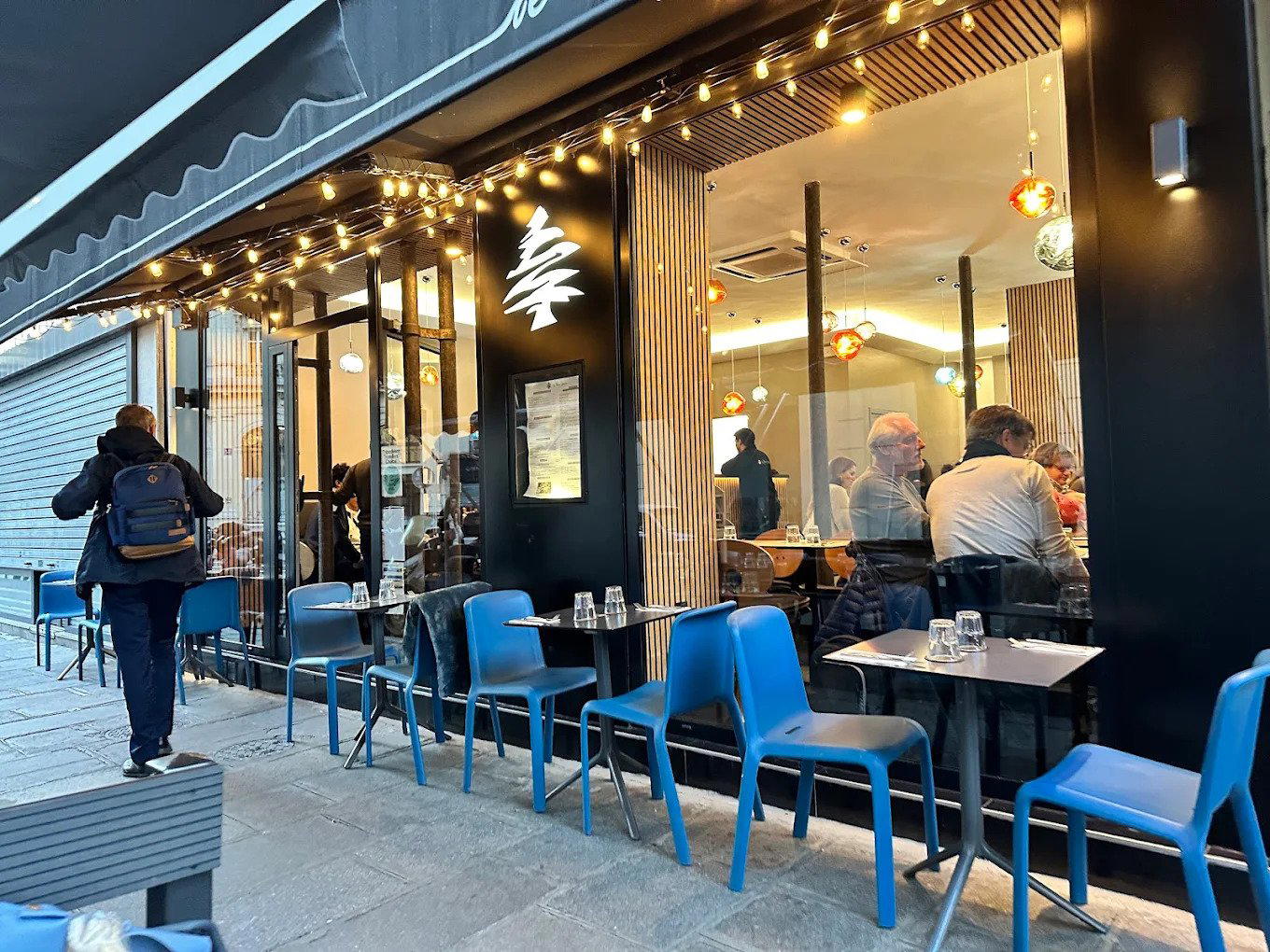
On Rue de l'Isly in the 8th arrondissement, La Pause Libanaise brings Lebanese cooking to one of Paris's most trafficked corridors, where the neighbourhood's business-lunch culture and proximity to Saint-Lazare station create a specific kind of midday demand. The address sits within reach of the grand French dining rooms that define the area's upper tier, offering a different register entirely.

Pearl is the En Primeur Club membership app, where members save venues, book tables and use the concierge.
The menu
What to order
- Falafel
- Shawarma
- Houmous
- Mezzé Libanais
- Fattouch Salad
A Lebanese Address in the 8th: What the Location Signals
Rue de l'Isly runs from the Gare Saint-Lazare toward the broad avenues of the 8th arrondissement, a stretch defined less by destination dining than by the daily rhythms of office workers, commuters, and travellers moving through one of Paris's busiest transit nodes. It is not the address where Paris's Lebanese community first planted roots, nor is it a neighbourhood that built its reputation on Middle Eastern cooking. That distinction belongs to streets further north, around Rue du Faubourg Saint-Denis and pockets of the 10th, where Lebanese grocers, patisseries, and restaurants have operated for decades. La Pause Libanaise at number 10 occupies a different position: a Lebanese table embedded in a predominantly French-cuisine district, serving a lunchtime and early-evening crowd whose default expectations are set by the brasseries and corporate dining rooms nearby.
That positioning matters when reading the venue against its neighbourhood. The 8th is home to some of the most formally ambitious French tables in the city. Le Cinq at the Four Seasons Hôtel George V operates within a few minutes' walk in terms of arrondissement, and Alléno Paris au Pavillon Ledoyen anchors the haute-cuisine end of the 8th from its position near the Champs-Élysées. La Pause Libanaise operates in an entirely different register: not competing with those rooms, but occupying the practical middle ground that any dense Parisian business district requires.
Lebanese Cooking in Paris: A Tradition with Specific Geography
Paris has maintained a Lebanese dining presence since at least the 1970s, when waves of immigration from Lebanon brought both the cooking and the community that sustains it. The city's most established Lebanese addresses have historically clustered in the northern arrondissements and along the inner suburbs, where the community itself is concentrated. But Lebanese food in Paris has also long found a secondary audience in the tourist and business corridors of the centre and west, where mezze formats, grilled meats, and flatbreads offer a practical alternative to the fixed-menu structures of French bistros.
The format that defines Lebanese restaurant dining, at almost any price point, is the shared-plate mezze: a spread of cold dishes, warm starters, and grilled proteins that arrives in waves rather than in the sequential courses that French dining normalises. This is a fundamentally different rhythm at the table, and it has shaped Lebanese restaurants' appeal to Parisian diners looking for something more convivial and flexible than the traditional entrée-plat-dessert sequence. For the lunch crowd around Saint-Lazare, that flexibility is a practical asset.
The broader French dining scene's relationship with Lebanese and Levantine cooking has also shifted over the past decade. A generation of Paris-trained chefs with Lebanese, Syrian, or Israeli backgrounds has brought Levantine flavours into wine-bar and neo-bistro contexts, creating a more diffuse presence for these ingredients and techniques across the city's restaurant culture. This has raised general Parisian familiarity with dishes like fattoush, kibbeh, and labneh without displacing the more traditional Lebanese restaurant model. La Pause Libanaise, given its address and apparent format, sits closer to that traditional model than to the fusion-adjacent positions those newer venues occupy.
The 8th Arrondissement's Dining Middle Ground
Any neighbourhood built around major transit infrastructure and corporate offices produces a specific kind of restaurant ecosystem. The very best of the 8th's dining hierarchy is documented and formal: multiple Michelin-recognised rooms, hotel dining at the palace-hotel level, and French classic cuisine at addresses like L'Ambroisie on the Place des Vosges (technically the 4th, but within the broader luxury dining tier that defines the area's upper register). Kei represents another strand: contemporary French technique inflected with Japanese precision. These are destination rooms with advance booking requirements and tasting menus priced accordingly.
Below that tier, the 8th runs on brasseries, wine bars, and a range of non-French cuisines that absorb the volume the grands restaurants cannot. Lebanese cooking fits well into that stratum: relatively fast service, shared plates that work for business lunches, and a price point that sits comfortably below the starred rooms without dropping into fast-casual territory. The question for any Lebanese restaurant in this district is whether it operates as a convenience stop for commuters or has built enough of a regular clientele to function as a neighbourhood fixture.
Situating La Pause Libanaise in the Broader Paris Lebanese Scene
Without detailed operational data, the most useful frame for understanding La Pause Libanaise is its position within the geography of Paris's Lebanese dining options. The most-reviewed and longest-established Lebanese restaurants in Paris tend to be in the northern and eastern arrondissements, or in venues that have been operating long enough to accumulate a critical mass of regulars. An address on Rue de l'Isly signals a calculated bet on foot traffic and the business-lunch economy rather than destination appeal.
For readers building a broader picture of Paris's restaurant scene, the reference points at the top of the French dining hierarchy are well documented. Venues like Arpège and the multi-starred rooms represent one axis of the city's food culture. The Lebanese and Levantine addresses scattered across the arrondissements represent another, less formally mapped axis that rewards direct exploration. Our full Paris restaurants guide maps both.
French fine dining's reach beyond Paris is also worth holding in mind for context. Rooms like Mirazur in Menton, Flocons de Sel in Megève, Troisgros in Ouches, Auberge de l'Ill in Illhaeusern, Bras in Laguiole, Paul Bocuse near Lyon, AM par Alexandre Mazzia in Marseille, Assiette Champenoise in Reims, Au Crocodile in Strasbourg, and Auberge du Vieux Puits in Fontjoncouse define France's starred dining geography outside the capital. For international comparison, Le Bernardin in New York and Atomix in New York illustrate how French-influenced fine dining and Korean tasting-menu formats have developed in parallel in that city.
Planning Your Visit
| Venue | Cuisine | Price Tier | Booking |
|---|---|---|---|
| La Pause Libanaise | Lebanese | Not confirmed | |
| Le Cinq | French, Modern | €€€€ | Advance booking required |
| Alléno Paris | Creative | €€€€ | Advance booking required |
| Kei | Contemporary French | €€€€ | Advance booking required |
La Pause Libanaise is at 10 Rue de l'Isly, 75008 Paris, within walking distance of Gare Saint-Lazare.
Frequently asked questions
How does La Pause Libanaise fit into the longer arc of Lebanese dining in Paris?
Lebanese restaurants in Paris have operated in two broadly different modes since the community first established itself in the city: community-anchored addresses in the northern and eastern arrondissements, and transit-corridor or business-district outposts serving a more general clientele. La Pause Libanaise, at its Rue de l'Isly address in the 8th, belongs to the second category, a positioning that has become more common as Levantine and Lebanese flavours gained broader familiarity among Parisian diners over the past decade. For readers tracking the evolution of Middle Eastern dining in Paris, this venue represents the diffusion of Lebanese cooking beyond its traditional geographic base in the city.
Where It Fits
Comparable venues nearby, for context on price, style, and recognition.
| Venue | Cuisine | Price | Notes |
|---|---|---|---|
| La Pause LibanaiseThis venue (the venue you are viewing) | Authentic Lebanese | $20–30 | Not listed |
| MANAL | Authentic Lebanese | $20–30 | Odéon |
| Shouk | Modern Israeli Street Food | Not listed | Canal Saint-Martin |
| Assanabel | Authentic Lebanese | $20–30 | 14th Arr. - Observatoire |
| L’As du Fallafel | Authentic Israeli Falafel | $10–20 | Le Marais |
| Al Ajami | Traditional Lebanese | $30–50 | 8th Arr. - Élysée |
Continue exploring
More in Paris
Restaurants in Paris
All restaurants in Paris →
Bars in Paris
All bars in Paris →

Details
- Cozy
- Romantic
- Lively
- Casual Hangout
- Group Dining
- Family
- Date Night
- Terrace
- Open Kitchen
- Beer Program
- Local Sourcing
- A La Carte
- Counter Dining
- Lebanese Wine
- Lebanese Beer
- Vegetarian Friendly
- Vegan Options
- Halal
Current opening hours
- Monday
- 11:30 AM–3:30 PM, 6–10:30 PM
- Tuesday
- 11:30 AM–3:30 PM, 6–10:30 PM
- Wednesday
- 11:30 AM–3:30 PM, 6–10:30 PM
- Thursday
- 11:30 AM–3:30 PM, 6–10:30 PM
- Friday
- 11:30 AM–3:30 PM, 6–10:30 PM
- Saturday
- 11:30 AM–10:30 PM
- Sunday
- 12–4:30 PM
Hours can change for holidays and private events. Hours as of .
Warm and friendly atmosphere with pleasant service, featuring a beautiful outdoor terrace and colorful, clean interior space.