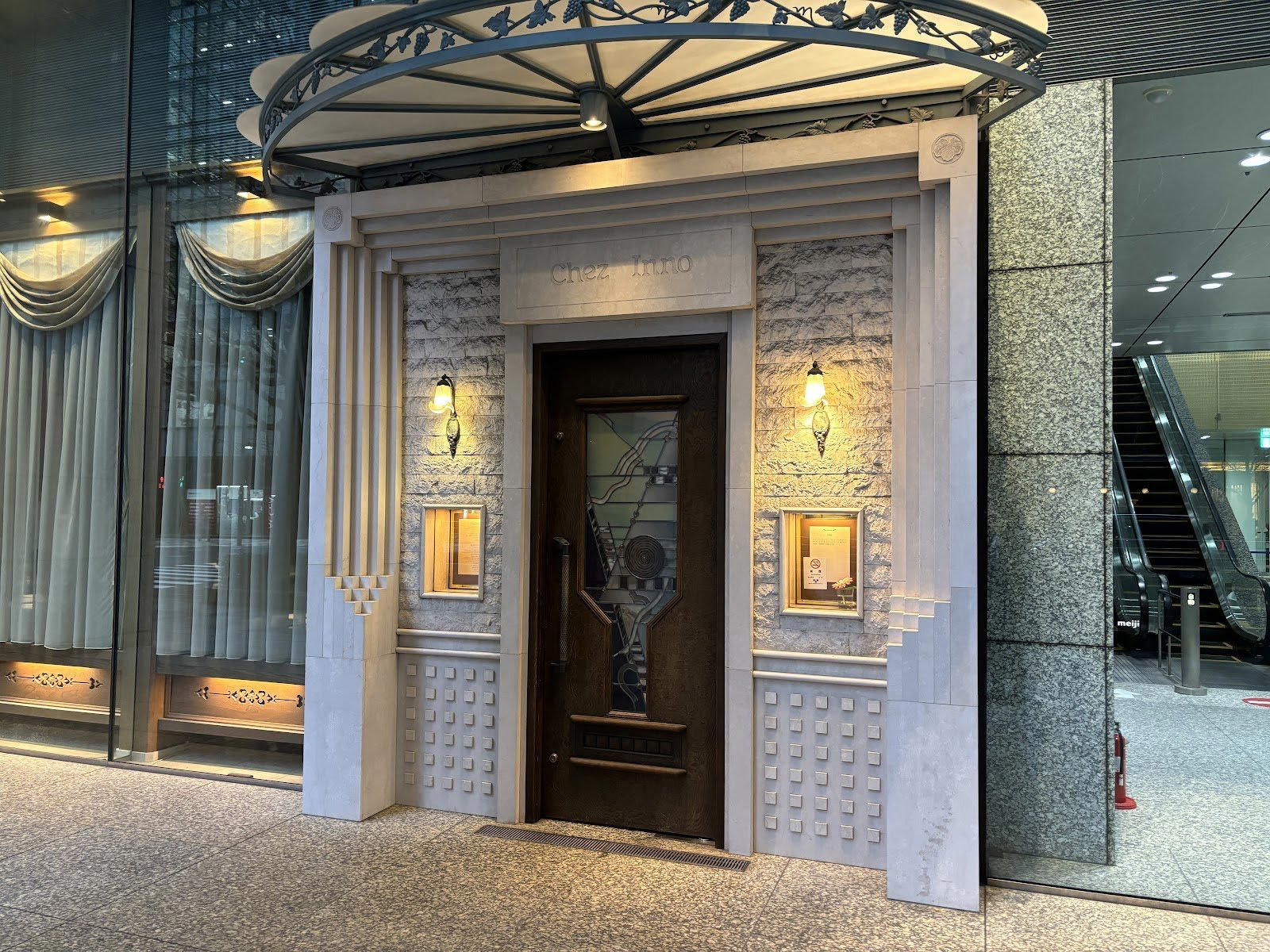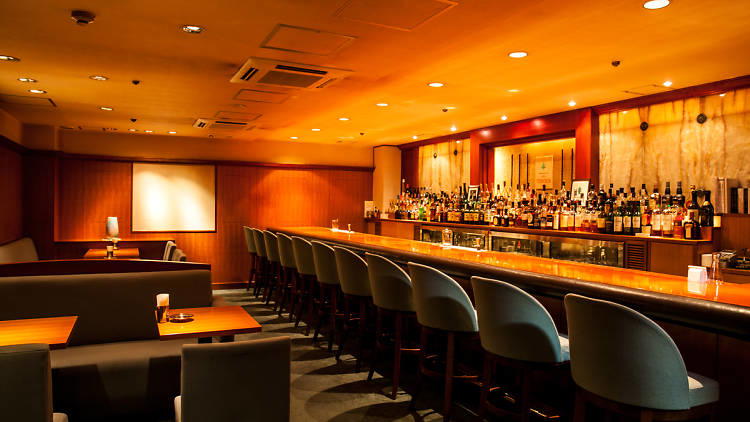

Star Wine List · Wine Spectator Best of Award of Excellence · Tabelog 100 #50
Our verdict
A New York steakhouse institution transplanted to Marunouchi's basement level, Wolfgang's Tokyo operates from within the Meiji Seimei-kan building and holds a White Star recognition from Star Wine List. The wine program is a central pillar here, with American dry-aged beef served in a format that sits apart from Tokyo's kaiseki and omakase corridors. Book in advance, particularly for weekend evenings.

Pearl is the En Primeur Club membership app, where members save venues, book tables and use the concierge.
The menu
What to order
- T-Bone Steak
- Filet Mignon
Dry-Aged Beef in the Shadow of Meiji-Era Stone
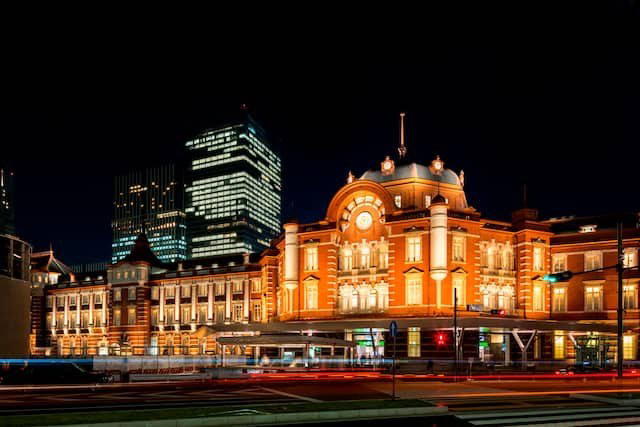
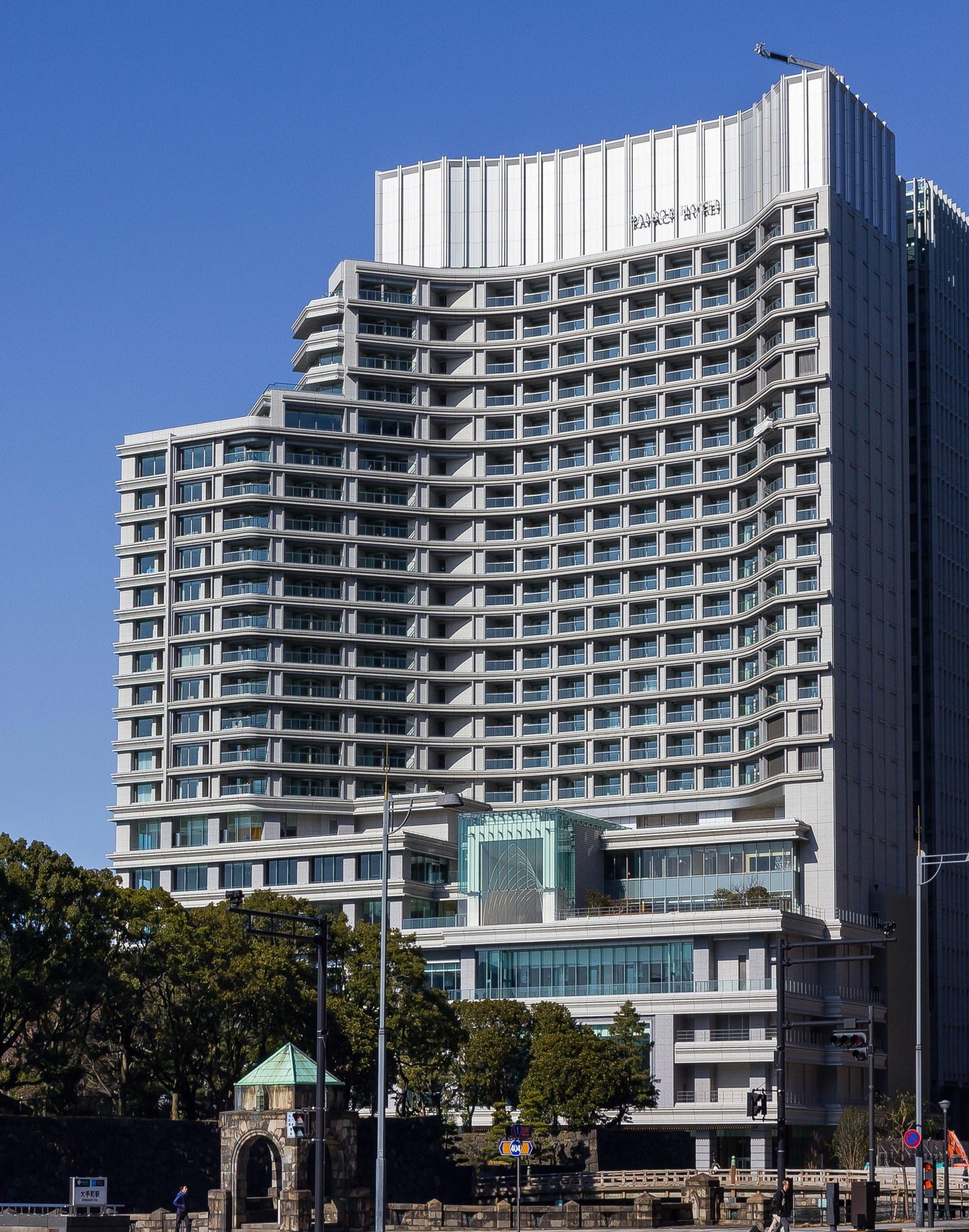
Descending into the basement level of the Meiji Seimei-kan in Marunouchi places you inside one of central Tokyo's more architecturally deliberate dining addresses. The building above is a registered Important Cultural Property, a 1930s neoclassical structure that now anchors the MY PLAZA complex at the northern end of Marunouchi's business corridor. The dining room below sits within that inherited weight: thick walls, a certain stillness, and a degree of remove from the street-level intensity of Chiyoda's financial district. For a format rooted in the New York steakhouse tradition, the setting provides an unexpected counterpoint.
Wolfgang's Steakhouse is an American concept with origins on Park Avenue in Manhattan, and the Tokyo outpost in Marunouchi is part of a wider Asian expansion that includes locations in Hong Kong, Seoul, and Taipei. That expansion pattern matters for understanding where this restaurant sits in Tokyo's dining structure. It is not positioned against the kaiseki counters of Ginza or the sushi rooms of Akasaka, where venues like Harutaka or RyuGin operate within distinctly Japanese culinary frameworks. Wolfgang's competes instead with a narrower set: Western steakhouse formats serving international business clientele in a district dominated by corporate headquarters and financial institutions.
The Steakhouse Format in a City That Has Largely Moved Past It
Tokyo's high-end Western dining scene has shifted considerably over the past decade. The city's most discussed French tables, from L'Effervescence to Sézanne, have pushed toward locally sourced ingredients and seasonal menus that reflect Japanese produce cycles as much as any European culinary tradition. Even within the innovative French category, places like Crony operate with a level of conceptual specificity that positions them against global fine dining rather than regional comfort formats.
The classic American steakhouse does not fit neatly into that trajectory. It operates on different values: consistency over seasonality, imported beef over local sourcing, a wine list built around Napa and Bordeaux rather than domestic producers. In a city increasingly attentive to traceability and regional food identity, that positioning invites scrutiny. The question worth asking is not whether the steak is well-executed, but whether the model's relationship to sourcing and environmental overhead has evolved alongside broader industry shifts.
Wine Recognition and the White Star Designation
The most documentable distinction on record for this location is its White Star status from Star Wine List, awarded in December 2021. Star Wine List operates a tiered recognition system, and White Star sits at the higher end of its scale, reserved for programs that demonstrate meaningful depth, curation, and presentation in their wine offering. For a steakhouse, that signals what regulars and wine-focused visitors already tend to know: the wine list here is taken seriously and functions as a genuine dining pillar rather than an afterthought.
American steakhouse formats globally tend to lean heavily on Californian Cabernet Sauvignon and aged Bordeaux, categories that pair predictably with dry-aged beef. Whether the Marunouchi list reflects that convention or has been adapted for a Tokyo audience with broader interest in Burgundy, domestic Japanese wine, or natural producers is not something the available record specifies. What the White Star recognition does confirm is that the program meets a professional standard worth noting when comparing this address against other Western-format restaurants in the Marunouchi and Ginza corridor.
Sourcing and the Sustainability Question in an Import-Heavy Format
The editorial angle that demands attention at a location like this is environmental: a New York-origin steakhouse in Tokyo is, structurally, an import-dependent operation. American dry-aged beef is the format's defining product, and its presence in Japan means transatlantic or transpacific supply chains, cold-chain logistics, and a carbon overhead that locally sourced formats do not carry. That is not a disqualifying observation, but it is a relevant one as Tokyo's dining culture grows more attentive to food origin and supply chain transparency.
Japan's own high-end beef culture, anchored by Wagyu production in regions like Kobe, Matsusaka, and Omi, offers an alternative model where provenance is central to the product's identity and the supply chain is domestic. Several Tokyo steakhouse formats have begun working with Japanese ranchers directly, shortening sourcing lines and building origin stories that align with broader consumer interest in traceability.
For guests weighing environmental considerations, the honest framing is this: the format's core appeal, American-style dry-aged beef in a New York dining room aesthetic, is inseparable from an import-based model. That choice is deliberate and positions the restaurant clearly within a particular tradition. Visitors whose priorities tilt toward domestic sourcing and reduced supply chain distance would find more alignment at restaurants operating within Japanese culinary frameworks across the city.
Marunouchi as a Dining District
Marunouchi functions primarily as Tokyo's corporate and financial core, bordered by the Imperial Palace to the west and Tokyo Station to the east. The dining scene here reflects that constituency: international formats, expense-account pricing, and a client-entertainment logic that values reliability and familiarity over culinary risk-taking. Wolfgang's fits that context with precision. It offers a format understood by international business travelers, a wine program with documented credentials, and an address that is steps from the Marunouchi exit of Tokyo Station.
For visitors building a broader Tokyo itinerary around dining, Marunouchi is rarely the primary draw. The concentrated creative energy sits in Ginza, Minami-Aoyama, and Azabu-Juban, where a wider range of formats and price points coexist. Our full Tokyo restaurants guide maps those neighborhoods in detail, and if you are extending travel beyond the capital, addresses like HAJIME in Osaka, Gion Sasaki in Kyoto, akordu in Nara, Goh in Fukuoka, Bleston Court Yukawatan in Nagano, and giueme in Akita each offer meaningful alternatives across the country's dining spectrum. For other dimensions of the Tokyo experience, our guides to hotels, bars, wineries, and experiences cover the relevant categories.
For context beyond Japan, the New York steakhouse tradition that Wolfgang's carries forward has its own reference points in American dining. Le Bernardin in New York City operates at the opposite end of the format spectrum, representing the French fine dining pole of Manhattan's high-end scene, while Emeril's in New Orleans shows how American regional cooking can anchor a serious dining program with a distinct sense of place.
Planning Your Visit
Wolfgang's Steakhouse Marunouchi Tokyo is located in the basement level of MY PLAZA, within the Meiji Seimei-kan at 2-1-1 Marunouchi, Chiyoda-ku. Tokyo Station's Marunouchi exit is the most direct approach on foot, making it direct for visitors arriving from other parts of the city by Shinkansen or local rail. The restaurant holds a White Star recognition from Star Wine List (December 2021), which makes the wine list a specific draw for guests whose interest extends beyond the beef program. Reservations are advisable, particularly for evening seatings and weekends, given the location's corporate clientele and the limited dining footprint typical of basement-level Marunouchi addresses. Specific pricing, hours, and booking contacts are best confirmed directly with the venue.
Frequently asked questions
How do I find Wolfgang's Steakhouse Marunouchi Tokyo?
Wolfgang's Steakhouse Marunouchi Tokyo is located at Japan, 〒100-0005 Tokyo, Chiyoda City, Marunouchi, 2 Chome−1−1 MY PLAZA 明治生命館 B1F, Tokyo.
What distinctions does Wolfgang's Steakhouse Marunouchi Tokyo have?
Wolfgang's Steakhouse Marunouchi Tokyo has received recognition including: Wolfgang's Steakhouse Marunouchi Tokyo is a restaurant in Tokyo, Japan. It was published on Star Wine List on December 17, 2021 and is a White Star.
What do people recommend at Wolfgang's Steakhouse Marunouchi Tokyo?
Wolfgang's built its reputation in New York on USDA dry-aged porterhouse steaks, and that format carries through to the Tokyo location in Marunouchi's Meiji Seimei-kan basement. The wine program is the most independently documented strength here: Star Wine List awarded the venue a White Star in December 2021, recognising the depth of the list.
What's the best way to book Wolfgang's Steakhouse Marunouchi Tokyo?
The restaurant is located at B1F of MY PLAZA, 2-1-1 Marunouchi, Chiyoda-ku, Tokyo, accessible directly from Marunouchi station.
Accolades, Compared
Comparable venues nearby, for context on price, style, and recognition.
| Venue | Cuisine | Price | Awards | Notes |
|---|---|---|---|---|
| Wolfgang's Steakhouse Marunouchi TokyoThis venue (the venue you are viewing) | Classic American Steakhouse | $150–200 | Star Wine List · Wine Spectator Best of Award of Excellence | Not listed |
| Steak Dining Vitis | Charcoal-Grilled Wagyu Steakhouse | $150–200 | Tabelog 100 #65 | Meguro |
| ルビージャックス | Premium Seafood & Steak | $100–150 | Not listed | Minato |
| RUSTEAKS | Modern Steakhouse | $100–150 | Tabelog 100 #61 | Shibuya |
| Wolfgang's Steakhouse Roppongi Tokyo | New York-Style Dry-Aged Steakhouse | $150–200 | Star Wine List · Wine Spectator Best of Award of Excellence | Minato |
| PENTHOUSE GINZA hanare: | Steakhouse / Teppanyaki | $150–200 | Tabelog 100 #52 | Chūō |
Recognition history
Dated appearances from independent guides and award organizations, with the underlying list record or original source where available.
Star Wine List
Star Wine List
Wine Spectator Best of Award of Excellence
Wine Spectator
Tabelog 100 #50 · No. 50
Tabelog · Tabelog 100 - Steak / Teppanyaki - EAST - 2025